





Turnkey Indoor Playground Projects in Czechia: Fast-Track to Operation
Launching a successful family entertainment business requires much more than purchasing play equipment. Investors looking for Turnkey Indoor Playground Projects in Czechia increasingly seek complete project partners capable of transforming an empty commercial space into a fully operational entertainment destination. From concept development and engineering to manufacturing, logistics, installation, and post-launch support, every stage directly affects the project’s profitability, operational efficiency, and long-term visitor satisfaction.
As MaxPlay Playground Equipment, we provide professional solutions for indoor playgrounds and soft play areas. We design, manufacture, install, and assemble indoor playground equipment and soft play systems for commercial spaces. Contact us for turnkey indoor playground projects.
| Landline: | 0216 377 10 88 |
| Mobile / WhatsApp: | 0532 069 53 17 |
| E-Mail: | info@maxplay.com.tr |
| Address: | Google Maps |
You can contact us for all your projects across Türkiye and international markets.
Our Services:
- Trampoline Manufacturing – Trampoline Park Installation
- Ball Pit Manufacturing – Ball Pit Playground Installations (with slides, etc.)
- Interactive Play Systems (Moving Soft Play Toys & Equipment)
- Sand Pit – Sand Play Areas
- Playgrounds and Role-Play Houses for Kindergartens & Nurseries
- Indoor playgrounds for businesses such as shopping malls, cafés, restaurants, etc.
- And all customized playground projects tailored to your specific needs.
In practice, the most successful indoor entertainment venues are not necessarily those with the largest footprint. They are carefully engineered environments where visitor circulation, age segmentation, attraction balance, maintenance accessibility, and future expansion have been considered before production even begins. This is why experienced developers now prefer working with manufacturers capable of managing the entire project lifecycle instead of coordinating multiple independent suppliers.
Understanding What Makes a Turnkey Indoor Playground Project Successful
A turnkey project begins long before the first steel frame is manufactured. Commercial success is largely determined during the planning stage, where market positioning, target demographics, available floor space, expected visitor capacity, operational costs, and revenue opportunities are evaluated together. Rather than selecting equipment from a catalogue, experienced project teams first identify how children and families will interact with the space throughout their visit.
One of the most common situations encountered in real projects is that investors initially focus on maximizing the number of attractions while overlooking circulation efficiency. In practice, excessive equipment density often creates bottlenecks, reduces visibility for parents, complicates supervision, and increases maintenance requirements. Professional project planning instead balances excitement with accessibility, ensuring every attraction contributes to a comfortable visitor journey.
A successful commercial entertainment facility typically combines several strategic elements:
- Diverse attractions for multiple age groups without overcrowding the venue
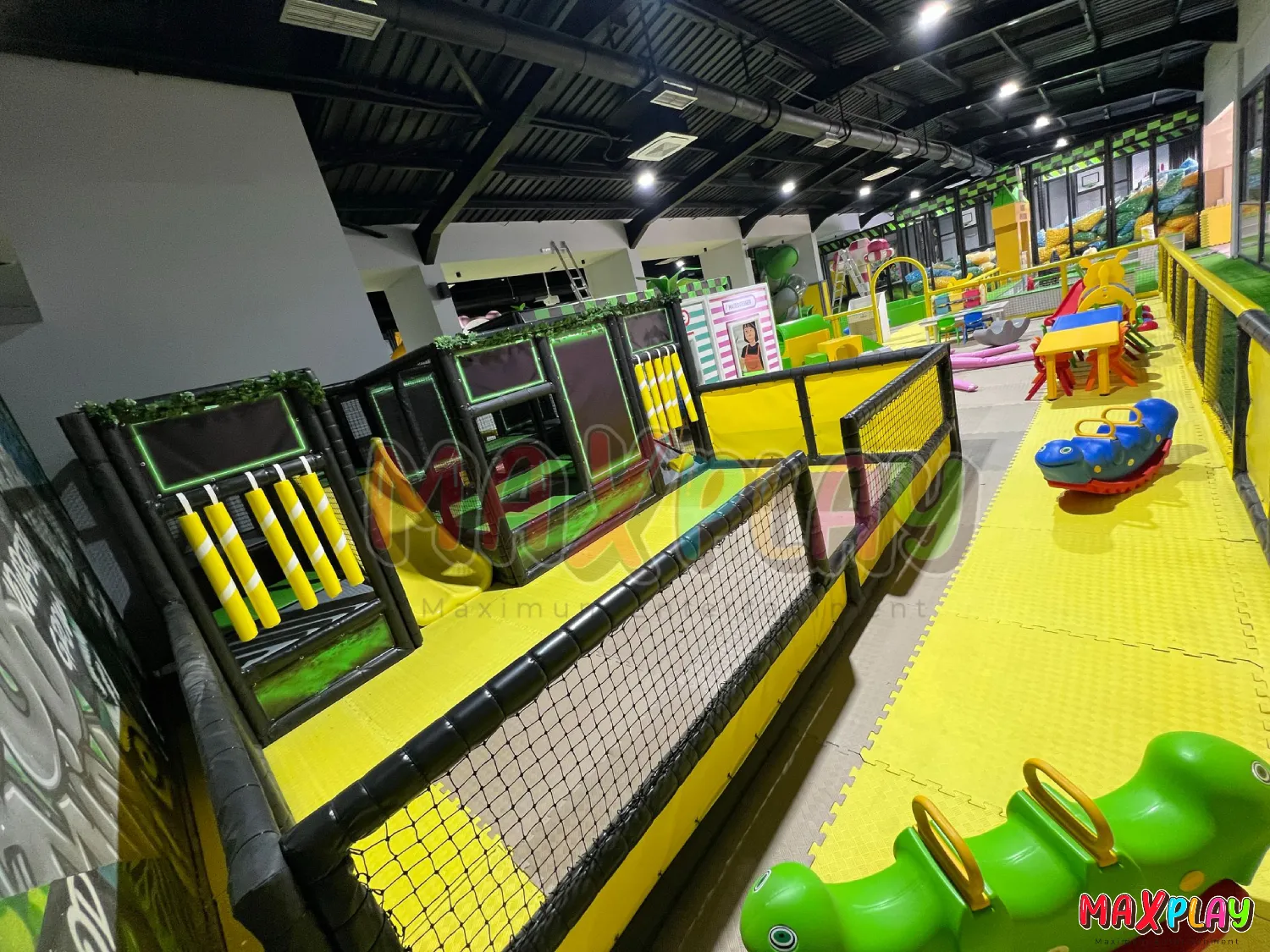
- Clear separation between toddler, family, and high-energy activity zones
- Efficient staff supervision points and maintenance access
- Flexible layouts that allow future expansion without major reconstruction
The objective is not simply installing an indoor play set, but creating a commercial environment capable of generating repeat visits, extended dwell time, and higher customer spending.
Why Czech Investors Source Indoor Playground Equipment from Turkey?
The Czech entertainment market has become increasingly competitive, encouraging investors to seek manufacturers capable of delivering premium quality while maintaining investment efficiency. Turkey has emerged as one of Europe’s strongest production hubs for commercial indoor playground systems thanks to its advanced manufacturing infrastructure, engineering expertise, and export-oriented production capabilities.
Unlike many trading companies, established Turkish manufacturers control design, engineering, steel fabrication, soft padding production, quality inspection, packaging, and logistics under one organization. This integrated production model significantly reduces communication errors while shortening overall project timelines.
From an operational perspective, transportation also plays a major role. Deliveries from Turkey generally require considerably less transit time than shipments originating from many Asian manufacturing regions. Shorter logistics routes help investors maintain predictable opening schedules while reducing warehousing and inventory risks.
Another practical advantage involves production flexibility. Many international suppliers offer limited customization or require very high minimum order quantities. Turkish manufacturers are often able to engineer fully bespoke entertainment environments tailored to the dimensions of shopping malls, hotels, restaurants, and family entertainment centres without sacrificing production efficiency.
In real commercial projects, investors frequently compare three primary sourcing options:
- Asian low-cost production
- European premium manufacturers
- Turkish integrated manufacturers
While Asian factories may appear attractive based solely on initial pricing, additional shipping time, communication challenges, engineering revisions, and quality inconsistencies can significantly increase the total project cost. Turkish production frequently provides a stronger balance between competitive investment, European manufacturing standards, faster delivery, and reliable engineering support.
For businesses planning large-scale entertainment facilities, working directly with an experienced indoor playground supplier also simplifies project coordination by eliminating intermediaries and improving technical communication throughout manufacturing.
MaxPlay Playground Equipment Overview
| Equipment Name | Description | Key Benefits |
| Ball Pool | Colorful pit filled with balls for safe sensory play. | Safe fun for toddlers, easy to clean, encourages motor skills. |
| Trampoline | High-quality indoor trampolines. | Builds balance and strength, child-safe design, durable materials. |
| Interactive Game Sets | Digital and physical interactive play stations. | Boosts learning, cognitive skills, and engagement. |
| Profession Houses | Role-play houses designed for kids. | Encourages creativity, social interaction, and imagination. |
| Trampoline Park | Large-scale trampoline structures. | Suitable for older kids, high durability, safe design. |
| Roller Slide | Conveyor-style (roller) slides for continuous fun. | Efficient design, fun motion play, safe structure. |
| Tower Slide | Tower slides designed for adventure play. | Exciting design, strong safety standards, eye-catching feature. |
| Climbing Wall | Indoor climbing walls. | Builds strength and coordination, safe grips, customizable difficulty levels. |
| Volcano Slide | Volcano-shaped slides with climbing and sliding features. | Combines climbing and sliding, unique design, fun for multiple age groups. |
Choosing the Right Mix of Play Attractions for Different Age Groups
One of the defining characteristics of profitable indoor entertainment centres is their ability to engage children across multiple developmental stages. Designing exclusively for one age category limits repeat visits and reduces the overall family appeal of the venue. Successful projects instead create interconnected experiences that encourage siblings of different ages to remain engaged during the same visit.
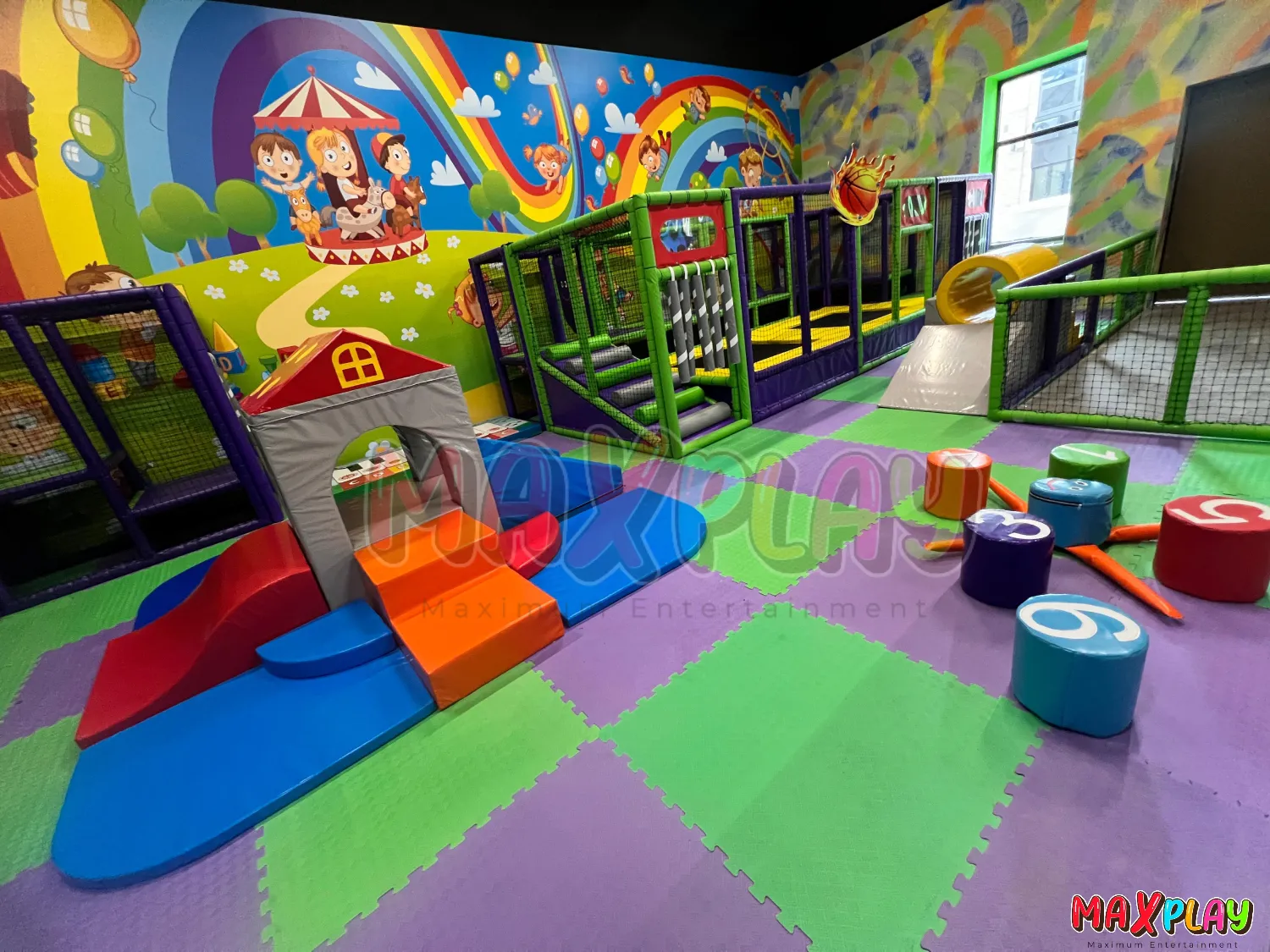
For younger children, soft exploration areas remain essential. Carefully designed indoor soft playground equipment, interactive sensory elements, low climbing challenges, miniature slides, crawling tunnels, and creative role-play environments help develop confidence, coordination, and social interaction without overwhelming early-age users. Toddler areas should always maintain clear visual access for accompanying parents while remaining physically separated from higher-energy attractions.
As children grow older, their expectations shift toward movement-based challenges requiring greater physical engagement. Multi-level soft play manufacturers now integrate obstacle courses, climbing towers, adventure bridges, rotating activities, and interactive technologies into larger play structures that encourage longer play sessions. These environments increase visitor retention because children naturally progress through multiple activities rather than repeating a single attraction.
High-capacity entertainment venues often combine several major attractions to broaden their audience profile, including:
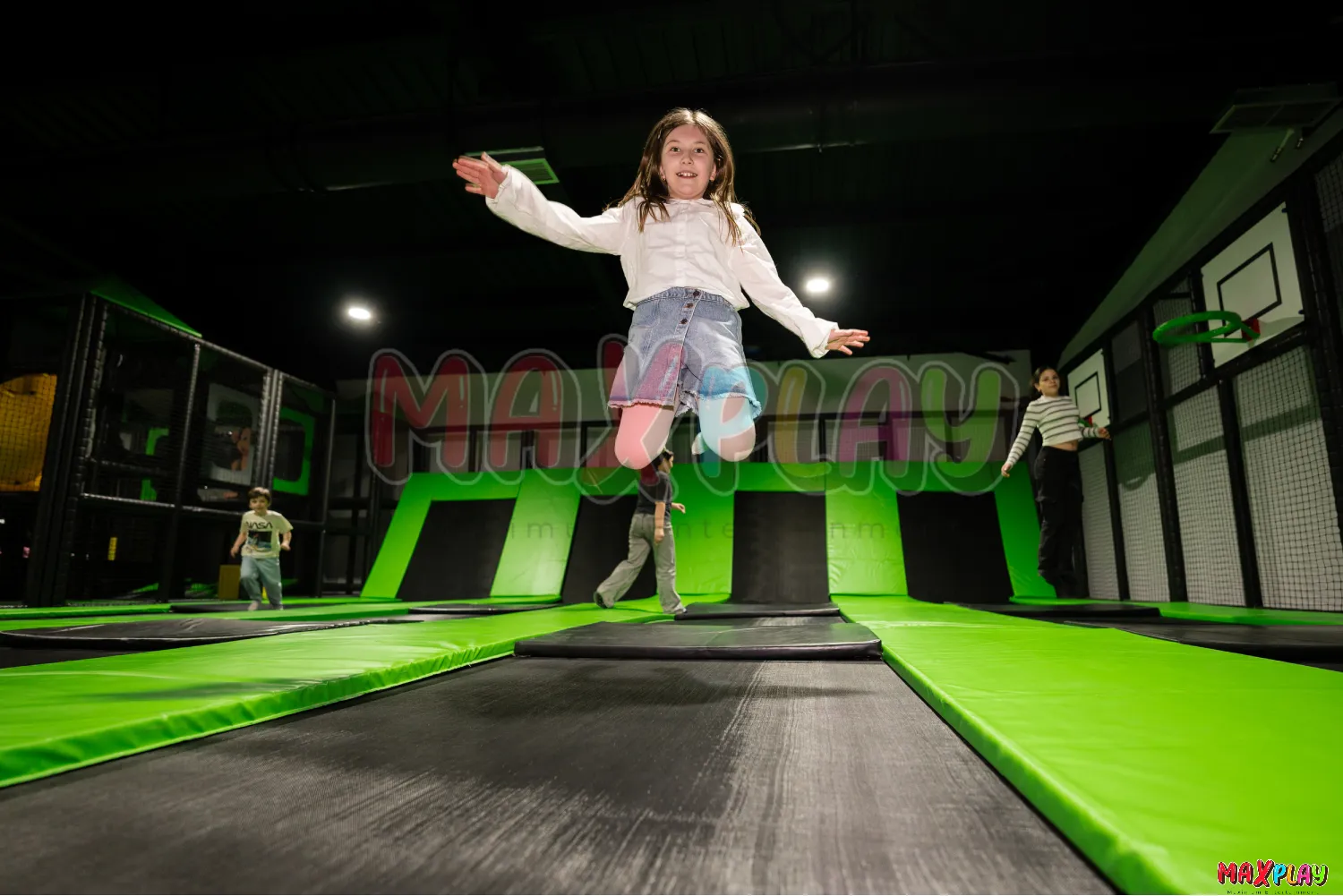
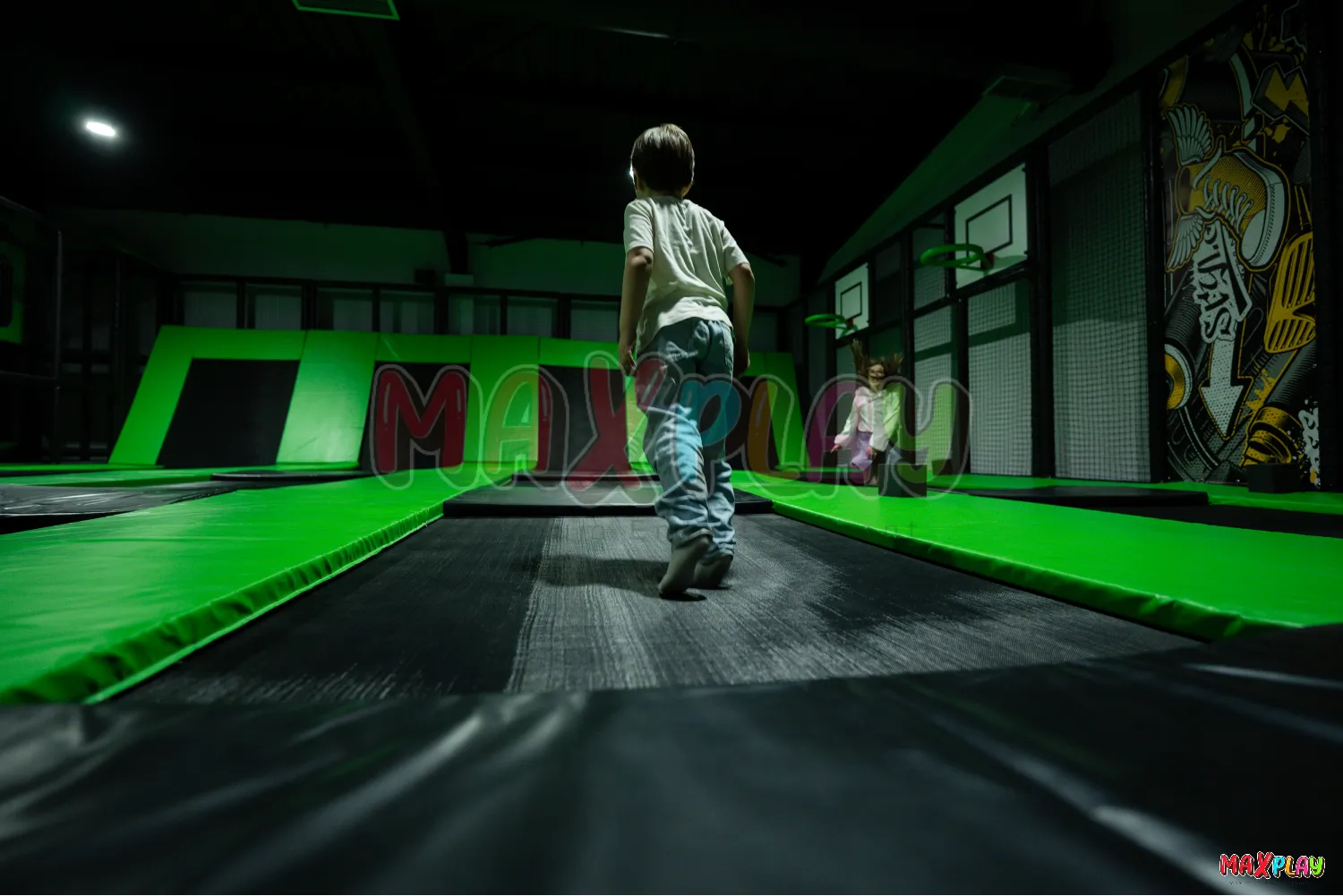
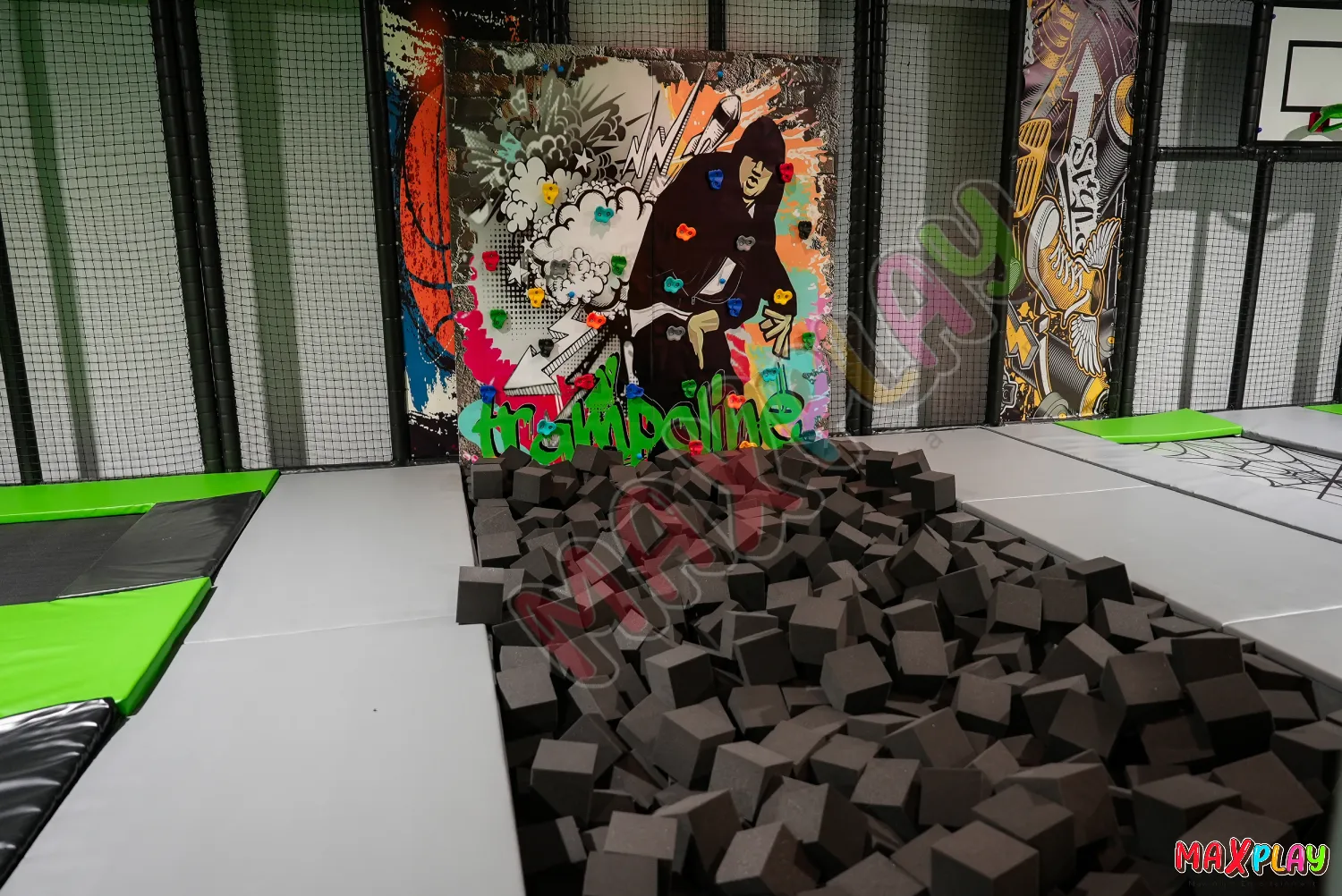
- Trampoline park equipment for active recreation and group activities
- Ninja challenge courses promoting balance and agility
- Interactive projection games blending physical movement with digital experiences
- Climbing walls designed with progressive difficulty levels
- Role-play villages encouraging imaginative learning
- Large ball pool areas connected to multi-level play systems
A common mistake seen during commercial planning is allocating too much space to one headline attraction while neglecting complementary experiences. In practice, visitor satisfaction increases when multiple activity types coexist within a cohesive layout, allowing children to alternate between energetic play, creative exploration, and social interaction.
Equally important is designing attractions that remain appealing as visitor expectations evolve. Modern interactive playground equipment not only enhances engagement but also extends the operational lifespan of the facility by introducing adaptable experiences that remain relevant over time.
Designing Family Entertainment Centres That Maximize Visitor Flow
A visually impressive playground does not automatically become a commercially successful entertainment venue. The difference often lies in how visitors move through the space. Effective circulation planning influences queue management, parental supervision, food and beverage sales, staff efficiency, and ultimately the amount of time families spend inside the facility. The most successful Family Entertainment Centres (FECs) are designed with customer behaviour in mind rather than simply filling every available square metre with attractions.
One of the most common situations encountered during project implementation is that operators underestimate the importance of transition zones. Entrances, waiting areas, seating sections, birthday party rooms, cafés, toddler spaces, and high-energy attractions should work together as one connected ecosystem. When these elements are disconnected, congestion forms quickly, reducing both comfort and operational efficiency. Experienced designers therefore map the customer journey before finalising the equipment layout, ensuring that every path feels intuitive and encourages exploration.
Themed concepts further strengthen visitor engagement by creating memorable environments rather than isolated play elements. Instead of combining unrelated attractions, modern entertainment venues often develop a unified story through colours, architecture, lighting, graphics, and play experiences. Whether the concept reflects a jungle adventure, underwater world, futuristic city, or space expedition, consistent theming encourages children to immerse themselves in the environment while making the venue more recognizable on social media and in customer recommendations.
Commercial performance also benefits from strategically positioning high-demand attractions deeper within the venue. This naturally guides families through multiple activity zones, increasing interaction with cafés, retail corners, party rooms, and additional revenue-generating services. In real operation, this planning approach often contributes more to profitability than simply increasing the number of attractions.
EN1176 Compliance and Safety Engineering Throughout the Project
Safety engineering begins during the earliest design stages—not after production has started. Every structural component, connection point, safety net, platform height, slide angle, protective barrier, and impact surface must function as part of an integrated safety system. This engineering-first approach helps reduce operational risks while supporting long-term reliability in high-traffic commercial environments.
European operators increasingly expect equipment manufactured in accordance with recognised safety standards. Compliance with EN1176 principles provides confidence that structural integrity, user protection, and installation methods have been considered throughout the engineering process. However, certification alone should never be viewed as the finish line. Real-world durability depends equally on production quality, precision manufacturing, installation accuracy, and routine inspections after opening.
A practical example frequently observed in commercial projects involves impact zones around climbing elements and slide exits. While these areas may appear adequate during design reviews, insufficient clearance or incorrectly specified flooring can create unnecessary safety concerns once the venue begins operating at full capacity. Professional engineering teams address these risks long before production by analysing movement patterns, fall heights, evacuation routes, and maintenance accessibility.
Premium commercial playground manufacturing also prioritises material quality. High-density impact-absorbing foam, flame-retardant soft padding, durable PVC coverings, reinforced safety nets, corrosion-resistant steel structures, and child-safe surface finishes all contribute to reliable long-term performance. These components are selected not only for compliance but also for their ability to withstand continuous daily use without compromising hygiene or structural stability.
Quality assurance extends beyond the factory floor. Every shipment should undergo documented inspections before loading, while installation teams verify that every structural connection matches engineering specifications. This level of quality control significantly reduces unexpected adjustments during commissioning and helps operators begin trading with confidence.
From Factory Production in Turkey to Installation in Czechia
An indoor playground project does not end when manufacturing is complete. Production, logistics, customs coordination, delivery scheduling, and on-site installation are equally critical stages that determine whether a venue opens on time and within budget. Investors often focus on equipment selection while underestimating the complexity of international project execution.
Experienced Turkish manufacturers manage the entire production workflow under one organisation, allowing design revisions, engineering updates, fabrication, and quality inspections to progress in a coordinated manner. Steel structures, modular platforms, slides, soft components, climbing systems, safety nets, decorative elements, and interactive features are manufactured according to a predefined production schedule, ensuring compatibility during final assembly.
One of the practical advantages of sourcing from Turkey is logistics efficiency. Compared with many overseas suppliers, transportation routes to Central Europe are considerably shorter, allowing projects to benefit from faster international shipping and more predictable delivery schedules. This helps investors reduce delays associated with long maritime transport, extended customs procedures, and fragmented supply chains. For businesses targeting seasonal openings or shopping mall launch dates, shorter lead times can represent a significant commercial advantage.
Container loading is also planned with installation efficiency in mind. Components are carefully labelled, packaged, and sequenced according to the assembly order, enabling installation teams to work systematically on site rather than spending unnecessary time identifying individual parts. This organised approach reduces installation errors while accelerating project completion.
Another point often overlooked is technical support during installation. In real projects, unexpected site conditions occasionally require minor engineering adjustments. Working directly with a manufacturer that provides engineering documentation, installation guidance, and experienced project coordination allows these issues to be resolved quickly without disrupting the overall schedule. This integrated workflow is one of the reasons why many European investors increasingly favour Turkish production partners for large-scale commercial entertainment developments.
Custom Engineering for Shopping Malls, Hotels and Leisure Facilities
No two commercial entertainment venues operate under the same conditions. A shopping mall may prioritise high visitor turnover and visibility, while a resort hotel focuses on extending guest stays and creating family-friendly amenities. Leisure parks, restaurants, and mixed-use developments each require different operational strategies, which is why custom engineering has become far more valuable than purchasing standardised equipment.
One of the most common situations encountered during project planning is that available floor space contains structural limitations such as support columns, varying ceiling heights, emergency exits, HVAC systems, or irregular architectural layouts. Attempting to fit standard modules into these environments often wastes valuable commercial space. Experienced engineering teams instead develop bespoke structural solutions that integrate these building constraints into the overall design, allowing operators to maximise usable play capacity without compromising accessibility or safety.
Commercial engineering also considers operational efficiency beyond the visible attractions. Service corridors, maintenance access points, emergency evacuation routes, equipment inspection areas, and replacement access for large components are incorporated during the design phase rather than treated as afterthoughts. In practice, these decisions reduce long-term operating costs because maintenance teams can perform inspections and repairs without interrupting customer activity.
Modern entertainment projects increasingly combine multiple activity formats within one integrated destination. Instead of relying on a single attraction, operators create complementary experiences where physical challenges, creative play, digital interaction, and family participation work together. A balanced commercial environment may include interactive playground equipment, climbing adventures, themed role-play villages, sensory exploration zones, ball pool experiences, and multi-level soft play structures, allowing different visitor groups to remain engaged throughout their stay.
Modular engineering further enhances investment security. As customer expectations evolve, operators can expand or update selected zones without replacing the entire facility. This flexibility supports sustainable long-term growth while protecting the original capital investment.
Reducing Project Timelines with Integrated Design and Manufacturing
Project delays rarely originate from manufacturing alone. They are more commonly caused by fragmented communication between designers, engineers, suppliers, logistics providers, and installation teams. Every additional contractor introduces another coordination point, increasing the likelihood of design revisions, incompatible components, and scheduling conflicts.
Integrated project delivery addresses this challenge by managing concept development, structural engineering, production, quality assurance, logistics, and installation through a single manufacturing organisation. This approach allows engineering decisions to move directly into production without unnecessary interpretation between multiple suppliers, reducing both lead times and technical errors.
In practical applications, early collaboration between engineering and manufacturing departments frequently prevents costly redesigns. Structural calculations, material selection, and production feasibility are reviewed simultaneously rather than sequentially. As a result, components enter fabrication sooner, procurement becomes more predictable, and installation schedules remain aligned with the overall construction programme.
Another important advantage is production scheduling. Commercial entertainment projects involve hundreds or even thousands of individual components, each requiring precise sequencing. Manufacturing facilities with dedicated production planning systems can synchronise steel fabrication, soft padding, slide production, graphics, interactive technologies, and packaging to minimise waiting periods between production stages.
From a logistics perspective, Turkey offers an additional operational benefit. Faster transportation routes to Europe allow projects to progress from manufacturing to installation considerably sooner than many long-distance supply chains. While price remains an important consideration, shorter delivery times often produce greater financial value by enabling operators to open earlier, begin generating revenue sooner, and avoid extended construction overheads.
Cost Efficiency Without Compromising Premium Build Quality
Commercial investors naturally compare project costs before selecting a manufacturing partner, yet the initial quotation rarely reflects the true lifetime investment. A lower purchase price can quickly become more expensive if the equipment requires frequent maintenance, premature replacement, operational downtime, or extensive repairs during the first years of operation.
Experienced developers therefore evaluate total lifecycle cost rather than acquisition cost alone. Durable structural steel, premium protective coatings, high-density foam systems, commercial-grade PVC coverings, reinforced safety nets, and precision-engineered connection systems contribute to longer service life while reducing maintenance frequency. Although these specifications may increase manufacturing quality, they typically lower long-term ownership costs.
One of the most frequent misconceptions in commercial procurement is that all manufacturers produce comparable products using identical materials. In reality, differences in steel thickness, welding quality, foam density, fastening systems, protective finishes, and quality control procedures have a direct impact on operational reliability. These details often remain invisible during procurement but become increasingly important after years of continuous commercial use.
Turkey has established a strong position by combining competitive manufacturing costs with advanced production capabilities. Compared with many European manufacturers, investors often benefit from more attractive project budgets. At the same time, compared with numerous low-cost overseas suppliers, Turkish production generally delivers higher engineering quality, faster lead times, easier communication, and more responsive technical support. This balanced value proposition allows commercial operators to optimise investment without sacrificing durability, safety, or visitor experience.
Another practical consideration is maintenance planning. Facilities engineered with modular components allow damaged sections to be replaced individually instead of requiring large-scale structural modifications. This reduces operational interruptions while preserving the appearance and performance of the entertainment venue for many years after opening.
Future-Proof Indoor Play Spaces with Expandable Modular Systems
The indoor entertainment industry continues to evolve as customer expectations, leisure trends, and commercial business models change. Facilities designed solely around today’s demand may require expensive renovations only a few years after opening. For this reason, experienced developers increasingly prioritise scalable playground concepts that can adapt to future market conditions without disrupting daily operations.
One of the most common situations encountered after a successful venue launch is the need to increase capacity or introduce new attractions. Businesses that initially planned only for current demand often discover that expansion requires dismantling existing structures, relocating utilities, or redesigning circulation routes. A modular engineering approach avoids these challenges by allowing additional activity zones, elevated platforms, interactive elements, and adventure attractions to integrate seamlessly with the original installation.
Future-ready systems also simplify seasonal updates and thematic renovations. Rather than replacing an entire facility, operators can refresh selected zones with new graphics, role-play environments, climbing challenges, or digital interaction features. This strategy helps maintain visitor interest while extending the commercial lifespan of the project.
Another practical advantage involves maintenance. Replaceable structural and decorative components reduce downtime because individual sections can be upgraded or serviced without affecting the entire playground. In real commercial operation, this flexibility becomes particularly valuable for high-traffic venues where extended closures directly impact revenue.
Expandable design is equally beneficial for investors entering the market for the first time. Instead of committing to maximum capacity immediately, operators can launch with a carefully planned core attraction mix and expand progressively as customer demand grows. This staged investment model improves financial flexibility while reducing initial business risk.
Key Considerations Before Selecting an International Playground Manufacturer
Choosing a manufacturing partner should involve far more than comparing quotations. Commercial playground projects are long-term investments, and the manufacturer’s engineering capability, project management experience, production quality, and post-installation support all influence the operational success of the venue.
One of the first aspects to evaluate is manufacturing capability. A company that designs, engineers, and produces equipment within its own facilities generally maintains greater control over quality, scheduling, and customisation than businesses relying heavily on outsourced production. Reviewing previous international projects, production capacity, and engineering resources provides valuable insight into whether the supplier can successfully deliver projects of similar scale.
Technical documentation is another area that deserves careful attention. Professional manufacturers provide detailed engineering drawings, installation plans, structural calculations, product specifications, and maintenance documentation before the project reaches the construction phase. In practice, comprehensive documentation reduces installation uncertainty and allows contractors, architects, and facility managers to coordinate more effectively.
When comparing international suppliers, investors should also consider several operational factors:
- Export experience with European commercial projects
- Engineering support throughout design and installation
- Compliance with recognised safety requirements
- Reliable production scheduling and quality assurance
- Availability of replacement components and after-sales support
- Efficient logistics coordination and customs documentation
Perhaps the most overlooked consideration is long-term partnership. The relationship with the manufacturer does not end once installation is complete. As the business expands, operators may require additional attractions, replacement parts, engineering modifications, or future extensions. Working with an experienced manufacturer that remains involved throughout the facility’s lifecycle provides considerably greater operational confidence than purchasing equipment through a distributor with limited technical capabilities.
Why MaxPlay Is a Trusted Partner for Turnkey Indoor Playground Projects in Czechia?
MaxPlay delivers far more than commercial playground equipment. As a Turkey-based manufacturer specialising in turnkey indoor entertainment projects, the company manages every stage of development—from concept design and engineering to in-house production, international shipping, professional installation, and comprehensive after-sales support. This integrated approach enables investors to work with a single experienced partner throughout the entire project rather than coordinating multiple suppliers.
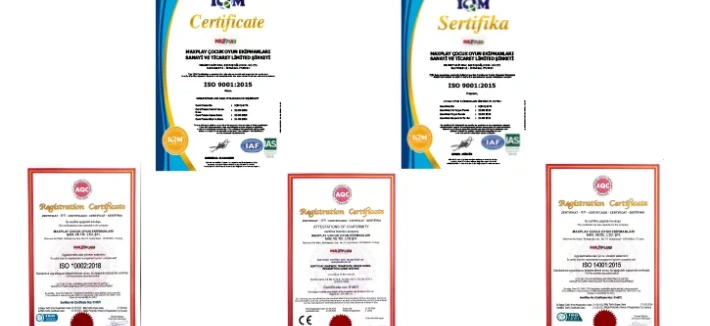
Every project is engineered around the client’s commercial objectives rather than standard product dimensions. Whether developing a shopping mall attraction, a family entertainment centre, a hotel children’s club, or a large leisure destination, MaxPlay designs fully customised environments that optimise visitor flow, operational efficiency, and long-term return on investment. Its portfolio includes premium indoor playground equipment manufacturers solutions, soft play equipment wholesale production, advanced trampoline park manufacturer systems, modular climbing structures, themed play environments, sensory attractions, and interactive entertainment concepts—all manufactured using high-quality, child-safe materials and certified production processes.
With competitive pricing that successfully competes against suppliers from China and other international markets, significantly faster delivery to Europe, free project planning, bespoke engineering, and reliable logistics from Turkey, MaxPlay provides an efficient path from concept to opening day without compromising quality or safety. If you are planning a new commercial entertainment investment in Czechia, now is the ideal time to discuss your project with our engineering team.