






Turnkey Indoor Playground Projects in Ireland: What You Should Know
Ireland has witnessed a steady transformation in the leisure industry over the past decade. As weather conditions limit outdoor activities for a significant part of the year, investors have increasingly focused on Turnkey Indoor Playground Projects in Ireland as a sustainable and year-round business model. Modern families no longer seek only a place where children can play; they expect an environment that combines physical activity, imagination, safety, social interaction, and comfort. This shift has encouraged developers, shopping centres, hospitality groups, and entrepreneurs to invest in commercial indoor entertainment facilities designed for long-term profitability rather than seasonal demand.
As MaxPlay Playground Equipment, we provide professional solutions for indoor playgrounds and soft play areas. We design, manufacture, install, and assemble indoor playground equipment and soft play systems for commercial spaces. Contact us for turnkey indoor playground projects.
| Landline: | 0216 377 10 88 |
| Mobile / WhatsApp: | 0532 069 53 17 |
| E-Mail: | info@maxplay.com.tr |
| Address: | Google Maps |
You can contact us for all your projects across Türkiye and international markets.
Our Services:
- Trampoline Manufacturing – Trampoline Park Installation
- Ball Pit Manufacturing – Ball Pit Playground Installations (with slides, etc.)
- Interactive Play Systems (Moving Soft Play Toys & Equipment)
- Sand Pit – Sand Play Areas
- Playgrounds and Role-Play Houses for Kindergartens & Nurseries
- Indoor playgrounds for businesses such as shopping malls, cafés, restaurants, etc.
- And all customized playground projects tailored to your specific needs.
Unlike traditional playground purchases, today’s commercial projects require a complete development process that begins with concept planning and continues through engineering, manufacturing, logistics, installation, and operational optimisation. Businesses that approach indoor entertainment as a professionally engineered investment rather than simply purchasing equipment generally achieve stronger customer retention, higher operational efficiency, and a faster return on investment. Selecting the right indoor playground supplier at the beginning of the project often determines the long-term success of the venue.
Understanding Ireland’s Growing Demand for Indoor Family Entertainment Venues
Ireland’s expanding population of young families, combined with unpredictable weather patterns, has created a strong demand for modern indoor recreation. Parents increasingly look for destinations where children can remain physically active throughout the year while enjoying safe and engaging experiences. This has accelerated investment in indoor family entertainment Ireland, particularly in shopping centres, mixed-use developments, hotels, holiday resorts, and independent FEC development projects.
One of the most noticeable trends in recent years is the evolution of children’s entertainment from simple play areas into destination-based experiences. Today’s successful venues combine active play, educational interaction, sensory activities, themed environments, cafés, birthday facilities, and family relaxation spaces. Investors entering the children’s leisure market are no longer competing only with neighbouring play centres; they are competing against cinemas, digital entertainment, trampoline venues, and other leisure attractions that continuously evolve with consumer expectations.
In practice, one of the most common situations encountered during project planning is underestimating visitor behaviour. Families rarely choose venues solely because of equipment size. Instead, they value comfort, cleanliness, intuitive layouts, age separation, visibility for parents, and engaging activities that encourage repeat visits. Businesses that recognise these behavioural patterns during the design phase generally outperform competitors that focus only on adding more equipment. As a result, commercial recreation investment today depends as much on strategic planning as it does on equipment selection, especially when creating weather-proof play centres capable of attracting visitors throughout every season.
Why Turnkey Playground Projects Reduce Risk for New Investors?
Launching a commercial indoor playground involves far more than purchasing equipment. Investors must coordinate architectural planning, structural engineering, safety compliance, manufacturing schedules, international logistics, installation sequencing, and operational preparation. When these responsibilities are divided among multiple contractors, communication gaps often lead to delays, budget overruns, incompatible components, and costly redesigns. This is why experienced investors increasingly favour turnkey playground solutions that consolidate every phase into a single, coordinated workflow.
A professional design-to-installation approach begins long before production starts. Visitor capacity, emergency exits, ceiling height, structural columns, fire regulations, maintenance access, visibility lines for parents, and future expansion possibilities should all influence the initial design. In real projects, one of the most frequently overlooked issues is leaving insufficient circulation space around popular attractions. Congestion around entrances, slides, cafés, or birthday rooms may reduce customer satisfaction even when the equipment itself is of excellent quality. Addressing these operational factors during project planning prevents expensive modifications after opening.
Another advantage of the single supplier model is accountability. Rather than coordinating independent designers, manufacturers, freight companies, and installers, investors work with one experienced partner responsible for the entire commercial playground development process. This creates better cost control, faster decision-making, fewer technical conflicts, and a smoother transition from concept approval to opening day. Instead of solving problems between different contractors, project owners can focus on preparing marketing campaigns, staffing, operational procedures, and customer experience before launch.
Why Irish Businesses Source Commercial Playground Equipment from Turkey
Turkey has become one of Europe’s strongest manufacturing hubs for commercial indoor entertainment systems thanks to its combination of advanced production capabilities, engineering expertise, competitive pricing, and efficient export infrastructure. Many Irish developers now choose a Turkish playground manufacturer not simply because of purchase cost, but because they gain access to customised engineering, flexible production, shorter lead times, and comprehensive project support throughout the development process.
Compared with suppliers located in distant Asian markets, Turkish manufacturers offer significant logistical advantages. Faster transport routes into Europe reduce shipping times, simplify customs procedures, and minimise the risks associated with long international supply chains. In commercial developments where construction schedules are tightly coordinated, reliable delivery often has greater financial value than obtaining the absolute lowest purchase price. Delays in equipment arrival can postpone opening dates and directly impact projected revenue.
In practice, developers also appreciate the flexibility that comes with factory-direct production. Rather than selecting fixed catalogue models, commercial projects frequently require adjustments to dimensions, colour palettes, branding elements, visitor capacity, or themed environments. Manufacturers with extensive export experience can integrate these requirements into production while maintaining European quality expectations. Combined with a well-established European supply chain, this approach enables investors to benefit from cost-efficient manufacturing without compromising durability, engineering precision, certified production standards, or long-term operational performance.
MaxPlay Playground Equipment Overview
| Equipment Name | Description | Key Benefits |
| Ball Pool | Colorful pit filled with balls for safe sensory play. | Safe fun for toddlers, easy to clean, encourages motor skills. |
| Trampoline | High-quality indoor trampolines. | Builds balance and strength, child-safe design, durable materials. |
| Interactive Game Sets | Digital and physical interactive play stations. | Boosts learning, cognitive skills, and engagement. |
| Profession Houses | Role-play houses designed for kids. | Encourages creativity, social interaction, and imagination. |
| Trampoline Park | Large-scale trampoline structures. | Suitable for older kids, high durability, safe design. |
| Roller Slide | Conveyor-style (roller) slides for continuous fun. | Efficient design, fun motion play, safe structure. |
| Tower Slide | Tower slides designed for adventure play. | Exciting design, strong safety standards, eye-catching feature. |
| Climbing Wall | Indoor climbing walls. | Builds strength and coordination, safe grips, customizable difficulty levels. |
| Volcano Slide | Volcano-shaped slides with climbing and sliding features. | Combines climbing and sliding, unique design, fun for multiple age groups. |
Choosing the Right Indoor Attractions for Different Business Models
Selecting attractions should never begin with product catalogues; it should begin with understanding the business model. A shopping mall family entertainment centre, a hotel kids’ club, a destination leisure venue, and a standalone activity centre all serve different customer groups and generate revenue in different ways. The most successful projects create a balanced attraction mix that matches visitor demographics, expected dwell time, operational capacity, and available floor space instead of simply installing the largest possible play structure.
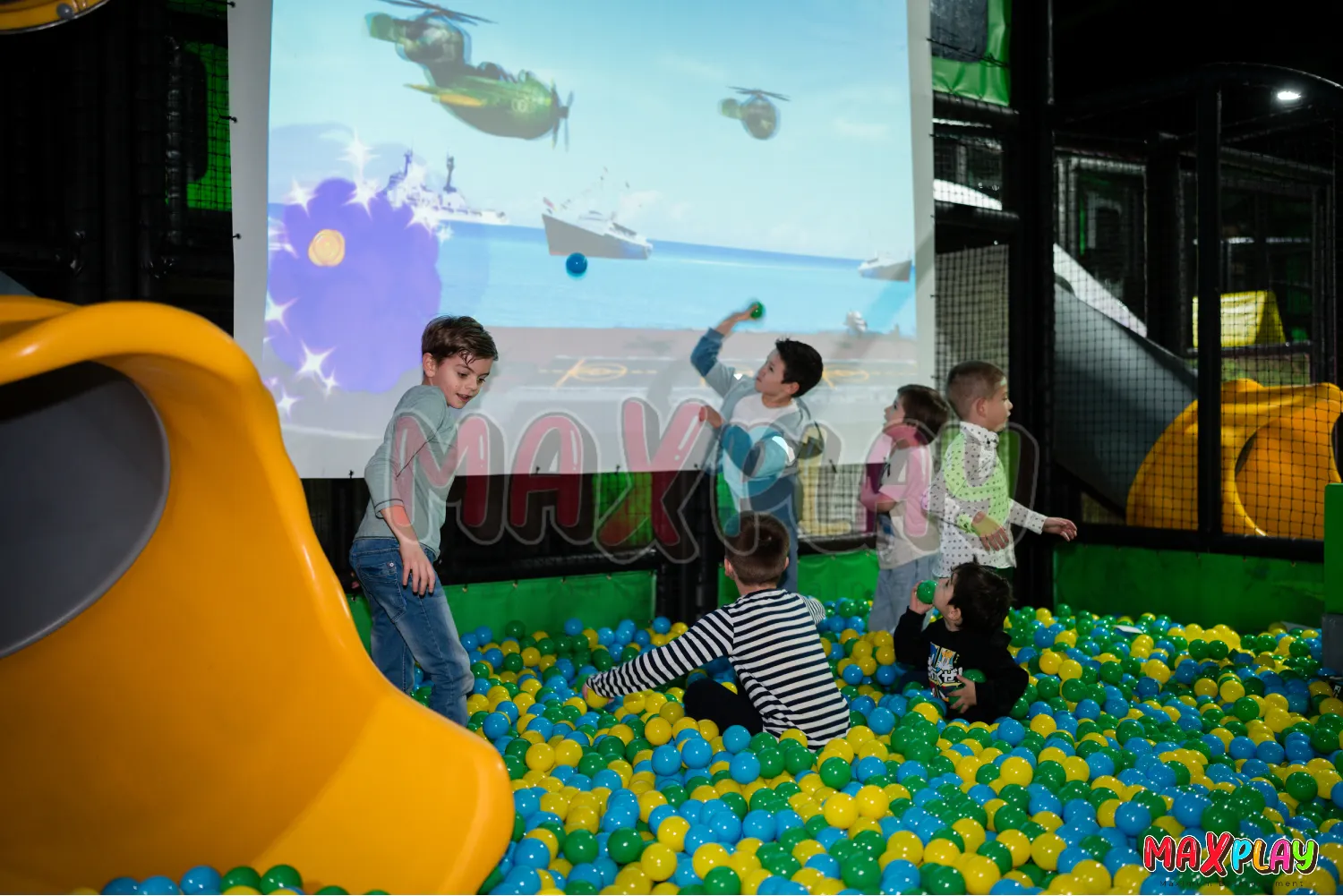
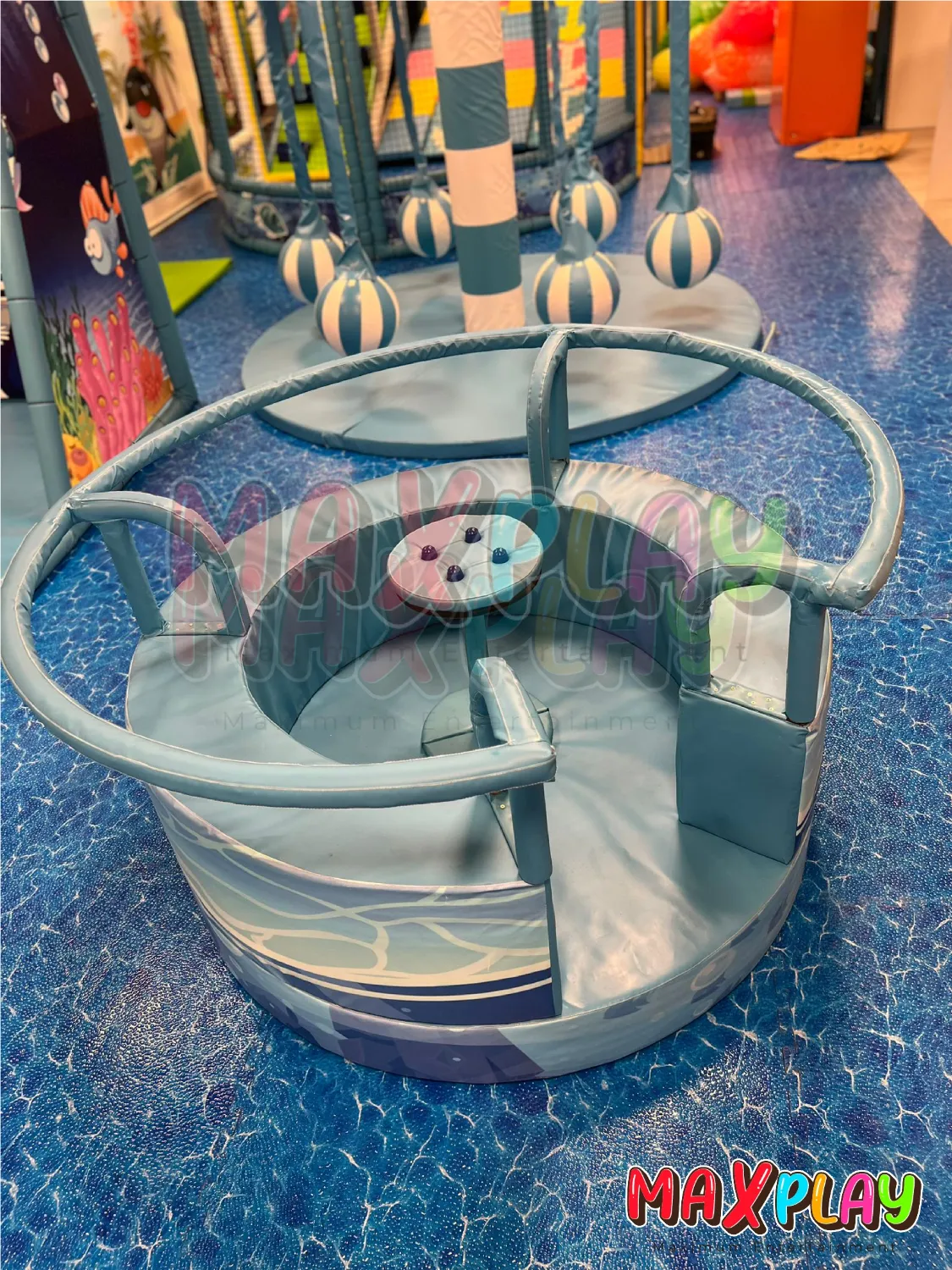
For venues focused on families with younger children, soft play systems remain the foundation of commercial indoor entertainment. Multi-level play structures, crawl tunnels, obstacle elements, interactive panels, and ball pool areas encourage free exploration while maintaining excellent visibility for parents. Businesses targeting a broader age range often combine these attractions with toddler play areas that are physically separated from older children’s activities. This zoning improves safety, reduces congestion, and creates a more comfortable experience for families with children of different ages.
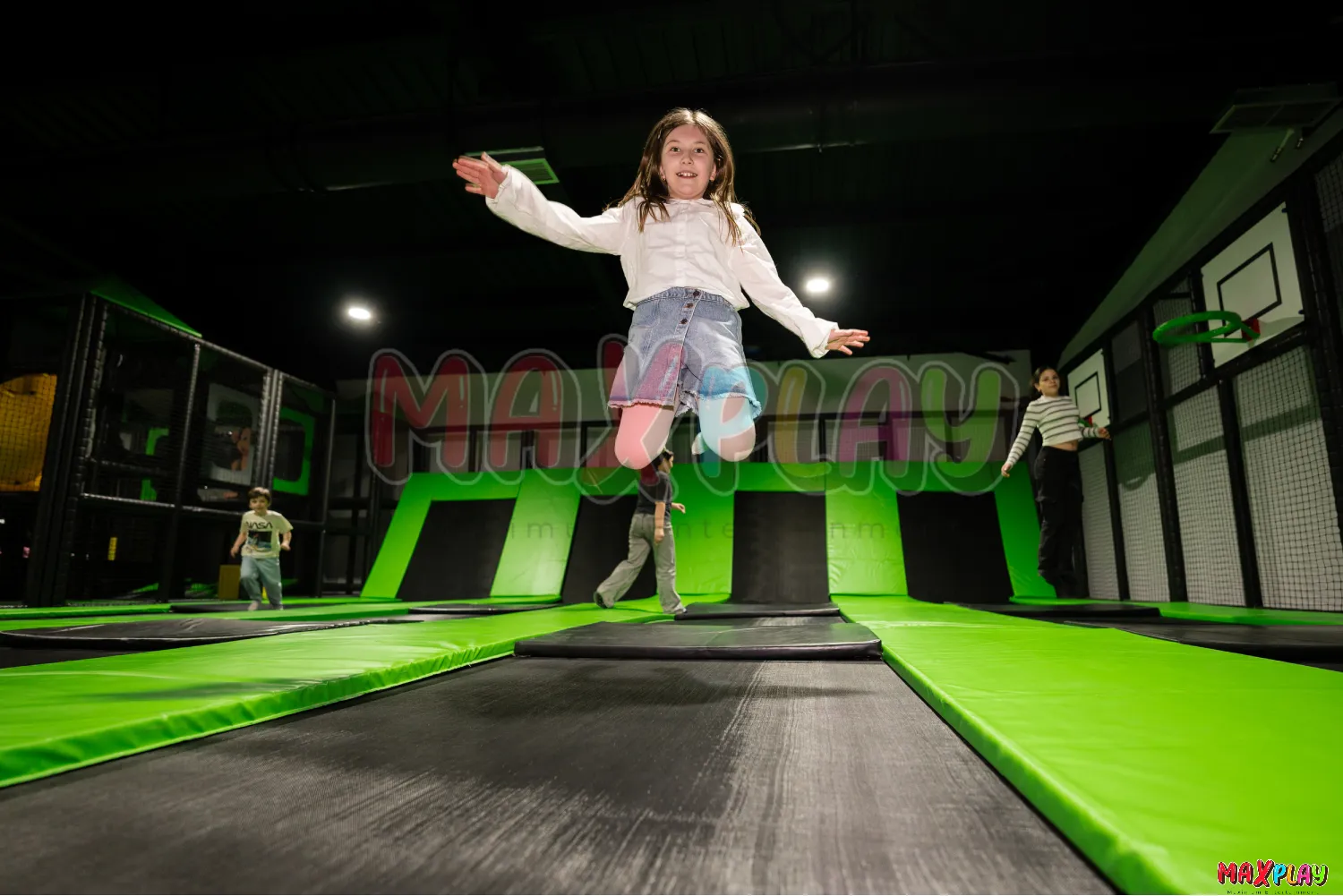
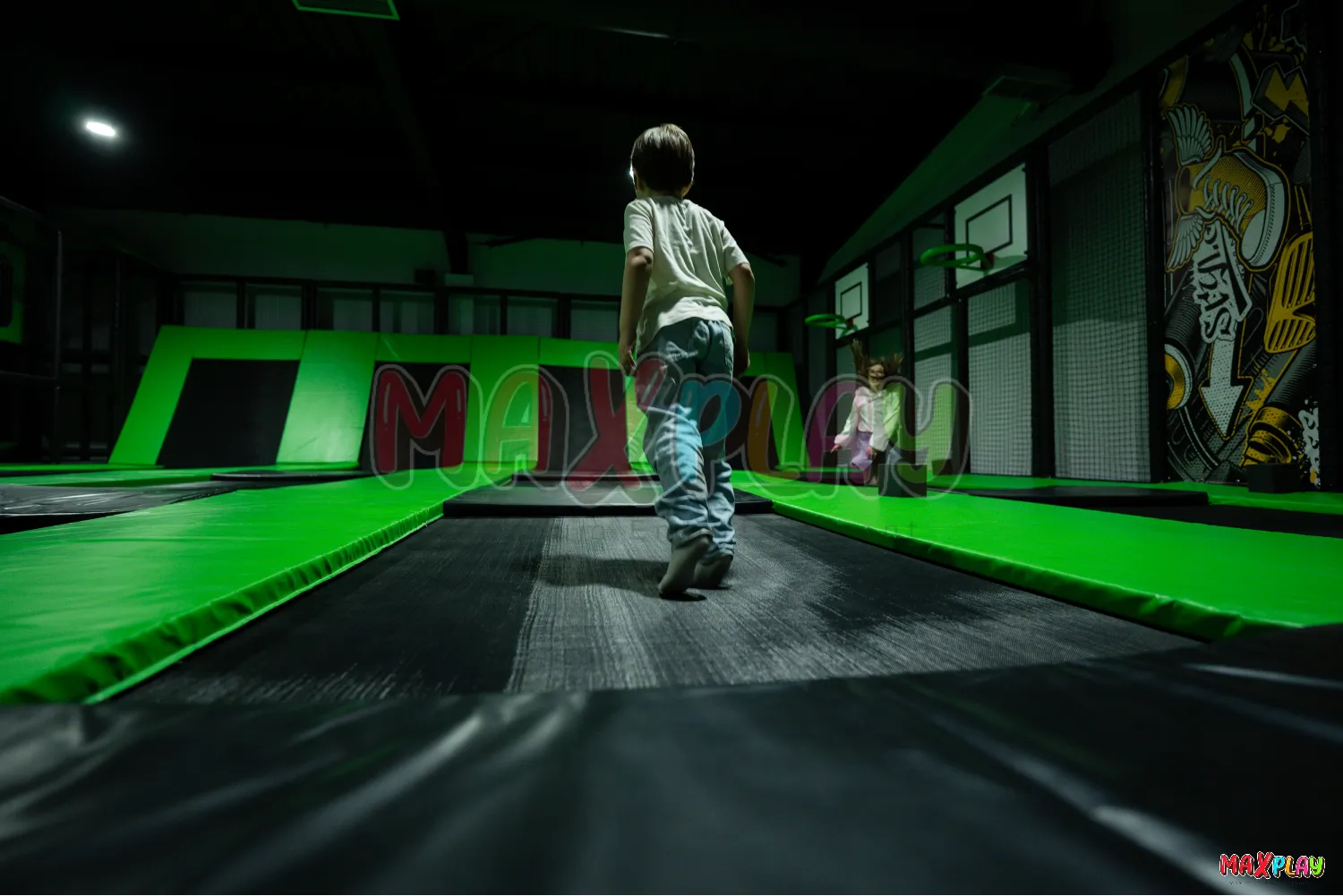
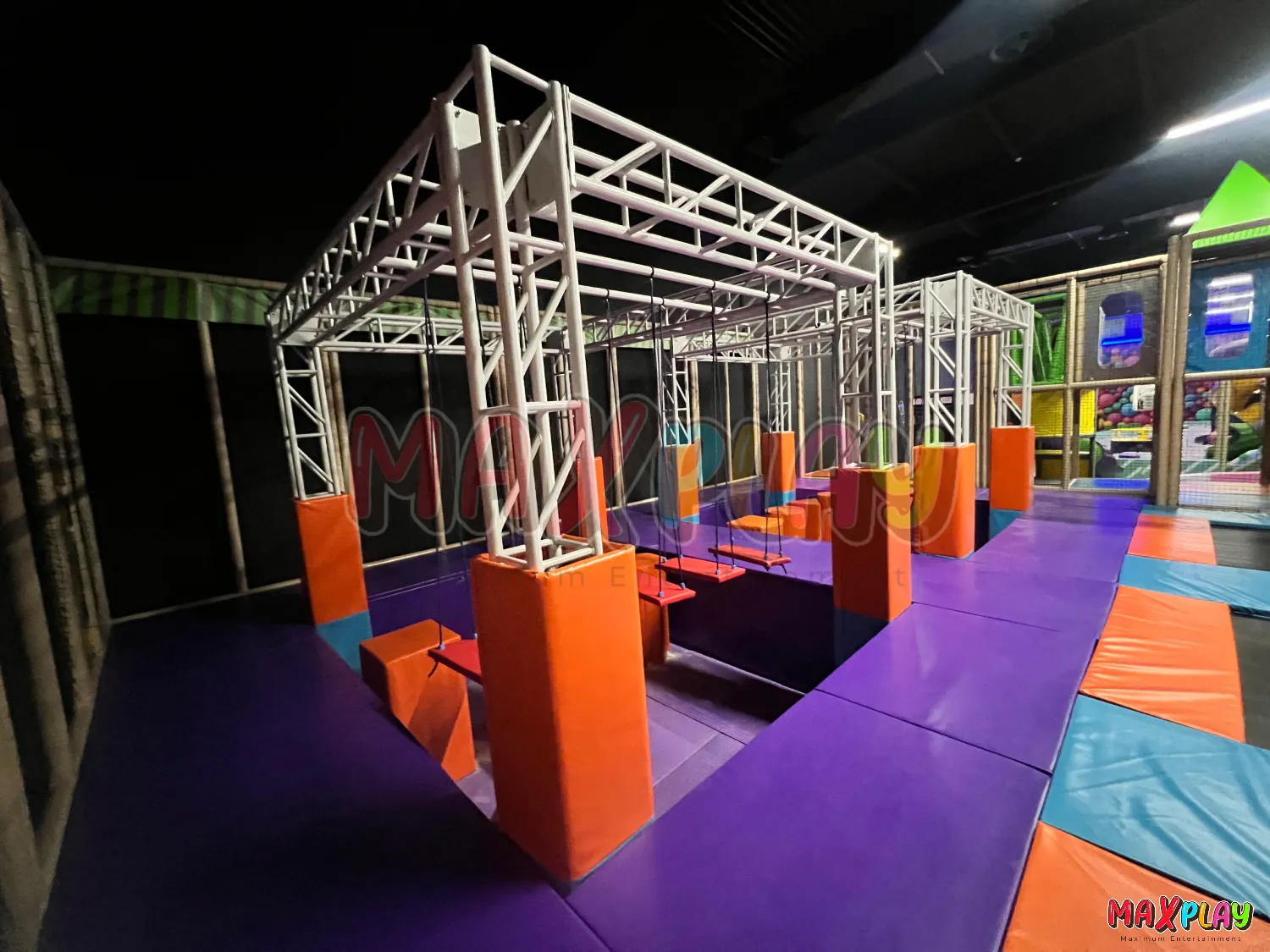
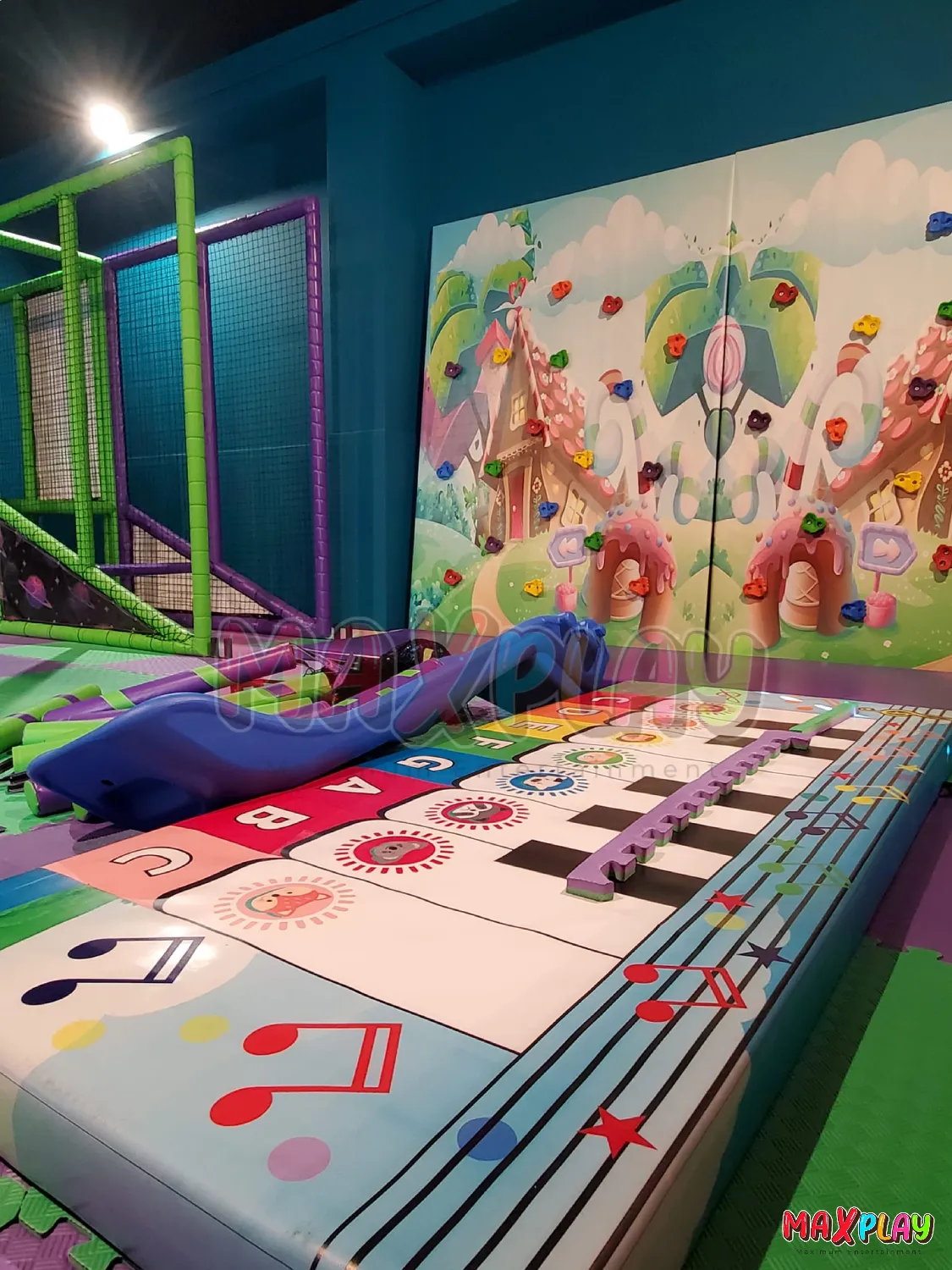
Facilities seeking higher visitor spending and longer average stay often integrate more physically demanding attractions. Trampoline parks appeal to older children and teenagers looking for energetic activities, while a professionally designed ninja course introduces challenge-based play that encourages repeat visits. Vertical attractions such as climbing walls utilise ceiling height efficiently without requiring a large floor footprint, making them especially valuable in urban commercial properties where space is limited. Modern venues also increasingly include interactive games that combine movement with digital technology, allowing operators to refresh gameplay without replacing major equipment.
One of the most effective ways to differentiate a venue is through signature attractions that become instantly recognisable in marketing campaigns. Features such as volcano slides, spiral slides, themed climbing towers, or immersive role-play environments create memorable experiences that encourage social media sharing and word-of-mouth promotion. In practical operation, these landmark attractions often become the visual identity of the venue, helping businesses build stronger brand recognition while increasing repeat visitation.
Custom Playground Design That Matches Your Available Floor Space
No two commercial properties present the same design challenges. Ceiling heights, support columns, emergency exits, HVAC systems, mezzanine levels, and structural limitations all influence how an indoor playground should be planned. For this reason, experienced manufacturers rarely recommend standard layouts. Instead, they begin with bespoke play area planning, where every square metre is analysed to maximise both visitor experience and operational efficiency.
Professional CAD playground design allows engineers to evaluate circulation routes, equipment positioning, evacuation paths, maintenance access, and customer flow before manufacturing begins. During real-world implementation, one of the most common issues encountered is discovering structural conflicts after production has already started. Early digital planning eliminates these risks by allowing architects, engineers, and investors to review the complete project before any materials enter production. This reduces costly revisions while ensuring every attraction integrates seamlessly into the available space.
Effective space optimisation is not about filling every corner with equipment. It involves creating a natural visitor journey where children move comfortably between activity zones while parents maintain clear sightlines from seating areas. Strategic placement of cafés, birthday rooms, waiting lounges, and circulation corridors improves customer comfort without reducing play value. Multi-functional layouts also simplify supervision, cleaning, and daily operations, contributing to lower operating costs over time.
Commercial venues increasingly choose themed playground concepts because they create stronger emotional engagement than generic play environments. Whether inspired by forests, oceans, space exploration, castles, or adventure landscapes, themed projects transform equipment into an immersive experience rather than a collection of individual attractions. Combined with intelligently designed multi-level structures, thematic planning helps maximise vertical space, increases play capacity, and creates visually distinctive destinations that remain attractive for many years without appearing outdated.
European Safety Standards Every Indoor Playground Should Meet
Safety is one of the first factors investors should evaluate when comparing commercial playground manufacturers. A visually attractive playground may generate interest during the first visit, but long-term success depends on consistent operational safety, structural reliability, and compliance with recognised European standards. For operators, certified equipment also reduces liability risks, simplifies insurance processes, and provides greater confidence when working with shopping centres, hotels, municipalities, and educational institutions.
Among the most important technical references are EN 1176 and EN 13219, which establish requirements for playground safety, structural performance, impact protection, access systems, and operational durability. These standards influence everything from platform spacing and protective barriers to climbing elements, slide integration, and fall protection. A professionally engineered project incorporates these requirements from the earliest design stage rather than attempting to adapt them after manufacturing has begun.
In practical applications, one of the most common mistakes is assuming that certification applies only to the finished product. In reality, safety is determined by the entire production process, including engineering calculations, raw material selection, welding quality, fastening systems, protective padding, and installation accuracy. Even premium components can perform poorly if they are assembled incorrectly or installed without proper supervision. This is why experienced commercial manufacturers integrate quality control throughout every production stage instead of treating compliance as a final inspection step.
High-quality projects also rely on CE certified playground production principles, using fire-retardant materials, commercial-grade PVC vinyl, high-density impact-absorbing foam, reinforced steel structures, and durable protective netting that withstand continuous public use. Health-safe materials, easy-to-clean surfaces, and hygienic finishes are equally important for facilities welcoming thousands of visitors each month. For operators, investing in commercial playground safety from the beginning not only protects visitors but also reduces maintenance costs, extends equipment lifespan, and supports a stronger business reputation.
From Manufacturing to Installation: How International Projects Are Delivered
The success of an international playground project depends not only on manufacturing quality but also on effective coordination throughout the entire delivery process. Commercial indoor entertainment systems consist of hundreds or even thousands of individual components that must arrive in sequence, fit together precisely, and be installed according to engineering specifications. Managing these stages requires detailed planning long before production is completed.
Professional manufacturers prepare comprehensive production schedules that align with construction milestones, ensuring equipment is ready when the building itself reaches the installation phase. Every shipment is organised using specialised export packaging designed to protect structural steel, slides, soft play components, safety nets, foam elements, and decorative panels during long-distance transportation. Proper packaging significantly reduces the likelihood of damage, missing parts, or costly installation delays after arrival.
Efficient shipping logistics have become one of Turkey’s strongest competitive advantages for European projects. Compared with longer intercontinental supply routes, transportation from Turkey enables considerably shorter lead times and more predictable delivery schedules. For Irish investors, this means greater flexibility when coordinating contractors, preparing marketing campaigns, recruiting staff, and scheduling opening dates. Faster logistics often translate directly into earlier revenue generation, making delivery reliability as important as manufacturing quality itself.
Real-world experience shows that successful international projects rarely depend on equipment alone. Continuous project management, technical documentation, installation manuals, engineering support, and installation supervision ensure that every structural connection, safety element, and operational detail is implemented exactly as designed. This integrated approach allows complex indoor entertainment facilities to open smoothly while maintaining consistent quality standards across every stage of the project, from factory production in Turkey to final commissioning in Ireland.
Maximising ROI Through Smart Playground Planning
A successful indoor playground is measured by far more than the number of visitors it attracts during its opening months. Sustainable profitability depends on how efficiently the space operates over many years. The highest-performing venues are designed around visitor behaviour, operational costs, maintenance efficiency, and long-term adaptability rather than simply installing the largest play structure available. Effective revenue optimisation begins during the planning stage, where every design decision influences future financial performance.
One of the most overlooked factors in commercial entertainment projects is customer circulation. In practice, operators often discover that bottlenecks near entrances, cafés, birthday rooms, or popular attractions reduce visitor satisfaction and limit the venue’s capacity during peak periods. Strategic zoning distributes visitors naturally across the facility, encouraging families to explore multiple activity areas instead of gathering around a single attraction. This balanced flow increases average visit duration, supports additional food and beverage sales, and strengthens overall operational efficiency.
Another key consideration is balancing attractions for different age groups. A venue designed exclusively for toddlers limits its potential audience, while facilities targeting only older children may struggle to attract families with younger siblings. Combining active challenges, imaginative role-play, sensory experiences, and age-specific play zones creates broader market appeal. This diversity improves customer retention, as families are more likely to return when every child finds activities suited to their developmental stage.
Operators should also think beyond admission fees when evaluating profitability. Birthday celebrations, school visits, seasonal events, memberships, café revenue, branded merchandise, and corporate family days all contribute to a healthier family entertainment business. The greatest play value is achieved when attractions encourage repeat visits rather than delivering a one-time experience. Well-planned commercial playgrounds become community destinations where families return regularly, creating predictable revenue and improving long-term investment performance.
Materials and Engineering That Extend Equipment Lifespan
Commercial playground equipment operates under continuous daily use, making engineering quality just as important as visual design. Unlike residential play products, professional indoor entertainment systems must withstand thousands of users every month while maintaining structural integrity, appearance, and safety. Durable construction reduces maintenance interruptions, protects the operator’s investment, and ensures a consistent visitor experience throughout the equipment’s lifecycle.
A strong foundation begins with a heavy-duty steel frame engineered specifically for commercial environments. Structural calculations determine load distribution across elevated platforms, bridges, climbing elements, and large slide systems, ensuring stability even during peak visitor capacity. In practical operation, inadequate structural engineering often becomes evident only after years of intensive use. Choosing a professionally engineered framework significantly reduces long-term repair requirements while providing greater operational confidence.
Impact protection is equally important. High-quality systems use high-density foam to cushion contact points while maintaining its shape under repeated compression. Combined with premium PVC vinyl, these protective surfaces resist tearing, fading, moisture, and intensive cleaning procedures. Health-safe, easy-to-sanitise materials have become increasingly important for modern indoor leisure venues, particularly those welcoming young children every day. Fire-retardant coverings and certified materials further enhance safety while supporting compliance with European commercial standards.
The longevity of a playground is ultimately determined by the quality of its durable playground components rather than its appearance on installation day. Precision-manufactured connectors, reinforced net systems, corrosion-resistant hardware, commercial-grade fasteners, modular platforms, and engineered slide integrations all contribute to extended service life. Businesses investing in commercial-grade materials benefit from lower maintenance costs, fewer operational interruptions, and equipment that continues to perform reliably even after years of intensive public use.
After-Sales Support Matters More Than Initial Purchase Price
When comparing commercial playground proposals, many investors naturally focus on the initial purchase price. However, experienced operators know that the real cost of ownership extends far beyond installation. An indoor entertainment venue is expected to operate continuously for many years, making reliable after-sales service one of the most valuable factors when selecting a manufacturing partner. A slightly lower purchase price can quickly lose its advantage if replacement components are difficult to obtain or technical assistance is unavailable when operational issues arise.
In real-world operation, one of the most common situations occurs after several years of intensive use. High-traffic attractions may require scheduled component replacement, padding upgrades, net renewal, or additional play elements to keep the venue fresh. A manufacturer capable of supplying original spare parts ensures compatibility, maintains safety standards, and minimises downtime. Operators avoid the risks associated with adapting third-party components that may not match the original engineering specifications.
A structured maintenance planning programme also plays a major role in extending equipment life. Preventive inspections, scheduled servicing, fastening checks, foam evaluations, slide inspections, and safety audits help identify wear before it develops into operational problems. This proactive approach reduces unexpected repair costs while protecting visitor safety and preserving the professional appearance of the facility throughout its operational lifecycle.
Equally important is responsive technical support backed by a meaningful warranty. International projects require clear communication, engineering documentation, installation guidance, and ongoing assistance whenever expansion or refurbishment is planned. Rather than viewing the transaction as a one-time equipment sale, experienced commercial manufacturers build a long-term partnership, supporting operators throughout the life of the project as visitor expectations, business strategies, and operational requirements continue to evolve.
Common Mistakes to Avoid When Launching an Indoor Playground Business
Many indoor playground businesses struggle not because of insufficient demand, but because critical planning decisions were overlooked before construction began. The most expensive mistakes are rarely visible during installation; they usually emerge months later when visitor numbers increase and operational challenges become more apparent. Careful planning during the early stages helps avoid costly redesigns and creates a stronger foundation for long-term commercial success.
One of the most frequent issues is poor layout planning. Some facilities prioritise fitting the maximum amount of equipment into the available space without considering customer movement, supervision, emergency access, or waiting areas for parents. The result is congestion, reduced comfort, and inefficient visitor circulation during busy periods. Well-designed facilities balance attraction density with open circulation zones, creating a more enjoyable experience while simplifying daily operations for staff.
Another common challenge involves incorrect capacity calculation. Overestimating visitor capacity can create safety concerns and operational pressure, while underestimating demand may lead to overcrowding and missed revenue opportunities. Capacity planning should consider attraction popularity, age distribution, average visit duration, birthday parties, school groups, café occupancy, and peak seasonal demand rather than relying solely on floor area calculations.
Businesses should also avoid making equipment selection decisions based exclusively on current trends. While signature attractions can generate strong initial interest, they should always complement the venue’s overall concept rather than dominate it. Investors who consider future expansion during the initial design phase gain greater flexibility to introduce new attractions as customer preferences evolve. Integrating expansion possibilities into the original operational planning allows businesses to grow without major structural alterations, protecting both the initial investment and the venue’s long-term competitiveness.
Why MaxPlay Is the Trusted Partner for Turnkey Indoor Playground Projects Across Europe
Developing a successful indoor entertainment venue requires much more than manufacturing quality equipment. It demands strategic planning, engineering expertise, commercial understanding, and the ability to coordinate every stage of an international project with precision. As a Turkish indoor playground manufacturer, MaxPlay delivers fully integrated solutions that combine concept development, engineering, production, logistics, installation, and post-project support into one streamlined process. Rather than supplying standard products, every project is tailored to the operational goals, visitor profile, available floor space, and commercial vision of each client.
MaxPlay designs and manufactures a wide range of commercial attractions, including indoor play set solutions, indoor soft playground equipment, interactive playground equipment, trampoline park equipment, ball pool systems, toddler zones, climbing structures, role-play areas, themed environments, and multi-level adventure courses. Every project benefits from dedicated custom engineering, free project planning, advanced CAD layouts, certified manufacturing processes, premium commercial materials, and strict quality control throughout production. Fast shipping from Turkey to Europe provides a significant logistical advantage, allowing Irish investors to receive high-quality equipment within shorter lead times than many overseas alternatives while remaining highly competitive against suppliers from China and other global manufacturing markets.
From the initial concept to final installation, MaxPlay acts as a complete commercial playground supplier, delivering true turnkey solutions supported by experienced project management and international installation expertise. If you are planning a new Family Entertainment Centre, hotel play area, shopping centre attraction, or commercial indoor leisure project in Ireland, our engineering team is ready to prepare your project at no cost.