





Interactive Indoor Playground Equipment in Germany: Enhancing Engagement for Kids
The commercial leisure and family entertainment sector across Western Europe is undergoing a fundamental structural transformation. In a market where digital engagement frequently competes with physical recreation, commercial operators require play environments that bridge screen-based immersion with tactile, kinesthetic activity. High-specification interactive indoor playground equipment in Germany has emerged as a cornerstone investment for venues seeking to increase family dwell time, elevate foot traffic, and maximize per-square-meter revenue. Integrating sensor-driven responsiveness into dynamic architectural structures transforms traditional play spaces into modern operational assets that captivate tech-literate generations.
As MaxPlay Playground Equipment, we provide professional solutions for indoor playgrounds and soft play areas. We design, manufacture, install, and assemble indoor playground equipment and soft play systems for commercial spaces. Contact us for turnkey indoor playground projects.
| Landline: | 0216 377 10 88 |
| Mobile / WhatsApp: | 0532 069 53 17 |
| E-Mail: | info@maxplay.com.tr |
| Address: | Google Maps |
You can contact us for all your projects across Türkiye and international markets.
Our Services:
- Trampoline Manufacturing – Trampoline Park Installation
- Ball Pit Manufacturing – Ball Pit Playground Installations (with slides, etc.)
- Interactive Play Systems (Moving Soft Play Toys & Equipment)
- Sand Pit – Sand Play Areas
- Playgrounds and Role-Play Houses for Kindergartens & Nurseries
- Indoor playgrounds for businesses such as shopping malls, cafés, restaurants, etc.
- And all customized playground projects tailored to your specific needs.
Operating commercial family venues in cities like Berlin, Munich, Hamburg, and Frankfurt requires engineering precision, complete regulatory alignment, and spatial efficiency. Modern European consumers expect dynamic play spaces that challenge children physically while engaging them cognitively. From an engineering and layout perspective, the shift toward digital play elements and responsive spaces is not merely an aesthetic trend; it addresses direct operational metrics. Venues equipped with responsive lighting, projection-mapped arenas, and gamified climbing units consistently record longer customer visits, higher recurring weekend footfall, and superior secondary spend in adjacent food and beverage operations.
In operational reality, the technical integration of responsive hardware into physical attractions requires dedicated planning. Installing electronic sensors, dynamic projection arrays, and interactive touch points inside high-impact play zones demands commercial-grade materials that withstand thousands of operational hours each year. Selecting an experienced indoor playground supplier capable of manufacturing structurally certified, mechanically isolated, and electronically integrated systems is what differentiates a high-performing entertainment venue from one plagued by maintenance downtime and operational friction.

How Interactive Play Equipment Supports Children’s Physical and Cognitive Development
Children’s play behavior has shifted toward hybrid activities that blend physical feedback with visual stimulation. When children interact with gamified walls, responsive target systems, and dynamic agility circuits, they do not simply burn energy; they engage in real-time problem-solving under active physical movement. Integrating technology into physical spaces fosters holistic physical and cognitive development, challenging fine and gross motor skills, spatial awareness, and strategic thinking simultaneously.
When implementing these installations, structural layout directly dictates physiological engagement. Agility grids that illuminate randomized pathways force children to calculate foot placement, adjust balance, and sprint toward designated targets within split seconds. This gamified framework prompts rapid decision-making while elevating heart rates far more effectively than static playground apparatus. Children remain engaged longer because the physical environment continuously responds to their personal actions, providing immediate sensory feedback.
From a cognitive psychology perspective, immersive play experiences foster social cooperation and healthy competitive drive. Multi-touch interactive surfaces and cooperative sports walls encourage children of varying capabilities to communicate, coordinate strategies, and achieve shared objectives. Rather than isolating individual users, thoughtfully engineered interactive elements dismantle social hesitation, allowing multi-player environments to stimulate executive brain function, reflex speed, and group problem-solving mechanics in a naturally intuitive setting.
Which Turkish Soft Play Equipment Is Most Popular in Germany?
Across commercial Family Entertainment Centres (FECs), indoor adventure hubs, and modern shopping destinations in Germany, the highest demand focuses on hybrid multi-level soft play structures and modular obstacle courses. German facility operators frequently prioritize high-capacity multi-tier play frames that incorporate integrated tube slides, transparent crawl cylinders, and themed rope bridges. These configurations allow high visitor throughput within limited real estate footprints while maintaining long-term physical resilience against heavy weekend usage.
Beyond standard structural frames, projection-mapped interactive ball pools and sensor-driven agility walls produced in Turkey have gained massive traction among German commercial venues. Modern indoor operators move away from static ball pits, opting instead for integrated systems featuring pneumatic ball shooters, interactive target walls, and acoustic response pads. Combining tactile foam elements with reactive digital gamification captures broader age brackets—from toddlers to pre-teens—directly driving higher dwell times and secondary concession spending.
German leisure investors and hospitality chains also heavily procure custom-tailored toddler discovery zones and modular ninja obstacle courses from Turkish manufacturers. In practical facility deployment, operators value the versatility of Turkish manufacturing lines, which seamlessly blend low-lux sensory elements for early childhood areas with high-thrill, padded competitive tracks for older youths. This comprehensive equipment versatility enables German venues to source diverse, theme-synchronized attractions under a single cohesive layout without managing fractured supplier chains.
MaxPlay Playground Equipment Overview
| Equipment Name | Description | Key Benefits |
| Ball Pool | Colorful pit filled with balls for safe sensory play. | Safe fun for toddlers, easy to clean, encourages motor skills. |
| Trampoline | High-quality indoor trampolines. | Builds balance and strength, child-safe design, durable materials. |
| Interactive Game Sets | Digital and physical interactive play stations. | Boosts learning, cognitive skills, and engagement. |
| Profession Houses | Role-play houses designed for kids. | Encourages creativity, social interaction, and imagination. |
| Trampoline Park | Large-scale trampoline structures. | Suitable for older kids, high durability, safe design. |
| Roller Slide | Conveyor-style (roller) slides for continuous fun. | Efficient design, fun motion play, safe structure. |
| Tower Slide | Tower slides designed for adventure play. | Exciting design, strong safety standards, eye-catching feature. |
| Climbing Wall | Indoor climbing walls. | Builds strength and coordination, safe grips, customizable difficulty levels. |
| Volcano Slide | Volcano-shaped slides with climbing and sliding features. | Combines climbing and sliding, unique design, fun for multiple age groups. |
How Do Turkish Playground Manufacturers Meet European Safety Standards?
Turkish commercial playground producers achieve strict compliance with European safety regulations by engineering every structure directly around the harmonized DIN EN 1176 (parts 1 through 10) and DIN EN 1177 standards. From early CAD layout drafts, structural calculations strictly eliminate head, neck, clothing, and finger entrapment risks through precise spacing metrics. Fall heights, safety run-outs, and impact attenuation zones are structurally isolated and padded according to rigorous Head Injury Criterion (HIC) thresholds required by German safety inspection bodies like TÜV and DEKRA.
Material chemistry and fire safety represent another crucial dimension of European certification compliance. Premium Turkish manufacturers exclusively source raw materials that satisfy European REACH directives, ensuring all high-density PVC coverings, protective vinyl wraps, and rotomolded plastics are completely phthalate-free, non-toxic, and heavy-metal-free. Furthermore, structural foam cores and outer membranes utilize flame-retardant composites certified under DIN 4102-1 B1 or EN 13501-1 flammability classifications, providing the necessary documentation for municipal fire marshal site clearances across Germany.
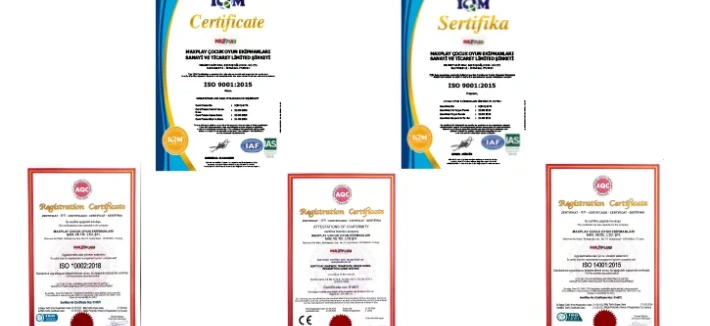
During the factory fabrication and pre-assembly phases, certified structural steel frameworks receive industrial anti-corrosion treatments, while low-voltage DC conduits (12V–24V) are completely isolated within tamper-proof, foam-insulated conduits. Leading Turkish producers conduct comprehensive factory testing and provide complete technical documentation dossiers—including structural static analyses, material test certificates, and step-by-step assembly schematics. This rigorous adherence to certified production workflows guarantees seamless on-site commissioning and effortless compliance sign-offs during local German regulatory inspections.
Interactive Playground Features That Work Well for Different Age Groups
A common operational error in commercial playground design is applying a one-size-fits-all approach across different developmental demographics. Age-stratified zoning prevents cross-age physical collisions and ensures children engage with equipment suited to their biomechanical capabilities. Deploying age-appropriate play equipment ensures toddler zones remain safe and tactile, while junior and teenage zones provide the intense kinetic and digital challenges required to keep older youth engaged.
For the youngest demographic, aged 1 to 3 years, commercial play venues require dedicated toddler play set indoor modules. These areas prioritize gentle sensory exploration over high-velocity movement. Installing low-lux, soft-step LED floor tiles, interactive acoustic soft-foam panels, and low-height sensory walls allows toddlers to understand basic cause-and-effect relationships without overstimulation or fall hazards. These zones must remain mechanically segregated from older traffic flows to ensure child safety and parent comfort.
For children aged 4 to 8, engineering strategies shift toward active agility and collaborative play. At this stage, integrating an interactive ball pool equipped with projection-mapped target systems turns basic ball play into an immersive arcade game where children throw soft balls at moving digital graphics. Combining this with multi-level soft play structures allows kids to navigate physical mazes, scramble over foam obstacles, and conquer interactive climb-points, actively honing coordination and building group communication skills.
For older kids, pre-teens, and family challenges aged 9 and above, the play environment must lean into competitive gamification and exergaming. Operators achieve optimal retention by installing high-intensity interactive sports arenas, augmented climbing walls with dynamic projection routes, and digital reaction timers built directly into vertical obstacle courses. These installations provide older youths with high-thrill, socially shareable experiences that traditional play structures cannot deliver.
Combining Digital Interaction with Active Physical Play
Merging electronics with physical architecture requires balanced industrial engineering. Over-indexing on pure screen interactions reduces physical activity and accelerates hardware fatigue, while under-utilizing technology risks losing the engagement of modern children. The technical solution lies in deploying interactive play systems where digital projection and sensors serve purely as catalysts for physical movement, jumping, balancing, and climbing.
Practical venue experience highlights that hardware durability is the primary technical hurdle when combining digital systems with physical impact. In high-traffic leisure facilities, a standard indoor play set experiences continuous mechanical stress, kinetic impacts, and vibration. Electronic components—such as optical cameras, LiDAR sensors, laser projectors, and touch-activated LED circuits—must be housed inside impact-resistant, dust-sealed, and vibration-damped sub-assemblies to operate continuously without calibration drift or component failure.
When engineered correctly, multisensory playground features generate intuitive interactions that require no complex instructions. Children understand instantly that striking a physical target, running across a projected surface, or tapping an illuminated node alters the game state. This seamless blend of tactile feedback and digital reactivity keeps kinetic engagement high, encouraging children to run, leap, and collaborate for extended play sessions.

Safety, Accessibility, and European Standards for Indoor Play Environments
Engineering indoor play architecture for the German and broader European market requires absolute compliance with harmonized safety codes. The governing framework, EN 1176 (parts 1 through 10) and EN 1177, dictates strict parameters regarding impact attenuation, entrapment hazards, structural stability, and fall zones. Operating without certified hardware creates catastrophic legal liability, voids commercial insurance policies, and exposes operators to immediate site closures by local safety authorities.
Creating child-safe interactive environments begins at the raw material selection stage. All soft coverings must utilize high-density, fire-retardant commercial PVC that is entirely non-toxic and phthalate-free under European REACH regulations. Foam cores must maintain consistent compression deflection ratings over years of continuous load to prevent material bottoming-out, ensuring head impact criteria (HIC) remain safely within certified thresholds across all designated fall zones.
Beyond impact mechanics, all electrical elements integrated into accessible play zones must operate on low-voltage DC lines (12V–24V) with isolated conduits and tamper-proof enclosures. In professional indoor activity centres, accessibility must also encompass inclusive design principles. Play corridors, tactile sensory boards, and interactive ground-level projections must allow seamless access for children of all physical abilities, including wheelchair users, ensuring frictionless operational compliance across the European Union.
Choosing Interactive Playground Systems for German Family Entertainment Centres
Selecting hardware for Family entertainment centres (FECs) in Germany requires balancing initial capital expenditure against lifecycle operating costs and throughput dynamics. German operators manage strict overheads regarding commercial floor leases, staff wages, and regulatory compliance. Consequently, equipment must deliver exceptional hourly visitor capacity while requiring minimal daily staff supervision and routine maintenance.
When evaluating systems, operators should prioritize industrial reliability over consumer-grade electronics repackaged for commercial use. Real-world venue data demonstrates that off-the-shelf consumer sensors fail quickly when exposed to the continuous mechanical vibration, ambient dust, and static electricity inherent to high-traffic play zones. Sourcing certified interactive playground equipment built specifically for commercial durability ensures solid-state electronics, industrial wiring harnesses, and reinforced mounting brackets that maintain operational uptime through peak weekend operational hours.
A comprehensive evaluation must also review content flexibility and software updates. Projection-based and sensor-driven games become stagnant if the software library cannot be refreshed periodically. The most commercially viable interactive systems feature modular game libraries, remote diagnostic access, and configurable difficulty levels. This allows operators to run corporate team-building events on a Friday evening, high-energy birthday parties on a Saturday afternoon, and toddler discovery sessions on a Tuesday morning—maximizing the commercial yield of every square meter.
Why Custom-Designed Play Areas Can Improve Space Utilisation in Germany
Standardized, modular catalog playgrounds rarely optimize commercial floor space efficiently. German real estate, whether in urban shopping centers, converted industrial halls, or dedicated leisure parks, presents complex structural geometries—including load-bearing structural columns, asymmetric ceiling trusses, varying mezzanine heights, and restricted emergency egress corridors. Installing custom indoor play areas allows operators to capture up to 30% more usable play volume compared to rigid modular systems.
Professional space planning leverages 3D spatial scanning to turn architectural constraints into unique play features. A massive concrete support column can become the core of an interactive spiral climbing tree, while dead ceiling clearance above an equipment room can accommodate elevated crawl bridges and aerial transparent tunnels. By engaging an agile engineering team, commercial venues transform awkward spatial footprints into multi-level play journeys that maximize vertical volume and increase overall venue capacity.
Customization also reinforces distinct thematic identity and commercial brand differentiation. Rather than presenting generic primary-color layouts, custom design aligns physical play structures with the architectural style and branding of the venue—whether an industrial-modern theme for an urban FEC or an organic, biophilic scheme for an upscale family resort. Bespoke manufacturing ensures that every slide run, obstacle deck, and interactive station fits the exact demographic needs and footfall strategies of the property.
Sourcing Indoor Playground Equipment from Turkish Manufacturers for the German Market
For German leisure operators, sourcing commercial playground installations from specialized Turkish manufacturers provides a compelling balance of geographic proximity, advanced manufacturing quality, and financial efficiency. Turkey has established itself as an industrial manufacturing hub for the leisure, entertainment, and composite structure industries, pairing deep metalworking and plastics expertise with strict adherence to European production directives.
Partnering directly with established indoor playground equipment manufacturers based in Turkey eliminates the extended supply chain vulnerabilities and language barriers common with distant overseas sourcing. Operating within aligned time zones ensures seamless technical coordination, live video production checks, and rapid collaborative engineering between German project managers and Turkish production teams. This close operational alignment significantly streamlines the transition from concept drafting to factory assembly.
Furthermore, trade agreements between Turkey and the European Union eliminate heavy import customs tariffs via standard A.TR movement certificates. German procurement teams benefit from certified production workflows, European raw material sourcing, and transparent commercial contracts governed by internationally recognized legal standards. This industrial synergy offers German operators a transparent, highly responsive manufacturing partnership directly on Europe’s logistics doorstep.
Cost, Production Quality, and Lead-Time Advantages of Buying from Turkey
When comparing procurement alternatives, the industrial advantages of sourcing from Turkey become distinctly apparent against distant alternatives like East Asian manufacturing or significantly higher-cost domestic Western European suppliers. Commercial leisure facilities operate within strict ROI parameters; excessive capital expenditure on hardware prolongs payback periods, while inferior manufacturing leads to rapid equipment failure and persistent maintenance overhead.
From an economic perspective, Turkish manufacturing delivers competitive cost advantages driven by optimized production overheads and integrated local supply chains for steel, rotomolded polymers, and high-density foam substrates. Unlike low-cost overseas alternatives where price cuts often stem from thinner vinyl walls, substandard foam, or non-certified steel profiles, reputable Turkish producers maintain uncompromising quality standards. They utilize heavy-wall galvanized steel frameworks, commercial-grade plastisol coatings, and certified, fire-rated PVC membranes that easily satisfy German safety inspectors.
Lead-time reliability represents another decisive operational advantage. In the commercial attractions industry, construction delays cause massive financial losses due to missed opening dates and unearned revenue during peak holiday seasons. While ocean freight from Asia routinely requires 5 to 8 weeks—subject to global shipping disruptions, volatile container rates, and port congestion—overland and Ro-Ro shipping from Turkey delivers equipment directly to German job sites in just 5 to 8 business days. This speed gives venue operators absolute schedule certainty and rapid project execution.
From Soft Play to Climbing and Interactive Zones: Equipment Options for German Venues
Modern European leisure spaces require layered, multi-attraction zoning to capture diverse customer segments and maximize revenue potential. A single venue must provide safe exploration for early developmental years alongside high-intensity, thrill-driven physical challenges for older youth. Procuring a cohesive equipment catalog from a single integrated producer ensures structural harmony, synchronized maintenance protocols, and smooth spatial flow throughout the entire facility.
Foundational layouts typically anchor on comprehensive soft playground equipment, including multi-level crawl structures, enclosed spiral tube slides, balance logs, and themed foam obstacle courses. These installations provide high-capacity, durable play that absorbs continuous visitor loads with minimal mechanical wear. Integrating high-volume commercial soft play equipment allows operators to maintain baseline capacity during peak weekend rushes, ensuring safe, self-guided physical play for diverse age groups.
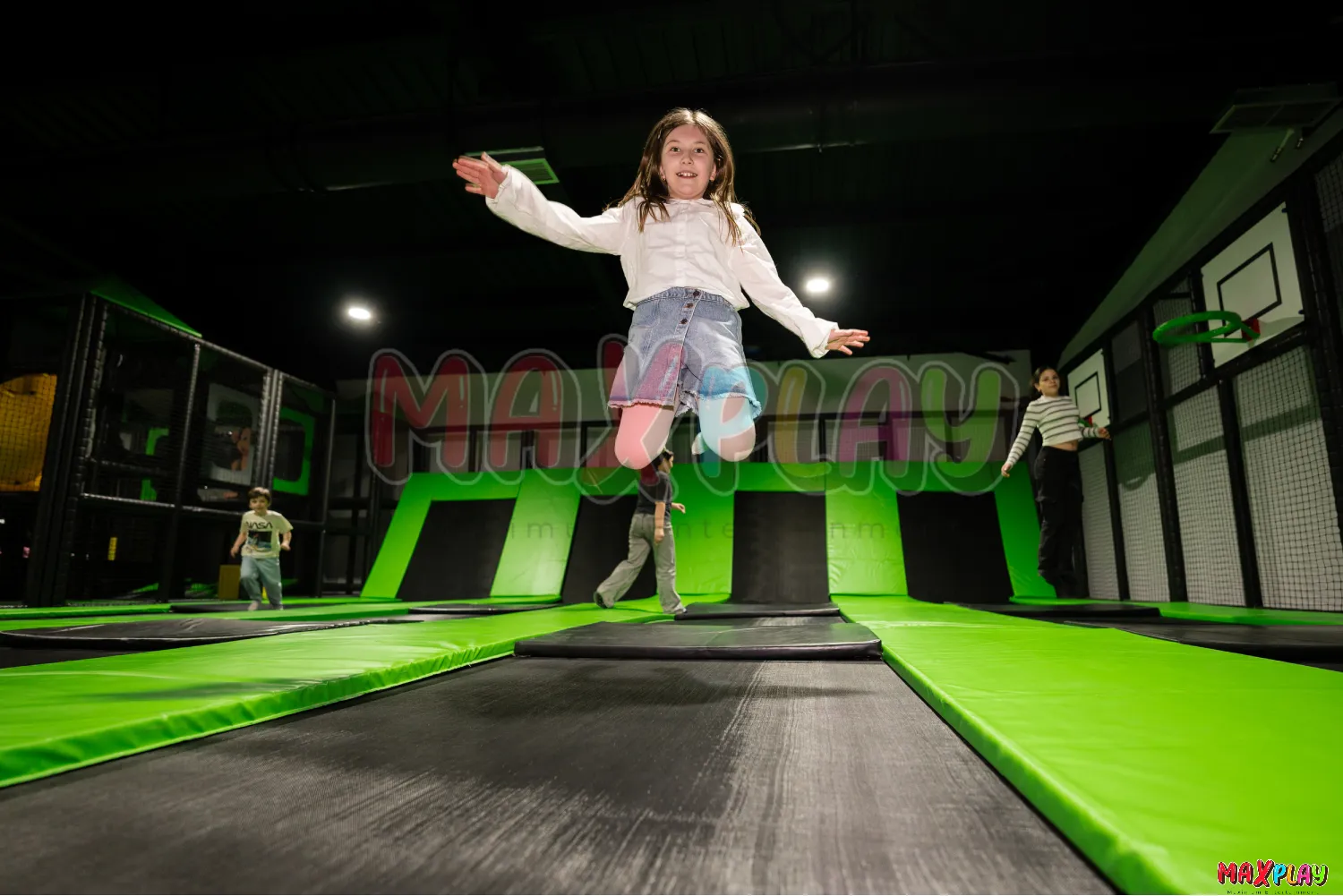
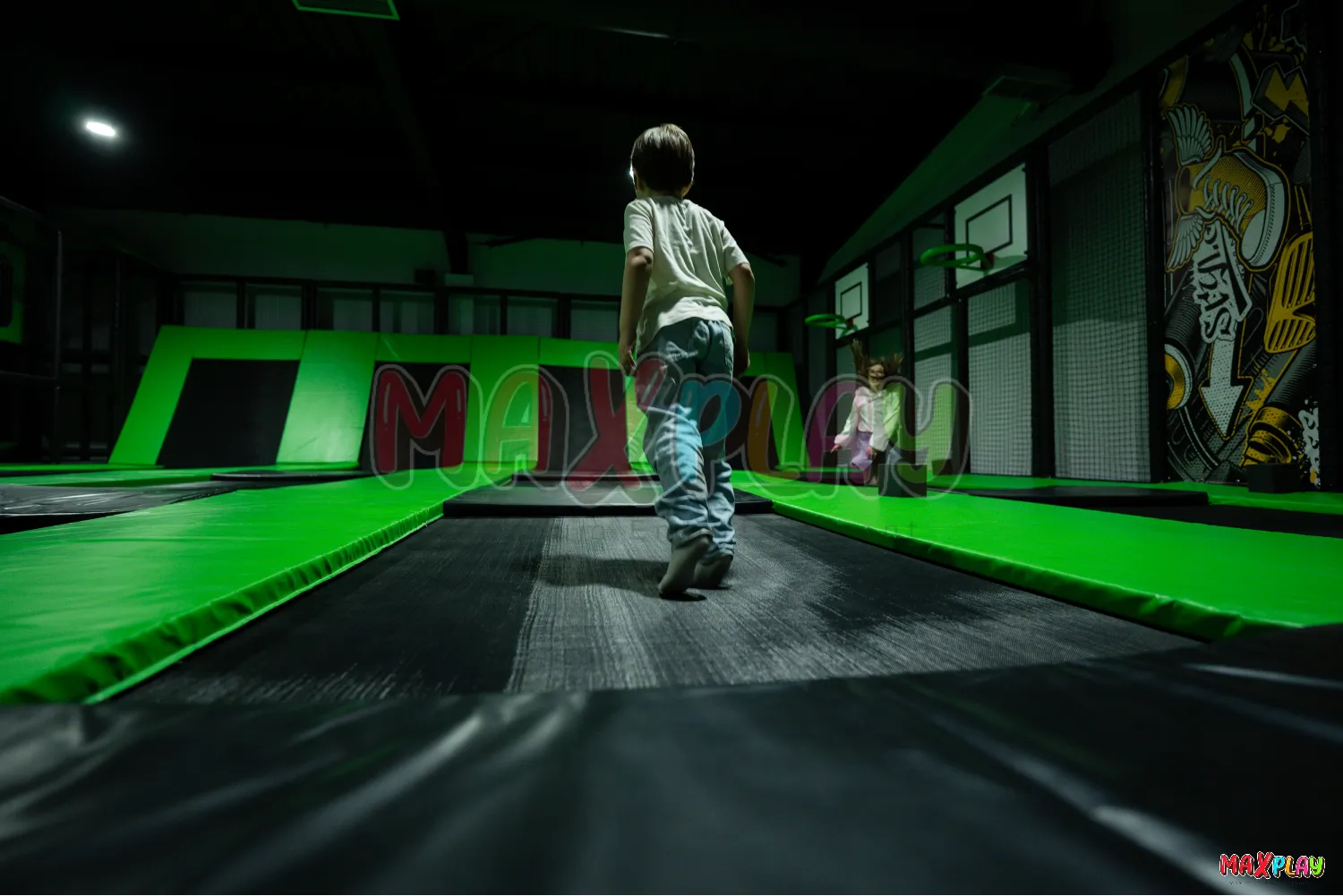
For venues looking to integrate modern active entertainment, incorporating specialized trampoline park equipment manufactured to ASTM and EN 13219 standards expands the facility’s appeal to teenagers and young adults. Designed and installed by an experienced trampoline park manufacturer, high-performance jump arenas—complete with airbag landing zones, tumbling lanes, interactive light-chaser jump walls, and challenging ninja warrior courses—transform standard indoor centers into high-adrenaline sports destinations.
Operators sourcing comprehensive solutions can choose from an extensive range of commercial-grade attractions:
- Modular Multi-Level Soft Play Arenas: Heavy-duty, high-occupancy play structures featuring integrated obstacle corridors, suspended web bridges, drop slides, and transparent aerial viewing cubes.
- Engineered Toddler Sensory Enclosures: Isolated, low-impact zones equipped with soft-foam play shapes, tactile wall puzzles, low-lux illuminated step pads, and micro-slides tailored for early childhood motor development.
- Commercial Ball Pool Systems: Integrated ball recovery, sanitization, and pneumatic ball-transport systems paired with high-impact projection-mapping target screens for active gamified throwing play.
- Active Agility & Exergaming Attractions: Timed ninja obstacle runs, elevated aerial ropes courses with magnetic safety belays, and gamified multi-target reaction boards engineered for competitive group play.
Working directly with established suppliers providing soft play equipment wholesale allows commercial operators to purchase entire multi-zone attraction suites through a single procurement channel. This unified sourcing strategy ensures that all structural connection points, aesthetic themes, safety foam densities, and digital sub-systems interface cleanly without engineering conflicts on site.
Shipping, Installation, and Project Coordination from Turkey to Germany
Executing a complex commercial fit-out across borders requires structured logistics, international site management, and precise schedule coordination. Transporting large-volume, heavy structural equipment from Turkish production facilities to German project sites follows direct European road freight corridors or intermodal Ro-Ro shipping routes. This direct overland transit delivers components straight to venue loading docks without intermediate harbor transshipment, significantly reducing the risk of cargo damage.
On-site installation is carried out by specialized, factory-trained mechanical assembly teams who travel directly to the German venue. These crews manage every facet of physical construction: erecting structural steel grids, tensioning safety nets to precise tolerances, seamless foam-and-vinyl wrapping, and mechanical bolting using calibrated torque specifications. Their deep familiarization with the manufacturing system ensures rapid, error-free assembly that strictly complies with the original static calculations.
Project coordinators manage the entire deployment process, working closely with local German trade contractors, fire marshals, and municipal building inspectors. The installation concludes with comprehensive mechanical load tests, electrical insulation checks, and optical sensor calibration. The project team supplies complete technical documentation—including detailed material data sheets, fire safety certificates, maintenance schedules, and structural calculations—ensuring a smooth, friction-free final sign-off with third-party inspection authorities.
Designing Engaging Indoor Play Spaces for Malls, FECs, Hotels, and Family Venues
Commercial environments require distinct design methodologies tailored to their specific operational models and visitor demographics. An indoor playground installed within a high-traffic shopping mall functions under different commercial objectives than an attraction built inside a dedicated regional FEC, a luxury family resort, or an urban sports center. Aligning the physical design with the host venue’s business model is essential for long-term commercial performance.
In shopping malls and retail centers, playground architecture should prioritize high visual visibility, fast throughput, and effortless drop-in usability. Installing illuminated, projection-mapped interactive facades captures the attention of passing foot traffic, drawing families into the retail property. These installations directly extend parental shopping time, increase dining dwell time, and drive cross-visitation across surrounding retail tenants, converting dead retail space into a vibrant family destination.
For dedicated Family Entertainment Centres and resorts, the strategy shifts toward deep immersion, social exergaming, and extended stay durations. In these venues, multi-level indoor soft playground equipment combines with advanced trampoline zones, timed ninja obstacle challenges, and interactive digital sports arenas. Layering physical difficulty allows venues to cater to diverse age brackets simultaneously—entertaining toddlers in tranquil, padded sensory zones while challenging teenagers in high-energy gamified arenas—securing full-day family ticket sales and maximizing revenue per square meter.

MaxPlay: Turkish Expertise in Custom Interactive Indoor Playground Solutions
As a premier international manufacturer of high-performance leisure architecture, MaxPlay bridges the gap between creative visual engineering, rigorous structural safety, and advanced digital gamification. With state-of-the-art production facilities in Turkey and an extensive portfolio of successful turnkey installations across Germany and Western Europe, MaxPlay provides commercial venue operators with high-yield entertainment assets tailored precisely to their commercial objectives.
The MaxPlay engineering approach integrates structural steel manufacturing, certified soft-play fabrication, and proprietary interactive technology under a single, unified quality standard. Utilizing top-tier European raw materials, non-toxic REACH-compliant PVC, flame-retardant foams, and robust solid-state electronics, MaxPlay manufactures world-class attractions that fully comply with DIN EN 1176 and EN 1177 safety mandates. From high-capacity modular soft mazes to projection-mapped interactive climbing systems and professional-grade trampoline parks, every installation is engineered for intense commercial use, low maintenance overhead, and rapid capital recovery.
Transform your commercial space into a high-earning, next-generation family entertainment landmark. Our engineering team provides comprehensive, complimentary 3D concept designs, structural space planning, and custom spatial layouts tailored to your exact floor plan, ceiling heights, and business goals. Complete project modeling is completely free of charge. Request your free custom project design today, contact our engineering team directly, and partner with MaxPlay to bring world-class interactive play solutions to your German venue.