





Indoor Playground Design and Build Services in Finland: Process and Key Considerations
Delivering turnkey commercial entertainment facilities across the Nordic region requires balancing architectural precision, strict safety regulations, and operational sustainability. Establishing a commercial leisure venue demands comprehensive indoor playground design and build services in Finland that bridge structural manufacturing with localized compliance, including the rigorous EN 1176 and EN 1177 safety frameworks. From preliminary spatial volume mapping to final mechanical commissioning, modern family entertainment centers (FECs) rely on engineering expertise to transform commercial real estate into high-yield, safe destinations.
As MaxPlay Playground Equipment, we provide professional solutions for indoor playgrounds and soft play areas. We design, manufacture, install, and assemble indoor playground equipment and soft play systems for commercial spaces. Contact us for turnkey indoor playground projects.
| Landline: | 0216 377 10 88 |
| Mobile / WhatsApp: | 0532 069 53 17 |
| E-Mail: | info@maxplay.com.tr |
| Address: | Google Maps |
You can contact us for all your projects across Türkiye and international markets.
Our Services:
- Trampoline Manufacturing – Trampoline Park Installation
- Ball Pit Manufacturing – Ball Pit Playground Installations (with slides, etc.)
- Interactive Play Systems (Moving Soft Play Toys & Equipment)
- Sand Pit – Sand Play Areas
- Playgrounds and Role-Play Houses for Kindergartens & Nurseries
- Indoor playgrounds for businesses such as shopping malls, cafés, restaurants, etc.
- And all customized playground projects tailored to your specific needs.
In field applications, the primary pitfall seen in Nordic developments is designing solely for visual volume rather than realistic circulation. An effective execution strategy coordinates civil architectural boundaries, ceiling HVAC ducting clearances, emergency egress routes, and localized building codes. By aligning technical spatial layout with robust engineering, operators ensure maximum guest capacity without sacrificing structural integrity, user comfort, or commercial viability.
A successful operational workflow breaks the deployment into clear technical phases: 3D volumetric laser scanning of the premises, structural steel calculation, parametric safety zoning, factory production, localized transit, and certified assembly. Navigating this pipeline with experienced engineering partners mitigates unforeseen site-modification expenses, optimizes floor utility, and guarantees that every component meets rigorous Nordic municipal health and fire-resistance mandates.

What Makes an Indoor Playground Suitable for Finnish Family Entertainment Venues?
Nordic seasonal dynamics heavily influence the indoor recreation landscape. Extended sub-zero winter temperatures, short daylight hours, and an ingrained cultural emphasis on active, self-directed motor development mean that Finnish family entertainment venues operate as essential community hubs rather than simple weekend novelties. Consequently, Finnish indoor recreation centers face continuous, year-round operational loads that quickly wear down light-duty equipment.
In practical operational terms, Nordic venues demand materials that prevent static electricity accumulation and resist dry-air degradation caused by heavy indoor HVAC heating during winter. Structural frameworks must incorporate premium non-toxic materials, hypoallergenic soft-touch coatings, and advanced acoustic baffling. Because Finnish parents value functional minimalism, organic sightlines, and genuine developmental play, venues must avoid chaotic, over-stimulating layouts in favor of open, purposeful physical navigation.
Ventilation integration and thermal regulation around enclosed play towers are equally critical. In practice, enclosed tubular crawlways and multi-level vertical mazes can form heat pockets if airflow dynamics are overlooked during structural engineering. Aligning equipment design with mechanical airflow, incorporating durable flame-retardant vinyls, and selecting sustainable composite foundations ensure the facility satisfies stringent environmental and public hygiene expectations.
Why Are European Businesses Investing in Turkish Indoor Playground Systems?
European leisure operators and family entertainment center developers increasingly direct their capital expenditure toward Turkish manufacturing hubs to achieve a balance of strict regulatory compliance and budget efficiency. Operating within the European Customs Union framework enables commercial buyers to procure heavy structural play assets without the administrative friction, anti-dumping tariffs, or complex clearance bottlenecks commonly associated with imports from East Asia. Furthermore, geographic proximity significantly lowers international freight expenditure while compressing delivery lead times down to roughly 7 to 12 days via direct intermodal road and Ro-Ro shipping routes.
From an engineering and regulatory perspective, leading Turkish manufacturers align their production lines strictly with European Standards EN 1176 (for playground equipment) and EN 1177 (for impact-attenuating surfacing). Facilities utilize first-class certified raw materials, including non-toxic, REACH-compliant PVC coverings, certified flame-retardant polyurethane foam (DIN 4102-1 B1), and hot-dip galvanized structural steel. This level of material traceability ensures that European business owners receive turnkey installations that smoothly pass municipal safety inspections, TÜV certifications, and strict national child-safety audits.
In practical operational terms, the financial equation provides a decisive competitive edge over both domestic Western European builders and far-east suppliers. European businesses secure high-tier European-grade build quality at factory-direct price points that remain highly competitive with Asian alternatives, all while avoiding the extended 45-to-60-day sea transits and container volatility. Combined with responsive engineering support, accessible on-site technical teams, and rapid parts replacement, Turkish systems deliver high commercial durability and a markedly faster return on investment for European venue owners.
MaxPlay Playground Equipment Overview
| Equipment Name | Description | Key Benefits |
| Ball Pool | Colorful pit filled with balls for safe sensory play. | Safe fun for toddlers, easy to clean, encourages motor skills. |
| Trampoline | High-quality indoor trampolines. | Builds balance and strength, child-safe design, durable materials. |
| Interactive Game Sets | Digital and physical interactive play stations. | Boosts learning, cognitive skills, and engagement. |
| Profession Houses | Role-play houses designed for kids. | Encourages creativity, social interaction, and imagination. |
| Trampoline Park | Large-scale trampoline structures. | Suitable for older kids, high durability, safe design. |
| Roller Slide | Conveyor-style (roller) slides for continuous fun. | Efficient design, fun motion play, safe structure. |
| Tower Slide | Tower slides designed for adventure play. | Exciting design, strong safety standards, eye-catching feature. |
| Climbing Wall | Indoor climbing walls. | Builds strength and coordination, safe grips, customizable difficulty levels. |
| Volcano Slide | Volcano-shaped slides with climbing and sliding features. | Combines climbing and sliding, unique design, fun for multiple age groups. |
Which Turkish Playground Equipment Is Best for Commercial Use?
Selecting the optimal equipment mix requires evaluating visitor demographics, spatial volume, and daily user-throughput dynamics to maximize dwell time and spend per head. Multi-level modular soft play structures represent the core high-yield asset for commercial venues, incorporating high-capacity vertical climbing towers, double-lane wave slides, suspended bridge networks, and integrated ball pools. Built on heavy-duty steel tubular frames with multi-directional safety netting and dense foam cladding, these modular structures withstand constant, high-traffic commercial use while offering complete adaptability to custom ceiling heights and architectural pillars.
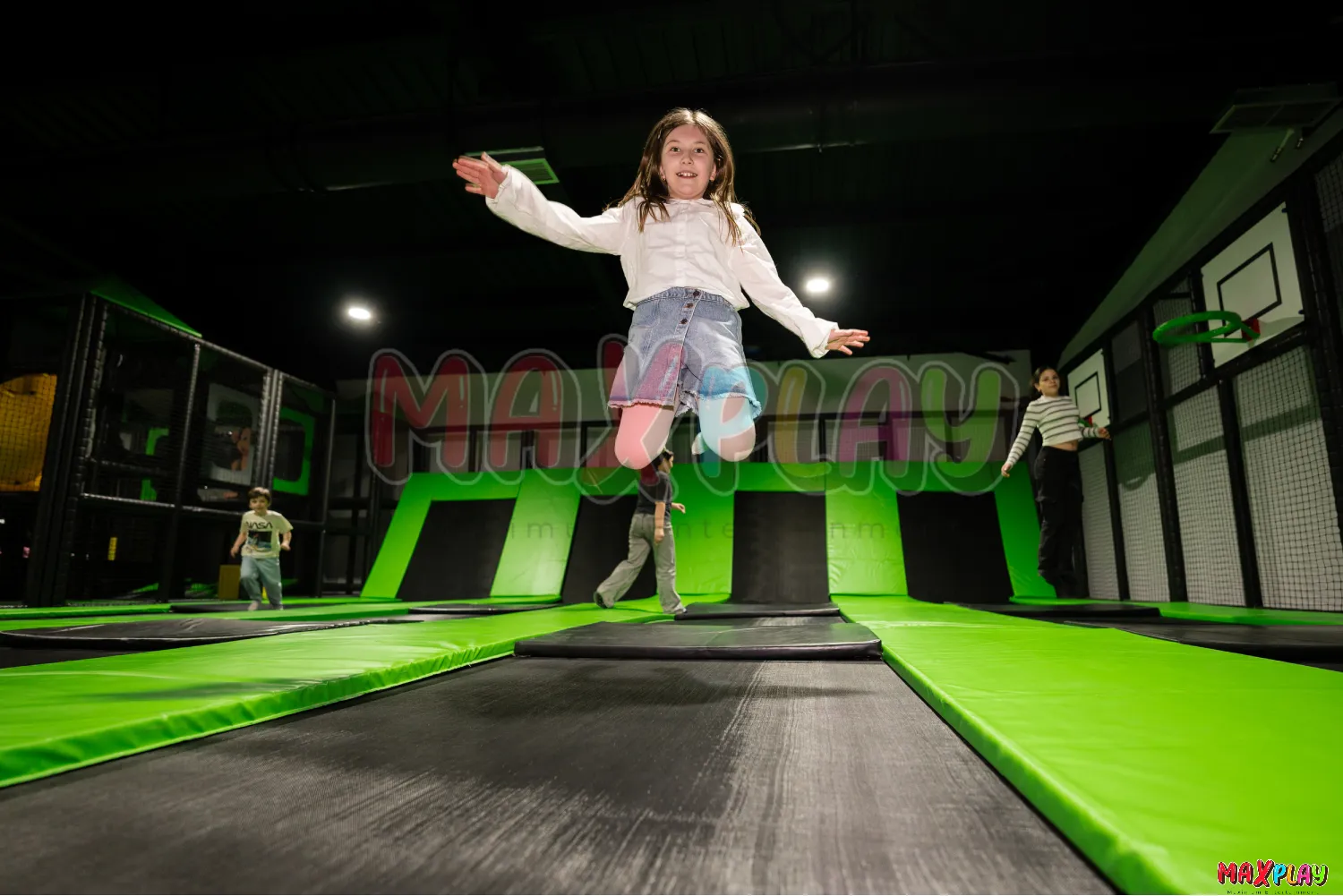
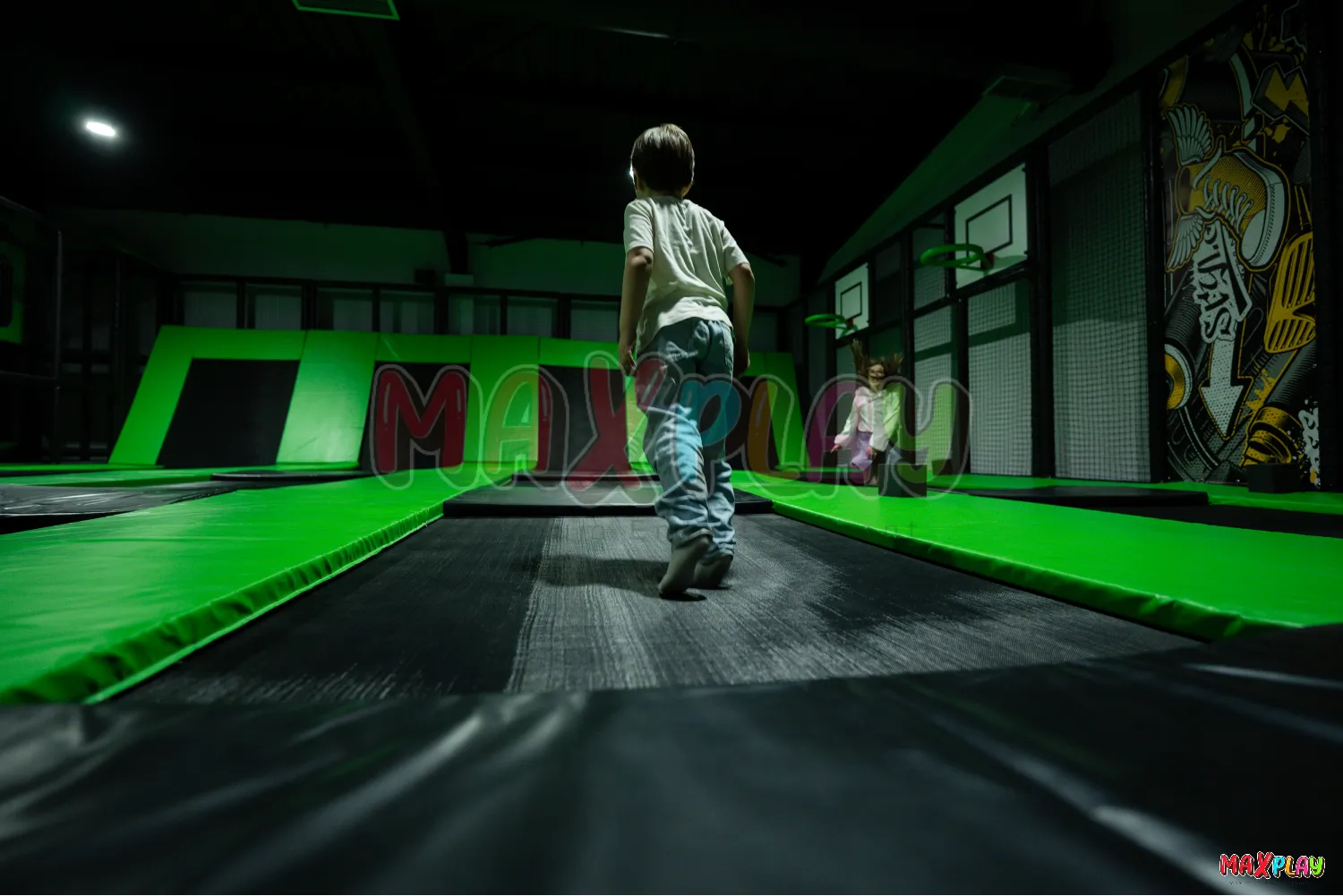
For venues catering to mixed age groups or seeking high-energy anchors, commercial-grade trampoline parks and integrated ninja warrior obstacle courses manufactured in Turkey offer unmatched structural performance. Turkish trampoline production utilizes heavy-wall structural hollow sections, commercial-grade continuous springs, and high-rebound, anti-slip jumping beds designed for intense continuous loads. Combining these active zones with interactive digital target walls, automated climbing challenges, and sensor-based obstacle tracks creates an engaging multi-generational destination that appeals to teenagers and corporate groups alongside younger children.
In low-impact and dedicated early-childhood zones, tailored soft play modules and sensory motor sets provide the highest safety and sanitation standards. Manufactured with ultra-dense, anti-bacterial foam cores and reinforced tear-resistant vinyl skins, these toddler attractions allow effortless wipe-down cleaning and resist mechanical seam strain. Whether deploying compact play nodes for shopping centers or equipping regional multi-thousand-square-meter family hubs, commercial operators achieve the best operational lifespan by pairing modular multi-tier labyrinths with dedicated active entertainment zones.
Selecting Playground Attractions According to Space and Target Age
Maximizing revenue per square meter requires a disciplined zoning strategy that isolates developmental age cohorts while maintaining cohesive operational oversight. Deploying an age-appropriate indoor play set layout eliminates physical collisions between age brackets and enhances the customer experience for families with multiple children. Successful floor layouts strategically map visitor flow across early childhood, middle childhood, and adolescent zones.
For infants and toddlers aged zero to three, the focus centers on gross motor experimentation within a dedicated toddler play set indoor perimeter. These spaces utilize ultra-dense, non-phthalate foam blocks, low-height sensory bridges, and anti-bacterial balance elements. Separating this area with low-profile safety partitions protects young children from older age groups while allowing parents uninterrupted observation lines from adjoining hospitality zones.
For children aged four to twelve, the facility requires high-capacity vertical play structures featuring continuous multi-tier labyrinths, fast-drop spiral slides, suspended bridges, and an expansive ball pool equipped with automated washing systems. Integrating high-energy challenges—such as digital target walls and structured ninja courses—extends the average stay duration, directly increasing secondary revenue across on-site food and beverage operations.

Designing a Safe and Comfortable Indoor Environment for Children
Engineering a safe indoor recreation venue requires more than just meeting nominal safety standards; it demands a clear understanding of human factors, material science, and spatial physics. Structural design must eliminate all potential head, neck, and finger entrapments in compliance with European Standard EN 1176. Load-bearing framework calculations must account for dynamic live loads, incorporating heavy-duty structural steel posts sheathed in high-density polyurethane protective foam with cross-stitched, tear-resistant PVC covers.
A common issue in high-traffic installations is uneven impact protection. Safety floor zones beneath drop heights exceeding 600 mm require seamless, high-elasticity EVA interlocking foam tiles or cast-in-place impact-absorbing polyurethane bases. These surfaces maintain stable impact absorption without hardening or off-gassing over extended use. Unobstructed sightlines are equally critical: structural mesh netting must feature high-tensile, fire-retardant polyester weaving that provides drop protection while allowing parents and safety marshals clear visibility into internal crawlways.
Parent comfort directly impacts dwell time and total transaction values. Play perimeters should integrate acoustic dampening wall panels to manage ambient noise alongside ergonomic lounge and café spaces. Providing unobstructed sightlines, readily accessible sanitization stations, and clear directional signage creates an inviting atmosphere that encourages repeat visits and builds customer loyalty.
Equipment Choices for Compact Venues and Large-Scale Play Centres
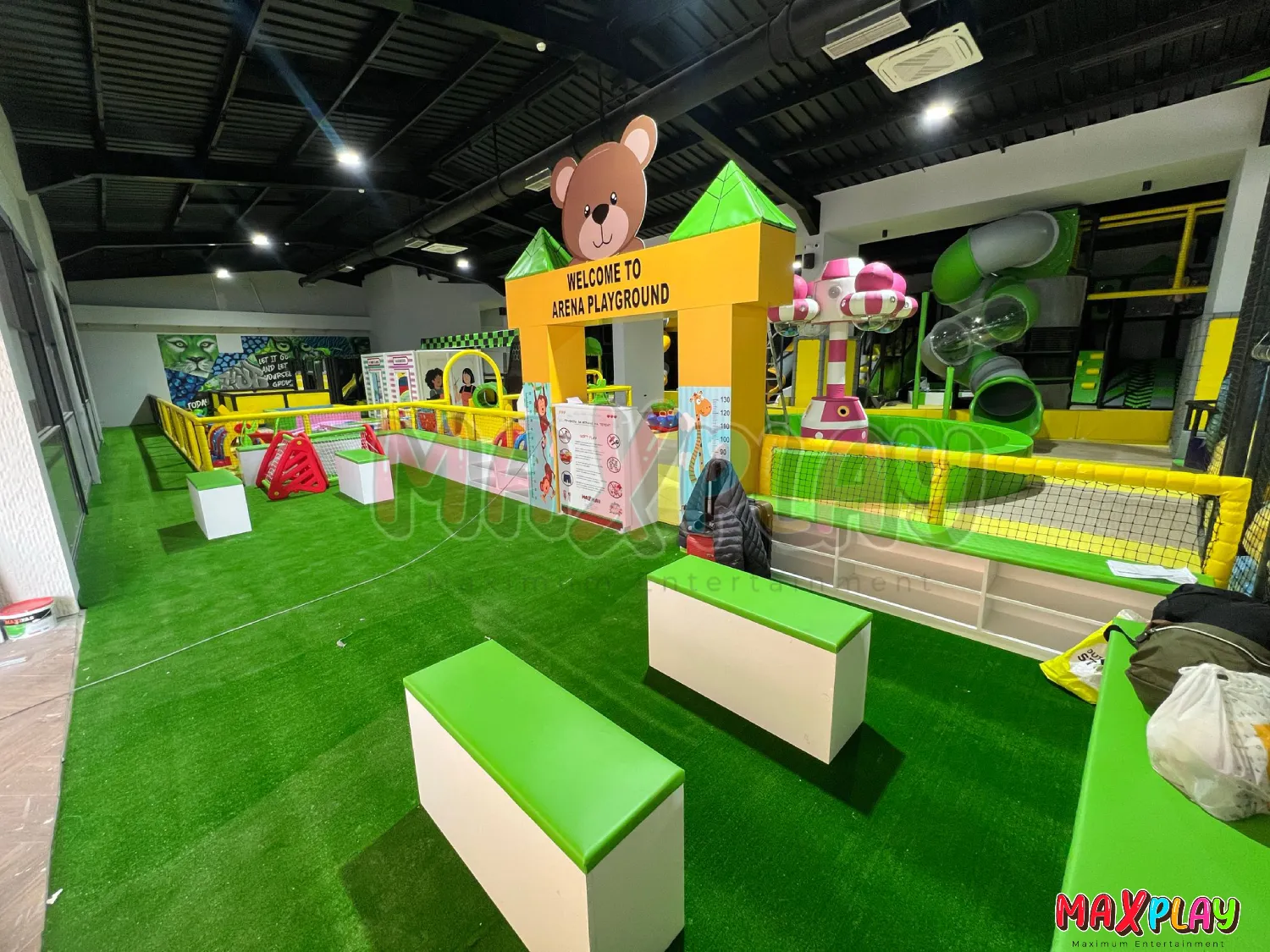
Spatial footprint dictates mechanical equipment architecture. Compact urban venues—such as shopping mall satellites, hospitality play corners, and family restaurants—benefit from space-efficient, modular assemblies. In these settings, verticality compensates for limited floor space. Multi-level compact towers incorporate integrated climbing tunnels, transparent acrylic viewing domes, and interactive wall modules, delivering full play value without compromising structural safety perimeters or customer circulation corridors.
Conversely, regional family entertainment complexes covering thousands of square meters require interconnected anchor attractions. These large-scale facilities combine high-capacity central play labyrinths with specialized zones like performance arenas, high-volume slide banks, and expansive active zones. Selecting durable commercial soft play equipment manufactured from high-tensile structural components ensures these installations easily withstand continuous, multi-user peak weekend loads.
Operators with diverse venue footprints must prioritize modularity. Modular structural joints allow for future expansions, layout adjustments, and straightforward theme refreshes without requiring complete structural teardowns. This adaptability ensures long-term return on capital investment as commercial entertainment trends evolve.
Sourcing Commercial Play Equipment from Turkey for Finnish Projects
Procurement strategy significantly impacts both upfront capital efficiency and the long-term operational lifespan of indoor entertainment assets. European project developers increasingly source from established indoor playground equipment manufacturers based in Turkey over far-east production centers. This shift is driven by modern manufacturing standards, responsive engineering support, and streamlined logistics within the European customs framework.
The commercial advantage stems from high-precision fabrication paired with cost-effective European industrial operations. Sourcing soft play equipment wholesale from Turkish manufacturers offers significant cost efficiencies without compromising material specifications, welding certifications, or environmental standards. Unlike suppliers in distant markets that rely on generic material lots, certified Turkish manufacturers use heavy-duty steel tubing, non-toxic water-based polyurethane surface coatings, and UV-stabilized, fire-rated European-spec PVC.
Real-world project evaluations reveal substantial differences between production regions:
- Turkish Industrial Manufacturing: Delivers full compliance with EN 1176/1177 certifications, provides TÜV-verified documentation, uses certified flame-retardant foam, offers tailored engineering support, and shortens transit to Northern Europe to 7–12 days.
- Far-East Sourcing Channels: Involves variable structural compliance risks, extended maritime transit times (45–60 days), challenging warranty remediation, elevated maritime container freight volatility, and complex import duty processes.
How Custom Manufacturing Helps Adapt Playgrounds to Individual Buildings
Standard off-the-shelf play equipment rarely integrates cleanly into existing commercial properties. Commercial buildings frequently present irregular architectural constraints, including low-hanging structural trusses, low mezzanine clearance, central building columns, floor level steps, and fixed emergency egress paths. Bespoke manufacturing adapts structural steel frameworks directly around these physical realities, eliminating dead zones and maximizing usable floor area.
Custom engineering utilizes 3D CAD modeling and parametric manufacturing to transform architectural obstacles into functional play features. A concrete support column, for instance, can serve as the core anchor for a spiral climbing tower or an enclosed treehouse-themed play element. Low-clearance mezzanine underpasses can house padded crawl labyrinths or sensory exploration zones, turning otherwise unusable space into engaging attractions.
Beyond spatial fit, bespoke production allows operators to reflect regional themes, corporate branding, and specific color palettes. Incorporating custom branding and thematic consistency elevates the park’s visual appeal and supports higher admission pricing.
Durability and Maintenance Considerations for High-Traffic Play Areas
Commercial play facilities operate in high-friction environments. Equipment surfaces must withstand thousands of daily dynamic loads, frequent abrasion, and constant sanitation using industrial cleaning agents. Investing in high-grade indoor soft playground equipment built with tear-resistant technical vinyls (650–900 g/m²) and reinforced cross-stitched seams prevents seam splitting and surface breakdown.
In high-traffic venues, the most common maintenance failure occurs at structural transit points: slide entries, climbing ramps, and bridge junctions. Facility managers must establish a disciplined maintenance regime: daily visual sweeps for netting tension and surface cleanliness, monthly mechanical torque audits on joint clamps and anchors, and quarterly structural inspections of internal foam resilience and structural welds.
Working with an agile indoor playground supplier that maintains a full catalog of precision replacement parts—including standardized clamps, safety net rolls, replacement vinyl covers, and impact pads—minimizes costly equipment downtime. Quick access to replacement components ensures minor surface wear is resolved before it creates safety hazards or operational interruptions.
Planning the Route from Turkish Production to Finnish Delivery
Efficient logistics planning is vital for meeting scheduled grand openings and keeping venue launch costs on track. Shipping industrial play systems from Turkish manufacturing hubs to Finnish project sites benefits from well-established intra-European freight routes, combining roll-on/roll-off (Ro-Ro) maritime shipping with dedicated cross-continental road transit.
Standard transit runs from Turkish ports to major European hubs before proceeding via Baltic ferry networks directly into Finnish ports like Helsinki, Turku, or Vuosaari. This door-to-door transit generally concludes within 7 to 12 days—a significant reduction compared to long ocean voyages from Asia. Furthermore, Turkey’s Customs Union agreement with the European Union streamlines customs clearance, using simplified documentation that avoids unexpected port duties and administrative delays.
To ensure efficient transport, all components are flat-packed, categorized, and crated using precision CNC palletization. Structural steel elements, soft foam modules, and fiberglass components are grouped and labeled by installation sequence, protecting delicate materials during transit and accelerating on-site assembly.
Installation Requirements Before Equipment Arrives on Site
Thorough site preparation is critical for a smooth on-site installation. Before equipment arrives, the building floor must be completely cleared, level, structurally cured, and verified for dynamic load-bearing capacity. Floor flatness tolerances must not exceed ±5 mm over a 3-meter span to ensure structural uprights and safety nets align correctly.
The installation zone must be sealed, dry, and climate-controlled, with indoor ambient temperatures maintained between 15°C and 22°C to allow PVC coverings and foam cushioning to achieve their specified elasticity during tensioning. All rough overhead MEP installations (HVAC ducting, primary electrical runs, and fire suppression systems) must be finalized to prevent scissor lifts from damaging the playground structure later in the build.
Site logistics also require establishing designated access routes and staging areas. Double-leaf service doors or direct ground-floor freight access points are required to move large structural sub-assemblies inside smoothly. Pre-marking utility conduits, locating underfloor heating elements, and testing primary anchor points ensure technicians can secure structural anchor bolts safely and without delay.
Assessing a Manufacturer’s Experience Before Placing a Project Order
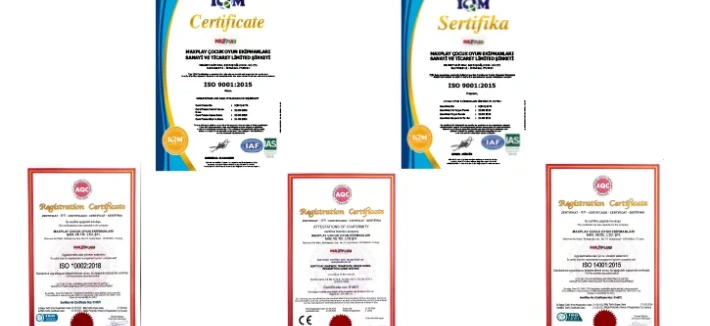
Selecting the right production partner requires a thorough technical audit of their manufacturing capabilities and engineering compliance. Rather than choosing suppliers based solely on marketing renderings, procurement teams must verify physical production assets, computerized steel cutting machinery, in-house foam moulding capabilities, and cleanroom assembly operations.
A rigorous supplier evaluation covers several essential technical checkpoints:
- Raw Material Traceability & Safety: Mill test certificates for structural steel, non-phthalate REACH validation for PVC materials, and certified fire ratings meeting DIN 4102-1 (B1) or EN 13501-1 standards.
- Engineering Standards & Portfolio: TÜV-verified EN 1176 and EN 1177 safety certifications, dynamic load calculation reports, and an active portfolio of successfully installed European facilities.
A reliable partner must maintain active, verifiable portfolios of completed European projects. Facility operators should inspect full factory test assemblies, evaluate the quality of seam welding and steel galvanization, and test the grade of safety nets before shipment. Working with verified soft play manufacturers ensures the completed installation satisfies local Finnish municipal inspectors during final commissioning.

Developing a Finnish Indoor Play Project with MaxPlay
Bringing a commercial indoor playground project to life in Finland requires a balance of structural design, precision engineering, European safety compliance, and cost-effective capital investment. MaxPlay delivers turnkey manufacturing solutions tailored specifically to the high operational demands of the Nordic recreation sector.
As a premier trampoline park manufacturer and comprehensive commercial play builder, MaxPlay fabricates high-durability attractions that elevate family entertainment venues. From integrated multi-tier soft play centers to custom trampoline park equipment, high-capacity drop slides, interactive motor zones, and precision-engineered interactive playground equipment, every system is manufactured directly in modern production facilities in Turkey.
Our streamlined production workflow pairs first-class European materials with cost-effective Turkish manufacturing, allowing our systems to compete directly with Asian pricing while delivering superior durability, verified safety, and rapid delivery across Finland. Complete architectural project planning and 3D concept designs are provided at no charge. Contact our engineering and design team today to request your free customized project layout and take the first step toward launching your next indoor entertainment destination.