




Commercial Indoor Playsets in Norway: Customization and Bulk Order Options
The commercial leisure sector across the Nordic region demands rigorous engineering, uncompromising child safety standards, and sustainable architectural design. Investing in Commercial Indoor Playsets in Norway requires an approach that goes far beyond standard off-the-shelf catalog configurations. Operating high-throughput entertainment venues in cities such as Oslo, Bergen, Stavanger, and Trondheim involves navigating unique demographic realities, strict Nordic building codes, and high consumer expectations regarding hygiene and material safety. Sourcing robust play modules tailored to precise architectural footprints directly impacts both visitor retention and bottom-line operational efficiency.
As MaxPlay Playground Equipment, we provide professional solutions for indoor playgrounds and soft play areas. We design, manufacture, install, and assemble indoor playground equipment and soft play systems for commercial spaces. Contact us for turnkey indoor playground projects.
| Landline: | 0216 377 10 88 |
| Mobile / WhatsApp: | 0532 069 53 17 |
| E-Mail: | info@maxplay.com.tr |
| Address: | Google Maps |
You can contact us for all your projects across Türkiye and international markets.
Our Services:
- Trampoline Manufacturing – Trampoline Park Installation
- Ball Pit Manufacturing – Ball Pit Playground Installations (with slides, etc.)
- Interactive Play Systems (Moving Soft Play Toys & Equipment)
- Sand Pit – Sand Play Areas
- Playgrounds and Role-Play Houses for Kindergartens & Nurseries
- Indoor playgrounds for businesses such as shopping malls, cafés, restaurants, etc.
- And all customized playground projects tailored to your specific needs.
From an engineering perspective, modern indoor facilities must strike a balance between structural longevity and adaptive play value. Commercial operators are moving away from rigid, single-purpose assemblies toward multi-tiered systems that incorporate diverse tactile, vestibular, and cognitive physical challenges. When procuring an indoor play set at scale, commercial operators must account for heavy year-round footfall driven by extended Scandinavian winters, where indoor family facilities serve as primary community socialization hubs rather than occasional weekend destinations.
Field experience shows that early-stage procurement missteps—such as underestimating ceiling clearance requirements or failing to plan for high-wear friction points—create costly operational downtime. Successful Nordic play center deployments rely on a systematic procurement process that integrates custom computer-aided design, certified production pipelines, streamlined international logistics, and localized installation workflows.

Understanding the Needs of Commercial Indoor Play Venues in Norway
Norwegian family entertainment centers, municipal leisure facilities, and hospitality play hubs operate within a distinct commercial environment. High operational overheads, especially labor and property rental costs, mean that every square meter of a facility must deliver measurable recreational and commercial value. Operators cannot afford dead floor space or high-maintenance play elements that require frequent manual intervention. Consequently, equipment must offer maximum self-directed play value while maintaining zero structural failure rates under peak-capacity loads.
Norwegian consumers place strong emphasis on environmental integrity, non-toxic materials, and indoor air quality. Indoor facilities are subject to stringent indoor climate regulations, meaning play structures must not emit volatile organic compounds or harbor moisture that could lead to microbial growth. In practical deployment across Scandinavian projects, facilities require antimicrobial, heavy-duty vinyl covers and fire-retardant structural padding that can withstand daily medical-grade chemical sanitation without fading, cracking, or degrading.
Furthermore, operational longevity in the Norwegian market requires a design approach centered on multi-generational engagement and long-term usability. Family venues frequently host cross-age demographic groups simultaneously, including parents participating alongside young children. Structural weight capacities, platform clearances, and sightlines must accommodate adult intervention and active supervision without compromising child-scale ergonomics or creating blind spots for floor staff.
How Can European Businesses Import Playground Equipment from Turkey?
Importing commercial play equipment from Turkey into the European single market follows a streamlined, highly integrated trade framework. Under the EU–Turkey Customs Union agreement, industrial goods move between Turkish manufacturing centers and European destinations free of standard customs tariffs when accompanied by proper movement documentation. Commercial buyers initiate the procurement process by finalizing structural computer-aided design drawings and structural calculations, which form the technical blueprint for the export file.
The logistics execution relies on direct multimodal networks that connect major Turkish manufacturing hubs to European freight corridors. Heavy structural frames, slide assemblies, and soft play modules are loaded into high-cube trailers or intermodal containers at the factory gate and routed via roll-on/roll-off maritime lines directly to key European hubs like Trieste, Toulon, or Rotterdam, before continuing overland. Sourcing from Turkey eliminates the unpredictable 45- to 60-day sea freight delays typical of East Asian ports, maintaining reliable, predictable delivery windows of 7 to 14 days across continental Europe.
For customs processing, European importers work with their appointed freight forwarder to submit standard documentation, including the ATR certificate, commercial invoice, packing list, and bill of lading. A complete, itemized packing list indexed to the structural installation manual is essential for smooth clearance. Preparing these documents ahead of arrival prevents border delays and ensures freight moves directly to the job site for immediate offloading and staging.
MaxPlay Playground Equipment Overview
| Equipment Name | Description | Key Benefits |
| Ball Pool | Colorful pit filled with balls for safe sensory play. | Safe fun for toddlers, easy to clean, encourages motor skills. |
| Trampoline | High-quality indoor trampolines. | Builds balance and strength, child-safe design, durable materials. |
| Interactive Game Sets | Digital and physical interactive play stations. | Boosts learning, cognitive skills, and engagement. |
| Profession Houses | Role-play houses designed for kids. | Encourages creativity, social interaction, and imagination. |
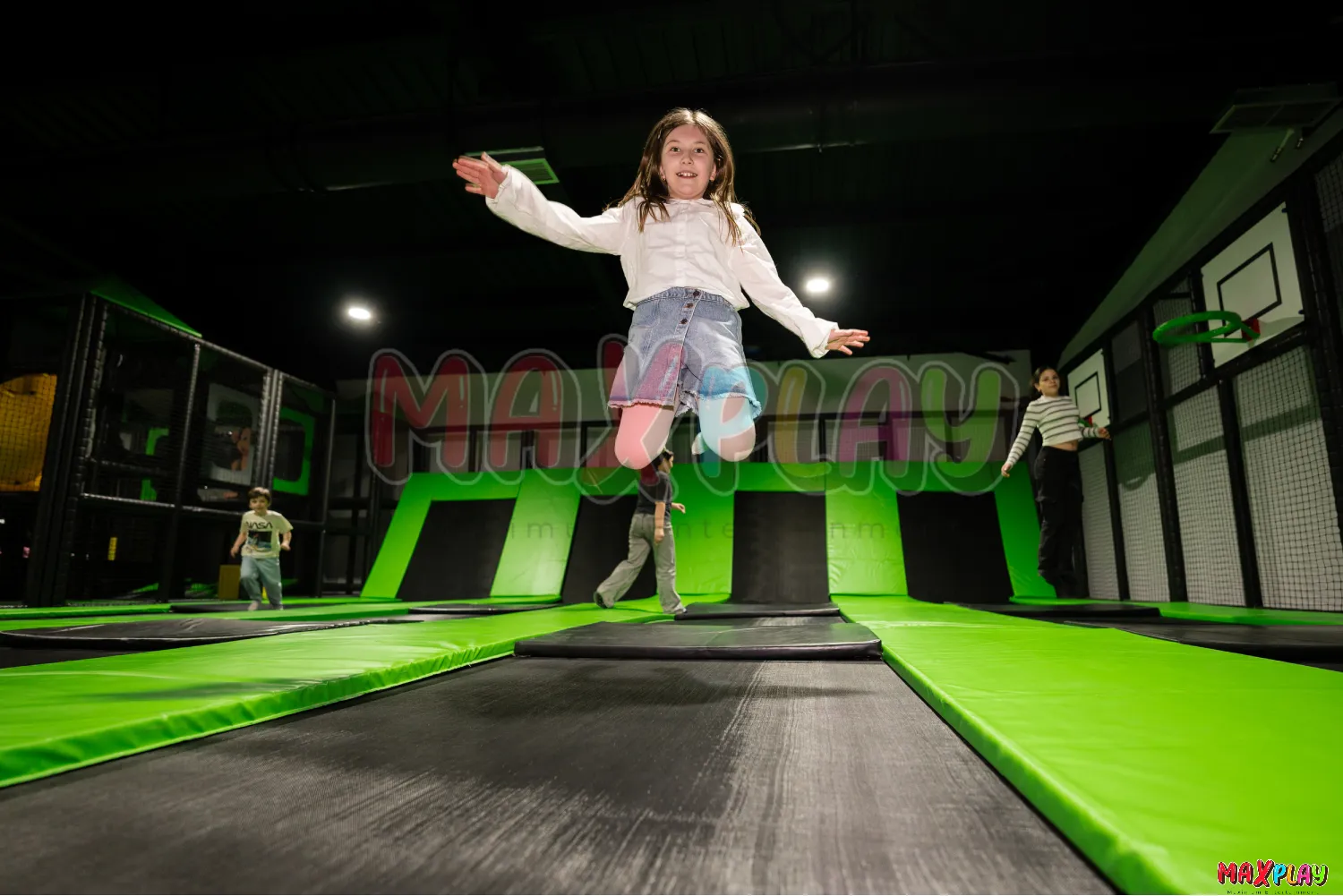
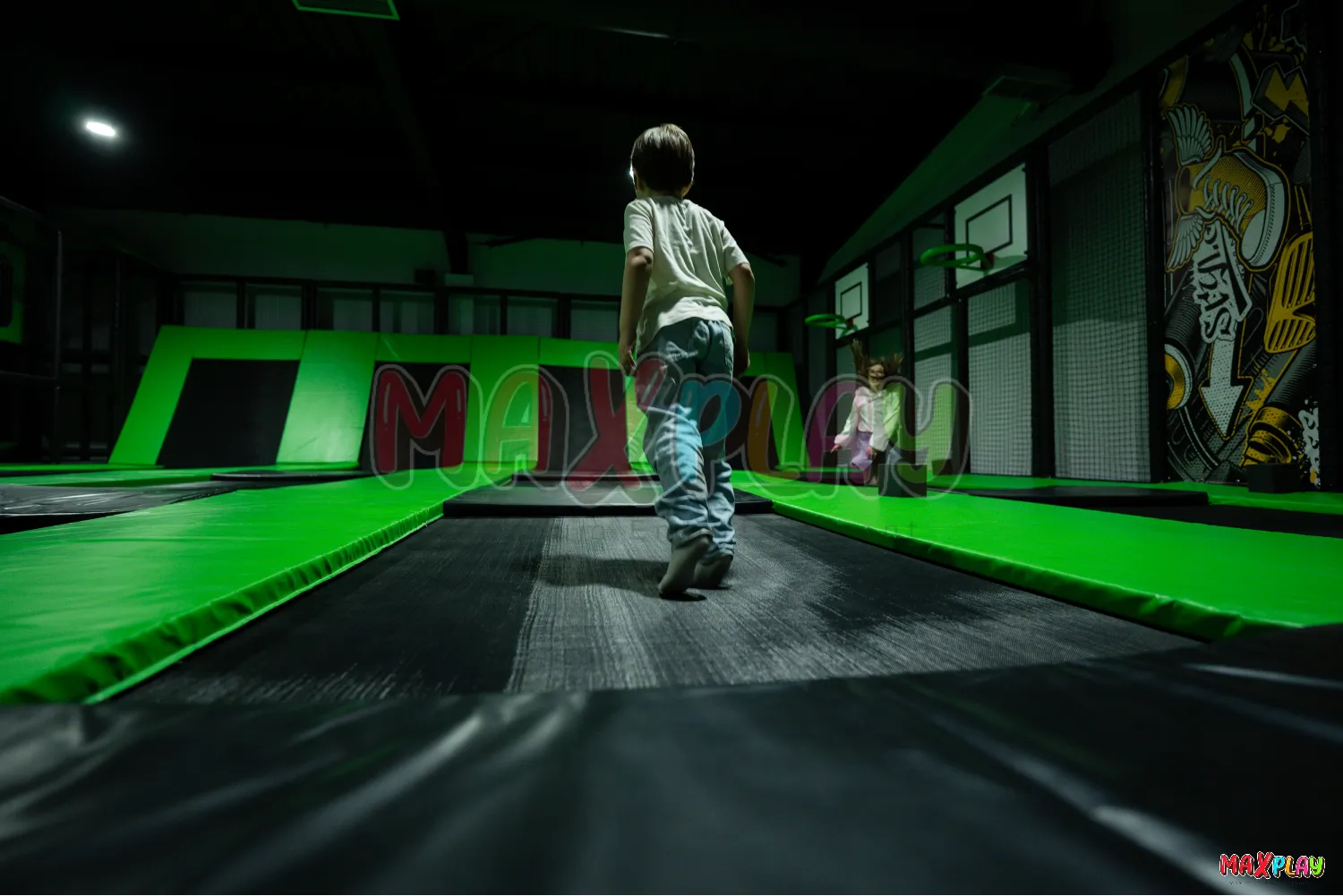
| Trampoline Park | Large-scale trampoline structures. | Suitable for older kids, high durability, safe design. |
| Roller Slide | Conveyor-style (roller) slides for continuous fun. | Efficient design, fun motion play, safe structure. |
| Tower Slide | Tower slides designed for adventure play. | Exciting design, strong safety standards, eye-catching feature. |
| Climbing Wall | Indoor climbing walls. | Builds strength and coordination, safe grips, customizable difficulty levels. |
| Volcano Slide | Volcano-shaped slides with climbing and sliding features. | Combines climbing and sliding, unique design, fun for multiple age groups. |
How Do Turkish Playground Manufacturers Meet European Safety Standards?
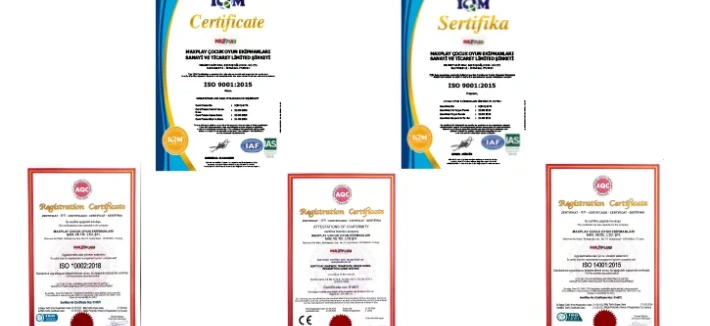
Turkish commercial playground manufacturers operate within the harmonized European regulatory framework, engineering equipment to full EN 1176 (indoor playground equipment) and EN 1177 (impact-attenuating surfacing) standards. Compliance begins at the raw material sourcing stage: structural steel framework utilizes hot-dip galvanized pipe with a minimum 3.25mm wall thickness, while external coverings are crafted from heavy-duty, fire-retardant 650g/m² PVC membranes (EN 13501-1 Class B-s1, d0 compliant) free of hazardous phthalates.
The manufacturing process relies on precision CNC pipe bending, automated laser cutting, and certified robotic welding to eliminate manufacturing tolerances that could introduce entrapment risks. Technical designs undergo rigorous digital simulation to verify that all gaps, rail spaces, and step intervals eliminate head, neck, and finger entrapment hazards. Moving joints, slide junctions, and platform decks are fitted with smooth, flush-mounted, tamper-resistant hardware to eliminate clothing snag points and structural pinch zones.
Before market release, component assemblies and materials undergo physical testing through recognized European third-party certification bodies, such as TÜV. These evaluations include destructive tensile load testing on structural webbing, dynamic drop impact tests on landing mats, and fire-behavior laboratory assessments on polyfoam padding. This verified compliance trail gives European venue operators the complete technical documentation and declarations of conformity required to pass local municipal safety audits and insurance underwriting.
How Long Does It Take to Install a Turkish Indoor Playground in Europe?
The complete on-site assembly timeline for a commercial indoor playground in Europe typically ranges from 5 to 20 business days, depending directly on overall square meterage, vertical tier complexity, and structural density. A compact, double-deck hospitality play structure of 100 to 250 square meters requires roughly 5 to 7 days, whereas a multi-tiered, 1,000-square-meter family entertainment complex with integrated high-altitude drop slides and trampoline arenas requires 15 to 20 working days.
Installation efficiency depends heavily on pre-fabrication accuracy and systematic factory packaging. Turkish manufacturers pre-assemble and stress-test complex module junctions in the factory before disassembling and color-coding individual components. Structural steel tubes, modular decks, and fastening brackets arrive on-site with clear identification tags that match the master 3D CAD schematic, eliminating confusion and on-site modifications for installation teams.
Assembly is typically managed by a factory-certified installation supervisor who directs a localized technical crew, or through a full turnkey assembly team provided directly by the manufacturer. The process follows a structured sequence: leveling and bolting the primary steel framework, attaching safety netting and structural barrier panels, installing high-density protective foam wrapping, and anchoring modular slides and interactive features. A comprehensive safety audit and load-bearing test conclude the installation, ensuring the play center is fully prepared for opening day.
Commercial Playset Types for Different Business Models
Selecting the appropriate structural ecosystem depends heavily on the underlying business model, building typology, and target revenue stream. Standalone family entertainment centers require comprehensive, multi-level indoor play equipment designed to handle continuous, high-volume rotations. These installations typically integrate three-dimensional climbing labyrinths, fast-exit spiral tube slides, high-capacity obstacle tracks, and integrated aerial bridges to maximize vertical space utilization and extend visitor dwell time.
For trampoline arenas and action parks, incorporating a specialized trampoline park equipment setup alongside traditional physical labyrinths creates cross-demographic appeal. As an experienced trampoline park manufacturer, engineering teams must integrate seamless transition zones between rebound courts, impact-absorbing foam pits, and overhead traversing nets to eliminate structural pinch points. Combining these dynamic kinetic elements with a commercial ball pool system featuring automated vacuum cleaning channels ensures both dynamic guest engagement and streamlined sanitation workflows.
In contrast, hybrid retail hubs, hotel leisure corners, and quick-service restaurant franchises require compact, highly visible systems. In these environments, deploying heavy-duty soft playground equipment ensures silent operation, zero mechanical risk, and rapid self-guided throughput. These business models benefit most from low-profile, modular physical structures that offer high safety margins without requiring full-time dedicated supervisory staff.
Building Age-Specific Zones Within a Larger Indoor Play Centre
Effective zoning is the foundation of safe and commercially successful family center management. Mixing energetic older children with early-stage developmental users introduces collision hazards and increases user anxiety, directly lowering repeat visits. An optimized venue layout establishes distinct, intuitively separated zones based on physical competence and play behavior, using clear visual boundaries rather than restrictive physical barriers.
For the youngest demographic, a dedicated toddler play set indoor environment must prioritize low-fall-height elements, non-abrasive textures, and sensory-motor development modules. In practical installation layouts, this zone must sit adjacent to parent seating areas and away from high-speed exit runs of major slides. Soft balance beams, micro-ramps, crawl tunnels, and interactive wall-mounted play boards allow toddlers to explore safely without exposure to high-velocity impacts from older children.
The junior and youth zones (ages 4 to 12) require multi-tiered configurations that encourage climbing, balance, and spatial awareness. Integrating high-volume commercial soft play equipment across intermediate deck levels—such as swinging vinyl buoys, horizontal squeeze rollers, and netted rope bridges—regulates foot-traffic speed and prevents structural bottlenecks. Implementing this structured zoning layout keeps visitor flow moving smoothly across the venue, reduces operational liabilities, and ensures children play within their physical comfort zones.

Custom Playset Configurations for Different Floor Plans
Standard, pre-designed play structures rarely maximize the financial or physical potential of commercial real estate. Commercial properties across Norway present diverse architectural challenges, from repurposed industrial warehouses with 8-meter ceiling clearances to shopping mall units interrupted by structural load-bearing concrete pillars. Custom-engineered configurations convert these physical obstacles into functional, integrated play features.
When building around interior structural columns, specialized engineering teams design padded, structural sleeves that transform dead perimeter obstacles into central play anchors, such as spiral climbing towers or 360-degree sensory hubs. Where vertical clearance is limited, low-profile, double-deck configurations focus horizontal movement through interwoven rope-crawls and wide obstacle courses. Conversely, high-ceiling venues benefit from soaring, three- or four-tier steel skeletons that maximize volumetric capacity while keeping the ground-level footprint efficient and open for circulation.
Working with an experienced indoor playground supplier allows operators to adapt structural entry and exit points to precise emergency egress routes, HVAC ducts, and lighting grids. Using parametric 3D CAD modeling early in development prevents costly on-site frame modifications during assembly, ensuring full alignment with local municipal safety and accessibility regulations before manufacturing begins.
Why Turkish Production Can Be an Attractive Option for Norwegian Buyers?
Sourcing commercial play equipment for the European market requires balancing precision engineering, strict regulatory compliance, and cost efficiency. Turkish manufacturing has become a top-tier sourcing hub for Nordic project developers, offering advanced industrial manufacturing capabilities directly aligned with European Union quality standards.
Compared to Asian production centers, Turkey provides significantly faster logistics turnaround times, shorter transit routes, and lower freight emissions. Commercial shipments from Turkish industrial facilities reach Scandinavian ports within 10 to 14 days via direct maritime and intermodal road networks, compared to 45 to 65 days for ocean freight from Far Eastern ports. This shorter supply chain minimizes project delays, reduces exposure to global maritime freight volatility, and allows for rapid dispatch of replacement components or expansion modules.
Furthermore, Turkish manufacturing offers substantial cost efficiencies without compromising technical build quality. Industrial facilities utilize premium European-standard raw materials—such as hot-dip galvanized structural steel, certified fire-retardant polyfoams, and high-tensile, non-toxic PVC membranes—supported by automated CNC processing and robotic welding. This structural precision, combined with direct commercial pricing, ensures Nordic operators achieve a rapid return on investment alongside long-lasting equipment durability.
Ordering Multiple Play Structures for Large or Multi-Location Projects
Managing equipment procurement for regional chains, multi-site franchises, or municipal development groups requires standardized component architectures and synchronized production planning. Ordering in bulk demands rigorous quality control across all production batches to maintain uniform aesthetics, structural reliability, and shared maintenance protocols across every location.
Working with established indoor playground equipment manufacturers capable of managing high-capacity industrial throughput is essential for multi-site rollouts. Manufacturing partners must implement phased delivery schedules that match real-world construction timelines across different cities. If a commercial building project in Stavanger finishes ahead of a site in Bergen, the manufacturer must adjust logistics staging to prevent uninstalled structural freight from cluttering unfinished construction sites.
Securing soft play equipment wholesale supply agreements allows multi-site operators to achieve significant economies of scale. Bulk procurement lowers per-unit engineering costs, optimizes container packing volume, and creates standardized spare-parts inventories across all operational branches. Standardized fasteners, safety netting meshes, and modular soft pads make maintenance straightforward, allowing in-house technical teams to service any location using a single inventory catalog.
Safety Features That Matter in Commercial Indoor Playsets
Commercial play installations carry strict legal, ethical, and operational safety responsibilities. In Norway and throughout Europe, equipment must fully comply with the EN 1176 standard (covering playground equipment and surfacing safety requirements) and EN 1177 (impact-attenuating surfacing test methods). Meeting these standards requires thorough structural analysis, precise manufacturing tolerances, and verified safety clearances across every component.
A common compliance failure in low-cost, uncertified play structures involves head, neck, and finger entrapment hazards:
- Entrapment Prevention: EN 1176 strictly regulates physical gaps between 89mm and 230mm to prevent a child’s torso from slipping through while trapping the head. Structural openings between 8mm and 25mm must also be engineered out of all climbing decks and railings to eliminate finger entrapment risks.
- Fastener Safety: Fasteners must use smooth, recessed cap systems to prevent clothing, cords, or hair from snagging during slide descents.
- Impact Cushioning: High-density foam padding encased in fire-rated PVC wrapping must cover all structural steel frameworks. Calibrated fall mats under slide exits reduce head injury criteria (HIC) to certified safe levels.
- Structural Barrier Netting: High-traffic drop zones require flame-retardant, knotless safety netting with a minimum tensile strength of 2.5 kN, securely fastened to eliminate frame separation under group impact loads.
In practical operation, choosing certified hardware from the outset eliminates the liability risks and expensive retrofits that often follow unannounced municipal safety inspections.
Comparing Materials and Finishing Quality Before a Bulk Purchase
The long-term operating cost of an indoor venue depends directly on initial material quality. Premium materials retain structural shape, vibrant color, and clean surfaces over years of heavy use, whereas sub-standard materials quickly suffer torn vinyl seams, saggy netting, and deformed foam pads within months of high-capacity operation.
When evaluating structural steel frameworks, specify hot-dip galvanized piping with a minimum outer diameter of 48.3mm and a wall thickness of at least 3.25mm. Cheap, cold-rolled thin-wall steel flexes under group loads, fatiguing welds and shifting floor plates over time. All structural clamps and junction nodes must use certified cast-iron fittings with recessed, tamper-proof industrial bolts, ensuring the main skeleton remains rigid throughout its operating life.
For soft components, the difference lies within foam cell density and vinyl outer construction. High-grade systems use closed-cell expanded polyethylene or high-resilience polyurethane foam with densities between 45 kg/m³ and 50 kg/m³. Low-density foams collapse under sustained load, leaving bare steel exposed beneath thin vinyl wraps. External coverings should use commercial-grade, heavy-duty 650g/m² PVC-coated tarpaulin featuring reinforced rip-stop polyester scrim, treated with non-toxic, antibacterial, and antifungal coatings that withstand rigorous, daily sanitation routines.
Managing Freight and Delivery from Turkey to Norway
International logistics for oversized, multi-component commercial play structures requires coordinated export handling, customs clearance, and carefully staged delivery schedules. A single large indoor playground can fill multiple high-cube shipping containers or mega-trailers, containing thousands of individual numbered structural bars, soft pads, rotational plastic slides, and netted panels.
Transport routes from Turkey to Norway use dependable intermodal solutions, combining direct roll-on/roll-off short-sea shipping to central European ports with direct road and rail freight forward into Scandinavia. This multimodal approach avoids unpredictable customs delays across non-EU transit borders while maintaining a predictable transit window of 10 to 14 days. Packaging must be systematically planned at the factory: all structural parts must be color-coded, labeled, and indexed in the master CAD layout to enable efficient offloading and unboxing on site.
Because Norway operates outside the European Union customs union while remaining part of the EEA, import documentation must be precise. Experienced manufacturers supply EUR.1 movement certificates, certified commercial invoices, and exact packaging declarations to streamline Norwegian Customs (Tolletaten) clearance. Proper documentation ensures smooth processing without unexpected terminal holding fees, keeping local assembly crews on schedule and within budget.
Questions to Ask Before Signing a Large Playground Equipment Order
Committing to a major play equipment order requires thorough due diligence to protect your capital investment. A professional indoor soft playground equipment supplier should welcome detailed technical questions regarding certifications, engineering tolerances, and after-sales support:
- Certification Proof: Can you provide genuine, third-party EN 1176 / EN 1177 test certificates from recognized European notified bodies (such as TÜV or equivalent) for this specific component assembly?
- Raw Material Specs: What are the exact material specifications for your structural steel and protective vinyl coverings, including wall thickness, outer diameter, PVC weight in g/m², and foam core density?
- Engineering Validation: Do you supply complete 3D architectural CAD files and structural stress calculations customized for our building’s ceiling heights, floor loading points, and pillar positions?
- Warranty & Spares: What specific warranty coverage applies to high-wear moving components versus static galvanized frames, and what is your guaranteed lead time for replacement parts?
Operators must also clarify installation logistics and project management support before signing agreements. Inquire whether the manufacturer provides a dedicated on-site installation supervisor or a turnkey assembly team familiar with Nordic occupational safety standards. Confirming installation timelines, structural hand-off protocols, and third-party safety inspection certifications in advance ensures smooth facility opening approvals from local municipal authorities.

Bulk Commercial Playground Supply with MaxPlay
MaxPlay operates as a premier industrial manufacturer and engineering partner for commercial leisure infrastructure, delivering custom-designed, fully certified indoor playground projects worldwide. As a premier source among European soft play manufacturers, MaxPlay transforms commercial floor plans into high-yield, experiential play destinations. Our multidisciplinary engineering team combines creative play architecture with structural precision, ensuring every installation balances safety, long-term durability, and strong visual appeal.
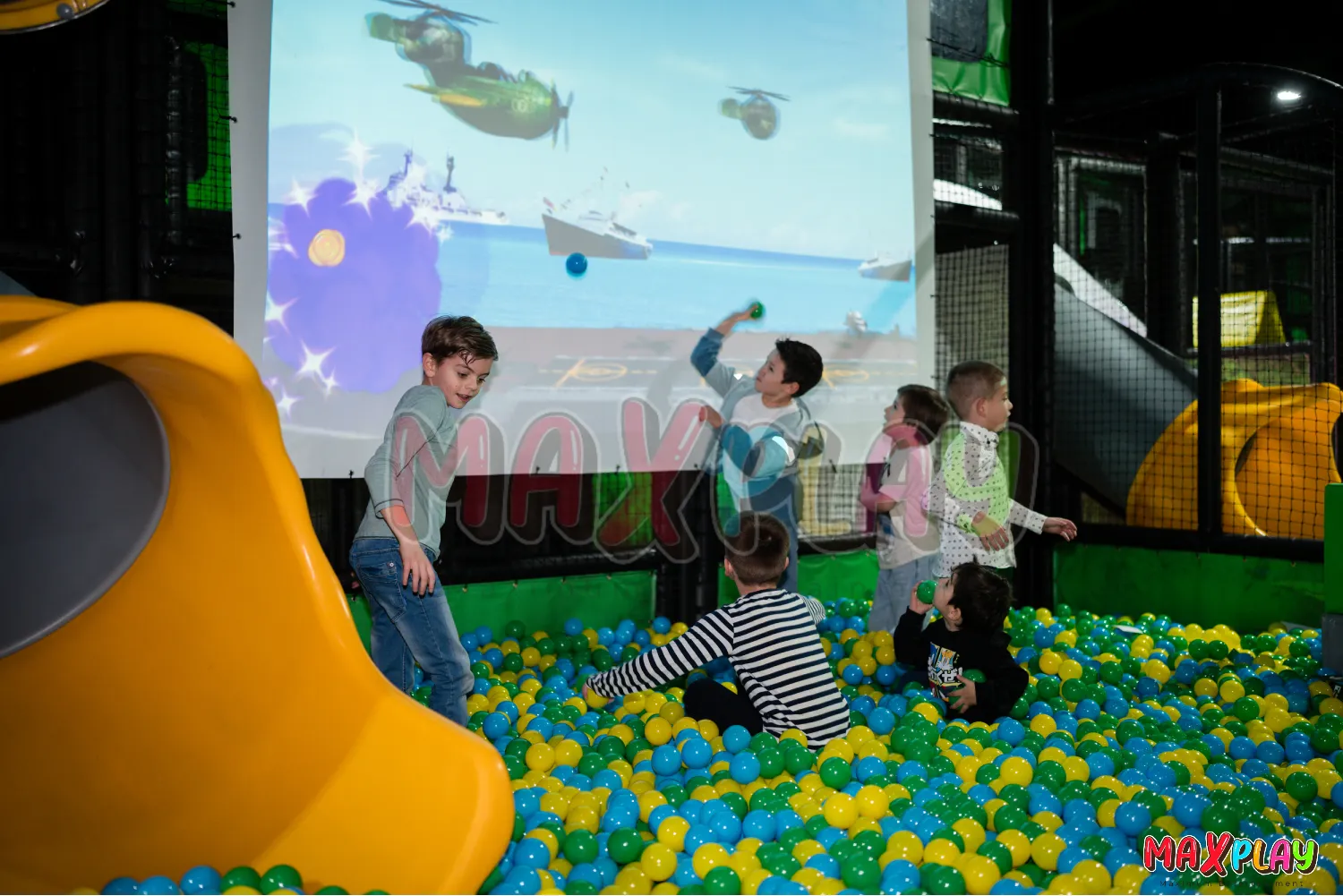
Our modern manufacturing facilities utilize advanced automated machinery, certified non-toxic raw materials, and precision tooling to fabricate complete indoor ecosystems. From standard play mazes to advanced interactive playground equipment that merges physical agility with digital projection technology, MaxPlay designs and manufactures high-performance commercial equipment engineered for sustained use. Every project is built in strict compliance with European EN 1176 standards, giving commercial operators across Norway complete confidence in safety, build quality, and operational reliability.
Whether you are launching a new family entertainment center in Oslo, updating a hotel leisure facility in Bergen, or expanding a nationwide trampoline chain across the Nordic region, MaxPlay delivers custom design, manufacturing, and international logistics tailored to your exact operational requirements. Project planning and custom 3D architectural design services are provided completely free of charge. Contact our engineering team today to request your custom design and launch your project with a dependable manufacturing partner.