





Soft Play Equipment Supplier in Poland: Tips for Selecting a Trusted Vendor
Navigating the commercial entertainment market in Central Europe requires a balance between architectural safety, operational longevity, and engaging design. Sourcing a dependable Soft Play Equipment Supplier in Poland is not merely a matter of browsing product catalogs; it is a long-term operational decision that directly affects your venue’s licensing, footfall, maintenance overhead, and daily safety profile. Polish family entertainment centres (FECs), hospitality venues, and retail destinations operate under rigorous regional building and playground regulations that demand verified structural engineering, non-toxic materials, and robust technical documentation.
As MaxPlay Playground Equipment, we provide professional solutions for indoor playgrounds and soft play areas. We design, manufacture, install, and assemble indoor playground equipment and soft play systems for commercial spaces. Contact us for turnkey indoor playground projects.
| Landline: | 0216 377 10 88 |
| Mobile / WhatsApp: | 0532 069 53 17 |
| E-Mail: | info@maxplay.com.tr |
| Address: | Google Maps |
You can contact us for all your projects across Türkiye and international markets.
Our Services:
- Trampoline Manufacturing – Trampoline Park Installation
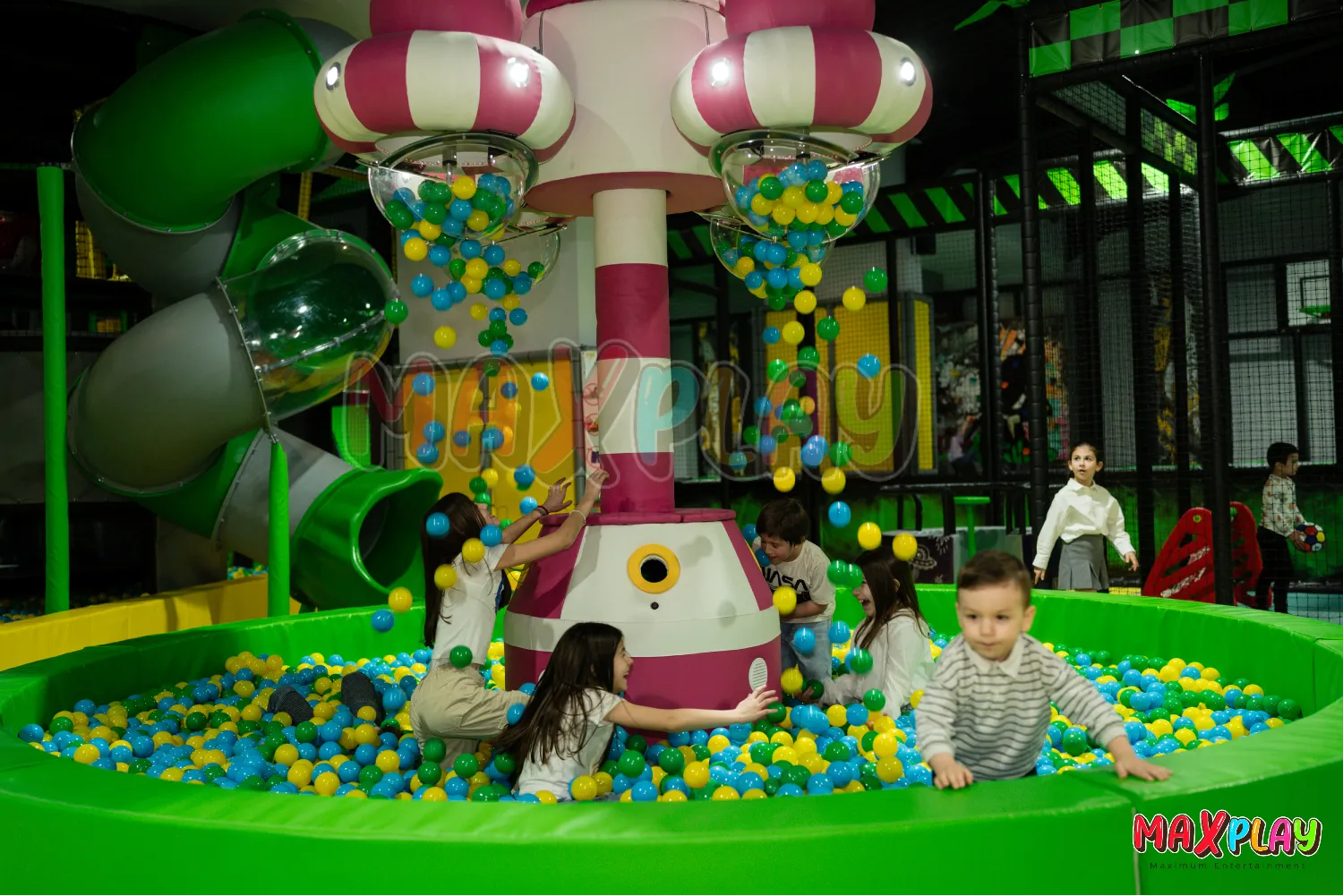
- Ball Pit Manufacturing – Ball Pit Playground Installations (with slides, etc.)
- Interactive Play Systems (Moving Soft Play Toys & Equipment)
- Sand Pit – Sand Play Areas
- Playgrounds and Role-Play Houses for Kindergartens & Nurseries
- Indoor playgrounds for businesses such as shopping malls, cafés, restaurants, etc.
- And all customized playground projects tailored to your specific needs.
From an operational standpoint, the most common pitfall for Polish investors is treating play equipment procurement as a purely decorative fit-out rather than an engineered structural installation. Commercial indoor play zones undergo continuous physical stress, fluctuating temperature conditions, and intensive sanitization routines. Partnering with seasoned manufacturing vendors guarantees that floor plans, entry-exit safety corridors, anchor points, and material stress limits are calculated accurately from day one, preventing structural redesigns or compliance failures during municipal and technical inspections.

What Polish Businesses Should Look for in a Soft Play Supplier?
Selecting an equipment vendor in the Polish market requires verifying engineering capabilities, regulatory compliance, and post-installation accountability. When screening potential soft play manufacturers, operators must look beyond 3D renders and examine the factory’s structural calculation reports, welding standards, vinyl seam welding techniques, and quality control procedures. A reputable vendor understands the specific commercial dynamics of the Polish recreation sector, providing detailed operational manuals, material safety data sheets (MSDS), and explicit load-bearing calculations for multi-level structures.
In practical installation scenarios, local authorities and site managers frequently evaluate how play structures interact with existing facility infrastructure. A reliable supplier assesses HVAC routing, ceiling height clearances, emergency evacuation routes, and sprinkler dispersion patterns before manufacturing begins. B2B buyers should avoid vendors that provide generic off-the-shelf drawings without requesting DWG architectural layouts or conducting site-specific structural assessments.
A trusted supplier must also provide transparent raw material traceability and comprehensive technical support throughout the operational lifecycle. Key evaluation criteria include:
- Documented Structural Testing: Verification that core steel framing and connection joints withstand high dynamic loads.
- Hygienic Material Properties: Proof that outer textiles utilize anti-microbial, anti-fungal, and phthalate-free coatings.
- Component Interchangeability: Ready availability of standardized wear-and-tear replacement parts to minimize venue downtime.
Understanding the Difference Between Standard and Custom Soft Play Systems
Standardized systems operate on pre-engineered modular grids, making them suitable for fast deployment in straightforward commercial layouts with standard ceiling clearances. These systems feature predefined slide trajectories, uniform deck heights, and basic obstacle pathways. While standard units offer predictable production cycles, they lack the spatial adaptability required for irregular structural footprints, low-hanging HVAC ducts, or support columns that divide commercial retail real estate.
Custom-engineered structures, by contrast, are designed to optimize usable volume and customer flow across complex floor plans. Bespoke engineering allows operators to integrate architectural obstacles into the gameplay experience, such as wrapping soft climbers around concrete load-bearing pillars or incorporating mezzanine levels. Investing in custom layouts prevents dead floor space, resolves dead-end bottlenecks that compromise safety, and creates dynamic play routes tailored to targeted age brackets.
From an operational perspective, modular structures suit standard retail leases, while bespoke systems maximize revenue density in high-investment entertainment venues.
Which Turkish Playground Equipment Is Best for Family Entertainment Centers?
Multi-level modular soft play structures represent the core anchor attraction for modern Family Entertainment Centers (FECs) sourcing from Turkish manufacturers. Engineered from heavy-duty galvanized steel framing and encased in impact-absorbing polyurethane foam, these multi-tier play frames maximize vertical cubic volume in high-ceiling commercial venues. Turkish manufacturers specialize in configuring these systems with integrated spiral tube slides, vertical squeeze rollers, rope traverse bridges, and aerial crawl tunnels. This structural versatility allows operators to achieve high visitor throughput while ensuring clear sightlines for floor staff and parents, optimizing the venue’s revenue per square meter without creating blind supervision spots.
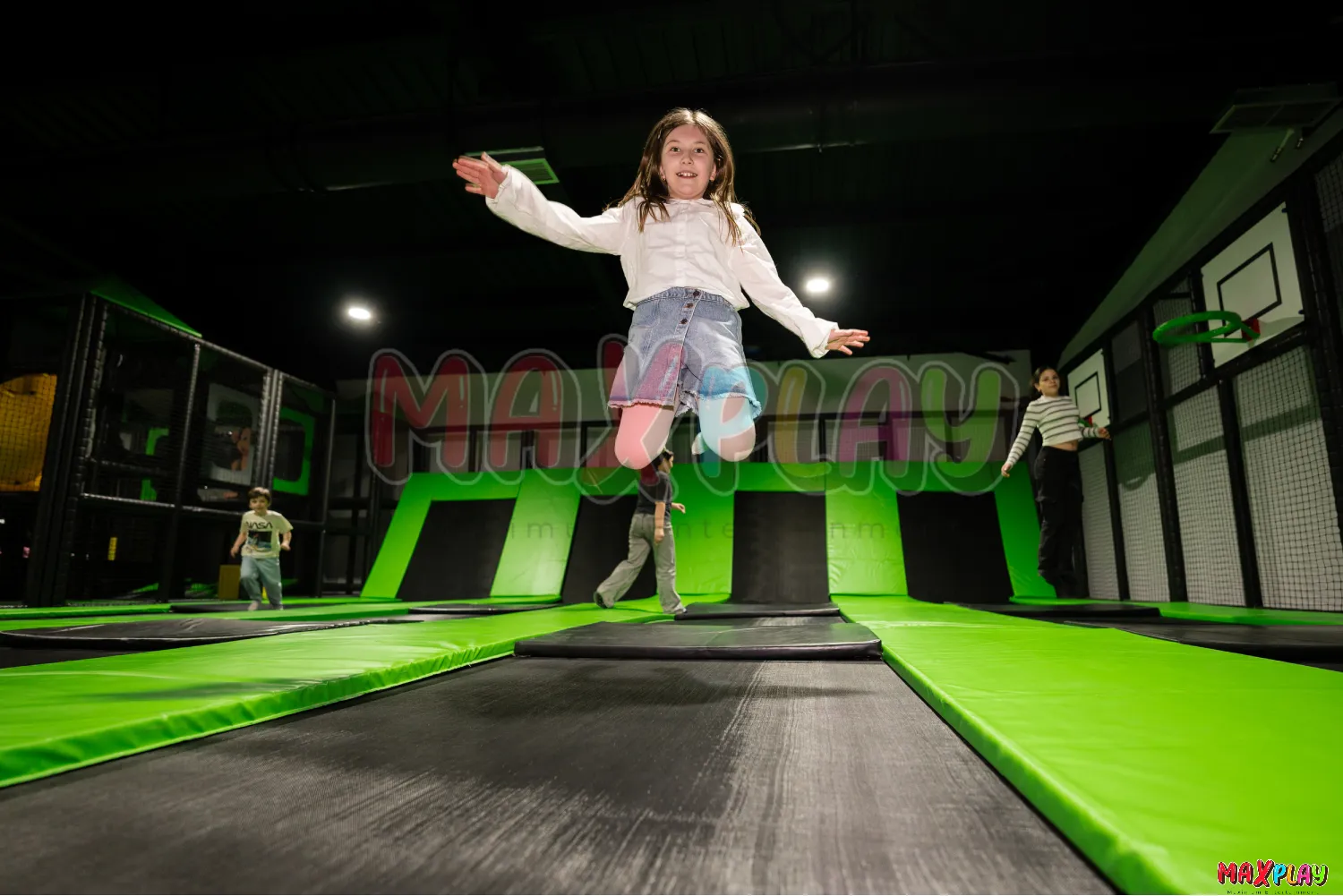
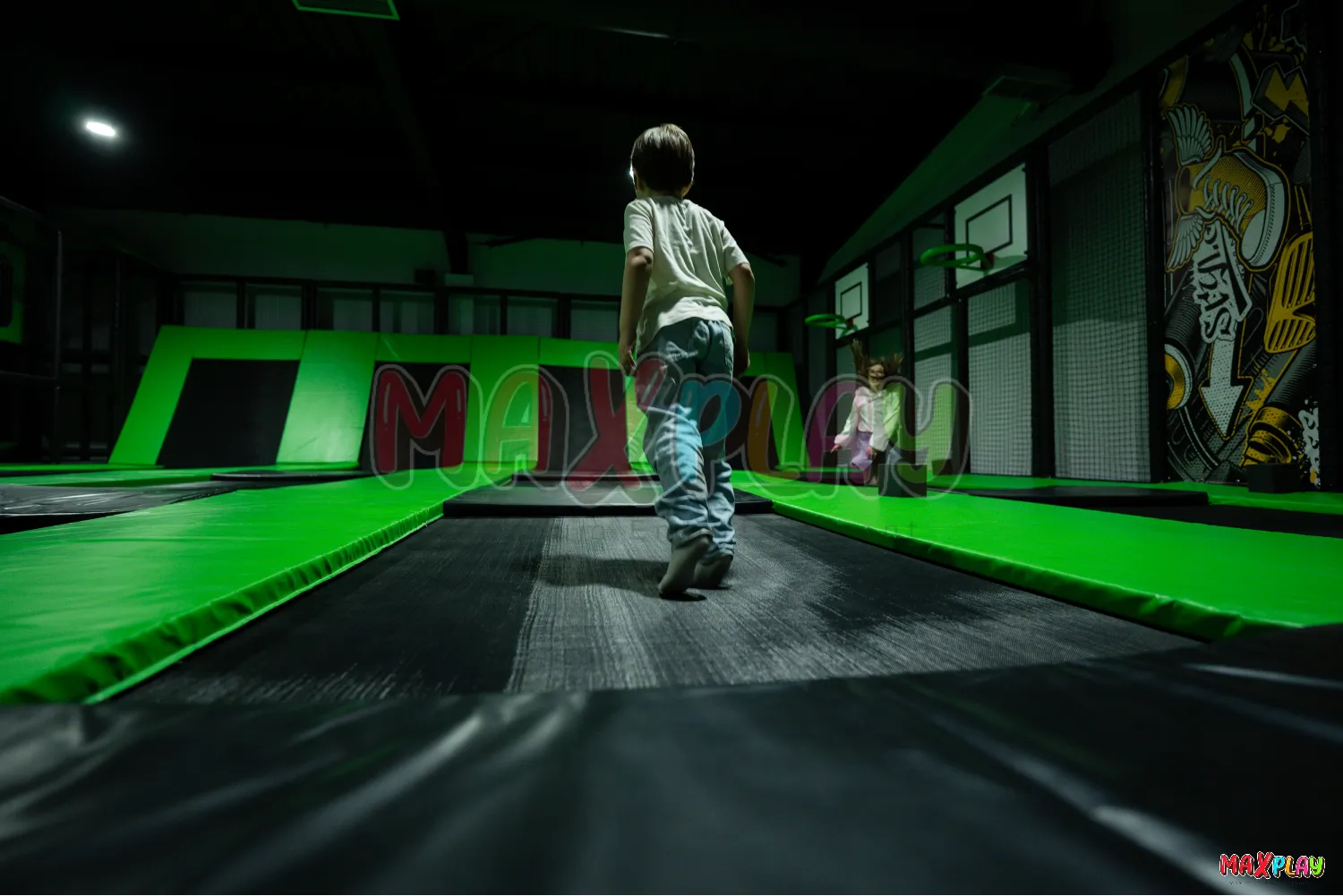
For expanding FECs targeting broader age demographics, hybrid ninja warrior courses and integrated trampoline zones produced in Turkey deliver high engagement for older children, teenagers, and young adults. In commercial execution, the most successful layouts connect traditional soft play zones with low-impact obstacle runs featuring balance beams, angled stepping pads, suspended cargo nets, and soft-landing foam pits. Turkish fabricators utilize high-tensile modular clamp systems that allow these attraction modules to be reconfigured or expanded over time, giving venue owners the flexibility to refresh their gameplay offering without undergoing complete structural overhauls.
Interactive electronic soft play modules and specialized toddler zones complete the ideal commercial equipment mix. Turkish factories increasingly integrate responsive LED sensor panels, digital ball-wall targets, and motorized soft carousels directly into the physical playscape to blend athletic movement with gamified elements. Simultaneously, dedicated early-childhood zones equipped with low-profile soft climbers, sensory tactile boards, and shallow ball pools isolate children under age four from high-velocity traffic areas. This strategic zoning protects younger guests, satisfies municipal risk-assessment criteria, and significantly increases average family dwell time within the facility.
MaxPlay Playground Equipment Overview
| Equipment Name | Description | Key Benefits |
| Ball Pool | Colorful pit filled with balls for safe sensory play. | Safe fun for toddlers, easy to clean, encourages motor skills. |
| Trampoline | High-quality indoor trampolines. | Builds balance and strength, child-safe design, durable materials. |
| Interactive Game Sets | Digital and physical interactive play stations. | Boosts learning, cognitive skills, and engagement. |
| Profession Houses | Role-play houses designed for kids. | Encourages creativity, social interaction, and imagination. |
| Trampoline Park | Large-scale trampoline structures. | Suitable for older kids, high durability, safe design. |
| Roller Slide | Conveyor-style (roller) slides for continuous fun. | Efficient design, fun motion play, safe structure. |
| Tower Slide | Tower slides designed for adventure play. | Exciting design, strong safety standards, eye-catching feature. |
| Climbing Wall | Indoor climbing walls. | Builds strength and coordination, safe grips, customizable difficulty levels. |
| Volcano Slide | Volcano-shaped slides with climbing and sliding features. | Combines climbing and sliding, unique design, fun for multiple age groups. |
What Safety Features Are Included in Turkish Soft Play Equipment?
Safety compliance in export-grade Turkish soft play equipment centers strictly on conformity with the European standard EN 1176 (parts 1 and 10) for fully enclosed play structures, alongside EN 1177 impact attenuation benchmarks. All load-bearing frameworks are constructed from hot-dip galvanized steel tubing wrapped in high-density, closed-cell polyethylene foam tubes secured by continuous UV-stabilized, heavy-duty fastening systems. Structural joint clamps are cast with flush, rounded profiles and recessed bolt housings, eliminating sharp mechanical edges and preventing finger, clothing, or toggle entrapment hazards across multi-level climb routes.
The upholstery and cushioning components utilize fire-retardant, high-density polyurethane foam (typically 35 to 50 kg/m³ depending on whether the element serves as a vertical buffer or a load-bearing deck step). This core is encased in double-sided, lacquered PVC-coated polyester fabric weighing between 650 and 900 g/m². The fabric is certified under EN 13501-1 fire reaction standards, meets EN 71-3 non-toxicity/heavy metal migration limits, and features high-frequency welded seams that resist moisture penetration, tear stress, and continuous chemical disinfection during daily sanitation routines.
Perimeter containment relies on knotless, high-tenacity polypropylene safety netting engineered with specific mesh dimensions (typically 40 mm to 50 mm) to prevent climbing while maintaining structural arrest capacity under dynamic impact. In practice, certified Turkish manufacturers install internal safety baffles, impact-absorbing fall zones beneath all slide exits, and padded transition buffers across every floor level. Every exported unit is backed by a technical safety dossier, including structural calculation sheets, material test certifications, and certified anchor point torque specifications for building control sign-off.
Choosing Equipment for Shopping Centres, FECs and Family Venues
Equipment selection must be aligned with the operational realities, visitor dwell times, and usage intensity of the specific venue type. Shopping mall playgrounds require durable, low-supervision elements with high turnover capacity, allowing children to move safely through visible zones while parents shop or dine. For multi-attraction family destinations, operators must deploy large-scale indoor soft playground equipment that accommodates diverse developmental stages within a unified, high-throughput footprint.
Within these larger family hubs, an indoor play set can serve as an energetic transit zone between distinct attractions. To maintain broad demographic appeal, venues must establish dedicated early-childhood zones featuring a dedicated toddler play set indoor. Isolating younger children from high-speed, multi-tier play structures prevents accidental collisions, minimizes liability, and provides parents with an accessible, low-impact environment designed specifically for early motor skill development.
In high-footfall entertainment environments, spatial efficiency and revenue per square meter are paramount. Commercial soft play zones must balance active athletic challenges with sensory stimulation to sustain repeat family visits:
| Venue Type | Primary Design Focus | Recommended Components | Typical Footprint |
| Retail / Malls | High visual visibility, rapid cleaning access, short dwell times | Low-profile obstacles, interactive wall panels, soft seating buffers | 50 – 150 m² |
| FECs & Theme Parks | High throughput, broad age segmentation, high retention | Multi-level soft structures, integrated slides, zip lines, sports courts | 300 – 2000+ m² |
| Hotels & Dining | Low-noise footprint, compact safety barriers, toddler safety | Sensory play corners, crawl tunnels, mini soft slides, activity tables | 30 – 100 m² |
For venues scaling up their experiential offerings, integrating a dedicated trampoline park equipment zone alongside traditional soft structures captures older children and teenagers, increasing total group dwell time. Combining diverse attractions under one structural design creates an inclusive entertainment environment that caters to multi-age family demographics.

Safety Documentation and European Standards to Check
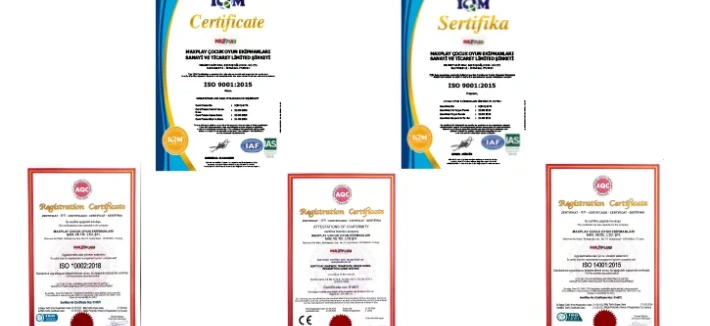
Commercial soft play safety across Europe is governed by the rigorous EN 1176 standard (specifically EN 1176-1, EN 1176-10 for fully enclosed play equipment) and EN 1177 for impact-attenuating surfacing. Polish inspection bodies, insurance underwriters, and municipal technical supervisors require verifiable third-party certification rather than self-declared conformity letters. Procuring equipment without authenticated testing documentation exposes business owners to severe financial penalties, operational shutdowns, and voided commercial insurance policies in the event of an incident.
When evaluating a manufacturer’s safety dossier, verify that structural calculations account for dynamic live loads, head and neck entrapment hazards, finger entrapment points, and toggle catch risks on slide transitions. All netting must maintain precise mesh openings to prevent climbability while offering sufficient tensile strength to arrest adult impact loads. Furthermore, foam cushioning must comply with European flame-retardant standards (such as EN 13501-1 Class B or C ratings), with accompanying documentation detailing smoke production indices.
In real-world compliance audits, inspectors cross-check the stamped batch numbers on protective vinyl and foam with the submitted lab reports. Operators must ensure that their supplier supplies a complete technical passport upon delivery, containing assembly schematics, maintenance interval schedules, daily inspection checklists, and structural torque specifications for every mechanical anchor.
Why Source Soft Play Equipment from Turkey for Polish Projects?
Sourcing commercial entertainment structures from Turkey provides Polish investors with a strategic balance of European-standard manufacturing quality, geographic proximity, and favorable price-to-performance metrics. Unlike domestic manufacturing sectors in Western Europe that carry heavy overheads, Turkish industrial fabrication delivers competitive direct-from-factory pricing without compromising on technical execution. This allows operators to allocate more capital toward expanding play capacity, interactive accessories, and thematic customization.
Compared to distant overseas production hubs, Turkish logistics eliminate extended ocean transit times, port congestion liabilities, and fluctuating container freight rates. Delivery to Poland via streamlined overland TIR freight networks typically takes only 5 to 7 business days once manufacturing is complete. This geographic proximity drastically reduces overall project lead times, facilitates rapid on-site technical installation, and ensures that specialized replacement parts arrive within days rather than months, minimizing costly venue downtime.
Trade efficiency is further enhanced by the European Union–Turkey Customs Union. Most commercial play goods enter Poland with zero customs duty via standard ATR documentation, simplifying the import process and eliminating unexpected import taxes. Turkish factories combine advanced CNC cutting, heavy-duty vinyl frequency welding, and precision engineering with strict adherence to EN 1176 norms, making Turkey an ideal manufacturing partner for the Polish entertainment industry.
Assessing Foam, Fabric, PVC and Structural Components
The physical lifespan of soft playground equipment is determined by the density and molecular composition of its core materials. Commercial installations require high-density, combustion-modified polyurethane foam (minimum 30–35 kg/m³ for wall pads; 40–50 kg/m³ for high-impact floor decking and stairs). Substandard low-density foam degrades rapidly under continuous compressive stress, causing the exterior vinyl to sag, creating hazardous gap clearances between structural steel members and expose children to rigid sub-frames.
Exterior textile covering requires equal scrutiny. Commercial-grade soft play utilizes heavy-duty, high-tenacity polyester fabric coated with durable PVC on both sides, typically weighing between 650 g/m² and 900 g/m². The material must feature a lacquered, anti-scratch matte or glossy finish that resists aggressive industrial disinfectants while maintaining tear resistance exceeding 2500 N/5cm. Seams must be precision-welded using high-frequency dielectric technology or sewn using bonded, UV-stabilized nylon threading to prevent moisture penetration and seam failure.
For core structural framing, the standard is hot-dipped galvanized steel pipe wrapped in fire-retardant, high-density polyethylene (PE) foam padding and secured with UV-stabilized cable ties. Connecting joints must utilize heavy-duty cast ductile iron or forged steel clamps that distribute dynamic mechanical loads evenly across the frame. Structural steel components with thin powder coatings or exposed sharp bolt heads present major safety risks and should never be accepted in commercial installations.
Custom Colours, Themes and Branding for Commercial Play Areas
A cohesive aesthetic theme elevates a play area from a collection of obstacle courses into an immersive, branded family destination. Polish shopping malls and hospitality brands increasingly demand customized color palettes that align with their architectural branding and interior finishes. Experienced manufacturers use precision digital UV printing, bespoke upholstery patterns, and sculptural fiberglass elements to create themed environments—from Nordic forest motifs and futuristic space stations to nautical adventures and minimalist pastel modernism.
In commercial environments, custom visual design serves an operational purpose alongside its aesthetic appeal. Distinct colorways can visually delineate age-appropriate zones, guiding toddlers away from high-velocity drop slides while directing traffic smoothly across the playscape. Branded features, character sculptures, and customized entrance portals also turn the play space into a recognizable visual backdrop, driving organic social media exposure from visiting families.
When commissioning custom themes, ensure that all decorative surface coatings and printing inks are non-toxic, scratch-resistant, and certified to meet toy safety migration standards (EN 71-3). Surface graphics must withstand abrasive friction from clothing, daily anti-bacterial cleaning, and chemical sanitizers without peeling, fading, or off-gassing volatile organic compounds (VOCs) into closed indoor spaces.
Lead Times, Production Capacity and Order Planning
Executing a commercial playground fit-out on schedule requires proactive project management and a realistic manufacturing timeline. A typical production cycle for a medium-to-large commercial soft play equipment installation spans between 4 to 8 weeks, depending on design complexity, material customizations, and factory queue capacity. Polish business owners must coordinate equipment manufacturing milestones directly with on-site construction timelines, electrical rough-ins, flooring installations, and local safety licensing audits.
One of the most frequent operational oversights is finalizing architectural layouts before confirming floor flatness, structural column dimensions, and ceiling obstructions. Any post-production modification to steel framework or slide trajectories can lead to costly manufacturing delays and site rework. Initiating factory engineering orders 3 to 4 months ahead of the target venue grand opening provides an adequate buffer for custom manufacturing, logistics transit, customs clearance, and structured on-site assembly.
When negotiating orders with large-scale indoor playground equipment manufacturers, operators should request a binding milestone schedule that clearly outlines engineering sign-off dates, factory progress reporting, pre-shipment quality inspections, and loading schedules. Clarifying production milestones upfront eliminates operational friction and ensures that your venue opens on schedule without costly administrative delays.
Delivering and Installing Soft Play Equipment in Poland
Logistics and installation demand precise planning to ensure seamless execution upon arrival at your Polish site. Sourcing from a reputable indoor playground supplier ensures that modular components, steel frameworks, netting rolls, and hardware are systematically packed, numbered, and cross-referenced with detailed CAD assembly blueprints. High-volume freight is loaded into sealed overland trucks to protect soft upholstered components from moisture, road dirt, and transit deformation.
Site readiness is essential before the logistics team arrives on location. The installation area must be cleared of general construction dust, fully enclosed, climate-controlled, and equipped with stable 230V/400V power connections for specialized assembly tools. Floors must be dry, structurally sound, and level to allow proper vertical anchoring of primary load-bearing steel columns. Any discrepancy in floor levelness can misalign pre-fabricated modular platforms, causing structural stress and assembly delays.
Professional assembly must be managed by certified installation technicians who understand structural safety clearances, correct tensioning of perimeter netting, and mechanical fastening torque standards. Improperly tensioned netting or loosely fitted foam sleeves create immediate entrapment hazards during third-party safety inspections. Once mechanical installation is complete, technicians perform rigorous impact testing and joint checks before handing over the operations manual.
How to Compare Soft Play Suppliers Beyond the Quoted Price
Evaluating competing vendor proposals requires analyzing total cost of ownership (TCO) rather than looking solely at baseline equipment prices. A low initial quote often reflects cost-cutting measures, such as thinner steel walls, low-density filler foams, recycled low-grade PVC, or the exclusion of critical fasteners and safety netting from the bill of materials. Purchasing uncertified, lower-grade equipment results in rapid material degradation, frequent component replacements, and expensive operational downtime within months of opening.
When comparing vendors, assess whether quotes include complete technical documentation, structural calculations, certified foam test reports, and dedicated factory engineering support. A superior supplier provides robust post-warranty parts availability, field-service capabilities, and transparent warranty terms covering frames, netting, and upholstery. Partnering with a dedicated trampoline park manufacturer or playground fabricator that maintains full control over its supply chain guarantees higher manufacturing precision and structural reliability.
Long-term commercial value is built on equipment reliability, ease of maintenance, and responsive after-sales support. Sourcing from an established manufacturer with proven fabrication experience protects your capital investment, lowers recurring operational expenses, and ensures your indoor play facility maintains an impeccable safety record year after year.

Choosing MaxPlay for Commercial Soft Play Supply
MaxPlay stands as a premier European manufacturing partner, delivering world-class, certified indoor play equipment engineered for the demanding commercial sector in Poland and across Europe. Our manufacturing operations combine high-precision engineering, automated steel cutting, and certified assembly practices to produce robust soft play equipment wholesale solutions that meet and exceed EN 1176 safety standards. Every system is constructed from high-density, fire-retardant foams, heavy-duty antibacterial PVC textiles, and hot-dip galvanized steel frames designed to withstand continuous commercial use.
From concept to completion, MaxPlay works closely with shopping malls, FEC developers, hotels, and leisure operators to design tailored play environments. Whether you need a high-throughput multi-tier play structure, interactive obstacles, or an integrated classic ball pool zone, our design team transforms commercial floor plans into high-yield entertainment assets. As a single-source interactive playground equipment fabricator, we provide end-to-end support, encompassing free bespoke architectural 3D planning, fast European road freight, and professional turnkey on-site assembly.
By sourcing directly from our factory in Turkey, Polish operators bypass intermediary markups, access premium European-grade materials, and benefit from reliable 5-to-7 day overland delivery to Poland. MaxPlay provides the perfect combination of structural durability, custom aesthetic execution, and competitive direct-from-manufacturer pricing. Contact our engineering team today to request your free 3D project design and quotation, and let us build an engaging, fully compliant commercial play space for your venue.