





Indoor Playground Design and Build Services in Slovenia: Step-by-Step Guide
Executing a high-performing family entertainment project demands far more than purchasing generic play items and placing them into an open hall. Investing in professional indoor playground design and build services in Slovenia requires a methodical approach that aligns commercial viability, architectural realities, and rigorous European safety directives. Whether transforming a commercial property in Ljubljana, expanding a hospitality resort along the Adriatic coast, or building a regional attraction in Maribor or Celje, your success relies on custom engineering, durable manufacturing, and layouts optimized for foot traffic and customer retention.
As MaxPlay Playground Equipment, we provide professional solutions for indoor playgrounds and soft play areas. We design, manufacture, install, and assemble indoor playground equipment and soft play systems for commercial spaces. Contact us for turnkey indoor playground projects.
| Landline: | 0216 377 10 88 |
| Mobile / WhatsApp: | 0532 069 53 17 |
| E-Mail: | info@maxplay.com.tr |
| Address: | Google Maps |
You can contact us for all your projects across Türkiye and international markets.
Our Services:
- Trampoline Manufacturing – Trampoline Park Installation
- Ball Pit Manufacturing – Ball Pit Playground Installations (with slides, etc.)
- Interactive Play Systems (Moving Soft Play Toys & Equipment)
- Sand Pit – Sand Play Areas
- Playgrounds and Role-Play Houses for Kindergartens & Nurseries
- Indoor playgrounds for businesses such as shopping malls, cafés, restaurants, etc.
- And all customized playground projects tailored to your specific needs.
Every commercial leisure venue must balance dynamic visual appeal with practical maintenance, spectator comfort, and child development principles. Selecting an indoor play set or a specialized toddler play set indoor is not merely an aesthetic choice; it dictates daily operational throughput, cleaning efficiency, and safety compliance. Navigating the journey from initial site analysis to grand opening requires a structured, step-by-step framework to maximize your return on investment while delivering an unforgettable guest experience.

Understanding the Venue Before Starting an Indoor Playground Project
The foundation of every sustainable leisure investment is an uncompromising site assessment. Before committing to concepts or equipment choices, developers must conduct an exhaustive venue evaluation that uncovers both the architectural advantages and structural limitations of the property. In actual field evaluations, what initially appears to be an ideal open hall often presents complex challenges: irregularly spaced structural pillars, low-hanging HVAC ductwork, floor load limits, or recessed emergency egress routes. Identifying these physical parameters early prevents expensive design revisions and installation delays later in the build.
The relationship between total floor area and unobstructed ceiling height directly governs the functional volume and revenue density of your business. While high ceilings exceeding five meters allow for thrilling multi-level play mazes, vertical drop slides, and integrated rope courses, venues with lower clearance require intelligent horizontal layouts, crawling circuits, and interactive floor games. Calculating the actual available space involves setting aside necessary perimeter clearances, safe walking paths for parents, shoe storage zones, and service corridors.
Accurately modeling peak visitor capacity prevents hazardous overcrowding and operational bottlenecks. A well-planned commercial play space balances active play zones with secondary revenue drivers, such as café seating, birthday party rooms, and check-in desks. Failing to match internal capacity with ventilation rates, emergency escape routes, and sanitation facilities leads to poor customer experiences and reduced repeat visits.
What Are the Most Profitable Turkish Indoor Playground Concepts for Europe?
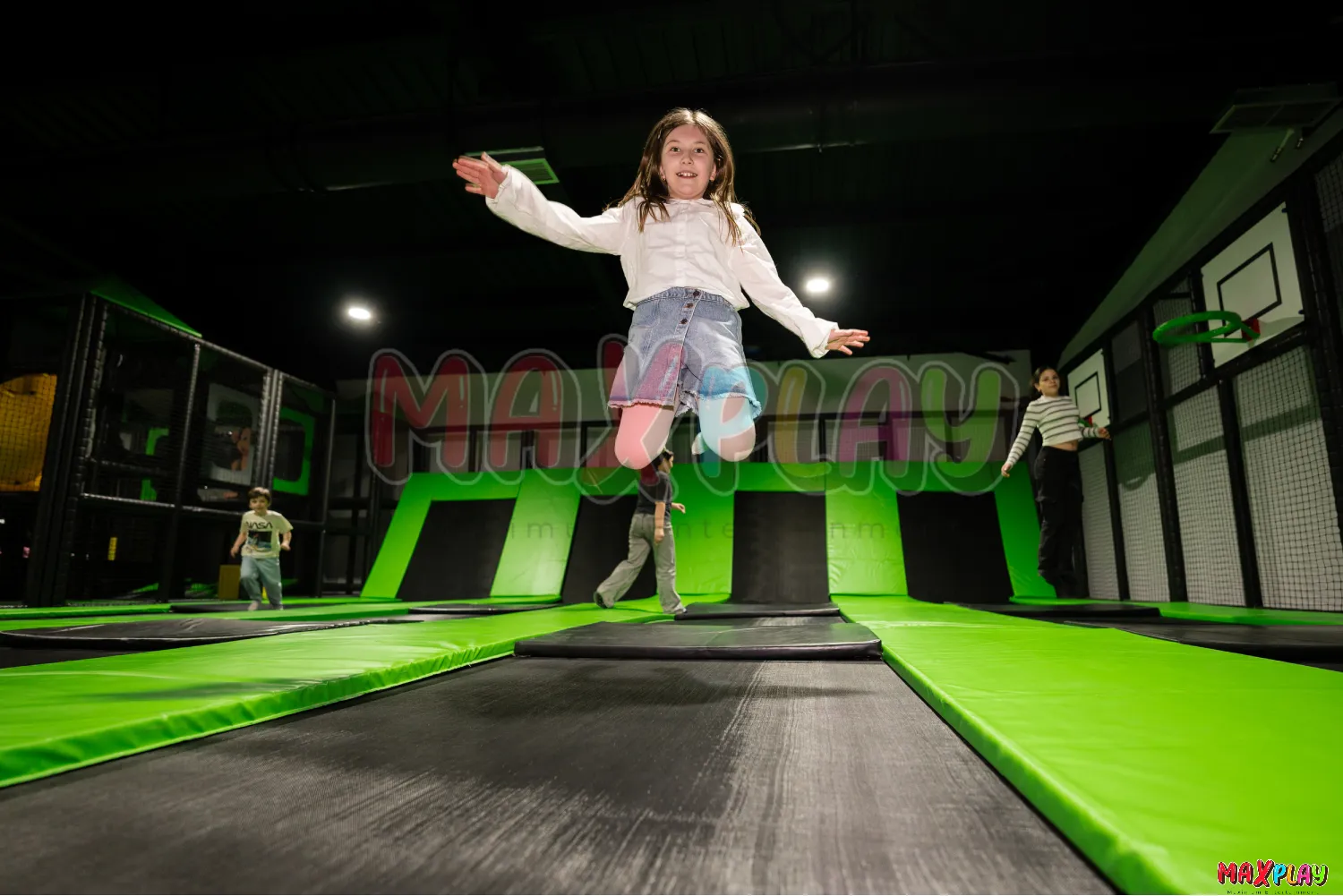
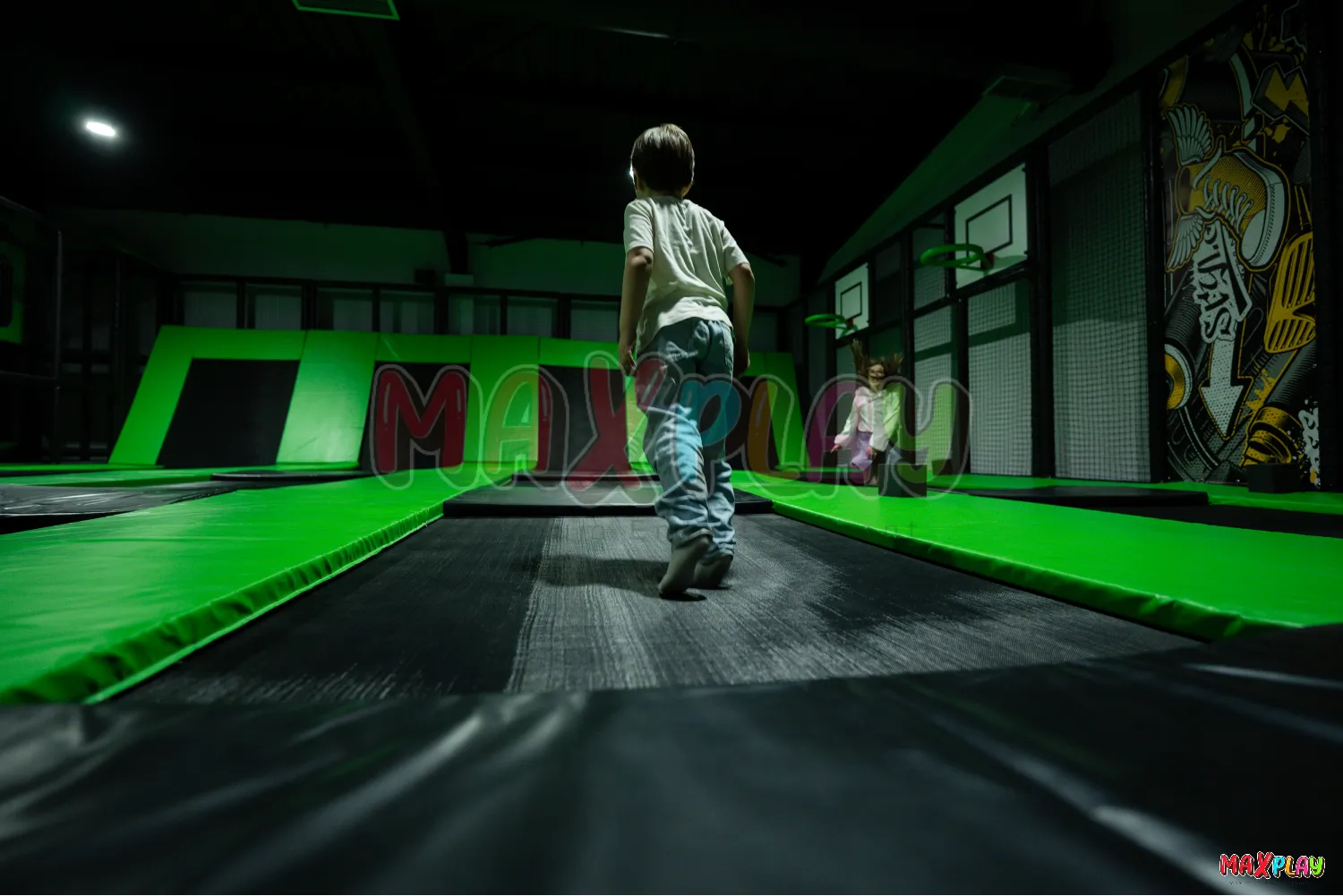
Maximizing returns in the European leisure market requires balancing high-throughput attractions with multi-generational dwell time. The most profitable concepts today are hybrid Family Entertainment Centers (FECs) that merge multi-level commercial soft play equipment with integrated trampoline park equipment and ninja obstacle runs. In practical operations, relying solely on standard toddler zones limits revenue potential to morning hours. Combining high-energy jump arenas for older kids with dedicated sensory zones for younger age groups allows European operators to drive sustained admissions across weekday afternoons, weekends, and seasonal school breaks.
Bespoke, immersive theming represents another major profit driver that commands premium ticket pricing. Turkish manufacturers excel at custom architectural fabrication, allowing European investors to move beyond generic catalog units and implement tailored, narrative-driven indoor play equipment—from Scandinavian alpine motifs to high-tech digital play hubs. Sourcing high-grade indoor soft playground equipment directly from an experienced indoor playground supplier in Turkey reduces initial capital expenditure (CAPEX) significantly compared to Western European alternatives, without sacrificing compliance with EN 1176 standards. This lower entry cost dramatically accelerates the payback period on fixed assets.
Operational profitability is also heavily bolstered by integrating secondary revenue-generating zones. The most lucrative European facilities dedicate up to 30% of their footprint to integrated parent cafés, spectator lounges, and private birthday party suites. Sourcing complete installations via soft play equipment wholesale from a versatile trampoline park manufacturer ensures space-optimized layouts that channel foot traffic naturally into these high-margin catering zones. This approach turns passive supervisory visits into extended stays that consistently increase per-visitor spending.
MaxPlay Playground Equipment Overview
| Equipment Name | Description | Key Benefits |
| Ball Pool | Colorful pit filled with balls for safe sensory play. | Safe fun for toddlers, easy to clean, encourages motor skills. |
| Trampoline | High-quality indoor trampolines. | Builds balance and strength, child-safe design, durable materials. |
| Interactive Game Sets | Digital and physical interactive play stations. | Boosts learning, cognitive skills, and engagement. |
| Profession Houses | Role-play houses designed for kids. | Encourages creativity, social interaction, and imagination. |
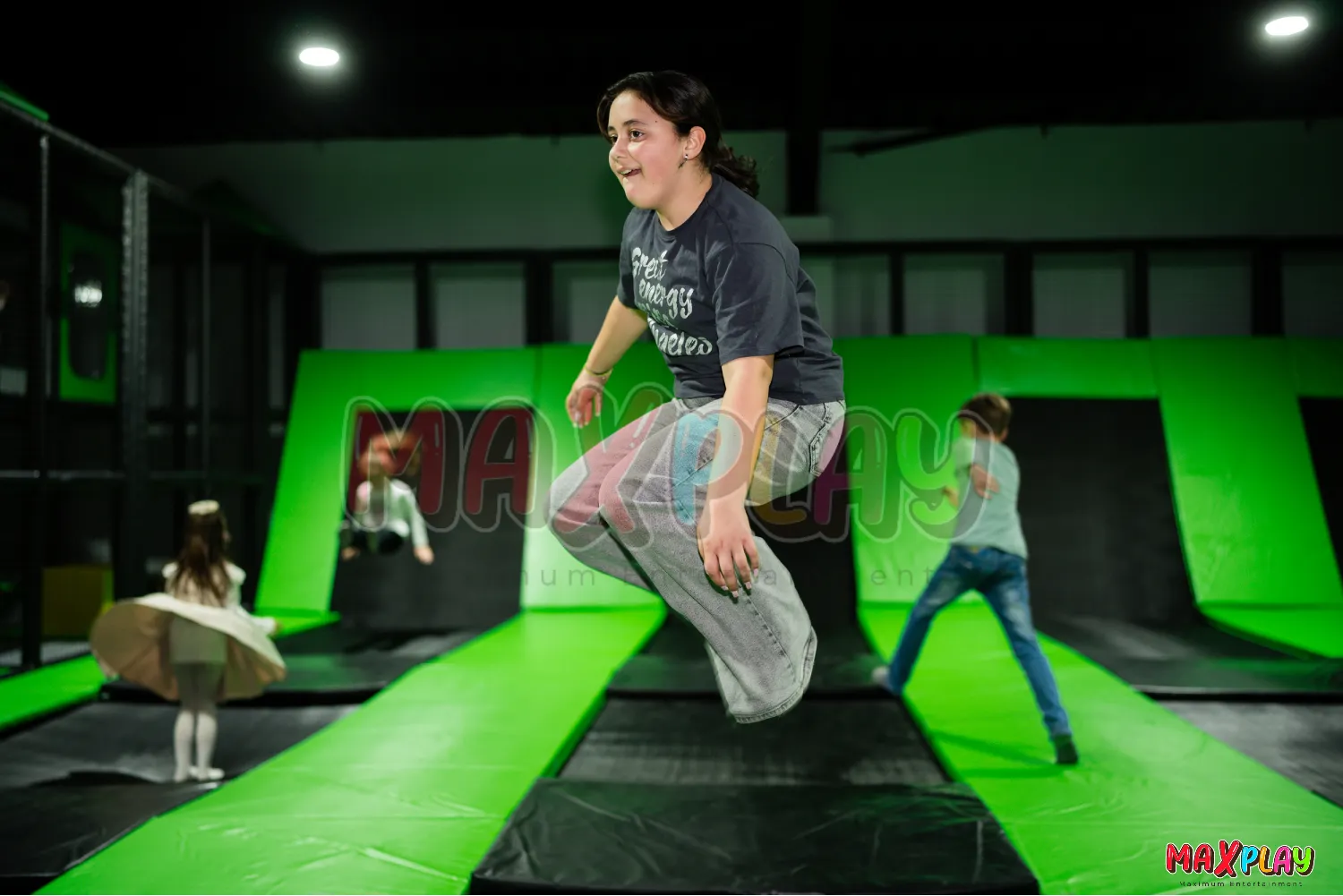
| Trampoline Park | Large-scale trampoline structures. | Suitable for older kids, high durability, safe design. |
| Roller Slide | Conveyor-style (roller) slides for continuous fun. | Efficient design, fun motion play, safe structure. |
| Tower Slide | Tower slides designed for adventure play. | Exciting design, strong safety standards, eye-catching feature. |
| Climbing Wall | Indoor climbing walls. | Builds strength and coordination, safe grips, customizable difficulty levels. |
| Volcano Slide | Volcano-shaped slides with climbing and sliding features. | Combines climbing and sliding, unique design, fun for multiple age groups. |
How Long Does It Take to Install a Turkish Indoor Playground in Europe?
The complete timeline for deploying a Turkish-manufactured indoor playground across a European site typically spans between 6 to 10 weeks from initial 3D design approval to operational commissioning. Sourcing from Turkey provides a distinct scheduling advantage over East Asian imports, where volatile ocean freight alone can consume 6 to 8 weeks. Turkish facilities complete precision steel fabrication, vinyl tailoring, and pre-assembly quality inspections within 3 to 6 weeks, after which direct overland road freight delivers the equipment anywhere across mainland Europe in just 3 to 6 days.
Once logistics coordination delivers the crated equipment to the venue, the physical on-site assembly typically takes 7 to 18 working days, depending on the scale and complexity of the project. A standard 200×400 modular soft playground equipment installation is usually completed within 7 to 10 days by a dedicated crew. Larger venues exceeding 1,000 or multi-level concepts incorporating complex interactive playground equipment, tall slides, and dynamic trampoline pits—generally require 14 to 20 days for structural fastening, safety netting tensioning, and perimeter padding alignment.
In real-world execution, avoiding installation delays depends entirely on rigorous pre-arrival venue readiness. Structural installation can only proceed smoothly when the host facility has completed all dusty civil construction, cured the concrete subfloors, and cleared dedicated access routes from the loading bays. Following physical assembly, certified factory technicians conduct systematic playground safety and mechanical load tests under EN 1176 / EN 1177 frameworks, hand over operational maintenance documentation, and achieve project commissioning for immediate openin
Defining the Concept, Target Audience and Play Experience
A profitable play facility begins with targeted playground concept development tailored directly to local community demographics. Facilities that attempt to serve every demographic with generic equipment often end up satisfying no one. In practice, operators achieve the highest customer retention when they segment their attractions by specific target age groups, ensuring older children can test their agility without endangering younger toddlers exploring early sensory movement.
Crafting an engaging children’s play experience requires stimulating tactile, vestibular, and cognitive abilities through varied physical challenges. Successful modern family entertainment centers structure their space to guide movement naturally, typically incorporating:
- Dedicated Toddler Zones: Fully enclosed spaces with low-density foam obstacles, gentle sensory wall games, and cushioned crawling ramps where parents can comfortably supervise early motor milestones.
- Active Play Jungles: Multi-level, labyrinth-style soft playground equipment with balance bridges, web climbs, and multi-lane racing slides engineered for children aged four to eight.
- High-Challenge Action Arenas: Fast-paced ninja runs, interactive digital target walls, and vertical climbing elements designed to keep older children engaged.
Integrating customized themed play areas—such as alpine landscapes, fantasy forests, or marine worlds—creates a distinct brand identity that stands out against regional competitors. However, theming must never compromise operational visibility or hygiene. Upholstered surfaces and themed shells must withstand thousands of contact cycles each week while remaining easy for staff to clean and sanitize between shifts.
Creating a Functional Layout and 3D Playground Design
Translating raw venue dimensions into an engaging play center begins with an engineering-led indoor playground layout. The design process balances clear sightlines for parental supervision with efficient internal traffic flow and emergency escape paths. In real-world operations, poor design often creates dead-end bottlenecks where children collide or parents struggle to locate their kids. An intuitive layout establishes clear, continuous loops that encourage natural movement across different attractions.
Advanced 3D playground design brings absolute clarity to project planning before manufacturing begins. Detailed volumetric modeling allows operators to inspect height clearances, structural column integration, and slide deceleration zones with total precision. This visual planning ensures that every vertical meter is leveraged effectively. Through strategic space optimization, structural components route cleanly around building columns and ceiling utilities, converting architectural challenges into integrated play features.
Thoughtful play zone planning keeps high-velocity movement paths separated from spectator seating and refreshment areas. A tailored, custom layout prevents barefoot children moving from play structures from crossing paths with adults carrying hot drinks from the café. Implementing a professional design ensures smooth circulation, simple supervision, and an overall layout that maximizes visitor comfort and spending across your facility.
Selecting Soft Play and Activity Equipment for the Project
Selecting the right attractions directly shapes daily operations, visitor capacity, and long-term durability. Commercial operations require heavy-duty soft play structures manufactured with high-density polyurethane foams and flame-retardant, non-toxic PVC tarpaulins. Low-grade residential equipment quickly tears and degrades under commercial footfall. Investing in certified commercial soft play equipment and professional indoor play equipment preserves structural integrity and visual appeal across years of heavy daily use.
A balanced equipment mix combines classic motor activities with modern interactive attractions:
- Ball Pools with Deep Filtration: Heavy-duty ball pool installations featuring crush-resistant, non-toxic LDPE balls, integrated step-up access ramps, and automated ball cleaning systems that streamline daily sanitization.
- High-Capacity Slides and Chutes: Multi-lane fiberglass wave slides, rotomolded spiral tubes, and transparent acrylic observation domes engineered to control descent speeds safely while maintaining steady hourly rider capacity.
- Climbing Structures and Challenge Runs: Modular climbing frames, suspended suspension bridges, and low-level obstacle courses that develop balance, spatial awareness, and upper-body strength.
- Interactive Tech Integrations: Dynamic interactive playground equipment that blends physical motion with digital projection mapping and touch targets to encourage active, gamified play.
- Trampoline and Rebound Arenas: Commercial-grade trampoline attractions built with heavy-gauge steel framing, redundant safety netting, and dual-layer vinyl-covered spring paddings engineered for continuous cyclic loading.
When sourcing indoor soft playground equipment from established indoor playground equipment manufacturers, operators should prioritize modularity, fire ratings, and field-replaceable wear components. Working directly with specialized soft play manufacturers ensures structural steel frameworks use hot-dip galvanized finishes and high-tensile fasteners that perform reliably over years of active commercial operation.
Why Custom Playground Manufacturing Can Suit Slovenian Commercial Spaces
Slovenia features a distinctive mix of historic town centers, contemporary retail parks, and converted industrial properties. Standard, off-the-shelf play structures rarely fit these venues without wasting valuable space. Specifying custom playground equipment gives developers complete freedom to tailor structural frameworks to the exact dimensions of their property, building around angled ceilings, integrating structural pillars into play elements, and maximizing overall play volume.
Investing in bespoke play structures allows operators to differentiate their facility in a competitive leisure market. Rather than installing identical catalog equipment seen in neighboring towns, venues can incorporate site-specific design elements that reflect local culture, nature, or unique business branding. Maximizing floor efficiency with tailored dimensions ensures that every square meter contributes directly to visitor capacity and revenue.
Modern modular systems deliver design flexibility alongside streamlined future adaptability. As visitor preferences evolve or the business expands, modular components can be reconfigured or upgraded with new activity modules without replacing the primary steel framework. Partnering with a specialist in themed playground manufacturing transforms structural safety engineering into an engaging, cohesive brand asset that drives recurring family visits.

Why Turkish Playground Manufacturers Can Be a Practical Supply Option for Slovenia
Sourcing equipment requires balancing capital investment, build quality, and dependable logistics. Choosing an established Turkish playground manufacturer gives Slovenian and Central European operators a clear commercial edge. Turkish manufacturing delivers exceptional structural quality at highly competitive prices compared to Western European builders, while outperforming distant Asian supply chains on material longevity, communication speed, and transport reliability.
The strategic overland route makes Turkey Slovenia sourcing fast, simple, and dependable. Direct road freight runs from Turkish industrial centers through Southeastern Europe straight into Slovenia in just 3 to 6 days. Compared to the long transit times, port congestion, and unpredictable container costs of shipping from East Asia or China, direct European trucking eliminates transit risks and keeps project schedules on track.
Choosing playground equipment from Turkey eliminates the operational compromises often seen with low-cost overseas suppliers. Top manufacturers utilize premium raw materials: certified non-toxic European vinyls, high-resilience fire-retardant foams, robust rotomolded components, and thick galvanized structural steel. Working directly with a dedicated indoor playground supplier and experienced trampoline park manufacturer provides access to first-class, heavy-duty play installations that comply with European safety frameworks without inflated production markups.
Building Safety Into the Design, Materials and Equipment Selection
Safety in commercial family venues is built directly into structural engineering and material compliance. Within the European Union, indoor play facilities must adhere strictly to harmonized safety codes, specifically EN 1176 (which governs multi-level play structures, entrapment protection, and spatial separation) and EN 1177 (which defines critical fall height limits and impact-absorbing surface requirements). Facilities incorporating jump areas must also verify structural frame tolerances and padding resilience under ASTM standards or relevant European annexes.
Real-world playground safety requires systematic engineering to prevent structural failures, falls, and bodily entrapment:
- Entrapment Prevention: Testing all openings, voids, and structural transitions with certified head, neck, torso, and finger probes to eliminate hazards across the entire structure.
- Impact-Absorbing Surfaces: Installing certified, high-density impact-absorbing surfaces—such as interlocking EVA safety tiles or poured polyurethane mats—under all elevated play zones matching tested fall heights.
- Child-Safe Materials: Selecting certified child-safe materials that are non-toxic, flame-retardant, and free from heavy metals or phthalates, ensuring safe contact for young children.
- Structural Safety and Load Testing: Verifying beam deflection limits, net anchoring strength, and joint stability under comprehensive safety testing to withstand maximum visitor loads.
Equipment sourced through certified indoor playground equipment manufacturers undergoes rigorous pre-assembly inspections and material stress testing. Cutting corners on material specifications or structural safety checks exposes operators to severe regulatory penalties, forced closures, and significant legal liability.
Moving from Approved Design to Manufacturing and Quality Control
Moving from signed 3D designs to physical production requires a disciplined playground production process. Once engineering drawings and connection tolerances are finalized, production teams develop detailed CNC cutting schedules, structural welding workflows, and vinyl upholstery patterns. Structured manufacturing planning ensures structural steel frameworks, safety netting, modular platforms, and rotomolded plastics are produced in parallel without manufacturing delays.
Rigorous factory quality control checks protect project timelines by catching potential assembly issues before parts leave the factory floor. Structural frames are dry-assembled in the factory to verify hole alignments, weld uniformity, and connection clearances. Running comprehensive equipment testing before shipping prevents costly on-site modifications during installation.
Maintaining continuous production supervision guarantees that components match the agreed engineering specifications. Fabricators use commercial-grade materials, including hot-dip galvanized internal and external steel tubing, high-tensile mounting hardware, UV-stabilized rotomolded plastics, and durable protective netting. Sourcing soft play equipment wholesale requires strict quality control, ensuring that low unit costs never compromise structural performance or safety standards.
Planning Delivery and Installation for a Slovenian Playground Site
Efficient international logistics keeps projects on schedule and on budget. Managing Turkey Slovenia shipping involves choosing optimized overland road transit routes that bypass complex multi-modal transfers. A detailed freight planning strategy schedules shipments to arrive only when the venue floor is clear and ready, eliminating expensive double-handling, congested storage areas, and on-site material damage.
Professional equipment packaging prevents transit damage across hundreds of kilometers of transport. Heavy structural steel is bundled with shock-absorbent cushioning, soft vinyl modules are shrink-wrapped in protective film, and delicate electronics or interactive components travel in reinforced crates. Clear, color-coded labeling links every package directly to the master engineering assembly diagrams.
Successful playground installation depends on efficient on-site assembly led by factory-certified installation technicians. Experienced crews handle high-altitude fastening, tension perimeter containment safety nets correctly, and seal all foam edge protectors. This organized delivery coordination ensures that structural frameworks are erected efficiently, accurately, and safely.
Preparing the Venue for Professional Playground Installation
Long before installation teams arrive on site, the facility must undergo thorough site preparation. Civil construction teams must complete heavy dusty tasks—including wall sanding, dry-cutting, structural grinding, and primary painting. Airborne construction dust settles deep into soft vinyl and safety netting, creating extensive cleaning work before opening. Establishing clear installation requirements ensures power utilities, lighting grids, and structural mounting points are ready for the assembly team.
Proper floor preparation guarantees a level, dry, and structurally sound subfloor. Uneven subfloors cause vertical structural columns to tilt, misaligning slide mounts and modular platforms. Precise electrical planning places clean power feeds, interactive conduits, and lighting connections safely away from active play paths while keeping them easily accessible for maintenance staff.
During installation, experienced installation supervision oversees mechanical alignments, anchoring methods, and safety margins. Once the physical equipment assembly is complete, technicians begin project commissioning: testing mechanical slides, calibrating interactive sensors, tensioning safety nets, and verifying that every fastener is secured to spec.
Supporting the Playground After Installation and Opening
Opening day marks the beginning of the facility’s active operational lifecycle. Protecting your capital investment and maintaining safety compliance requires an ongoing playground maintenance program. Over weeks of heavy use, structural vibrations naturally loosen mechanical fasteners, compress safety paddings, and stretch perimeter safety nets. Establishing routine daily, monthly, and quarterly inspection protocols keeps equipment safe, clean, and fully operational.
Having fast access to original spare parts avoids long, costly attraction downtime. Reliable manufacturing partners maintain detailed build records, enabling quick dispatches of replacement vinyl covers, custom-molded slide panels, or high-tensile netting. Rapid technical assistance helps on-site operations teams resolve unexpected mechanical issues, repair worn components, and handle electronic updates quickly.
Consistent after-sales support includes structured staff safety training and operational audits. Routine equipment inspection and proactive repairs protect your business from operational liability and slow the visual aging of the play area. This active approach to long-term playground management preserves the value of your commercial assets and ensures a consistently safe, engaging experience for visiting families.

How MaxPlay Can Support a Playground Project from Design to Completion
Bringing an indoor family entertainment center to life requires an experienced partner who combines creative design, structural engineering, and end-to-end execution. MaxPlay delivers comprehensive, turnkey indoor playground solutions tailored specifically to commercial venues across Slovenia and throughout Europe. Rather than managing multiple disconnected vendors, our clients benefit from an integrated workflow covering concept planning, direct manufacturing, certified installation, and dedicated after-sales care.
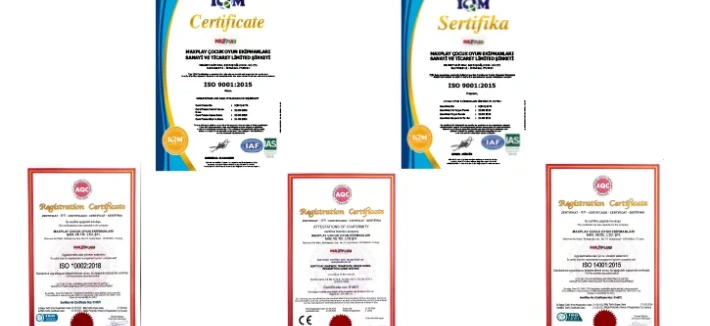
Our design and production process provides complete quality and cost control at every stage. We build every project using certified first-class materials, European-standard safety engineering (EN 1176 / EN 1177), and durable commercial construction. By combining Turkish manufacturing value with dedicated European logistics, we deliver premium, long-lasting facilities at competitive prices, with significantly faster lead times and higher build quality than distant overseas suppliers.
Whether you are designing a full-scale family entertainment center in Ljubljana, adding a dedicated play zone to a shopping mall, or developing a custom trampoline park, our team brings the technical knowledge needed to maximize your venue’s commercial potential. We provide complete architectural project design at zero cost, helping you explore layouts, run spatial assessments, and verify business models with complete confidence.