





Indoor Playground Accessories in Poland: Popular Choices in 2026
Choosing indoor playground accessories in Poland starts with a walk through the venue on a busy day. Watch where children turn back, where parents lose sight of toddlers, and where staff stop to clear a queue or retrieve balls. Those observations will tell you whether the floor needs a second activity, a different route, or a replacement for a worn component. A new slide can be the right investment for a room with spare capacity. In a room where children already cross the slide exit to reach the stairs, the same purchase can make the afternoon harder to manage.
As MaxPlay Playground Equipment, we provide professional solutions for indoor playgrounds and soft play areas. We design, manufacture, install, and assemble indoor playground equipment and soft play systems for commercial spaces. Contact us for turnkey indoor playground projects.
| Landline: | 0216 377 10 88 |
| Mobile / WhatsApp: | 0532 069 53 17 |
| E-Mail: | info@maxplay.com.tr |
| Address: | Google Maps |
You can contact us for all your projects across Türkiye and international markets.
Our Services:
- Trampoline Manufacturing – Trampoline Park Installation
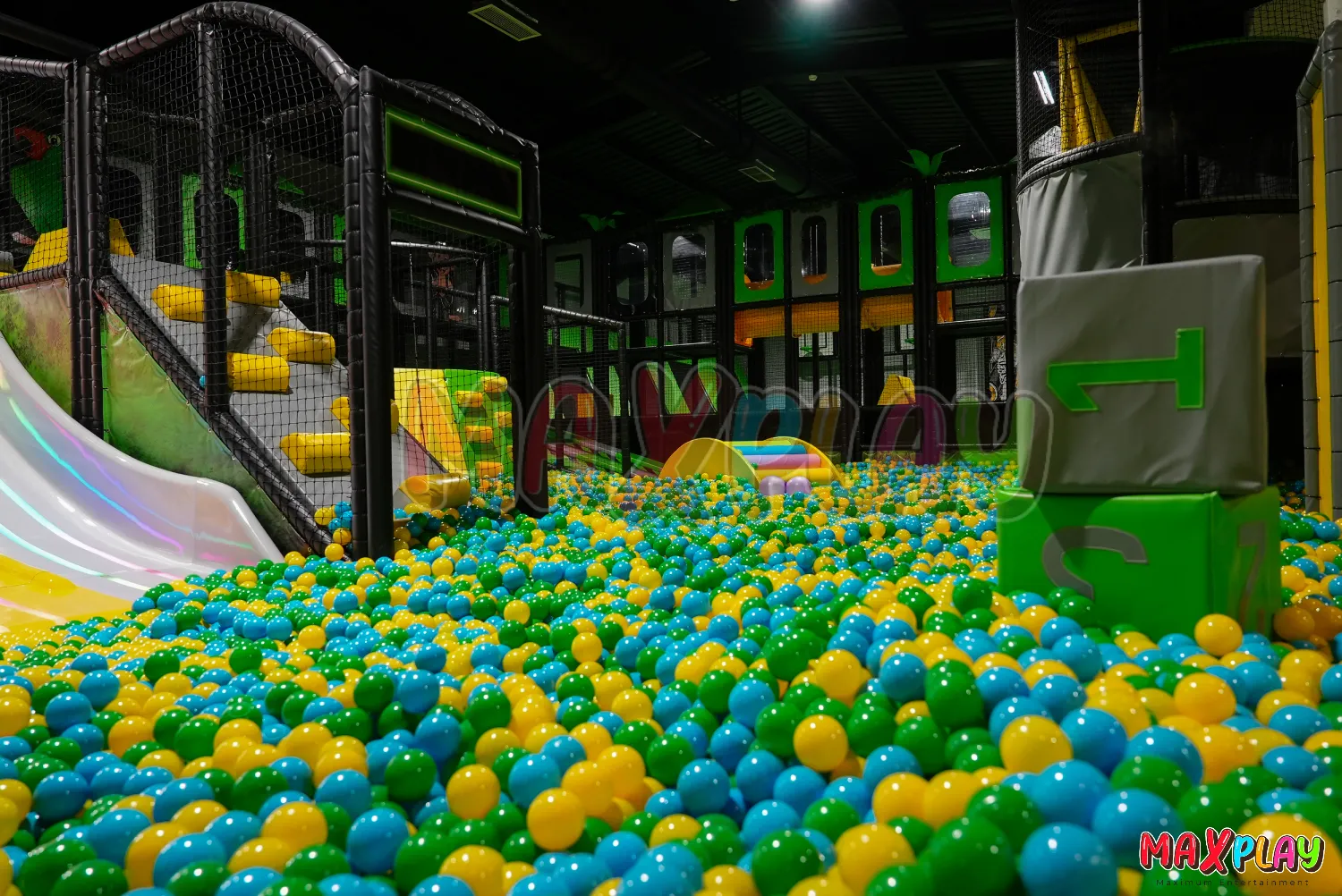
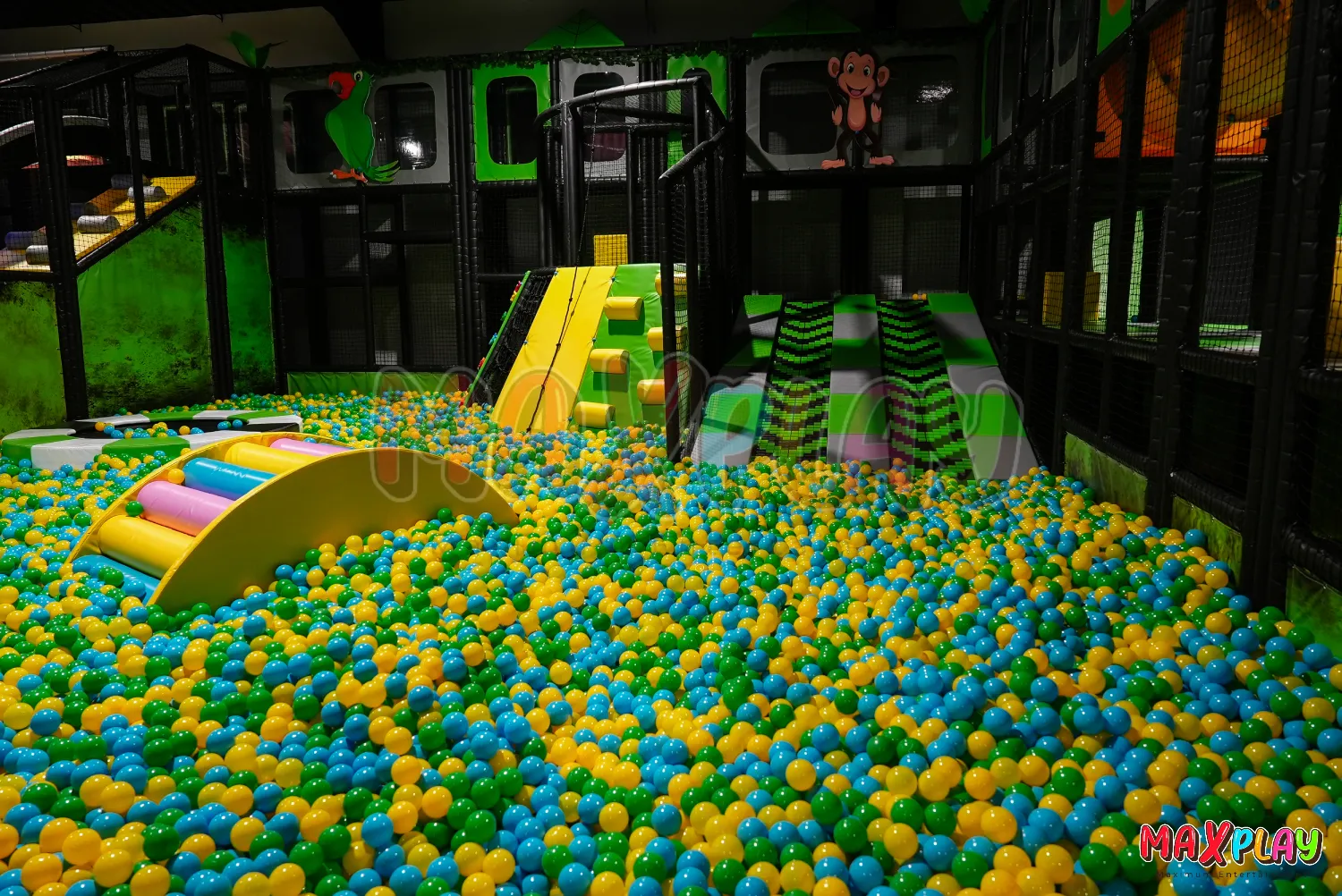
- Ball Pit Manufacturing – Ball Pit Playground Installations (with slides, etc.)
- Interactive Play Systems (Moving Soft Play Toys & Equipment)
- Sand Pit – Sand Play Areas
- Playgrounds and Role-Play Houses for Kindergartens & Nurseries
- Indoor playgrounds for businesses such as shopping malls, cafés, restaurants, etc.
- And all customized playground projects tailored to your specific needs.
For operators comparing commercial indoor play equipment Poland listings, the useful details are often missing from the product photo. A footprint tells you how much floor the unit occupies. The working layout also needs to show the approach, exit, supervision points, and space staff need for cleaning and inspection. Those differences matter whether you are buying one accessory for a hotel playroom, updating a shopping centre attraction, or refurbishing several sections of a family entertainment centre.
Which Attractions Are Featured in Poland’s New Indoor Play Centres in 2026?
Klub Fikołki at BIG Łubna, near Warsaw, officially opened on 18 September 2026. Its attractions include a tube slide, spider tower, obstacle course, and ball pool, alongside other slides and a dedicated space for younger children. For operators following 2026 indoor playground trends in Poland, the opening provides a concrete example of one Polish operator combining several kinds of play in a single venue. The published opening coverage describes the offer at BIG Łubna. A nationwide popularity ranking would require comparable data from a wider group of new venues.
The mix is worth studying because each attraction serves a different purpose. A tube slide gives children a defined way down from an upper level. A spider tower offers a vertical challenge that children can attempt at their own pace, while an obstacle course gives them a reason to keep moving through the frame. A ball pit serves children who want to stay in one place and play. On a busy weekend, the practical question is how many of those activities can run side by side before their approaches, exits, or queues start competing for the same space.
A compact venue can apply the same principle with fewer components. A low climb, a short descent, and a quieter play area may give families enough variety in a hotel or restaurant. A large retail venue with several birthday parties arriving together may need multiple activities children can enter independently. When assessing indoor play equipment, use the busiest ten minutes of a typical session as the test. Follow the path a child would take after finishing each activity, then check whether the next group can start while that child moves away.
MaxPlay Playground Equipment Overview
| Equipment Name | Description | Key Benefits |
| Ball Pool | Colorful pit filled with balls for safe sensory play. | Safe fun for toddlers, easy to clean, encourages motor skills. |
| Trampoline | High-quality indoor trampolines. | Builds balance and strength, child-safe design, durable materials. |
| Interactive Game Sets | Digital and physical interactive play stations. | Boosts learning, cognitive skills, and engagement. |
| Profession Houses | Role-play houses designed for kids. | Encourages creativity, social interaction, and imagination. |
| Trampoline Park | Large-scale trampoline structures. | Suitable for older kids, high durability, safe design. |
| Roller Slide | Conveyor-style (roller) slides for continuous fun. | Efficient design, fun motion play, safe structure. |
| Tower Slide | Tower slides designed for adventure play. | Exciting design, strong safety standards, eye-catching feature. |
| Climbing Wall | Indoor climbing walls. | Builds strength and coordination, safe grips, customizable difficulty levels. |
| Volcano Slide | Volcano-shaped slides with climbing and sliding features. | Combines climbing and sliding, unique design, fun for multiple age groups. |
When Is a Tube Slide a Better Fit Than an Open Slide for a Multi-Level Play Frame?
Tube slides for indoor playgrounds are a good fit when an upper deck needs a continuous descent that turns around an existing frame or works within a constrained layout. An open slide can make more sense at a lower platform, especially when younger children want to see the landing before committing and carers need a clear view of the descent. Compare the installed geometry from the entry platform all the way through the runout. A tube that looks compact on the floor plan may still need substantial clearance at its supports and exit.
In practice, the problem often starts at the top. A child pauses at an enclosed entrance while several others gather on the landing behind them. If that landing also receives children from a climbing route, the queue can block an entire level. Look at the entry platform and waiting position together, then walk the route on the drawing from the child’s point of view. At the bottom, keep through-traffic clear of the exit area. This is especially important where children naturally head back toward the same stairs for another turn.
A soft play slide replacement also needs a fit check even when the new unit appears to have the same length and shape. Record the platform height from the finished floor, the opening dimensions, the support positions, and the space available at the exit. On a tube model, check how sections can be brought inside, assembled, and reached for inspection. An open model usually offers easier visual checks during daily operation. An enclosed model earns its place when its route fits the frame and the operator can still inspect, clean, and supervise it effectively.
How Can Ball Pits with Ramps or Slides Serve Different Age Groups?
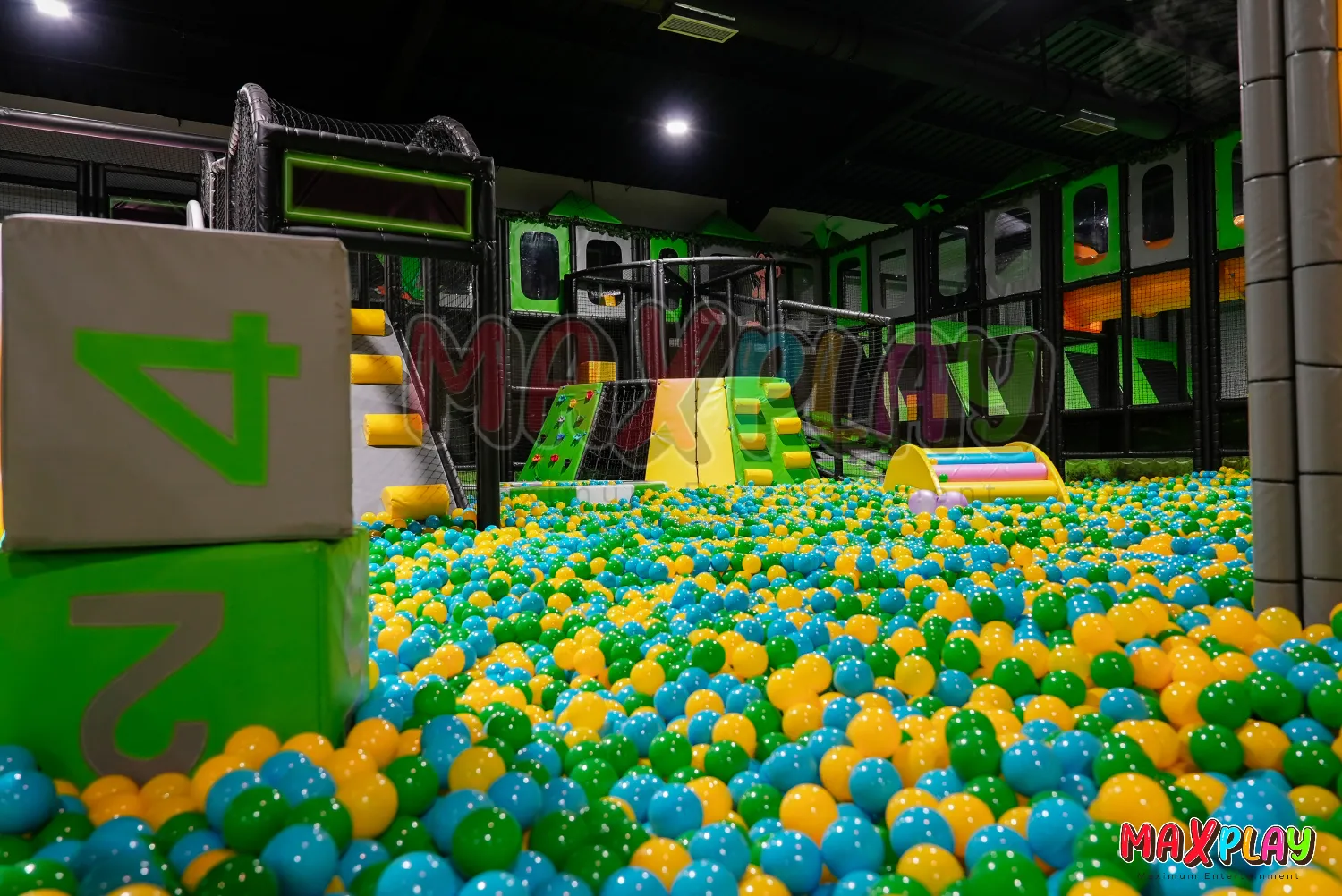
A toddler ball pit with ramp gives younger children a gradual way to enter and a route they can often use to leave independently. It suits a dedicated early-years area where carers supervise from close by. A commercial ball pit with slide introduces an elevated start and a more defined play sequence. It suits a venue that can manage the slide approach, supervise the landing, and give children already in the pit somewhere to play clear of arriving riders. MaxPlay’s toddler range includes a 2 × 3 m model with a ramp and several models with slides.
In real use, children spend time where they land. They may sit at the bottom of a ramp, turn around to look for a parent, or collect balls at a slide exit. Watch where those pauses are likely to happen before choosing the entry location. A ramp that takes up part of the pit reduces the open area available inside. A slide introduces a landing that staff must keep usable throughout the session. If the room serves mixed age groups, a separate toddler pit can be easier to operate than trying to schedule age groups around one shared landing.
Cleaning access can decide between two otherwise suitable designs. Ask where balls collect against the perimeter, how staff will reach the base and corners, and how they will remove and return the balls during a clean. Check how the approach contains loose balls so the entrance does not create extra work in adjoining walkways. A low-entry pit is particularly useful when the operator wants a simple, visible activity for short visits. A slide combination is better suited to a venue that has room for a waiting approach and can absorb the extra supervision at peak times.
Where Do Climbing Nets, Spider Towers and Obstacle Modules Fit into an Existing Play Route?
Indoor playground climbing nets work best where the entry is visible and children can see what comes next. A spider tower play equipment specification needs to show how children enter, gain height, and return to a lower level, as well as how staff can reach the interior. Low soft play obstacle modules can occupy a quieter bay or create an optional route alongside the main circuit. Each works differently at peak times. A net may move children steadily between levels, while a tower or balance challenge can hold several children in one place as they work out the next move.
A common layout mistake is putting the hardest obstacle on the only route between two busy areas. On a quiet morning, children have space to hesitate or turn around. During a party, a child halfway across can stop everyone behind them. Place a demanding climb on a branch with a clear return path, or choose an obstacle that children can approach independently. Also consider what happens when a child needs help. Access for staff should be apparent on the layout and checked against the installed equipment before the area opens.
For an indoor play frame retrofit, confirm how the existing frame will carry the new module before choosing its position. A net or suspended challenge can load connection points differently from the part it replaces. Have the supplier or a competent assessor review the frame, its condition, and the proposed interface. A freestanding low obstacle may suit a venue with incomplete drawings or little space inside the frame. A linked climbing module makes more sense when the structure and access can be verified and the new route gives children a clear reason to use it.
When Is an Interactive Game Worth Adding to a Soft Play Zone?
Interactive indoor play games are worth considering when they give children something they currently lack on the floor. A wall-based reaction game can serve children who enjoy short challenges or want a break from a busy climbing frame. A group game can give siblings of different ages a shared activity. MaxPlay lists interactive options that include a piano module and Galactic Ball Falls, alongside other products in its interactive range. The right format depends on how children start a round, how many can play together, and where the next players wait.
In practice, interactive playground equipment often draws a crowd beyond its stated player capacity. A game designed for two children may attract several spectators and a parent filming from just behind them. That gathering can block a corridor even when the unit itself takes up little space. Mark the player area, viewing space, and waiting position on the layout. If the game uses projection or sensors, check the lighting, mounting position, and coverage in the actual room. For sound-based activities, consider what staff and families will hear during repeated rounds at peak times.
The financial case is stronger when the game solves a recurring problem, such as a quiet corner that older siblings ignore or a shortage of parallel activities during party sessions. Ask how long a round lasts, how staff reset the unit, and which replacement components are available. Include power, installation, content or support fees where applicable, and the cost of a service visit. A tactile panel or a mechanical activity may suit a small café with limited supervision. A staffed entertainment centre can make better use of a larger electronic game when it has space for spectators and someone available to help between rounds.
Which Compact Accessories Can Refresh a Toddler Area Without Replacing the Main Structure?
Useful toddler play area upgrades include a low foam ramp, a crawl-through arch, a padded step, and a wall-mounted activity panel. A commercial indoor play set can combine several of these at floor level. They suit hotel playrooms, café play corners, and family centres that need a quieter area for younger children. If a brief starts with the search phrase toddler play set indoor, translate it into the details a commercial supplier can quote against: intended age group, usable dimensions, fixings, supervision, and daily cleaning.
The detail that matters in daily use is the space left around the pieces. A ramp placed just inside the gate encourages children to stop where parents and staff enter. A large crawl tunnel can hide the far side of the enclosure from the main seating position. Lay out the walking line first and put the activities where children can pause without blocking someone else. When comparing soft playground equipment, check how the fitter will secure components that could migrate across the floor, where covers can be reached, and whether the venue can replace one worn piece independently.
A few pieces of indoor soft playground equipment can give a usable area more variety without reopening the entire design. This approach suits a toddler zone with sound flooring, good sightlines, and a clear boundary. When older children already use the area as a shortcut, or when carers cannot see across it, rearranging the entrance and boundaries comes first. MaxPlay’s toddler catalogue includes stand-alone pools and larger soft play layouts, giving operators options at both ends of that decision.
What Measurements and Fixing Details Should You Check Before Ordering Replacement Modules?
For replacement soft play modules, give the supplier a dimensioned site drawing, wide photos of the affected bay, and close-ups of the existing connections. Record clear openings between padded surfaces as well as dimensions between the structural members. Include deck levels measured from the finished floor, frame sections, connection positions, and any nearby services or obstructions. If original drawings exist, compare them with the installed frame. Previous repairs, added padding, or a floor finish installed later can change the dimensions a fitter needs.
A frequent problem appears only when the old component comes out. A bracket may sit behind cladding, a previous repair may have shifted a mounting point, or the frame may be in worse condition than external photos suggested. Arrange an early inspection where the connections can be accessed safely. Ask the supplier to provide an interface drawing showing what the module connects to and what the fitter is expected to supply. Have the proposed assembly reviewed before fabrication if it changes the structure or how the children use it.
For commercial soft play equipment, collect evidence that matches the quoted model and the intended installation. Poland’s Office of Competition and Consumer Protection cites PN-EN 1176-10 for fully enclosed play equipment in its playground guidance. Ask a competent assessor which requirements apply to the specific refurbishment and what needs to be checked before reopening. Include access for inspection and cleaning when approving the drawing. A module can fit between the posts and still leave an inaccessible seam or interfere with staff access once the padding and netting are back in place.
Which Slides, Ball Pits and Soft Play Modules Can Polish Operators Source from Turkey?
MaxPlay’s catalogue gives Polish buyers several comparisons at the same nominal size. The 160 × 160 cm standalone pool is product 25201, while 25202 adds a slide. At 2 × 2 m, products 25203 and 25204 offer the same standalone-versus-slide choice, and the range also includes a 2 × 3 m ramp model, product 25206. The standalone version suits an open play corner or a room that already has a separate descent. The integrated version suits a layout that can accommodate a distinct waiting area and a clear landing inside the pit.
A detail that matters when choosing between those models is how much room children have to play after the slide is installed. Compare the clear area inside the enclosure, access for removing the balls, and the space carers need around the opening. Confirm what is included by product code. The listing for MaxPlay’s 2 × 2 × 2 m slide model, for example, identifies both the slide and 1,000 balls of 7 cm diameter as included. Larger soft play systems and interactive products are also listed. For a slide that needs to connect to an existing upper deck, have the supplier assess the interface before treating a catalogue model as a direct fit.
Distributors buying soft play equipment wholesale can use standard product codes for repeat orders and commission site-specific attachments separately. An operator sourcing from a Turkish indoor playground equipment manufacturer should give the same attention to what happens after delivery. Confirm which covers, balls, and other wear parts can be reordered by reference, and which custom pieces require a new drawing or production run. That distinction matters when several sites use similar equipment and staff need to identify a component quickly from a photograph or asset record.
Why Is Turkish Manufacturing a Practical Option When New Modules Need to Match an Existing Layout and Colour Scheme?
Custom play accessories from Turkey are a practical option when the new piece must follow a particular opening, padding thickness, or colour scheme. The drawing should show the surrounding frame as well as the new component. For a close colour match, send a physical sample and specify whether the new material should match the original brand colour or the finish currently visible on the floor. Existing covers can change appearance with use and cleaning. A new panel made to the original colour reference may therefore look different next to the equipment it joins. MaxPlay lists custom colours and patterns for its slide ball pools.
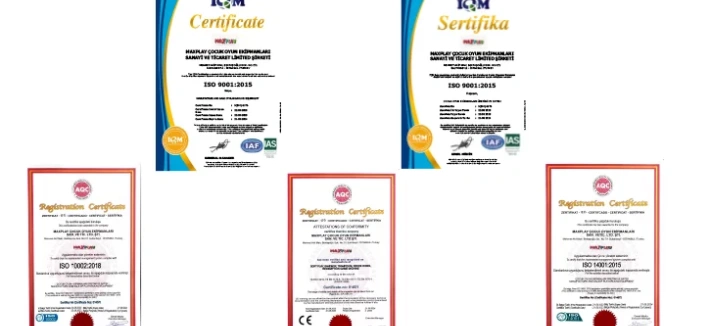
When comparing soft play manufacturers, define first-class quality through details that staff and fitters can verify. For a padded component, check the cover material, seam finish, padding coverage, attachment method, and whether a worn cover can be renewed. For hygienic production and materials suitable for children’s environments, ask for material declarations and cleaning instructions that specify what can be used on each surface. MaxPlay publishes certification references and describes its production and testing process. Have the relevant documents matched to the components in your order so the buyer and installer know exactly what they cover.
Turkish indoor playground equipment manufacturers can compete on price with suppliers in China and other markets, especially when the quote combines custom fabrication and freight to Poland. A Turkish offer can also provide a shorter delivery schedule and a higher-quality component if it includes expedited transport, better-specified materials, and stronger evidence of finish and fit. Compare approved samples, the production slot, packing dates, and the committed delivery window on the same basis. That gives the operator a way to judge whether the savings and the quality difference will carry through to installation.
How Should You Compare Quotes from Turkey Once Freight, Fitting and Spare Parts Are Included?
For playground equipment shipping from Turkey to Poland, compare prices to the same point of delivery. One offer may include transport to the venue, while another may leave unloading, import handling, or onward delivery to the buyer. Request packed dimensions and weights, the transport option, the named delivery point, and a clear allocation of responsibilities for customs handling, unloading, assembly, and inspection. MaxPlay offers international shipping. For a tight programme, ask for the fastest viable road-freight option for bulky modules and a separate express courier price for small, urgent components. Confirm the production date, dispatch window, and estimated transit time separately.
A common surprise comes when a crate reaches the building but cannot get from the loading bay to the play floor. For a shopping centre, check the service entrance, goods lift, corridor turns, delivery hours, and the space available to unpack. If the shipment contains parts for several rooms or phases, ask for crates to be marked by installation area and sequence. The lowest transport price can lose its advantage if a fitting crew spends a shift finding hardware inside crates intended for a later phase.
Include spare parts for commercial soft play in the opening quote. Price likely wear items alongside the equipment and ask for SKU references, warranty terms, and typical dispatch times for standard and custom parts. Have each indoor playground supplier set out who pays for diagnosis, return freight, and fitting if a covered part fails. Compare options against the actual installation programme and the revenue at risk from an unavailable attraction. Fast courier delivery for a small component is most valuable when staff can identify the correct part quickly and the supplier has it ready to dispatch.
How Can You Install New Attractions in Phases to Limit Venue Closures?
Phased indoor playground refurbishment works when each stage can be isolated and the operating area still has its own safe access and usable play routes. A freestanding toddler corner may be possible to close and update during a quiet period. A slide that shares an upper deck with the main structure will often need a wider closure while the old unit is removed, connections are inspected, and the new assembly is checked. Plan the phases around those physical dependencies before agreeing installation dates or booking parties.
In practice, a delivery schedule and an installation schedule answer different questions. Equipment can arrive before an agreed work window, provided the venue has secure space to store it. Installation generally starts with isolating the work area, removing the old components, and checking any structure concealed behind them. Leave time for fitting, cleaning, inspection, and staff familiarisation before reopening. Update the wayfinding and supervision plan for every operating phase, especially if families are accustomed to entering through a route that will temporarily be closed.
For venues that also operate trampoline park equipment, coordinate the refurbishment with the team responsible for that zone. A trampoline park manufacturer can specify what must be checked if the work affects shared barriers, circulation, or adjacent access. Where both attractions depend on the same entrance or supervision position, closing them together for a defined window may give the operator a simpler schedule. Where they operate independently, reopening the finished zone first can preserve capacity while the crew completes the rest.
How Can MaxPlay Help Polish Operators Choose Between Catalogue Accessories and Custom Play Modules?
A catalogue item is usually the cleaner choice when the footprint, age range, access, and maintenance arrangements already suit the room. A standalone pit for a hotel playroom is a good example. Custom design makes more sense when the project needs to connect to an existing deck, work around a column, align with a fixed entrance, or match a specific finish. MaxPlay’s catalogue and project design process give operators a basis for comparing those options against the same layout.
One of the most useful comparisons at the drawing stage is to put both options on the same floor plan with their approaches and exits shown. Check what staff can see from their normal positions, where children wait during a party, and how the team reaches the equipment for cleaning. Include the installation works and critical spare parts in the comparison. A custom module earns its cost when it solves a clear operating problem, such as moving a queue away from a toddler gate or preserving space for an independent route through the frame.
Send MaxPlay your floor plan, photos of the existing equipment, the ages you serve, and your preferred installation window. Site layout planning and 3D project design are free of charge. Request your project today to compare catalogue and custom options for your venue in Poland, with production, freight, and installation requirements considered from the start.