





Commercial Indoor Playground Equipment in North Macedonia: Long-Term Value and Profit
Investing in commercial indoor playground equipment in North Macedonia starts with a decision about what the venue needs to sell. A family café earns from tables and repeat visits, a birthday venue sells reserved time, and a ticketed play centre depends on steady admissions. Each model puts a different demand on the same square metres. A floor plan can look complete on paper and still lose sales when party arrivals block check-in, parents cannot see the toddler zone from their seats, or one slide queue slows the entire play structure. The layout, equipment specification and operating budget need to account for those moments before production starts.
As MaxPlay Playground Equipment, we provide professional solutions for indoor playgrounds and soft play areas. We design, manufacture, install, and assemble indoor playground equipment and soft play systems for commercial spaces. Contact us for turnkey indoor playground projects.
| Landline: | 0216 377 10 88 |
| Mobile / WhatsApp: | 0532 069 53 17 |
| E-Mail: | info@maxplay.com.tr |
| Address: | Google Maps |
You can contact us for all your projects across Türkiye and international markets.
Our Services:
- Trampoline Manufacturing – Trampoline Park Installation
- Ball Pit Manufacturing – Ball Pit Playground Installations (with slides, etc.)
- Interactive Play Systems (Moving Soft Play Toys & Equipment)
- Sand Pit – Sand Play Areas
- Playgrounds and Role-Play Houses for Kindergartens & Nurseries
- Indoor playgrounds for businesses such as shopping malls, cafés, restaurants, etc.
- And all customized playground projects tailored to your specific needs.
Which Business Model Fits Your Venue: Paid Play Sessions, Birthday Packages or a Family Café?
Play Time Playground & Coffee in Skopje’s Aerodrom district combines indoor play, a café and birthday bookings. Its website shows a ball pit and coffee seating and describes a standard two-hour birthday reservation. That combination gives buyers evaluating family entertainment centre equipment in Skopje a concrete example of how one address can serve several reasons to visit. It also raises an operating question. When a party arrives, can families already using the venue keep playing and ordering comfortably, or does the booking need exclusive use of the space? The answer affects how much each booking needs to contribute.
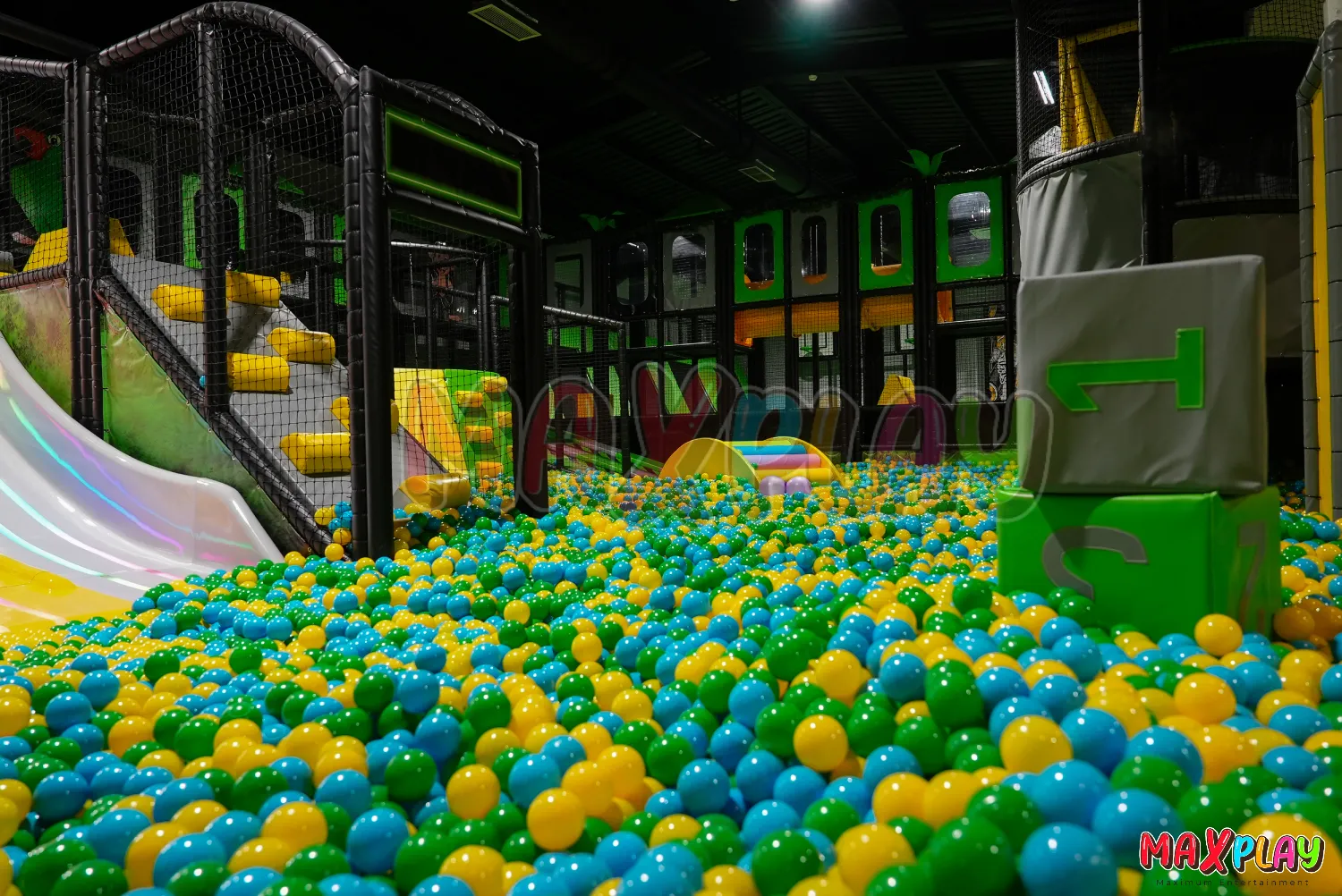
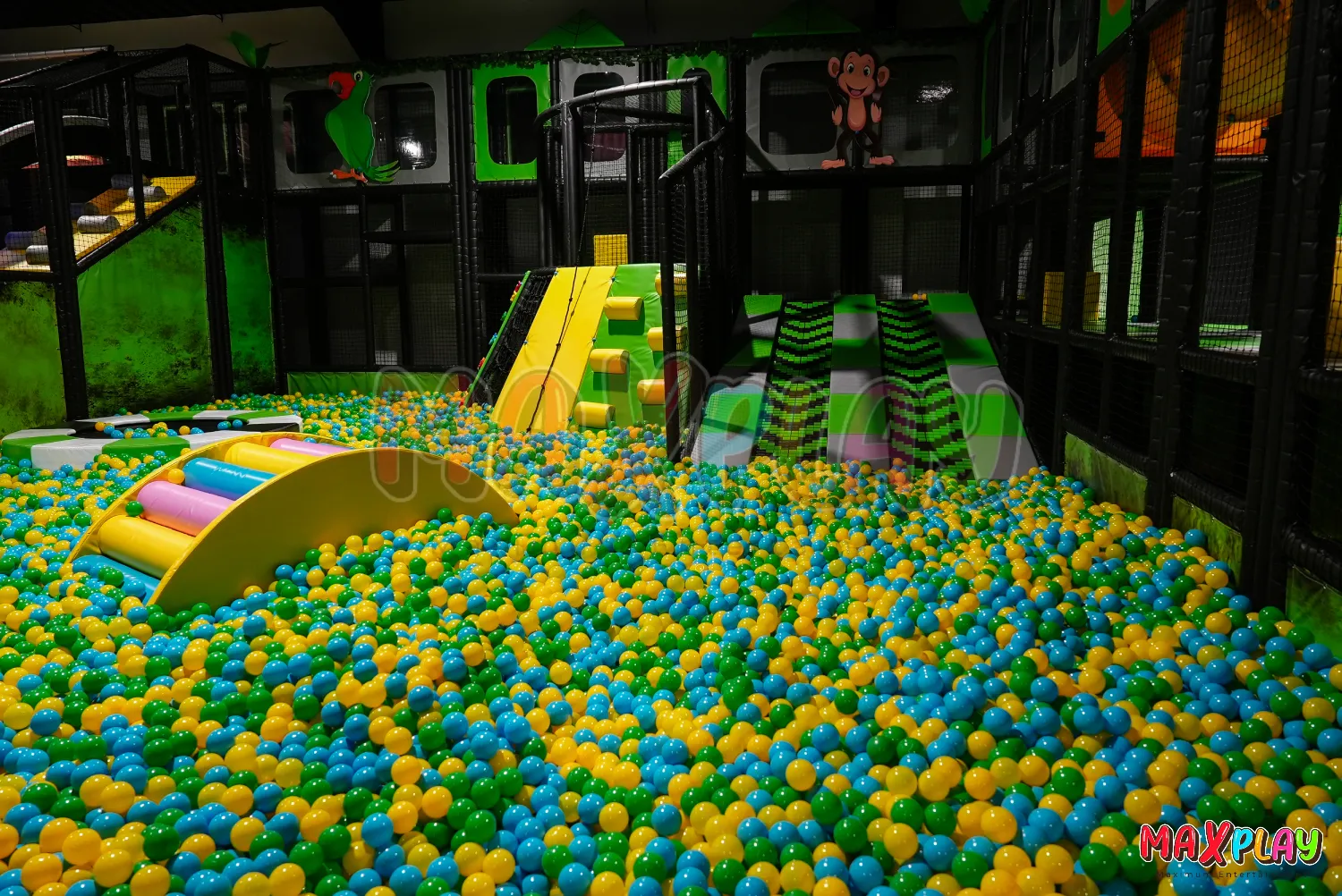
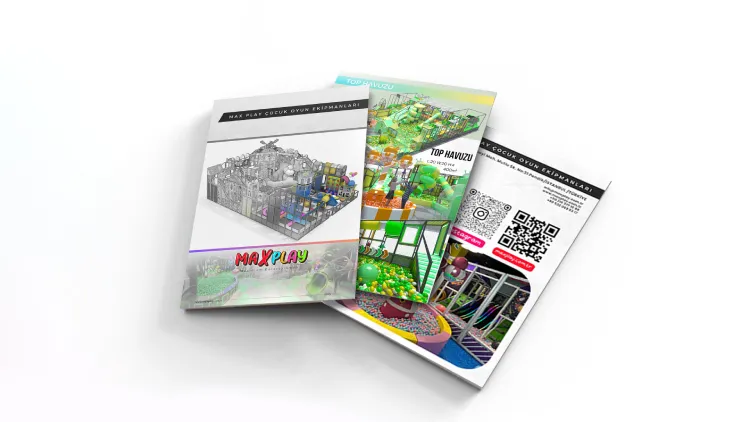
MaxPlay’s 400 m² catalogue concept offers a separate example of how to allocate space for a mixed model. It includes a toddler zone, a dedicated party area and a larger soft play circuit. A venue that relies on birthdays can use a dedicated area to stage food and reset tables between bookings. A café-led business can use the same planning principle on a smaller footprint by keeping low-height equipment visible from the most frequently occupied tables. Play Time illustrates the operating model, while the MaxPlay concept illustrates how a larger footprint can accommodate it.
In day-to-day operation, the first conflict often appears at the overlap between the busiest walk-in session and a party arrival. For a ticketed centre, prioritise check-in, shoe storage and a play route that spreads children across activities. For indoor play equipment for family cafés, prioritise visibility from seats and a compact entrance to the play zone. For a party-led venue, give the host a place to receive guests and supplies before the room becomes available.
MaxPlay Playground Equipment Overview
| Equipment Name | Description | Key Benefits |
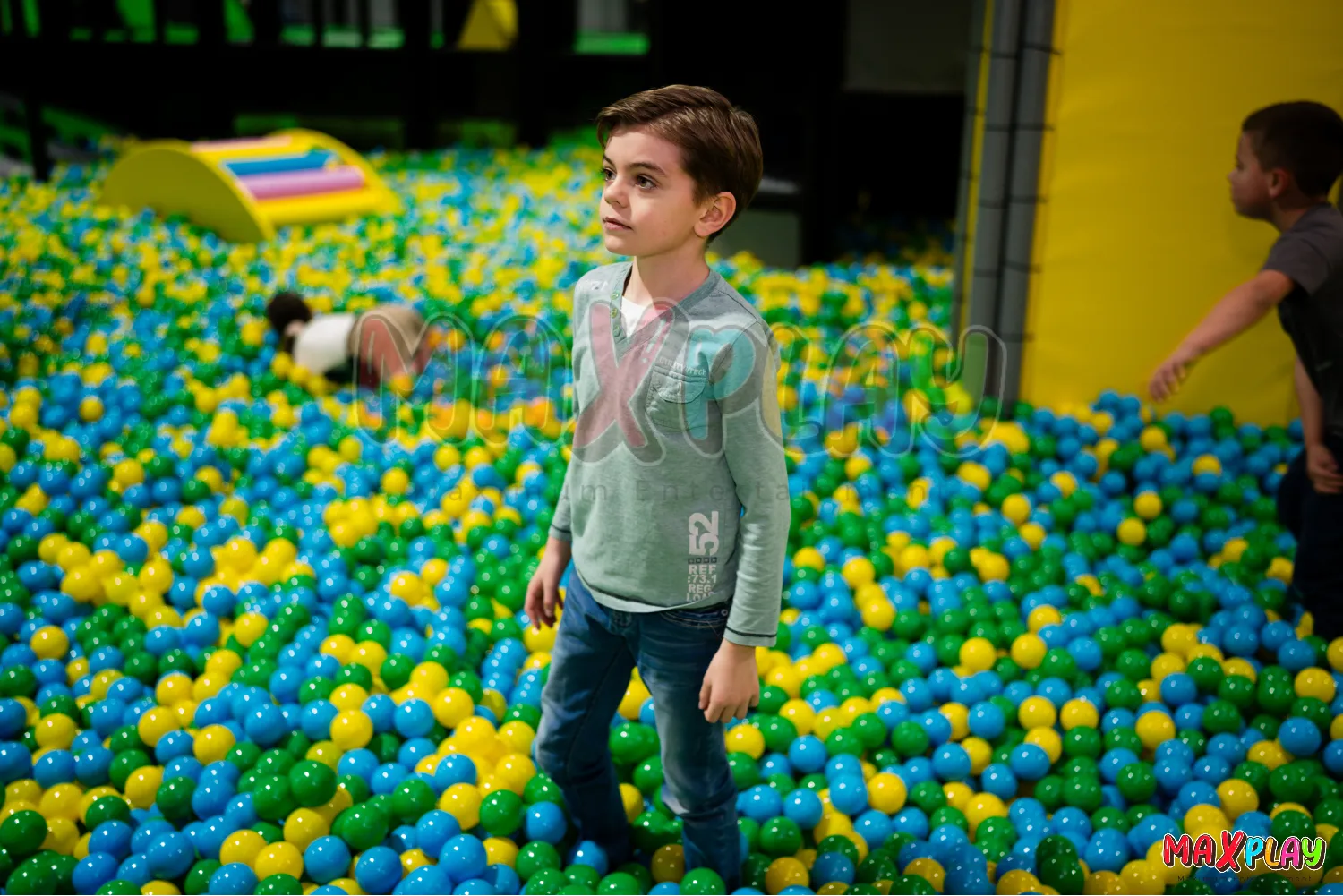
| Ball Pool | Colorful pit filled with balls for safe sensory play. | Safe fun for toddlers, easy to clean, encourages motor skills. |
| Trampoline | High-quality indoor trampolines. | Builds balance and strength, child-safe design, durable materials. |
| Interactive Game Sets | Digital and physical interactive play stations. | Boosts learning, cognitive skills, and engagement. |
| Profession Houses | Role-play houses designed for kids. | Encourages creativity, social interaction, and imagination. |
| Trampoline Park | Large-scale trampoline structures. | Suitable for older kids, high durability, safe design. |
| Roller Slide | Conveyor-style (roller) slides for continuous fun. | Efficient design, fun motion play, safe structure. |
| Tower Slide | Tower slides designed for adventure play. | Exciting design, strong safety standards, eye-catching feature. |
| Climbing Wall | Indoor climbing walls. | Builds strength and coordination, safe grips, customizable difficulty levels. |
| Volcano Slide | Volcano-shaped slides with climbing and sliding features. | Combines climbing and sliding, unique design, fun for multiple age groups. |
How Much Play Capacity Should You Build for Weekdays and Busy Weekends?
Start commercial playground capacity planning with a Saturday schedule in 30-minute blocks. Record expected arrivals, session lengths, party headcounts and the number of children remaining from the preceding block. Forty arrivals an hour can create a very different load when children stay 90 minutes and a party enters halfway through. Plot adult seating alongside child occupancy. A family may leave when there is nowhere to sit, even if the playground can admit more children. The operating limit should reflect the tightest constraint across the equipment, staffed supervision, the approved premises occupancy and the available space for adults and children together.
The bottleneck in actual use may be a single point inside the equipment. On commercial multi-level soft play frames, a slide can handle plenty of turns while children waiting at its entrance block the route to every other activity on that deck. Review the plan with a pencil and trace where a child goes after entering, where another waits, and how both can move back towards the exit. A second activity on the same level can distribute demand if it has its own approach and waiting space.
Weekday staffing deserves a separate test. A site that can run comfortably on Tuesday with one clearly visible play circuit may need more staff and timed arrivals on Saturday. If weekend demand is still unproven, model admissions with session controls before committing floor area to a larger structure. Extend capacity where the records show repeated turnaways, sustained queues or another measurable constraint.
Which Attractions Are Worth the Floor Space They Take Up?
A compact commercial indoor play set can work well for a café with limited ceiling height and a young audience. Treat products marketed as a toddler play set indoor as a starting point for comparing dimensions, age guidance and intended duty. A low ramp, crawl-through and ball pool give toddlers several things to do within view of a seated parent. In use, however, balls spread beyond the pool, adults gather at the opening and children pause at the foot of a slide. Mark those spaces on the plan before deciding how large the module can be.
For older children, compare the number of simultaneous activities each layout offers. A multi-level route with alternative paths can make better use of available height when the venue has the clearance and the staff to supervise it. A compact unit of interactive playground equipment can add a short, repeatable activity to an underused bay. It earns its space when children can join or leave without obstructing circulation. Larger interactive indoor play attractions make more sense when the attendance mix supports them and staff have access to power isolation, controls and service points.
The practical comparison for soft playground equipment is between the attraction’s total footprint and what children can do there during a busy session. Include its entry, exit, waiting space and service access. A tall feature may photograph well and still serve only one child at a time. Two compact activities that support several children can deliver more usable play from the same floor area, especially during short weekday sessions.
When Does a Dedicated Party Room Make Financial Sense?
A dedicated room makes financial sense when the additional contribution from bookings and preserved walk-in sales covers the cost of fitting out, cleaning and dedicating the space to parties. Compare two Saturday schedules. In one, parties use a flexible café section and displace tables during prime hours. In the other, parties use a separate room and regular service continues. Calculate birthday party revenue for play centres using the package fee and paid extras, then deduct event labour, food, supplies and payment fees. Include any café or admission contribution lost while a booking occupies shared space.
In practical birthday party play area design, the turnover period can determine how many bookings fit into the day. A two-hour event also needs time for arrivals, guests collecting their belongings, table cleaning and the next setup. The booking calendar should reflect the full time the room is committed. A short route from the service counter and nearby storage for clean tableware can reduce reset time. Guests waiting for the next reservation need an obvious place to gather away from the play entrance.
A separate room suits operators with recurring bookings, a reliable host schedule and enough admissions or café demand to justify running both formats at once. A flexible seating area is generally easier to justify when most parties fall on occasional weekends and the room would sit idle through the week. The comparison should use booked slots by time of day. Two overlapping requests for Saturday afternoon tell you more about the value of a second room than two bookings spread over a quiet week.
Which Soft Play Frames, Toddler Zones and Interactive Attractions Can You Source from Turkey?
MaxPlay’s range covers framed commercial soft play equipment, compact ball pools, toddler modules, interactive playgroups and trampolines. A Skopje café might use toddler play zone equipment built around low steps, padded shapes and a short slide. A ticketed family centre could combine an enclosed multi-level circuit with a separate younger children’s area and a short-turn interactive feature. The equipment list should also identify which parts are standard catalogue items and which are made to fit columns, low ceilings or other fixed elements of the building.
In practice, activities placed next to each other often draw different queues and require different supervision. Putting trampoline park equipment beside an open toddler entrance can bring fast-moving children into the same circulation path as first-time walkers and their parents. A distinct trampoline zone suits venues with sufficient space, staffing and demand from older children. A specialist trampoline park manufacturer can define the equipment specification, access and supervision requirements early enough for the operator to assess the full cost of that zone. A compact family café may get more use from a low-height circuit it can supervise through its regular service hours.
For indoor soft playground equipment, a workable equipment schedule includes the intended ages, dimensions, recommended user limits, clearance requirements and service access for each unit. Giving the same schedule to every Turkish indoor playground manufacturer makes it easier to compare what their designs achieve. A rendering shows what the room could look like. The schedule shows whether the proposed equipment fits the age mix and how the venue will run it.
When Is Factory-Direct Sourcing from Turkey a Good Fit for a Custom Build or Phased Expansion in North Macedonia?
Factory-direct soft play equipment from Turkey makes sense when dimensions, branding, component compatibility or the opening schedule require close coordination between design and production. The benefit is tangible in an irregular commercial unit, where moving a support bay can free up a walkway or place the entrance within view of reception. Catalogue units can suit a café with a regular footprint and a modest order. Soft play equipment wholesale is more relevant to a multi-site operator or reseller buying repeatable items with common specifications, packaging and spare parts.
The issue we design around with phased indoor playground expansion is how the next installation will reach and connect to the first. A reserved bay helps only if the installer can still reach it once the venue opens. Record future connection points, floor levels, clearances, access routes and finish codes on the approved drawings. Then design the first phase to open as a complete play area. When comparing soft play manufacturers and indoor playground equipment manufacturers, check who is responsible for updating those drawings and how they will verify compatibility before a second order goes into production.
Fast road freight is a practical advantage for playground equipment delivery from Turkey to North Macedonia, with consolidated truckloads for complete installations and courier options for eligible small components and urgent spares. Turkish production can compete on installed price with quotations from China and other markets. It can also deliver sooner than an ocean-freight offer and provide a higher specification at a comparable price when the quotes confirm better materials, workmanship or serviceability. Compare actual dispatch dates, transit estimates, test documentation and part-level specifications for the same scope.
How Do You Compare Quotes Once Freight, Assembly and Site Preparation Are Included?
The installed cost of an indoor playground is the amount required to bring the venue from its current condition to a completed, inspected installation. Put each offer into the same cost schedule. Include equipment, export packing, freight, brokerage, any applicable duties and taxes, unloading, movement into the unit, installation, installer travel, flooring, electrical preparation, inspection and initial spares. Use the same basis for tax and currency across bids. Identify who carries each cost and which figures are firm, estimated or excluded. Separating equipment supply, work on the property and the cash required before opening makes it easier to see where the budget is exposed.
In practice, the delivery route often determines whether an installation starts on time. A truck may reach the building while a packed module cannot clear the service door or take a turn in the corridor. Check the largest packed dimensions against the unloading route, door openings, lift dimensions and available staging space. Have the indoor playground supplier confirm who provides unloading equipment and how much time the crew needs on site. Mall delivery windows, unfinished flooring and delayed power connections can all move an installation date even when the equipment reaches Skopje on schedule.
A useful commercial comparison also separates the factory completion date, expected arrival and handover. Two quotes with the same advertised lead time can offer different opening dates if one only covers dispatch. Tie payment milestones to identifiable outputs such as approved drawings, completed production and signed handover. Define the documents and operating checks due at each milestone so the quote covers the work needed to open.
Which Equipment Features Make Cleaning and Repairs Easier During Busy Periods?
Serviceable indoor play equipment has covers, pads and wear parts that staff or authorised technicians can reach and replace individually. During a practical review, trace the cleaning route from the entrance to the furthest deck. Look for seams that trap dirt, enclosed corners that limit access and floor mats that are difficult to lift under normal operating conditions. A large ball pool can be manageable with planned access for ball removal and base cleaning. The same feature creates a longer shutdown if staff have to dismantle surrounding elements to reach the bottom.
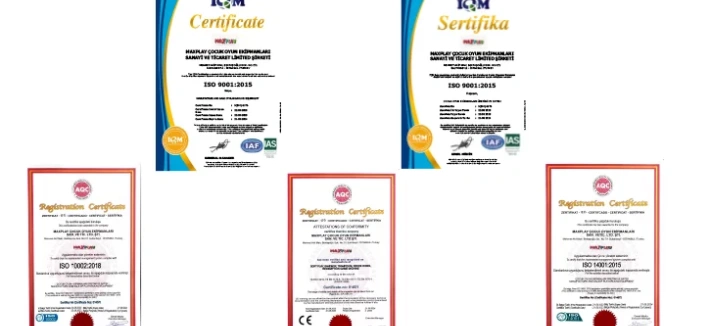
First-class quality and hygiene-conscious production are easiest to assess at component level. MaxPlay’s 400 m² catalogue listing describes welded metal components, padded profiles and reinforced vinyl joints for its ball pool. On a proposed installation, review samples of the covers and padding, material documentation, the approved cleaning products and how the supplier specifies replacement pieces. Ask for certificates and test reports that identify the equipment or components they cover. For fully enclosed equipment, EN 1176-10 addresses additional requirements specific to that type of structure. Match the documentation to the proposed configuration.
What matters during a busy session is how much of the room you lose when a part needs attention. A removable entrance pad with a known part code can be scheduled for replacement once the area is closed. An inaccessible fastening or a shared electrical feed can extend the shutdown to adjacent features. Review isolation and repair access in the drawings, especially where a high-use attraction sits on the only route through a play frame.
How Should You Budget for Inspections, Replacement Parts and Temporary Closures?
Forecast commercial soft play maintenance costs in three lines. The first covers daily cleaning and routine checks, the second covers scheduled inspections and planned maintenance, and the third funds unexpected repairs. At handover, collect the maintenance instructions, inspection schedule, parts list and procedures for closing and reopening affected equipment. In practice, a useful staff log names the exact location of a defect, the time it was found and the action taken. A clear entry lets the next shift identify the same part without reopening a closed bay to investigate.
Prioritise indoor playground spare parts by the consequences of failure and the time to obtain an approved replacement. A spare entrance pad, cover or compatible fitting may be inexpensive compared with closing a popular route while a replacement is made. Keep the equipment code, cover colour and fixing details with the order record. For lower-frequency parts, confirm the supplier’s lead time and whether the part can travel by courier. Those details determine which items are worth holding on site and which can be ordered when a fault is identified.
Budget for downtime using expected contribution from the affected period. A repair during a quiet weekday may leave enough capacity to operate. The same closure on a Saturday can force the operator to cap sales, move a booking or issue a refund. Record the cost of parts and labour alongside the contribution lost from appointments or visits you could no longer serve. That gives you a basis for comparing the price of a spare with the cost of waiting for it.
How Many Paid Visits and Party Bookings Do You Need to Break Even?
An indoor playground break-even analysis starts with the contribution each sale leaves after direct costs. Consider an illustrative North Macedonian venue with monthly fixed operating costs of MKD 300,000, including rent, base payroll and administration. A paid visit brings in MKD 350 and incurs MKD 70 in direct costs, leaving MKD 280. A birthday booking brings in MKD 9,000 and incurs MKD 3,000 in food, supplies, payment fees and additional event labour, leaving MKD 6,000. All figures use the same tax basis and are hypothetical operating assumptions. Use the equation MKD 280 × paid visits + MKD 6,000 × party bookings ≥ MKD 300,000.
With 20 party bookings, parties contribute MKD 120,000, leaving MKD 180,000 for admissions to cover. Dividing by MKD 280 gives 642.86, so the venue needs 643 paid visits. With 10 party bookings, it needs 858 paid visits. Without any parties, it needs 1,072 paid visits. Across 26 opening days, the 20-party scenario averages about 25 paid visits per day. The timetable still needs to accommodate the actual pattern, including quieter weekdays and parties clustered into weekend slots.
In operation, double-counting is easy when party attendees are included in the daily headcount. Count only separately paid admissions in the visit total. If a private party displaces walk-ins, reduce the visit forecast for that session. Include café contribution separately if you can track it reliably after ingredients, packaging and fees. Operating break-even covers the monthly costs in this example. Use cash remaining after operations and reinvestment to estimate how long it will take to recover the original installation spend.
Which Operating Figures Should You Review Before Investing in More Equipment?
For an indoor playground investment in North Macedonia, review paid visits by session, party enquiries by time slot, booking conversion, average contribution per sale and the number of guests turned away. Pair those figures with observations of where children queue and which units sit idle. Three Saturdays with enquiries for an already booked party slot can indicate demand for another room or a faster reset. Three Saturdays with lengthy check-in queues and spare capacity inside point to a reception problem. A larger structure only helps when the existing equipment is the constraint.
In actual use, counts should explain the reason for a missed sale. Log whether a family left because there was no table, because their age group had limited play options or because the next session was full. Keep the reason for declined party enquiries as well. A customer asking for a date you cannot offer signals a different opportunity from one who declines after hearing the package price. Several weeks of comparable time slots provide a better basis for expansion than the busiest holiday weekend on its own.
Estimate indoor playground investment payback using the extra monthly cash the upgrade is expected to generate after additional staffing, cleaning, consumables and maintenance. An upgrade costing MKD 1,200,000 that adds MKD 60,000 in monthly net operating cash would have a simple payback of 20 months. At MKD 30,000 per month, payback extends to 40 months. Test a slower launch, weaker weekday demand and the effect of any installation closure before relying on either figure.
How Can MaxPlay Match the Equipment Mix to Your Venue’s Revenue Model, Floor Plan and Expansion Budget?
MaxPlay designs, manufactures and implements play projects, with an equipment range that spans compact toddler modules and multi-zone commercial installations. For a North Macedonian venue, the design brief can bring together the measured plan, ceiling heights, fixed obstructions, age mix, intended staffing and revenue model. A family café might use a low-height zone visible from the tables and flexible seating for occasional parties. A venue built around ticket sales and birthdays might allocate more space to parallel play routes, covered party storage and a room that can turn over while regular sessions continue.
One practical drawing review is to walk through the busiest hour on paper. Follow a family from the door to a table, a toddler from the play entrance to the parent’s line of sight and a party host from storage to the room. Then trace the route a technician would take to remove a worn component. The answers can change the equipment mix before steel is cut. They also help define the scope of certified production, installation and handover, and set aside room for a later module if the operating figures support it.
MaxPlay offers free project design. Request your free project design today and share your floor plan, location, target opening date and estimated budget. If you plan to offer both open play and birthday bookings, include the session formats you expect to run so the first layout can account for both.