





Interactive Indoor Playground Equipment in Czechia: Enhancing User Experience
The most revealing test of interactive indoor playground equipment in Czechia is what happens when a child approaches it for the first time. Can they see where to start? Does the equipment respond in a way they understand? Can the next child join without crossing a slide exit or interrupting the current player? These questions matter whether you are adding one attraction to a shopping centre or designing a family entertainment centre around several age groups.
As MaxPlay Playground Equipment, we provide professional solutions for indoor playgrounds and soft play areas. We design, manufacture, install, and assemble indoor playground equipment and soft play systems for commercial spaces. Contact us for turnkey indoor playground projects.
| Landline: | 0216 377 10 88 |
| Mobile / WhatsApp: | 0532 069 53 17 |
| E-Mail: | info@maxplay.com.tr |
| Address: | Google Maps |
You can contact us for all your projects across Türkiye and international markets.
Our Services:
- Trampoline Manufacturing – Trampoline Park Installation
- Ball Pit Manufacturing – Ball Pit Playground Installations (with slides, etc.)
- Interactive Play Systems (Moving Soft Play Toys & Equipment)
- Sand Pit – Sand Play Areas
- Playgrounds and Role-Play Houses for Kindergartens & Nurseries
- Indoor playgrounds for businesses such as shopping malls, cafés, restaurants, etc.
- And all customized playground projects tailored to your specific needs.
The right purchase starts with the job each attraction needs to do. A musical floor can give children a quick activity between longer play routes. A ball feature can give siblings a reason to stay and play together. A climbing challenge can create a destination for older children who want to improve on their last attempt. Each takes up space differently, creates a different pattern of demand and gives staff a different set of tasks during a busy weekend.
What Makes an Interactive Play Feature Easy for Children to Discover and Use?
A child should be able to see where to stand, what to touch and what happened after the first action. For a floor game, the active surface should be recognisable from the approach. For a wall activity, the target should be visible at a child’s eye level, with the first control within reach of the intended users. Immediate feedback, such as a note, a visible movement or a light change, helps a child connect their action with the result. This is especially valuable when the room is crowded and several attractions are competing for attention.
In practice, the first point of friction often appears a step before the game begins. Children follow the lighting around a cabinet, gather beside it and leave the actual playing position empty. A station can look obvious from the operator’s side and still be confusing from the direction families enter. When selecting commercial interactive play equipment in the Czech Republic, watch a demonstration from that approach angle. Check whether you can identify the first move before the demonstrator explains it.
After installation, observe a few first attempts during ordinary opening hours. Record where children stop, how many need help and which control they try first. If several reach for the same inactive surface, review the cue, position or lighting. That small correction can make the station easier to enter and reduce the time staff spend repeating the same instruction.
Which Activities Suit Toddlers, School-Age Children and Siblings Playing Together?
Good interactive toddler play equipment rewards simple actions such as pressing, rolling or matching. Toddlers often repeat one movement several times before trying a second one. A low panel or a short ball run beside the caregiver area gives them room to do that. When evaluating a listing labelled “toddler play set indoor,” confirm the recommended age range, the reach needed to use the activity and whether an adult can assist without standing in the circulation aisle. For a compact hotel playroom, a low indoor play set with activities at several positions can accommodate children at different stages of confidence.
School-age children tend to have more ways to engage when an activity offers a second challenge after the first success. A climbing route might offer several paths. A target game might change the sequence or let children compare rounds. In actual use, waiting becomes more frustrating when one player controls a station for a long session. A short round with a clear finish makes turns easier to share and gives returning players a fresh attempt.
For siblings, cooperative play equipment works best when both roles feel active. At a ball feature, for example, one child can feed or collect balls while another follows their movement, where the model and layout support that arrangement. In a mixed-age venue, place a younger child’s activity within sight of an older sibling’s challenge so one caregiver can watch both from a practical position.
MaxPlay Playground Equipment Overview
| Equipment Name | Description | Key Benefits |
| Ball Pool | Colorful pit filled with balls for safe sensory play. | Safe fun for toddlers, easy to clean, encourages motor skills. |
| Trampoline | High-quality indoor trampolines. | Builds balance and strength, child-safe design, durable materials. |
| Interactive Game Sets | Digital and physical interactive play stations. | Boosts learning, cognitive skills, and engagement. |
| Profession Houses | Role-play houses designed for kids. | Encourages creativity, social interaction, and imagination. |
| Trampoline Park | Large-scale trampoline structures. | Suitable for older kids, high durability, safe design. |
| Roller Slide | Conveyor-style (roller) slides for continuous fun. | Efficient design, fun motion play, safe structure. |
| Tower Slide | Tower slides designed for adventure play. | Exciting design, strong safety standards, eye-catching feature. |
| Climbing Wall | Indoor climbing walls. | Builds strength and coordination, safe grips, customizable difficulty levels. |
| Volcano Slide | Volcano-shaped slides with climbing and sliding features. | Combines climbing and sliding, unique design, fun for multiple age groups. |
When Is a Play Piano, an Interactive Ball Feature or a Climbing Challenge the Better Fit?
MaxPlay’s Piano, product code 31104, is listed at 240 × 106 × 12 cm. Children approach this indoor playground piano from floor level and can start by stepping onto a key. One child might try the same note repeatedly, while siblings can turn the surface into a follow-the-leader game. In practice, its usable footprint includes the space children need to step on and off. It suits venues looking for brief, open-ended musical play, especially where the playing surface can sit clear of a doorway or main aisle.
MaxPlay’s Galactic Ball Falls, product code 31114, gives children a shared focal point around the movement of balls. The comparison for a buyer is how children gather. At the Piano they spread along the keys and can leave after a few steps. Around Galactic Ball Falls they can pause to watch, look for where the balls reappear and stay for another cycle. When reviewing this interactive ball play equipment, use the demonstration to identify the approach, collection and viewing positions. Allow for siblings who spend part of the session watching and part of it playing.
Indoor climbing challenges for children suit venues with demand for longer physical play and enough space to manage the approach and descent. Watch where a hesitant child is likely to pause and where a faster climber will try to pass. A climbing feature earns its footprint when children can attempt different routes without forming a single bottleneck. For a quick musical encounter, choose the Piano. For a ball-centred activity with a strong viewing component, consider Galactic Ball Falls. For progressively harder movement, specify a climbing route.
How Can You Design for Different Sensory Preferences in the Same Play Area?
Sensory-friendly indoor play design starts with giving children control over what they encounter. A child who enjoys music should be able to approach a sound-based station easily. A child who is sensitive to sudden sound should be able to reach another activity without passing through that station’s busiest area. Place higher-energy attractions together where the layout allows, preserve a quieter route and give children a place to observe before they join. A quiet edge works best when it still feels connected to the room.
In a live venue, several moderate sound sources can combine into an uncomfortable area. A musical module, party speakers and a nearby game may each sound reasonable during a commissioning test in an empty room. Their combined effect can be quite different during a birthday session. Check sound from caregiver seating and the quieter play area. Confirm which volume, lighting and idle settings staff can adjust on each model and whether those settings are retained after a restart.
Consider how children will take part when they prefer slower or less intense play. A tactile panel with a predictable response, a small ball pool with an orderly entry or low-level indoor soft playground equipment can provide activities with no round to finish or score to chase. The most practical arrangement gives these options genuine play value and enough space for a child to stay while friends explore the more active parts of the venue.
Where Should You Place Interactive Stations to Keep Queues Clear and Preserve Parent Sightlines?
Effective indoor playground queue management starts by drawing the playing position, waiting area and exit path separately on the plan. A wall station can take up very little floor space while its audience occupies an entire aisle. For most short-turn games, a waiting pocket beside the approach is easier to manage than a queue behind the active player. Children finishing a round should have room to leave without squeezing through the group waiting for its turn.
In practice, parent sightlines in indoor playgrounds often disappear where a layout looks open on paper. A padded column, tall cabinet or group of standing spectators can block the same view. Check the layout from seated adult height as well as from the staff position. Pay particular attention to the point where a child enters a structure, the playable surface itself and the exit. Seeing where a child goes after the round is as important as seeing where they enter.
For interactive play equipment for shopping centres, test the layout under a plausible burst of demand, such as several families arriving at once after a film. Keep the viewing space within the venue and protect the routes used by accompanying adults and pushchairs. At a family entertainment centre, two quick-turn stations can absorb some of the pressure around a larger attraction. Give each its own approach so the waiting groups have a clear place to form.
Which Interactive Play Systems Can Czech Operators Source from Turkey?
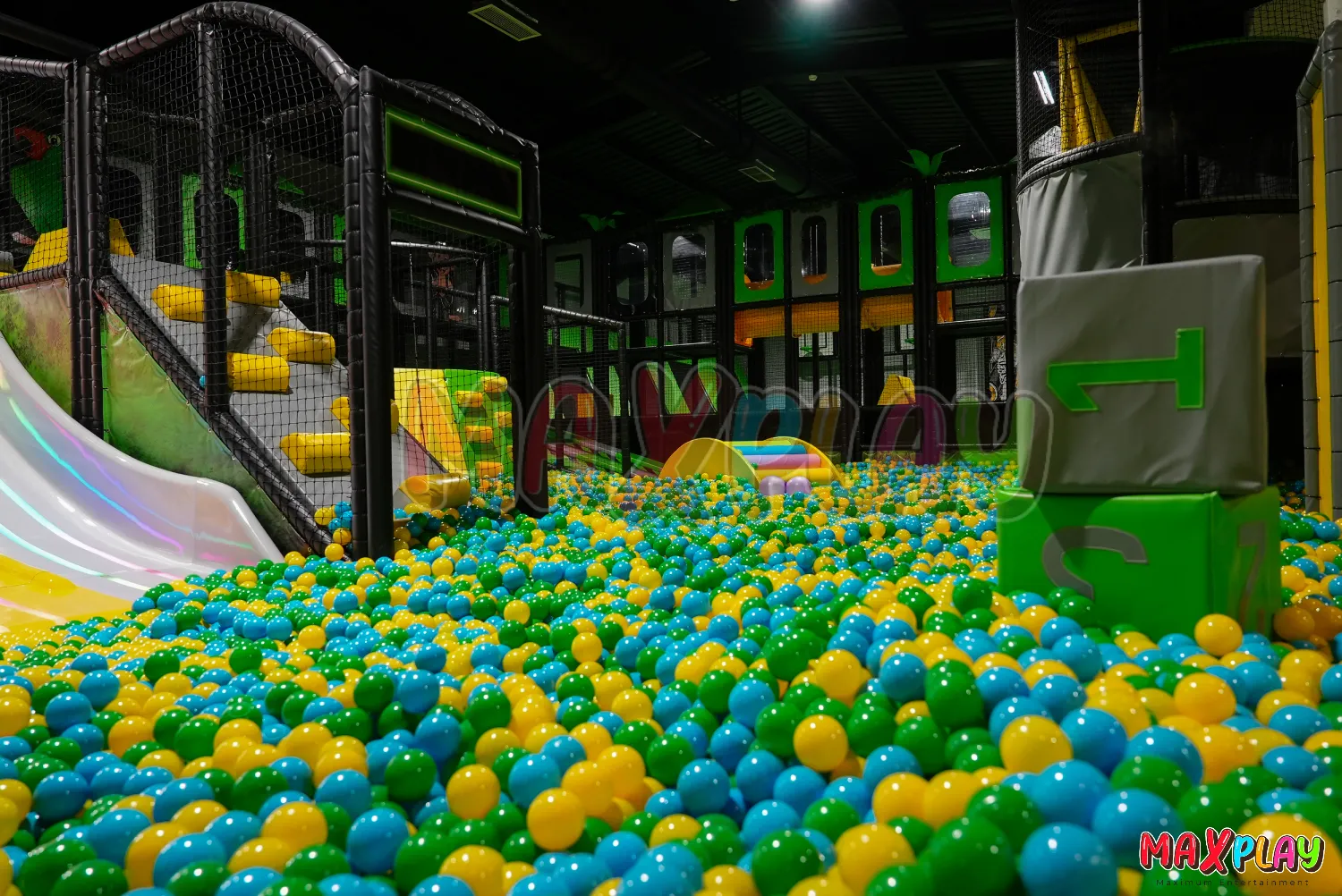
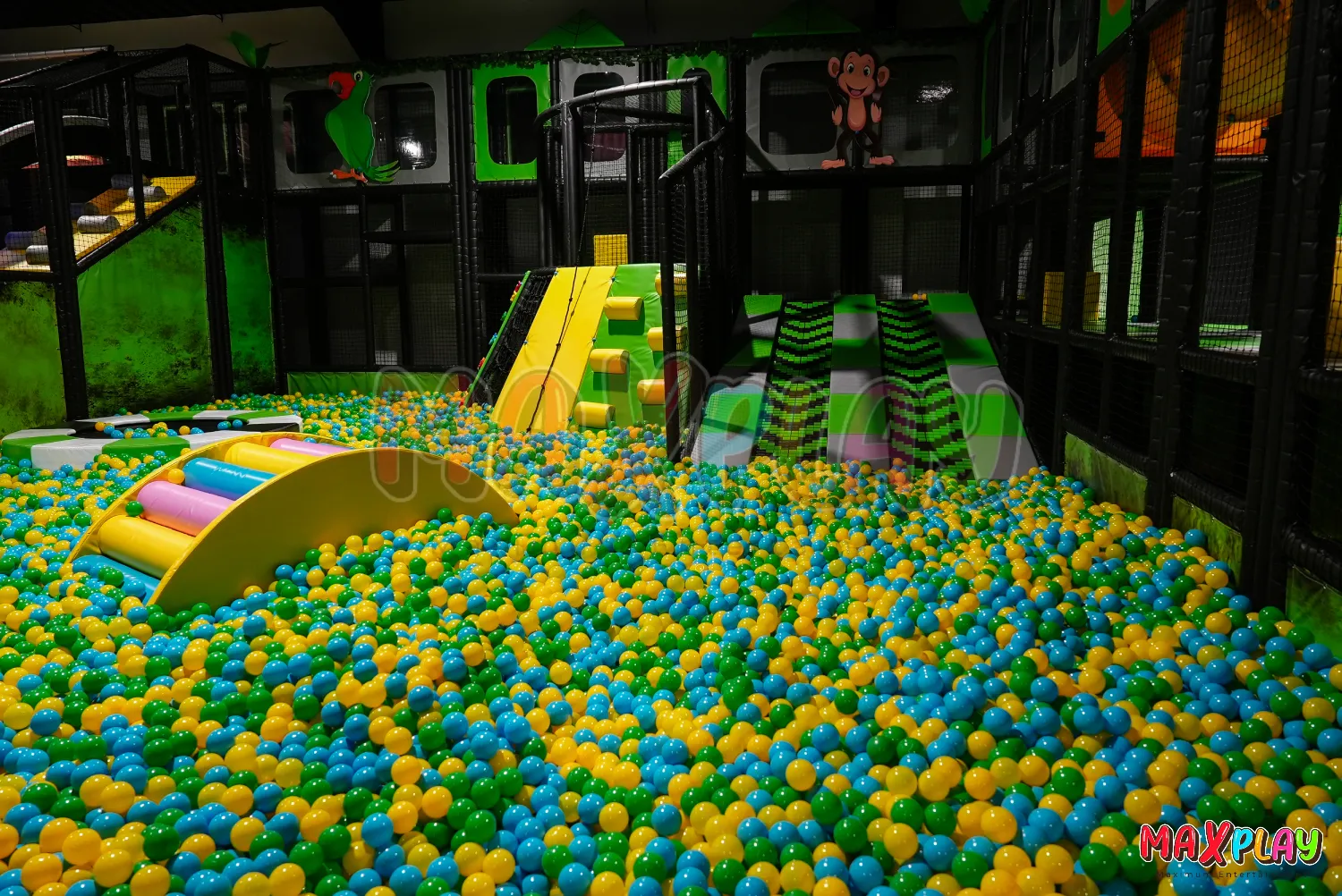
Turkey is a sourcing option for musical floor features, ball-based attractions, climbing elements, toddler areas and interactive soft play modules that sit within a larger structure. MaxPlay’s catalogue places interactive products alongside toddler play, soft play and trampoline systems. That range gives operators several ways to specify a project, from a single station for a refurbishment to a combination of attractions designed around the floor plan of a new venue.
When comparing soft play manufacturers, describe whether the order is for a new build, a retrofit or several branches with the same layout. In a retrofit, the practical difficulty is often the connection between new and existing equipment. Record the actual frame dimensions, post spacing, floor build-up and access route before asking a supplier to price the work. For soft play equipment wholesale, document what can be repeated across sites and which mounting details or finishes will vary. That distinction improves quote accuracy and makes reorders easier to specify.
Larger projects may combine soft playground equipment with trampoline park equipment. A trampoline park manufacturer can price the active zone as a defined part of the project, with its own equipment, installation scope and operating requirements. For a smaller site, a single interactive activity paired with conventional indoor play equipment may use the budget more effectively. Compare the options by the age groups they serve, the space they need and the staff workload they create at peak attendance.
Why Is Turkey a Practical Sourcing Option for Czech Venues Combining Soft Play and Interactive Equipment?
A Turkish interactive playground manufacturer that also supplies commercial soft play equipment can coordinate the soft play frame and the attraction during design. This matters when a game sits inside an enclosure or beside a climbing route. The equipment drawing, cladding, power provision and maintenance access need to agree before fabrication. In practice, individually sound supplier drawings can still overlap at the installation stage. Put the frame and interactive unit on the same drawing revision and assign responsibility for their interface.
Road freight from Turkey gives Czech operators a fast door-to-door shipping option for project cargo. Full-truck and part-load services are available, and smaller replacement parts can be quoted separately for expedited delivery where timing matters. Turkish suppliers can compete with offers from China and other markets on delivered price. A road shipment can also offer a shorter delivery window than an ocean shipment from China. Compare the promised date at the venue, including production, customs, unloading and installation, because a short freight estimate alone tells you little about the date you can open.
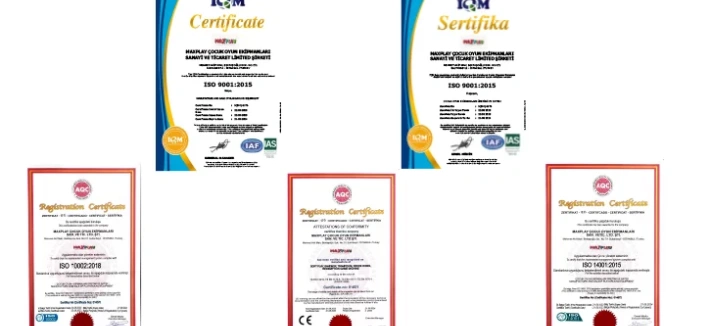
Turkish equipment can also represent the higher-quality offer when the materials, finish, service access and spare-parts terms are stronger. Ask for samples and documentation for the exact products quoted. MaxPlay publishes certification information and describes its production and testing process. For first-class quality and child-appropriate materials, verify the scope of applicable certificates or test reports, the materials children will touch and the approved cleaning methods. Make those requirements part of the purchase specification so every offer can be assessed against the same standard.
How Can Czech-Language Prompts, Visual Cues and Simple Controls Help Children Start Playing Independently?
Use a visible action cue first and save text for instructions a picture cannot convey. A hand icon can show where to press. A footprint can mark a starting position. A short animation can demonstrate the first move. Czech-language interactive game prompts help older children and caregivers understand turn rules, difficulty choices or what to do when a round ends. A game with visual cues and simple controls can also serve children who are too young to read and families visiting from abroad.
A common problem during testing is checking every menu with staff while skipping the screen a child sees after the previous player walks away. Put the station into that exact state during commissioning. Check how long it takes to return to its starting screen, whether the next player can begin without clearing someone else’s score and whether the cues remain legible in the venue’s lighting. Where possible, pair colour with a shape or symbol so children have more than one way to understand a signal.
For custom interactive play modules from Turkey, settle the language scope before production. Confirm whether Czech copy will appear on a printed panel, in software, in audio or across several of those formats. Review wording at its actual display size and ask who can update it later. A native Czech reviewer can shorten awkward instructions before they become part of a permanent graphic or software build.
What Power, Mounting and Service Access Should You Confirm Before Ordering?
For interactive play equipment installation in Czechia, obtain a model-specific drawing showing the equipment footprint, fixing locations, power requirements and service clearances. Identify who prepares the mounting surface and who confirms the connection details on site. Where the equipment forms part of a play frame, clarify whether the interactive module mounts to the frame, the building or an independent support. Have the relevant installer and qualified electrical contractor review the manufacturer’s requirements before finishes conceal the routes they need.
A frequent coordination problem is a service panel that opens freely in the standalone product drawing but meets a padded post after assembly. Check the direction and full opening of every access panel on the combined plan. Also confirm whether a technician can remove the largest replaceable part without dismantling adjacent soft playground equipment or taking a major route out of use. On a small floor plan, a few centimetres of additional access can change how much space must close during a repair.
Ask the indoor playground supplier to identify the site information needed before manufacturing and the checks recorded at handover. For a replacement unit, photos and physical measurements are especially useful where earlier drawings differ from the installation. For a new build, agree when the mounting, networking where required and electrical provisions will be checked against the final layout. Give the venue team the approved drawings and model references so the next service visit starts with the correct information.
How Can Staff Keep Interactive Equipment Running Through Busy Weekends?
Effective commercial interactive play equipment maintenance gives front-line staff a short, repeatable way to check each attraction before opening. Run one normal play cycle, confirm the expected response and look for visible damage or missing approved play pieces. Check that the station returns to its ready state at the end. A display can appear to be working while one input has stopped responding, so the opening check should include the actions children actually perform.
During a busy session, intermittent faults are often harder to diagnose than a complete shutdown. Give staff one place to record the time, model, symptom and action taken. A report saying that a target failed after several rounds is more useful than a note saying the game stopped. Define which routine actions staff may carry out under the manual, when they should take the equipment out of service and who has authority to reopen it.
The handover should identify approved cleaning products, consumables and the parts worth holding on site. For ball-based features, follow the manufacturer’s specifications for compatible replacements. For musical or electronic modules, use the model-specific cleaning and servicing instructions. When an attraction needs to close during a weekend, staff can guide children toward other activities while keeping the service area clear. A floor plan with several independent attractions makes that easier.
How Can You Use Queue Length, Repeat Play and Downtime to Evaluate a New Attraction?
Start measuring engagement in indoor play areas in the first weeks after installation. Observe the same time windows across several comparable sessions, such as Saturday afternoons with similar attendance. Define each metric before collecting data so different staff members count the same events. An operator comparing family entertainment centre attractions in Czechia can use a clipboard or a simple shared log.
| Metric | How to track it after installation | What the result can help you investigate |
| Queue length | Count waiting children at fixed intervals. Record the largest count and note when waiting spills into another route. | Whether demand, long rounds or limited waiting space is creating pressure. |
| Repeat play | During a defined observation window, count how many children who finish a turn start another, using anonymous tally marks. | Whether children choose to play again and whether repeat turns are limiting access for first-time players. |
| Downtime | Log when the attraction becomes unavailable and when it reopens. Record the cause and total minutes lost during scheduled opening hours. | Whether availability problems come from recurring faults, slow service, missing parts or operational closures. |
In practice, these numbers become useful when read together. A long queue with strong repeat play and little downtime can justify a second play position or a clearer turn system. A long queue with few repeat turns calls for a closer look at round length, the quality of the first attempt and how many children leave before playing. An attraction with strong engagement and recurring downtime needs a review of the recurring fault and the parts or service response needed to resolve it. Change one operating variable at a time and compare the next similar session.
How Can MaxPlay Pair Interactive Play Modules with a Custom Soft Play Layout for Your Czech Venue?
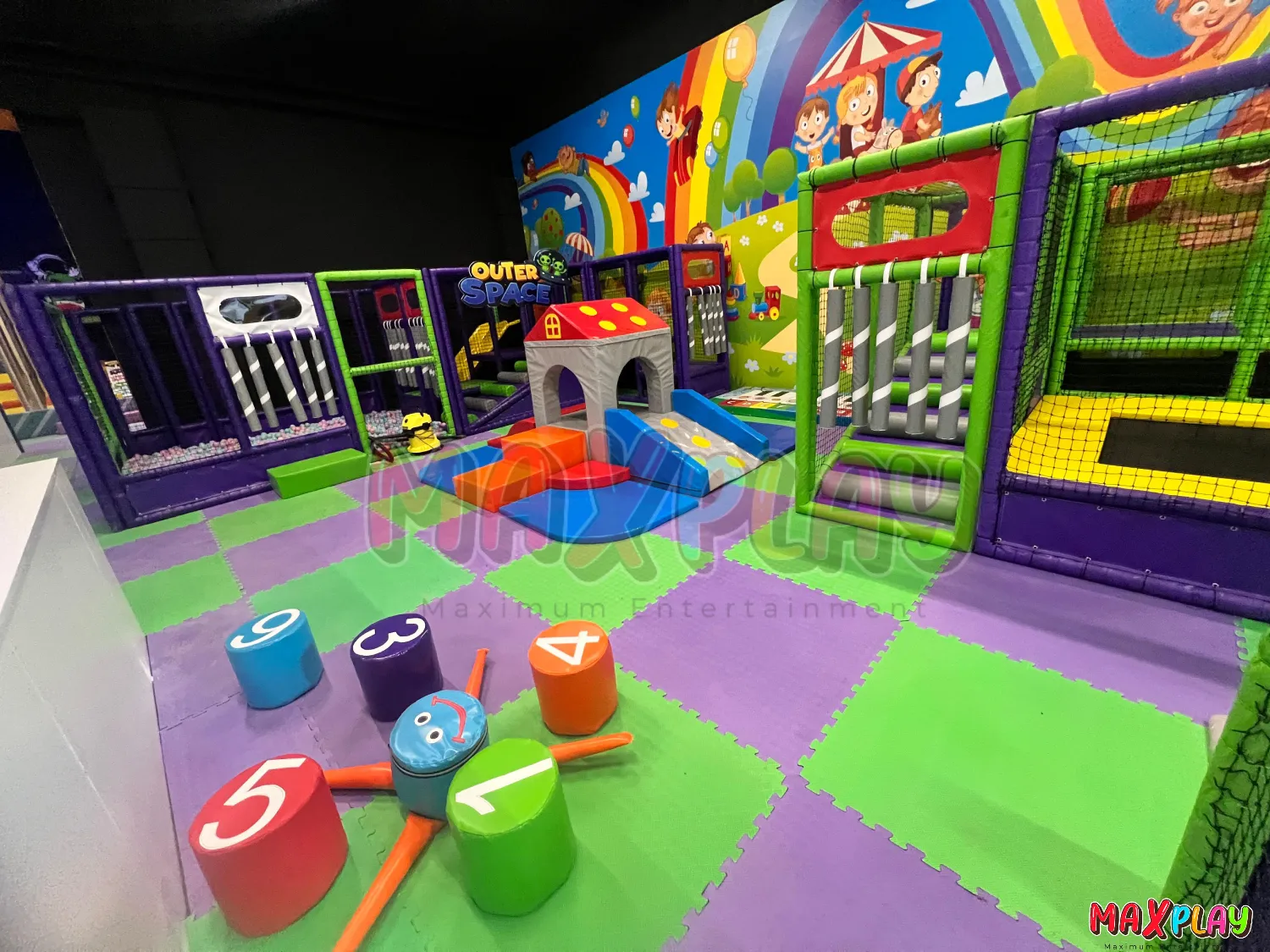
MaxPlay designs, manufactures and installs indoor playground and soft play systems. A compact venue might pair a low toddler area with a musical feature visible from the caregiver seating. A larger centre might give a ball attraction its own viewing pocket and put a climbing challenge deeper into the active route. The equipment choice follows the way families use the building, including which attractions they reach first and where they are likely to stop.
A common project mistake is approving equipment from individual catalogue images before seeing it in the room as a whole. When comparing indoor playground equipment manufacturers, look for a layout that shows entrances, equipment footprints, waiting space, adult viewing positions and service access together. For a refurbishment, include the parts of the existing venue that will stay open. For a new centre, identify which areas can open together and where a later phase could connect. This gives the operator a basis for comparing installation scope, landed cost and the usable play capacity of each proposal.
MaxPlay provides project design, site layout planning and a 3D concept free of charge. Contact us with your floor plan, ceiling height, target age groups and planned opening date. If you’re upgrading an existing venue, include a few photographs so we can account for the frame, access routes and equipment already in place.