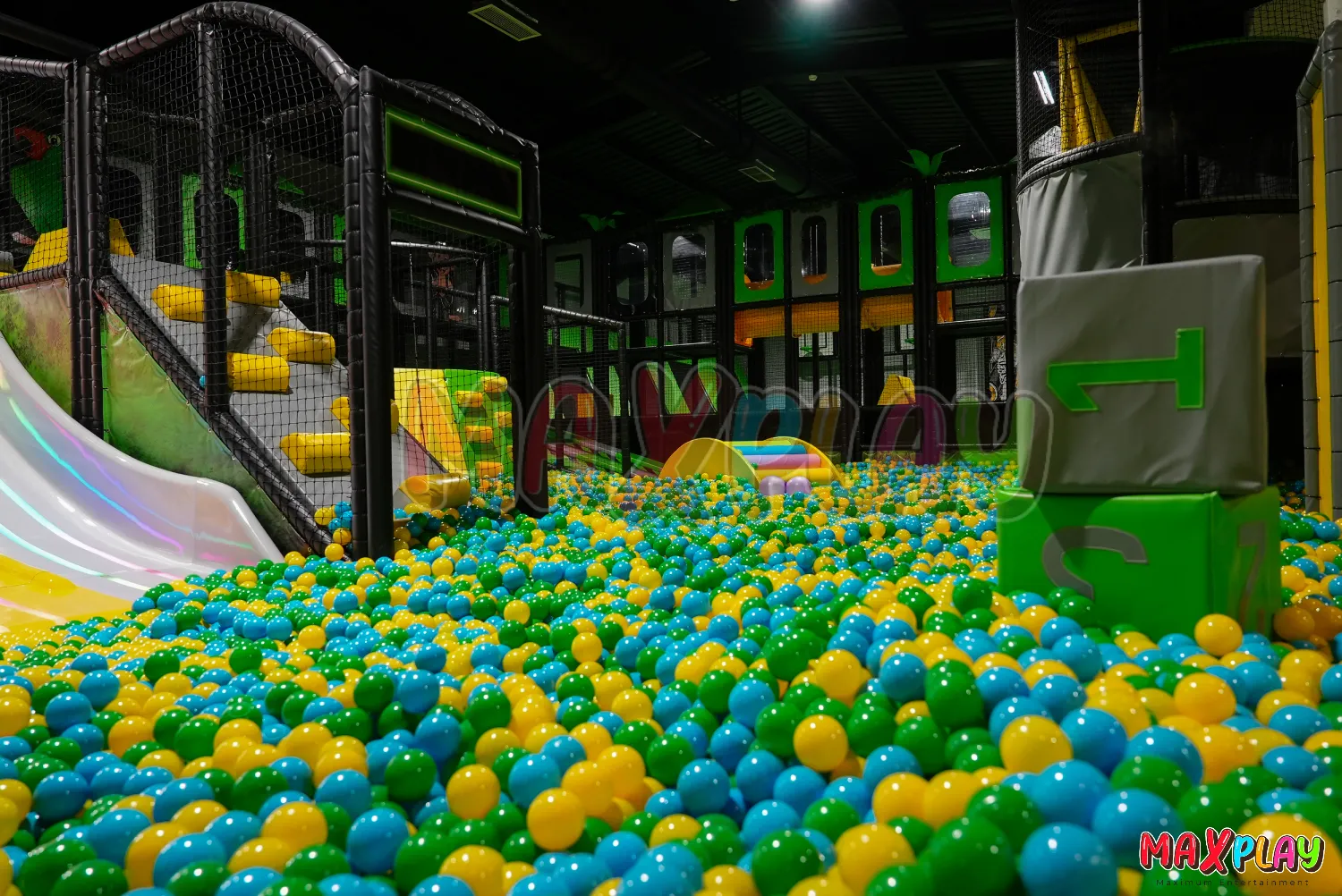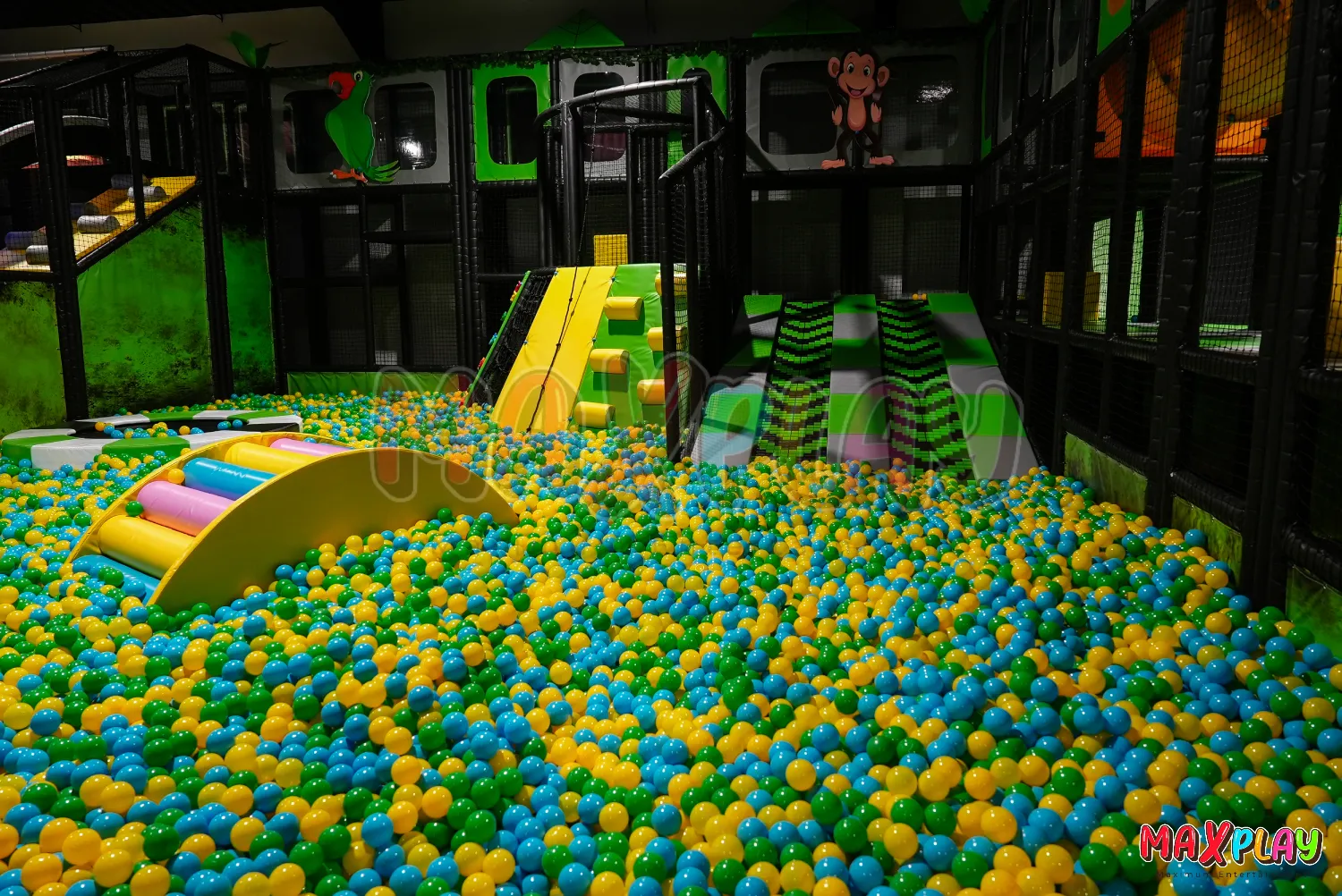









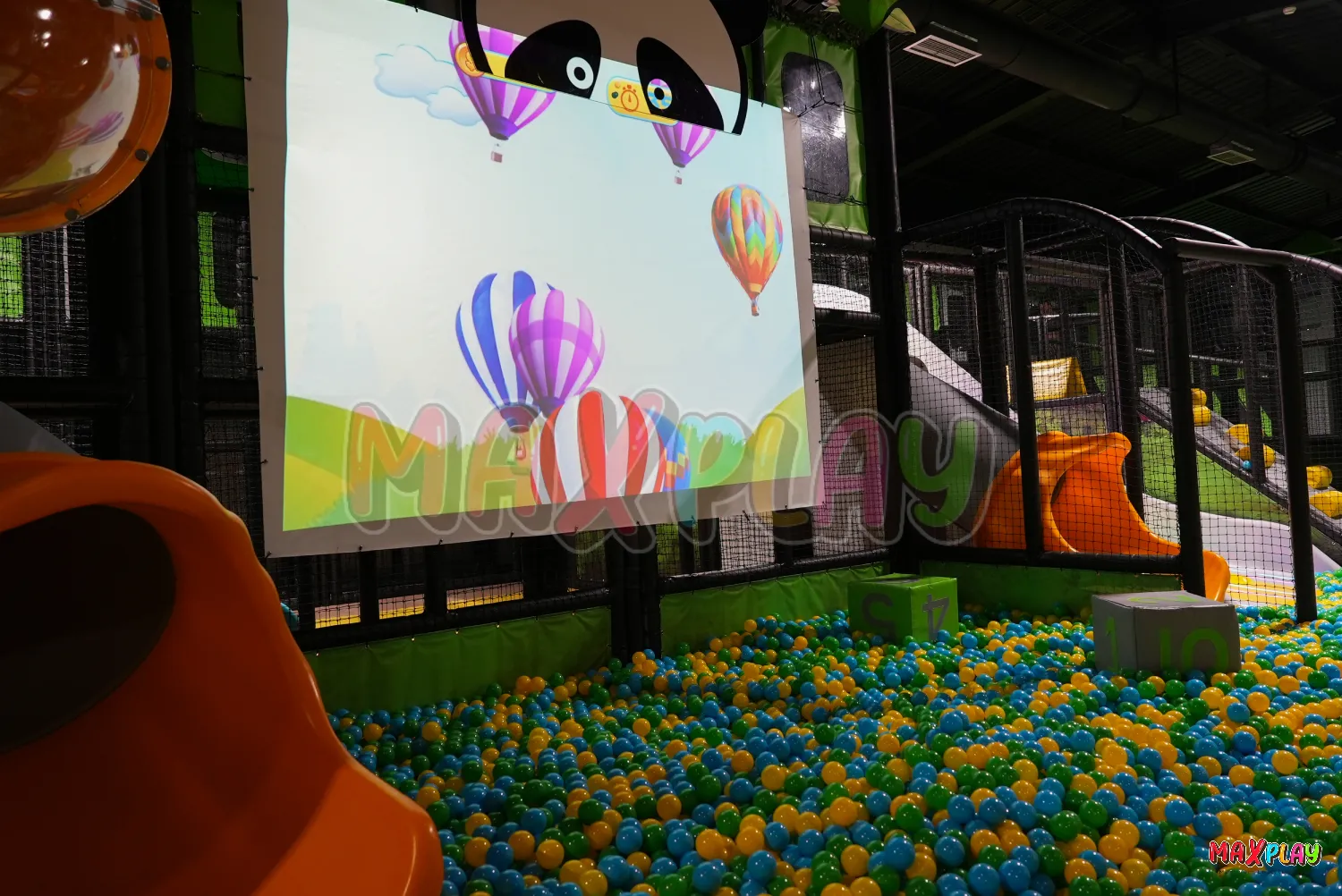
Indoor Playground Accessories in Finland: Slides, Ball Pits, and Climbers
Choosing indoor playground accessories in Finland starts with three practical questions. Where will children wait? Where will they go when they finish an activity? How will staff reach the equipment to clean and inspect it? A slide can fit neatly on a floor plan while its exit interrupts the busiest route through the room. A ball pit can occupy a small corner while making the floor underneath difficult to clean. These details determine whether an accessory works during a Saturday rush as well as it does on opening day.
As MaxPlay Playground Equipment, we provide professional solutions for indoor playgrounds and soft play areas. We design, manufacture, install, and assemble indoor playground equipment and soft play systems for commercial spaces. Contact us for turnkey indoor playground projects.
| Landline: | 0216 377 10 88 |
| Mobile / WhatsApp: | 0532 069 53 17 |
| E-Mail: | info@maxplay.com.tr |
| Address: | Google Maps |
You can contact us for all your projects across Türkiye and international markets.
Our Services:
- Trampoline Manufacturing – Trampoline Park Installation
- Ball Pit Manufacturing – Ball Pit Playground Installations (with slides, etc.)
- Interactive Play Systems (Moving Soft Play Toys & Equipment)
- Sand Pit – Sand Play Areas
- Playgrounds and Role-Play Houses for Kindergartens & Nurseries
- Indoor playgrounds for businesses such as shopping malls, cafés, restaurants, etc.
- And all customized playground projects tailored to your specific needs.
For a Finnish hotel, the right indoor play equipment might be a low climber and a ball pit that parents can see from nearby seating. A shopping centre may need several short activities to keep children moving through a shared play space. A family entertainment centre can use taller equipment and longer play routes where staffing and floor area support them. The choice depends on how the venue operates, how long families stay and how much space the equipment needs in use.
Which Play Features Suit Finnish Shopping Centres, Hotel Playrooms and Family Entertainment Centres?
A shopping centre play area has to absorb short visits and sudden bursts of demand. In practice, a popular feature often draws a second crowd of parents, siblings and pushchairs around its entrance. A low indoor play set with two or three independent activities can distribute that demand across the space. A short climb, a ground-level play panel and a slide with its own return route give children options without sending everyone towards the same opening. A mall with limited frontage may get more usable capacity from an activity that children can enter and leave quickly than from a larger enclosed feature with a single access point.
Hotel playrooms operate differently. A compact ball pool for hotel playrooms makes sense where parents can supervise from nearby seats and staff can clean the unit between busy periods. In a breakfast-area play corner, a low toddler play set indoor configuration can combine broad padded steps, a low platform and simple ground-level play. Check the sightline from seated adult height. A solid surround that appears low on a drawing can hide a seated child in the far corner. Where the playroom is next to guest accommodation, also consider noise from repeated landings and hard surfaces.
Family entertainment centres can support more demanding soft playground equipment, especially when a climbing route ends near a slide platform and children can move through the structure in a loop. Interactive playground equipment adds value when it creates an activity away from that loop, such as a wall game for children waiting for a sibling. During school holidays or birthday parties, the operator can see whether each feature distributes traffic or draws it back to the same bottleneck.
MaxPlay Playground Equipment Overview
| Equipment Name | Description | Key Benefits | |
| Ball Pool | Colorful pit filled with balls for safe sensory play. | Safe fun for toddlers, easy to clean, encourages motor skills. | |
| Trampoline | High-quality indoor trampolines. | Builds balance and strength, child-safe design, durable materials. | |
| Interactive Game Sets | Digital and physical interactive play stations. | Boosts learning, cognitive skills, and engagement. | |
| Profession Houses | Role-play houses designed for kids. | Encourages creativity, social interaction, and imagination. | |
| Trampoline Park | Large-scale trampoline structures. | Suitable for older kids, high durability, safe design. | |
| Roller Slide | Conveyor-style (roller) slides for continuous fun. | Efficient design, fun motion play, safe structure. | |
| Tower Slide | Tower slides designed for adventure play. | Exciting design, strong safety standards, eye-catching feature. | |
| Climbing Wall | Indoor climbing walls. | Builds strength and coordination, safe grips, customizable difficulty levels. | |
| Volcano Slide | Volcano-shaped slides with climbing and sliding features. | Combines climbing and sliding, unique design, fun for multiple age groups. |
How Do Platform Height, Slide Length and Exit Space Affect Your Choice of Slide?
Platform height determines where a slide can start and who can realistically reach it. Slide profile, length and orientation determine how much room it needs at floor level and where riders emerge. When comparing commercial indoor playground slides, look at a plan and section together. The plan should show the approach, run-out and route away from the exit. The section should show the platform level, the slide profile and any overhead obstruction. For soft play slide attachments, the connection between the deck and the slide entry deserves the same attention as the overall dimensions.
A common mistake in practice is measuring from the platform to the end of the chute, then treating that point as the edge of the slide’s operating space. Children may stand up slowly, turn around to look for a friend or walk across the landing area to reach the access steps. Indoor slide exit clearance therefore needs to be assessed alongside the direction children take after landing. In a narrow playroom, moving the access steps to the opposite side can have more effect on the layout than choosing a slightly shorter slide.
For a Finnish project, have the designer or inspector establish which requirements apply to the installed configuration. Finland’s standards body lists SFS-EN 1176-3 for slides, and EN 1176-10 covers fully enclosed play equipment. A slide within an enclosed frame needs to be assessed in the context of that structure, including how children approach and leave it. Record the slide model and its intended position in the drawings so the specification follows the unit through manufacture and installation.
When Should You Choose a Standalone Ball Pit or a Combined Slide-and-Ball-Pit Unit?
MaxPlay lists two sizes for buyers comparing a ball pit with integrated slide. The 2 × 2 m model, product code 25204, has a 4 m² catalogue footprint and a 2 m listed height. The 3 × 3 m model, product code 25307, has a 9 m² catalogue footprint and a 2.5 m height in the product title. The larger model’s online dimension fields differ from its title, so the order drawing should confirm width, depth and overall height before the venue allocates floor space or approves production. The listed dimensions are a starting point for the comparison.
In practice, the smaller unit is a candidate for a hotel playroom where adults can see the entry and staff can service the unit from the room side. Add the approach to the entrance, the space a parent needs to help a child and access for removing a bin of balls. If one edge sits against a wall, establish how staff will clean the floor and reach seams along that edge. With the larger unit, check where children collect after sliding and how they get back to the access steps. The extra 5 m² is the difference in equipment footprint. The difference in room area depends on the circulation and service space each layout requires.
A standalone ball pool suits a dedicated toddler area or a venue that wants to keep floor-level play separate from slide traffic. An integrated unit suits a venue where the slide and pit can operate as one attraction, with a visible entrance and space for children to leave the landing area. Compare commercial ball pits for children by drawing a full play cycle for each option. Mark the entrance, landing point, route out and cleaning access. If the landing zone repeatedly fills with children who want to sit and play in the balls, a separate pit and slide will usually give the operator more control over both activities.
Which Climbers Work Best for Toddlers, Younger Children and More Confident Climbers?
Toddler climbing modules work best when children can see their next foothold, turn around and get down without crossing a busier route. Broad padded steps, shallow ramps and low platforms can give toddlers several ways to explore at their own pace. In practice, the most revealing point is the descent. A child may climb easily with both hands on the padding, then hesitate when the first step down disappears from view. A low return route or a second way off the platform gives children room to turn back without holding up those behind them.
For younger children ready for more challenge, commercial soft play climbers can use staggered steps, inclined surfaces or a short climb between levels. Difficulty depends on the distance between footholds, the angle of the climb and how easily a child can reach the next grip. In a mixed-age room, put the harder route to one side of the main circulation path. This makes it possible for a child to pause or reverse while others continue to the slide or adjacent play features. It also makes it easier for staff to see where a queue begins.
Indoor playground climbing nets suit more confident climbers when the start, finish and route down are easy to identify. A net leading to a platform should leave space for arriving children to stand and move away from the opening. Two routes feeding the same small deck can produce a queue wherever the slower group arrives. For genuine choice, give the net and the simpler climb distinct approaches and enough room at their destinations for children to decide where to go next.
How Can You Position Slides, Ball Pits and Climbers to Keep Queues Clear of Play Routes?
Start by mapping four movements on the floor plan. Mark where children enter, where they wait, where they land and how they return for another turn. In practice, a queue often forms at the first feature children can see, even where the main attraction is farther inside. A slide entry beside a doorway can draw a queue into the entrance, while children leaving the slide cross it on their way back. Moving a platform access point or rotating the slide can give the queue and the return route separate places to operate.
Ball pits add a different kind of traffic. Children enter slowly, parents sometimes stop to help, and other children stand outside looking for friends. A pit entrance beside a climber exit combines all three with children stepping down and looking for their next activity. In a shopping centre, a layout can place the pit entrance towards the viewing side and direct the climber exit towards the active play zone. For an enclosed structure, check the viewing line through netting and around posts from the actual position staff and parents will use.
The most useful test for a layout of indoor soft playground equipment is to run through a busy five minutes on the plan. Imagine a group arriving, one child waiting at the top of the slide, another stopping at the bottom and two adults helping at the ball pit. Then add a staff member who needs to cross the room. This exposes conflicts that an empty rendering conceals, especially where seating, pushchair parking and the path to the exit all compete for the same strip of floor.
What Measurements and Mounting Details Matter When Adding Equipment to an Existing Play Frame?
An indoor play frame retrofit begins with the installed structure. Measure the deck from the finished floor, confirm the clear width between posts, record post sections and locate connection points. Photograph the underside of the deck and identify the original equipment manufacturer if possible. The most common issue in practice is a deck opening that measures correctly at the front but narrows behind padding or around a brace. A slide may fit the opening on paper while the mounting plate remains inaccessible during installation.
The technical review should establish how the new accessory connects to the frame and how the frame carries the resulting loads. Check support locations, fasteners, guarding, padding, net transitions and any openings created at the interface. Where the original drawings are available, compare them with current site measurements. Where records are incomplete, the supplier and a competent assessor need enough site information to evaluate the proposed connection. A freestanding module can be a better option when the existing structure’s condition, capacity or connection details cannot be established.
For indoor playground equipment upgrades, include what happens to the surrounding area during the work. Replacing a slide may require temporary removal of guarding or netting. Adding a climber can change where children gather on a deck that previously served as a passage. Record who approves the revised drawing, who handles installation and what the final inspection will cover. A retrofit is ready for handover when the connections, adjacent routes and affected protective features have all been checked together.
How Can You Compare Ball Pit Designs for Cleaning Access and Ball Containment?
The best way to assess ball pit cleaning access is to follow the job from start to finish. Establish how staff will remove the balls, what containers will hold them, how the floor and corners will be reached and where cleaned components can dry. In practice, the awkward places are behind internal steps, at floor-to-wall seams and around the base of a slide. A decorative partition may conceal one of those areas from view while also making it difficult to inspect or wipe down.
Ball containment depends on the entrance, wall height and how children move through the unit. A high threshold contains balls but can make access harder for younger children. A broad opening makes entry easier and may send more balls into an adjacent walkway. A recessed entry, a suitable threshold and a layout that places active play away from the opening can improve containment. Where a slide ends inside the pit, check whether the landing repeatedly pushes balls towards the entrance and whether there is room to redistribute them during routine checks.
The finish specification should name the materials and identify compatible cleaning products and methods. First-class workmanship shows up in close-fitting covers, accessible seams and padding that can be inspected and replaced. For health-conscious production, ask for material information for the balls, covers and padding, with relevant compliance documentation for the intended use. Maintenance staff also need to know how to deal with damaged seams, worn covers, contaminated balls and components that require removal for more thorough cleaning.
Which Slides, Ball Pits and Climbing Modules Can Finnish Operators Source from Turkey?
MaxPlay’s catalogue includes standalone and integrated ball pits, slide and ramp configurations, toddler modules, larger play structures, trampoline units and interactive play products. A Finnish buyer working with a Turkish indoor playground accessory manufacturer can choose a catalogue unit for a clear, open floor area or specify components that fit a particular frame or room. On a live site, a combination often works well. A standard pit can fill a regular bay while a made-to-measure climb solves a difficult connection elsewhere.
Buyers comparing indoor playground equipment manufacturers should identify who owns the interface between components. This matters when an existing deck takes a new slide or when an enclosure supplied by one company meets a module built by another. Ask the indoor playground supplier to record the connection and assembly responsibilities in the quotation. For soft play equipment wholesale orders, standardise part codes and finishes across sites where possible, then identify exceptions for local measurements. In practice, a shared spare-parts list simplifies maintenance across several venues.
Some family entertainment centres also source trampoline park equipment as a separate activity. A buyer working with a trampoline park manufacturer can coordinate the two packages around staffing, circulation and available floor space. The activity zones still need their own operational checks. A route that carries children away from an active trampoline area should lead away from a toddler entrance, even when both zones share a reception desk and viewing area. MaxPlay lists trampoline parks alongside its indoor playground and soft play offering.
Why Is Turkish Manufacturing a Practical Option When Standard Modules Do Not Fit Your Existing Layout?
Custom soft play components from Turkey can solve a specific layout problem, such as a slide entry that needs to meet an existing deck or padding that must follow an irregular column. In practice, one well-designed component can preserve several serviceable parts of the original installation. For example, a Finnish operator with a sound frame and a busy slide exit may be able to retain the frame and specify a different slide orientation. That option becomes viable once the supplier verifies the deck connection, the revised run-out and how children will return to the platform.
When comparing soft play manufacturers in Turkey, China and other markets, request like-for-like quotes for the same approved drawing and scope. Turkish production can compete on price and offer shorter delivery schedules than an overseas order moving by sea, particularly when European road transport gives the Finnish venue an earlier installation date. Build the comparison around the delivered cost, including packaging, transport, unloading, installation and initial spares. A competitive equipment price carries more weight when the supplier also gives a dependable factory completion date and a freight plan.
A Turkish offer can also deliver better build quality where it specifies stronger wear components, sounder frame connections and finishes that stand up to frequent commercial cleaning. Verify those differences through samples, material data and relevant test records. For commercial soft play equipment, examine the parts children grip, step on and land against each day. Cover seams, padding retention and replaceable wear surfaces have more influence on the operating cost than a small difference in purchase price, particularly if the venue has to close an entire play zone to replace one component.
What Drawings, Materials and Spare Parts Should You Confirm Before Ordering from Turkey?
A production approval should include a dimensioned plan and elevations, with connection details for any accessory fitted to an existing frame. Mark entrances, slide exits, net openings, finished floor levels and service access. In practice, omissions often surface when a factory drawing gets compared with a later property plan. A column may have been boxed in, ceiling services may have dropped below the stated height, or the finished flooring may change the height of the first step. Date the site measurements and tie the signed drawing to the product code and order revision.
For certified production, confirm the current scope and validity of any manufacturing certificates and ask for the applicable equipment-specific reports for the configuration ordered. MaxPlay publishes quality and environmental management certification information and describes welded metal frames, protective padding and mesh surrounds on its ball-pit product pages. For a Finnish project, the order file should also identify materials and finishes in child-contact areas, include available supporting test documentation and explain the approved cleaning methods. Record colour and sample approvals against the same drawing revision.
Agree on replacement parts for indoor play equipment before the first shipment. Establish the codes, lead times and fitting responsibility for net panels, fasteners, padding sleeves, balls and other wear items. Confirm whether a replacement will match the original colour and mounting pattern. A small initial stock makes sense for frequently handled components, while bulky parts can be ordered as needed if the supplier can identify them reliably. An illustrated parts list helps a maintenance team specify the right item even after staff change.
How Can You Schedule Delivery and Installation in Finland Around Opening Hours?
For indoor playground equipment from Turkey to Finland, set separate dates for drawing approval, production completion, dispatch, arrival, installation and inspection. MaxPlay offers international delivery and turnkey installation. Fast road freight from Turkey can suit a time-sensitive module order, while express parcel shipping can help when a small spare is holding up a reopening. Larger structures need a freight plan based on crate dimensions, handling requirements and site access. Allow time for transport and customs processing when comparing the quoted dispatch date with the planned reopening.
In practice, the loading bay can be the tightest constraint on indoor playground accessory installation in Finland. A shopping centre may allow unloading before public opening, but the longest crate may still need to turn through a corridor or fit into a goods lift. Confirm the largest packed component against the entire route and arrange a secure staging area if unloading and assembly happen on different shifts. In a hotel, book noisy work around guest activity and keep the installation route away from breakfast service and check-in traffic where the building allows it.
Plan handover before committing to a reopening time. Allow for assembly, housekeeping, the agreed post-installation inspection and time to resolve any findings. The venue can keep other areas operating where work zones and routes can be safely separated. The handover should include drawings, inspection records and staff instructions for cleaning, daily checks and fault reporting. The Finnish Safety and Chemicals Agency includes indoor play areas within its consumer-service safety guidance, so these records support the operator’s work after the installation crew leaves.
How Can MaxPlay Combine Slides, Ball Pits and Climbers in a New Playground or an Existing Venue?
For a new venue, MaxPlay can plan the climb, slide and ball pit as a sequence or as separate activities. A compact hotel room might use a low climb and a small combined unit within view of nearby seating. A family entertainment centre can give toddlers a standalone pit and place the larger slide on a separate play loop. MaxPlay’s published European project portfolio includes a 150 m² installation in Milan, and its indoor playground service covers design, production, delivery and installation.
For an existing venue, the first design decision is usually which equipment still serves the business and which feature limits the way children use it. In practice, a venue may already have enough activities and need a better route around the slide, a lower entry to the toddler area or access for cleaning the pit. A useful project drawing identifies the proposed improvement, shows the connections to the existing equipment and lets the operator compare a targeted upgrade with a wider refurbishment before pricing either option.
Project planning and custom concept design are free. Request your project today with a floor plan, ceiling height, photos of the venue and the age groups you want to serve. If you’re upgrading a play frame, include its deck heights and photos of the connection points so MaxPlay can assess the fit and discuss production, delivery and installation around your opening hours.