





Indoor Playground Design and Build Services in Denmark: From Planning to Execution
Establishing a commercial play space within the Nordic recreation sector requires aligning structural engineering, high-throughput ergonomics, and Scandinavian interior aesthetics. Investing in Indoor Playground Design and Build Services in Denmark entails navigating a mature market where consumer expectations for environmental hygiene, acoustic comfort, and developmental value are exceptionally high. A successful enterprise moves beyond assembling standard modular parts; it demands a calibrated master plan where architectural constraints, local building regulations, and certified manufacturing integrate seamlessly from the initial feasibility assessment.
As MaxPlay Playground Equipment, we provide professional solutions for indoor playgrounds and soft play areas. We design, manufacture, install, and assemble indoor playground equipment and soft play systems for commercial spaces. Contact us for turnkey indoor playground projects.
| Landline: | 0216 377 10 88 |
| Mobile / WhatsApp: | 0532 069 53 17 |
| E-Mail: | info@maxplay.com.tr |
| Address: | Google Maps |
You can contact us for all your projects across Türkiye and international markets.
Our Services:
- Trampoline Manufacturing – Trampoline Park Installation
- Ball Pit Manufacturing – Ball Pit Playground Installations (with slides, etc.)
- Interactive Play Systems (Moving Soft Play Toys & Equipment)
- Sand Pit – Sand Play Areas
- Playgrounds and Role-Play Houses for Kindergartens & Nurseries
- Indoor playgrounds for businesses such as shopping malls, cafés, restaurants, etc.
- And all customized playground projects tailored to your specific needs.
Operational success in Danish commercial recreation relies on delivering immersive, safe, and durable physical infrastructure tailored to modern leisure formats. The structural integration must balance high-traffic durability with natural Nordic design principles, avoiding visually cluttered layouts in favor of open sightlines and hygienic architectural detailing. Sourcing high-specification hardware from an experienced indoor playground supplier ensures that structural systems meet stringent European structural safety mandates while remaining operationally adaptable for long-term commercial returns.
Executing a commercial leisure build in cities like Copenhagen, Aarhus, or Odense involves coordinating structural zoning, specialized logistics, and precision installation. Every design detail—from shock absorption thresholds under high-use climbing zones to acoustic baffling in multi-level structures—impacts bottom-line profitability and operational longevity. Structuring an indoor play facility demands an engineering and fabrication workflow engineered to withstand decades of intensive commercial patron traffic.

How to Plan an Indoor Playground Project for the Danish Market?
Launching a successful commercial family leisure project within the Danish family entertainment market requires a deep understanding of regional consumer habits and strict Nordic municipal frameworks. Danish parents prioritize sustainable, non-toxic materials, minimalist and functional architecture, and play environments that foster natural physical motor skill development over hyper-stimulating, plasticized settings. The initial project planning phase must account for local zoning permits, stringent fire safety regulations under the Danish Building Regulations (Bygningsreglementet BR18), and precise emergency egress calculations for high-occupancy commercial play centres.
In practical application, the most critical mistake investors make is underestimating operational overheads, particularly energy efficiency and indoor climate control. Commercial venues in Denmark face substantial heating and ventilation demands during extended winter seasons. When engineering indoor recreation concepts, site layout blueprints must integrate HVAC ducting seamlessly into high-climbing multi-level frameworks without obstructing play lines or compromising the minimum headroom clearances required by European engineering norms.
Commercial viability hinges on realistic financial feasibility modeling that segments revenue across multiple streams: birthday party hosting, dedicated food and beverage offerings, and seasonal memberships. The strategic layout must ensure the cafe or parent lounge maintains uninterrupted visibility of the play zone, driving extended dwell times and higher average spend per customer. An effective design aligns spatial programming directly with business targets, balancing open floor circulation with high-capacity play density.
What Are the Latest Turkish Indoor Playground Trends for 2026?
The indoor leisure sector in 2026 demands a shift away from isolated play structures toward multi-attraction hybrid environments. Turkish manufacturers are driving this transition by engineering integrated destinations that combine traditional multi-level soft play mazes with high-capacity trampoline arenas, ninja warrior obstacle courses, interactive projection systems, and dedicated toddler zones within a single architectural footprint. This hybrid approach enables commercial operators to capture wider demographic brackets—ranging from early developmental toddlers to active teenagers—maximizing secondary spend and extended facility dwell times.
A defining design evolution in 2026 is the alignment with biophilic and modern Scandinavian design languages. Facilities are departing from chaotic, oversaturated primary color schemes in favor of natural wood finishes, muted Nordic color palettes, tactile acoustic paneling, and custom architectural thematic lighting. Turkish design teams leverage rapid 3D modeling and automated fabrication workflows to deliver clean sightlines, open-concept visibility corridors, and aesthetically cohesive interiors that blend into upscale shopping malls, family resorts, and modern commercial leisure complexes.
In operational practice, integrating digital gamification and hygiene-centric engineering represents the fastest-growing functional trend. Turkish producers increasingly integrate smart sensor targets, reactive projection walls, automated ball-handling sanitation systems, and anti-static, antimicrobial surface coatings into standard equipment packages. These technological enhancements create immersive, physically demanding play experiences that appeal to modern digital-native families while drastically simplifying daily sanitization routines for venue floor teams.
MaxPlay Playground Equipment Overview
| Equipment Name | Description | Key Benefits |
| Ball Pool | Colorful pit filled with balls for safe sensory play. | Safe fun for toddlers, easy to clean, encourages motor skills. |
| Trampoline | High-quality indoor trampolines. | Builds balance and strength, child-safe design, durable materials. |
| Interactive Game Sets | Digital and physical interactive play stations. | Boosts learning, cognitive skills, and engagement. |
| Profession Houses | Role-play houses designed for kids. | Encourages creativity, social interaction, and imagination. |
| Trampoline Park | Large-scale trampoline structures. | Suitable for older kids, high durability, safe design. |
| Roller Slide | Conveyor-style (roller) slides for continuous fun. | Efficient design, fun motion play, safe structure. |
| Tower Slide | Tower slides designed for adventure play. | Exciting design, strong safety standards, eye-catching feature. |
| Climbing Wall | Indoor climbing walls. | Builds strength and coordination, safe grips, customizable difficulty levels. |
| Volcano Slide | Volcano-shaped slides with climbing and sliding features. | Combines climbing and sliding, unique design, fun for multiple age groups. |
Why Are Turkish Indoor Playground Manufacturers Trusted Across Europe?
European leisure developers, municipal bodies, and FEC operators consistently rely on Turkish manufacturers due to their adherence to strict European compliance frameworks and superior manufacturing transparency. Turkish facilities produce equipment aligned strictly with the unified European safety standards EN 1176 (parts 1–10) for playground structures and EN 1177 for impact-attenuating surfacing. By utilizing non-toxic, fire-retardant (DIN 4102 B1 / EN 13501-1 compliant) textiles and heavy-gauge galvanized steel frameworks, Turkish manufacturers ensure frictionless municipal safety audits and insurance validations across all European Union member states.
The primary operational advantage lies in the strategic balance between manufacturing agility, certified material quality, and logistical efficiency. Sourcing directly from Turkey eliminates the severe shipping transit times, transshipment risks, and supply chain volatilities associated with transcontinental Asian imports. Direct overland freight routes link Turkish production hubs to continental Europe and Scandinavia within 7 to 12 business days, enabling reliable delivery timelines, scheduled assembly dispatches, and lower carbon footprints across the project lifecycle.
Practical project execution across Europe demonstrates that Turkish engineering provides exceptional bespoke flexibility at highly competitive capital costs. Unlike rigid catalog suppliers, Turkish fabricators customize steel tube geometries, platform elevations, and spatial zoning to match irregular building footprints, structural columns, and low ceiling heights. This engineering precision allows operators to maximize patron capacity per square meter while working directly with factory technical engineers rather than third-party retail intermediaries.
What Warranty Do Turkish Playground Manufacturers Offer?
Commercial warranty structures provided by Turkish manufacturers are built around multi-tiered coverage tailored to the mechanical stress profile of each component. Primary structural elements—including heavy-duty galvanized structural steel frameworks, cast iron pipe fittings, and rigid clamp assemblies—are backed by extensive 5-year to 10-year manufacturer structural warranties against material defects, weld fatigue, and corrosion. This foundational coverage ensures that the main load-bearing skeleton maintains structural integrity under sustained commercial patron loading.
For dynamic components, rotational-molded plastics, and high-contact soft-play elements, warranty terms reflect real-world commercial usage patterns. Commercial-grade PVC vinyl covers, high-density EPE protective foam padding, high-tensile safety netting, and specialized components like spiral slides or trampoline springs are covered under 1-year to 2-year industrial replacement warranties against premature seam rupture, delamination, or material degradation. Electronic and interactive equipment, such as interactive sensory panels and optical projection units, typically carry standard 1-year commercial electronics protection.
In practical operational management, long-term asset reliability is reinforced through dedicated spare parts availability guarantees and comprehensive after-sales technical support. Turkish manufacturers provide direct factory spare parts dispatch across Europe, ensuring that routine wear items—such as net fasteners, foam sleeves, safety belts, and vinyl patches—can be procured and replaced without disrupting daily operations. Detailed maintenance logbooks, preventative inspection schedules, and remote technical support accompany every equipment handover to ensure uninterrupted compliance throughout the facility’s lifecycle.

Turning Available Floor Space into an Efficient Play Environment
Effective space planning transforms raw industrial, retail, or warehouse footprints into high-yield commercial assets. In commercial play engineering, the first step is conducting an exhaustive dimensional audit that accounts for structural columns, service risers, ceiling height variances, and load-bearing capacities. Professional playground zoning establishes clear acoustic and energetic separation between dynamic, high-impact attractions and low-stimulus zones, ensuring that running pathways never intersect with toddler exploration corridors.
In daily operations, poor visitor circulation creates operational bottlenecks that drastically limit peak-hour revenue. Designing logical circulation arteries of at least 1.8 to 2.4 meters ensures smooth transit for strollers, service personnel, and mixed-age groups without congesting primary access corridors. Capacity management requires balancing spatial density against safety zones, optimizing the footprint so that every square meter contributes directly to visitor capacity without causing visual crowding.
Functional layouts must balance structural capacity with operational sightlines. Service personnel and parents should maintain unobstructed visual control over complex modular structures from seated cafe zones. Eliminating structural blind spots within dynamic play towers reduces staffing requirements, lowers liability, and enhances the overall visitor experience through thoughtful spatial arrangement.
Selecting Equipment for Toddlers, Children and Mixed-Age Facilities
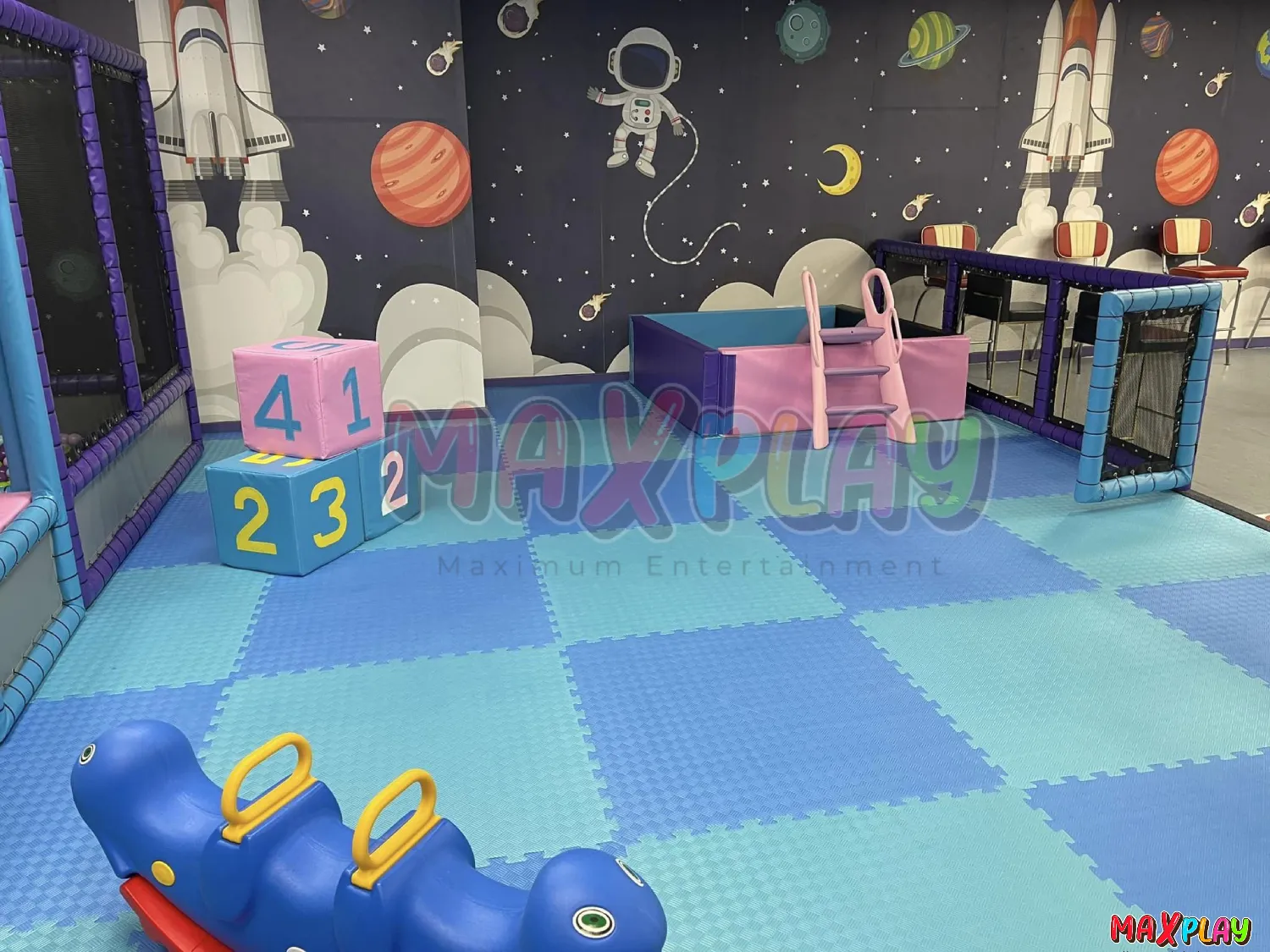
A balanced attraction mix is fundamental to maximizing customer retention across diverse demographic groups. Mixed-age family entertainment facilities require clear architectural and functional zoning to prevent energetic older children from encroaching on early-development play areas. Equipping a venue with an engineered toddler play set indoor environment requires lower elevation platforms, soft-contoured sensory walls, and gross motor skill elements configured specifically for cognitive growth:
- Dedicated Toddler Play Zones: Low-impact toddler play set units, sensory activity panels, micro-slides, crawl tunnels, and shallow developmental zones.
- Dynamic Multi-Level Play Structures: Structural steel labyrinth towers incorporating vertical climbing matrices, web bridges, and rapid spiral exit tubes.
- High-Capacity Attraction Features: Stainless steel and rotationally molded high-speed slides, obstacle routes, drop towers, and integrated soft obstacles.
- Soft Active Play Components: High-density vinyl-wrapped floor wedges, balancing blocks, and modular spatial building forms.
Integrating high-performance indoor soft playground equipment throughout the main structure provides durable impact protection during continuous high-velocity movement. Multi-level structures provide continuous play value through interconnected climbing activities, rope bridges, and high-capacity slides. Sourcing diverse commercial soft play equipment ensures all high-impact corners, steps, and cross-beams feature certified foam padding wrapped in tear-resistant PVC.
For broader venue engagement, modern facilities incorporate responsive digital elements. Installing specialized interactive playground equipment—such as projection ball walls and reactive floor surfaces—merges digital gameplay with vigorous physical exercise. Integrating an expansive, commercially graded ball pool equipped with automated ball washers, air cannons, and suction systems elevates visitor engagement while maintaining strict Danish facility hygiene standards.
Integrating Safety into the Playground Design from the Beginning
Safety engineering is an active, structural design principle rather than a cosmetic addition. In the European Union and Denmark, all commercial public-use indoor play facilities must strictly conform to the EN 1176 (parts 1-10) standard for playground equipment and surfacing, as well as the complementary EN 1177 impact attenuation requirements. From the initial 3D CAD modeling phase, safety zones must be calculated around every slide exit, climbing egress, and moving component to eliminate structural overlaps or fall trajectory hazards.
In high-throughput environments, the most severe liability risks stem from subtle head, neck, and finger entrapments. Design teams must audit all structural intersections against standardized cylindrical and torso probes defined under EN 1176-1. Protective flooring must utilize certified seamless poured polyurethane or high-density interlocking EVA systems, with calculated Critical Fall Heights engineered to match the highest accessible platform within the vertical play tower.
Operational longevity requires integrating daily and monthly equipment inspection protocols directly into the engineering handover documentation. Critical structural anchor points, wire rope terminations, netting tension systems, and protective foam wrappings must be easily accessible for facility technicians without dismantling core structures. A proactive, compliant design framework guarantees long-term regulatory compliance, simplifies annual third-party inspections, and protects operational continuity.
Why Turkish Playground Manufacturing Can Support Danish Projects?
Over the past two decades, high-precision industrial fabrication has established Turkey as a preferred manufacturing partner for premier European leisure infrastructure. Sourcing playground equipment Turkey provides Danish investors with a robust alternative to Asian imports and costly Western European fabricators. Turkish manufacturers operate state-of-the-art facilities utilizing automated CNC tube bending, laser cutting, certified electrostatic powder coating, and precision rotational molding, producing equipment that meets strict European technical and mechanical quality benchmarks.
Procuring systems directly from established indoor playground equipment manufacturers in Turkey delivers superior structural integrity and direct engineering oversight compared to intermediaries. When purchasing soft play equipment wholesale, Danish developers capture significant capital expenditure efficiencies without compromising raw material specifications:
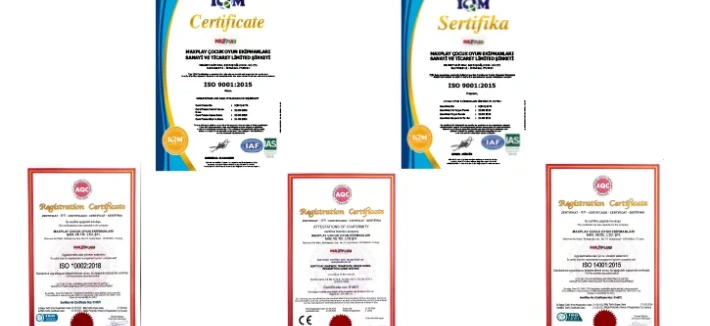
- Manufacturing Standards: Fully certified EN 1176, CE, and ISO 9001 quality systems.
- Material Specifications: Heavy-gauge galvanized steel frameworks and phthalate-free, non-toxic commercial vinyl.
- Freight Transit to Denmark: Reliable 7 to 12 business days direct road freight, avoiding extensive sea port delays.
- Production Flexibility: Rapid bespoke engineering and high-density custom layout adaptations.
- Capital Expenditure Efficiency: Aggressive competitive pricing compared to Western Europe, with far superior durability and shorter lead times than Asian alternatives.
Partnering with reliable soft play manufacturers in Turkey bridges technical performance with financial prudence. Production flexibility allows for fully customized, venue-specific structural adaptations that maximize low-ceiling or irregular commercial footprints. Lower production overheads paired with skilled metal and textile fabrication allow operators to allocate capital toward higher play density and advanced interactive features.
Custom Design Options for FECs, Restaurants, Hotels and Shopping Centres
Every commercial venue requires an operational focus tailored to its core business model. A Family Entertainment Center (FEC) demands high-capacity, multi-story attraction towers that serve as destination anchors, whereas hospitality settings require compact, self-contained, low-maintenance entertainment zones. Deploying a tailored indoor play set within a shopping mall or restaurant provides dynamic family dwell value without disrupting primary pedestrian traffic or adjacent dining spaces.
Themed interiors tailored to Danish venues emphasize clean architectural lines, muted Scandinavian color palettes, and natural tactile textures that complement modern hospitality aesthetics. Bespoke structural design enables venues to integrate their brand identity directly into play towers, themed vinyl prints, and interactive features. In high-turnover restaurant environments, selecting an easily sanitizable indoor play equipment configuration allows waitstaff to maintain hygiene protocols without dedicated maintenance crews.
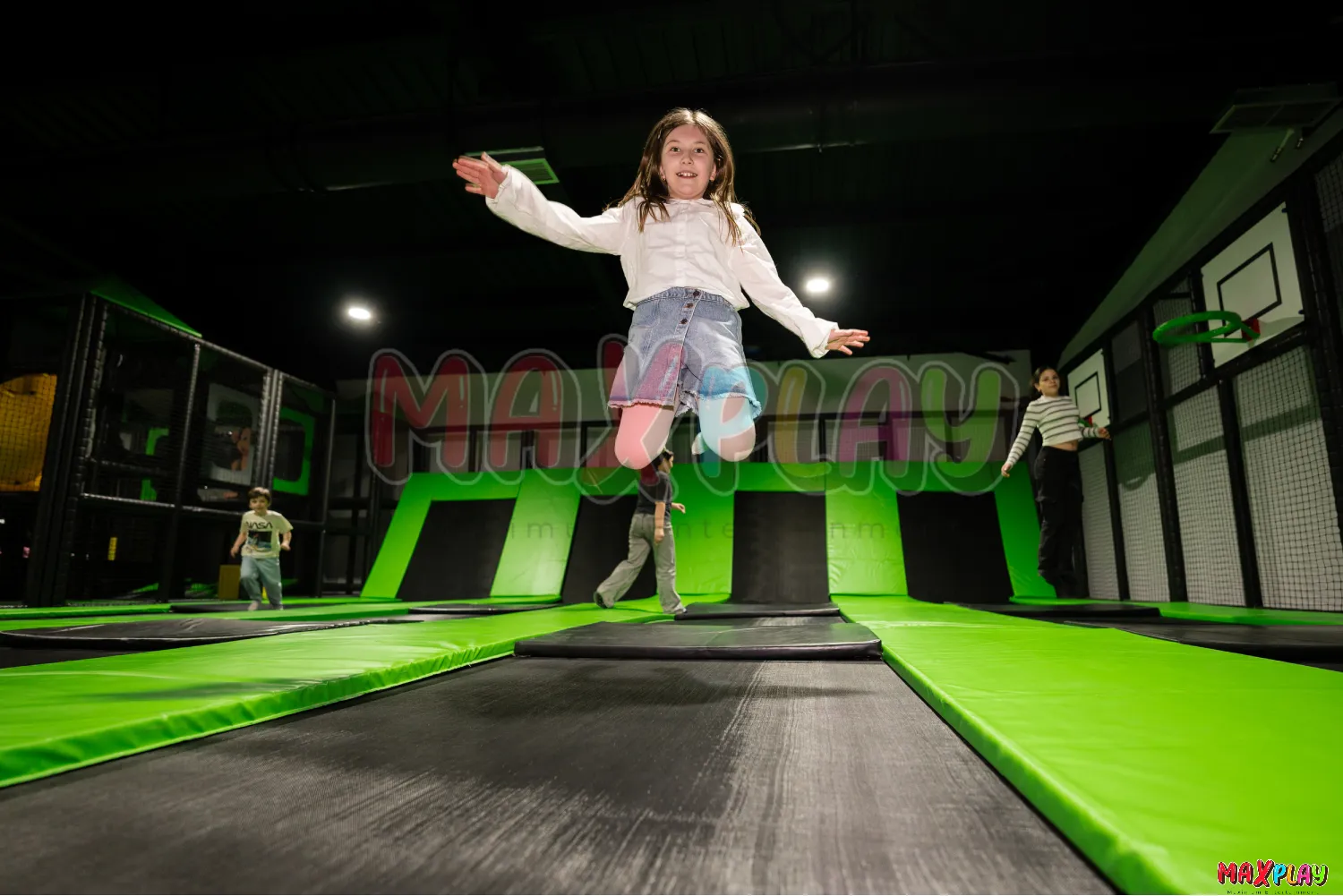
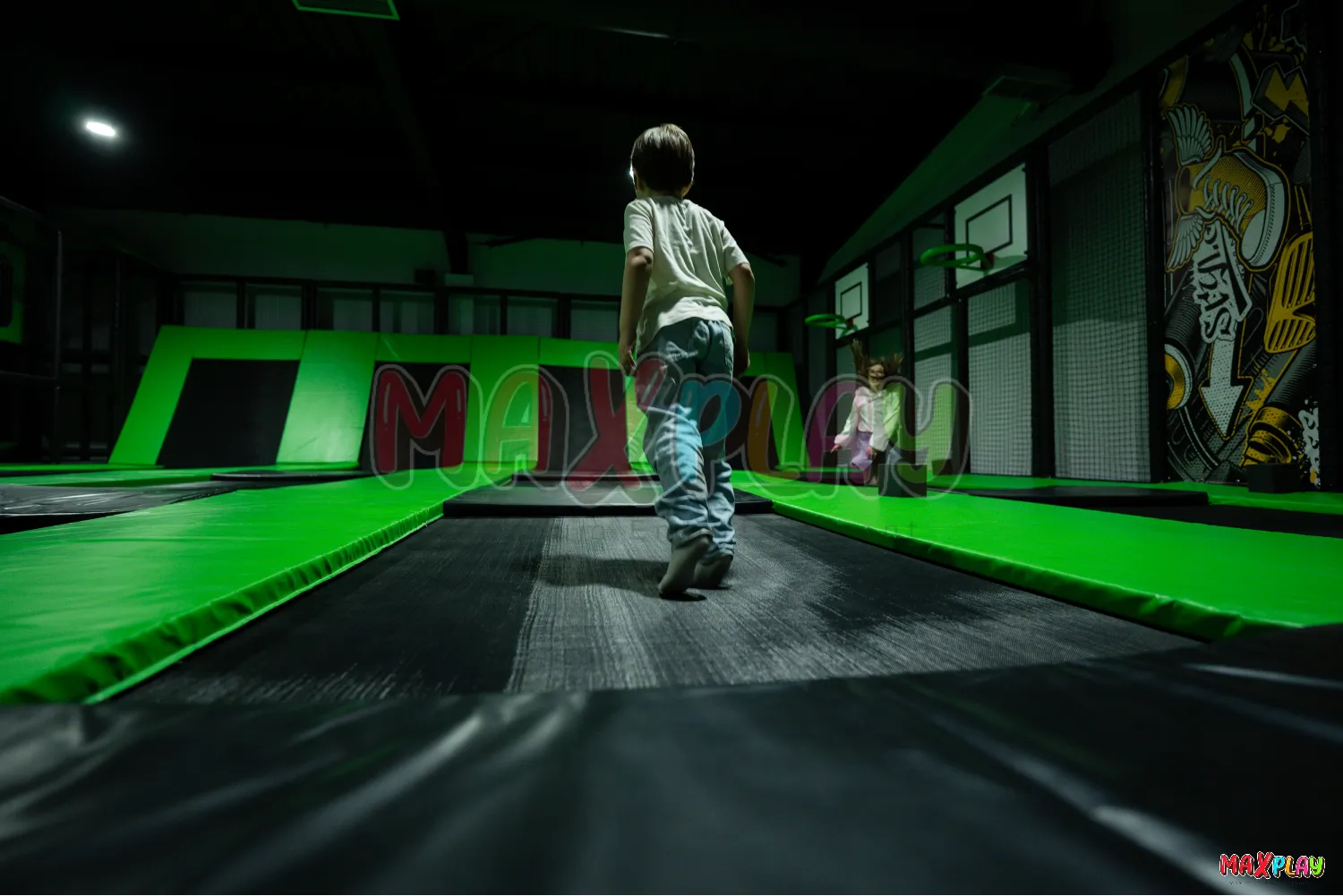
For large destination entertainment hubs, combining classic climbing mazes with dynamic vertical sports features drives higher secondary spending. Sourcing directly from an experienced trampoline park manufacturer allows developers to integrate interconnected jumping beds, dodgeball arenas, and airbag drop zones directly into the soft play perimeter. Installing high-yield trampoline park equipment within a unified design increases dynamic dwell times, attracting older children, teenagers, and corporate team-building events.
Choosing Materials That Withstand Intensive Commercial Use
Commercial indoor play centres experience relentless wear and tear, demanding materials engineered specifically for severe mechanical loading and high-frequency abrasion. Structural integrity begins with the internal skeletal framework: primary support columns must be fabricated from heavy-gauge galvanized steel tubing (minimum 48mm diameter with 2.5mm to 3.0mm wall thickness), cold-formed and treated against indoor ambient corrosion. Structural clamps, brackets, and fast-lock joints must be cast from high-tensile ductile iron or aluminum alloy to eliminate the risk of stress fractures under rhythmic dynamic loading.
Protective foam padding must never rely on low-density domestic foam. Industrial-grade, closed-cell cross-linked polyethylene (EPE) or high-resilience polyurethane foam maintains its geometry, cell structure, and impact-absorption characteristics over hundreds of thousands of compression cycles. This protective foam core must be wrapped in heavy-duty, commercial-grade PVC vinyl (minimum 650g/m² to 900g/m²). The outer vinyl must be flame-retardant (certified to DIN 4102 B1 or EN 13501-1), UV-stabilized, phthalate-free, non-toxic, and reinforced with an internal high-tenacity polyester scrim to resist tearing and puncture damage.
High-touch, high-traffic containment requires knotless, high-tenacity polypropylene or nylon safety netting with reinforced borders. Netting matrices must feature mesh openings precisely sized to eliminate finger entrapment while retaining high tensile breaking strengths (minimum 2.5 kN per strand). For smooth surfaces, slides, and crawl tubes, commercial-grade rotational-molded linear low-density polyethylene (LLDPE) provides impact resistance, anti-static surfaces, and easy sanitization against aggressive commercial cleaning detergents.
Coordinating Manufacturing, Freight and Delivery to Denmark
International supply chain management requires meticulous planning to prevent costly installation delays and site downtime. Sourcing play structures from Turkey to Denmark offers strong logistical advantages over transcontinental maritime shipping routes. While ocean freight from Asia involves unpredictable port dwell times, transshipment risks, and fluctuating container rates, direct land transport from Istanbul or Izmir delivers freight directly to Danish project sites in approximately 7 to 12 business days.
In international logistics execution, proper packing methods determine whether components arrive in pristine condition or suffer transit damage. High-density soft playground equipment must be clean-wrapped, moisture-sealed, and edge-protected with heavy-gauge corrugated board before loading into dedicated mega-trailers. Large structural steel elements require precision bundling and padded bracing to prevent abrasive friction during transit across the European mainland.
Customs clearance between Turkey and Denmark operates efficiently under the EU-Turkey Customs Union framework. Equipment supplied with accurate ATR movement certificates, detailed packing lists, CE declarations of conformity, and aligned HS customs codes moves across borders without unnecessary administrative holds. Coordinated logistics dispatch ensures trailers arrive sequentially in alignment with the physical installation schedule on site.
Preparing the Site for Playground Assembly and Installation
A smooth installation workflow depends heavily on site preparation before freight arrives on Danish soil. The host building must be dry, fully enclosed, weather-sealed, and climate-controlled to ensure adhesive bonds, foam components, and vinyl wraps cure under optimal environmental conditions. Concrete substrate floors must be structurally sound, dust-sealed, level within standard commercial tolerances, and cleared of all debris, industrial machinery, and uncoordinated trade activities.
Accurate structural scanning must map all subfloor utility lines, in-floor heating pipes, and expansion joints prior to drilling for heavy-duty floor anchor bolts. Mechanical anchoring into commercial concrete slabs requires certified chemical or expansion anchors rated for high pull-out loads, ensuring the multi-story structure resists lateral sway during peak visitor usage. Electrical supply points for lighting, interactive components, and air management systems must be positioned according to the engineering layout drawings to eliminate surface-mounted extension leads.
Site logistics must also establish clear access corridors, designated unloading bays, staging zones, and internal material hoists capable of lifting structural steel bundles to upper mezzanine floors. Ensuring certified scissor lifts and mobile scaffold towers are on site ahead of the assembly team minimizes mechanical setup delays, allowing the construction team to execute the structural build immediately upon truck uncoupling.
From Concept Drawings to Final Handover: What a Build Process Involves
Building a commercial indoor play destination requires a structured, multi-phase project lifecycle executed by certified engineers, industrial designers, and safety specialists. The process begins with an exhaustive architectural site audit, translating raw building measurements into detailed 3D CAD modeling. Engineering teams perform finite element structural analyses, verify drop zones, and align emergency egress clear paths with municipal safety codes.
Once conceptual renderings and technical specifications are approved by the client and local Danish certifiers, precision production commences at the manufacturing facility under strict ISO 9001 and EN 1176 quality control protocols. Components undergo factory pre-assembly checks, load testing, and comprehensive packaging to ensure complete alignment with project blueprints prior to dispatch.
Following factory staging and freight transport, certified structural assembly teams manage on-site mechanical erection. The framework is anchored, foam padding and knotless safety netting are tensioned, and complex attractions like slides, ball pits, and balance matrices are secured. The commissioning phase concludes with an exhaustive safety inspection, structural load verifications, operational staff safety training, and the formal handover of the complete compliance logbook and maintenance manuals.

Managing a Complete Indoor Playground Project with MaxPlay
Navigating commercial leisure planning, international manufacturing, strict safety certifications, and specialized installation requires a proven, single-source turnkey partner. MaxPlay delivers end-to-end expertise for family entertainment centres, commercial shopping malls, theme parks, and hospitality ventures across Denmark and the wider Nordic region. From initial architectural layout consulting to final regulatory safety sign-off, our turnkey engineering process eliminates operational friction, unifies project communication, and protects capital investments at every stage.
Every project engineered by MaxPlay is built upon certified 1st-class European-grade raw materials, phthalate-free textiles, non-toxic components, and heavy-gauge structural steel manufactured to outlast standard commercial lifespans. Fabricating directly in Turkey allows us to deliver high-specification bespoke engineering that competes aggressively on price against Asian suppliers and European fabricators, while cutting shipping transit times down to days. Every weld, netting perimeter, and high-impact soft vinyl module conforms strictly to EN 1176 standards, ensuring rapid, issue-free certification by local Danish inspection authorities.
Transforming an underutilized commercial floor plan into a safe, high-capacity, and profitable play destination begins with meticulous planning and tailored structural engineering. Our engineering and design team provides fully customized, venue-specific 3D conceptual modeling and structural project layouts completely free of charge. Contact us today to claim your free custom project design and discover how our certified turnkey solutions can bring your vision to life.