





Indoor Playground Design Build Services in Montenegro: Complete Project Support
Commercial entertainment and family leisure investments across the Adriatic region are growing rapidly, making specialized Indoor Playground Design and Build Services in Montenegro a key operational asset for developers, mall operators, hoteliers, and entertainment entrepreneurs. Developing a commercially viable indoor recreational space requires far more than placing random play units inside an empty hall. It demands structural engineering expertise, detailed understanding of consumer dwell times, strict compliance with European child safety mandates, and a supply chain that ensures durability under heavy daily use.
As MaxPlay Playground Equipment, we provide professional solutions for indoor playgrounds and soft play areas. We design, manufacture, install, and assemble indoor playground equipment and soft play systems for commercial spaces. Contact us for turnkey indoor playground projects.
| Landline: | 0216 377 10 88 |
| Mobile / WhatsApp: | 0532 069 53 17 |
| E-Mail: | info@maxplay.com.tr |
| Address: | Google Maps |
You can contact us for all your projects across Türkiye and international markets.
Our Services:
- Trampoline Manufacturing – Trampoline Park Installation
- Ball Pit Manufacturing – Ball Pit Playground Installations (with slides, etc.)
- Interactive Play Systems (Moving Soft Play Toys & Equipment)
- Sand Pit – Sand Play Areas
- Playgrounds and Role-Play Houses for Kindergartens & Nurseries
- Indoor playgrounds for businesses such as shopping malls, cafés, restaurants, etc.
- And all customized playground projects tailored to your specific needs.
Investing in commercial play facilities across Montenegrin coastal cities like Budva, Tivat, and Kotor, as well as capital commercial centers in Podgorica, requires versatile indoor solutions that operate seamlessly through seasonal tourism peaks and steady local winter traffic. A direct-from-manufacturer project model bridges the gap between creative visual architecture and structural longevity. Rather than choosing rigid catalog assemblies, customized planning allows operators to monetize every cubic meter of commercial real estate while creating safe, engaging destinations for modern families.
When building a high-capacity commercial center, the equipment must withstand intense daily physical impact while maintaining high hygiene and safety standards. Partnering with dedicated indoor playground equipment manufacturers ensures that every structural upright, vinyl wrap, protective net, and connection joint is engineered for long-term commercial performance, lowering operational overhead and maximizing investor returns.

How to Plan an Indoor Playground Project Around Your Available Space
Proper indoor playground space planning begins with a structural and architectural audit of the commercial property. Standard commercial spaces present physical constraints such as load-bearing structural pillars, low-hanging HVAC ductwork, fire sprinkler grids, structural floor load limitations, and emergency egress routes. Accurately assessing exact venue dimensions—measuring down to the millimetric clear height beneath utility runs rather than relying solely on raw slab-to-slab blueprints—prevents costly engineering reworks during on-site assembly.
In real-world applications, the most common planning mistake is calculating visitor capacity based purely on total gross floor area without accounting for operational clearance. A minimum 1.5-meter open perimeter buffer is required around main play structures to accommodate parental foot traffic, shoe storage units, seating, and unobstructed emergency routes. Evaluating usable vertical ceiling height early in the process determines whether the venue can house a high-revenue, multi-tier system or if horizontal expanse must be prioritized to keep overhead clearances safe and functional.
Strategic layout optimization relies on practical play area zoning, isolating high-velocity kinetic play zones from calm, low-impact toddler areas to prevent accidental collisions. Professional 3D site planning allows investors to analyze guest traffic flow from ticket desks and shoe cubbies to cafe zones and party rooms. Proper spatial organization eliminates interior congestion, provides clear line-of-sight supervision for parents, and maximizes revenue per square meter across the facility.
What Are the Best Turkish Indoor Playground Solutions for Shopping Malls?
Shopping mall operators require high-capacity, multi-tiered attractions that act as anchor destinations, driving foot traffic and extending family dwell times across retail and dining zones. Turkish manufacturers specialize in heavy-duty modular soft play structures and multi-level adventure mazes that maximize high-ceiling retail atriums. These systems integrate interactive ball pits, vertical drop slides, climbing volcanoes, and ninja obstacle courses engineered specifically for continuous, high-volume commercial footfall.
In real-world retail applications, the most successful shopping mall installations balance active play for older children with dedicated, low-impact toddler zones. Turkish production facilities deliver fully integrated, turnkey solutions where high-energy trampoline courts, digital interactive projection games, and role-play villages operate side-by-side within a unified safety perimeter. Using high-density, anti-microbial vinyls and fire-retardant foams, these structures are engineered to handle intensive daily wear while maintaining easy-to-clean hygienic surfaces that retail properties demand.
A major advantage of sourcing mall-scale play structures from Turkey is the level of architectural customization available without prohibitive engineering costs. Designers tailor every frame around existing structural pillars, low-hanging HVAC ductwork, and emergency egress corridors typical of modern shopping centers. This bespoke approach ensures zero wasted square footage, allowing mall management to optimize usable floor space, maintain clear glass-railing sightlines, and create a visually striking leisure zone that elevates the mall’s overall commercial appeal.
MaxPlay Playground Equipment Overview
| Equipment Name | Description | Key Benefits |
| Ball Pool | Colorful pit filled with balls for safe sensory play. | Safe fun for toddlers, easy to clean, encourages motor skills. |
| Trampoline | High-quality indoor trampolines. | Builds balance and strength, child-safe design, durable materials. |
| Interactive Game Sets | Digital and physical interactive play stations. | Boosts learning, cognitive skills, and engagement. |
| Profession Houses | Role-play houses designed for kids. | Encourages creativity, social interaction, and imagination. |
| Trampoline Park | Large-scale trampoline structures. | Suitable for older kids, high durability, safe design. |
| Roller Slide | Conveyor-style (roller) slides for continuous fun. | Efficient design, fun motion play, safe structure. |
| Tower Slide | Tower slides designed for adventure play. | Exciting design, strong safety standards, eye-catching feature. |
| Climbing Wall | Indoor climbing walls. | Builds strength and coordination, safe grips, customizable difficulty levels. |
| Volcano Slide | Volcano-shaped slides with climbing and sliding features. | Combines climbing and sliding, unique design, fun for multiple age groups. |
How Do Turkish Playground Manufacturers Meet European Safety Standards?
Compliance with strict European safety standards—specifically the EN 1176 series for commercial play equipment and EN 1177 for impact-attenuating surfacing—is integrated into every stage of Turkish production. Direct manufacturers source certified, non-toxic, and fire-resistant raw materials, including heavy-gauge hot-dip galvanized steel frames, lead-free PVC coverings, and phthalate-free rotational plastics. Structural engineers calculate head-and-neck entrapment tolerances, finger-pinch clearances, and maximum fall heights directly within 3D CAD modeling software before any steel is cut.
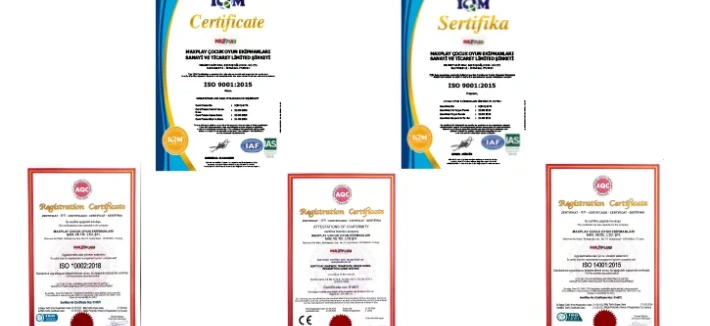
In practical manufacturing audits, adherence to European standards requires rigorous testing and documentation traceable to accredited international certification bodies. Turkish factories conduct strict quality-control procedures, including mechanical load-bearing tests on suspension brackets, seam-strength tests on double-stitched safety netting, and impact-absorption evaluations on polyurethane safety tiling. Every individual module is engineered with protective closed-cell foam tubing and heavy-duty vinyl casing to ensure all metal connection joints and clamp assemblies remain entirely inaccessible to children.
Beyond factory-level testing, Turkish suppliers provide complete technical documentation packages required by municipal licensing authorities and independent European inspection bodies (such as TÜV or local safety auditors). These comprehensive dossiers include structural calculation reports, material fire certificates, critical fall height assessments, and detailed daily inspection checklists. This strict alignment with European standards ensures seamless regulatory approvals, protects venue operators against liability risks, and guarantees long-term operational safety under continuous commercial use.
How Long Does It Take to Install a Turkish Indoor Playground in Europe?
The complete timeline for installing a Turkish indoor playground across European facilities generally ranges from 4 to 8 weeks from initial design sign-off to full operational handover. Production and factory-level pre-assembly typically require 2 to 4 weeks depending on the project’s scale and complexity. Because Turkey shares direct overland and Ro-Ro shipping corridors with mainland Europe and the Balkans, transit times take only 3 to 7 days, completely avoiding the month-long port delays and unpredictable maritime freight bottlenecks associated with East Asian imports.
On-site mechanical installation usually takes between 5 and 15 business days, depending directly on the total square footage and multi-tier height of the structure. Turkish manufacturers pre-assemble and barcode modular steel cages, slide alignments, and safety frames on the factory floor prior to packing, ensuring rapid, error-free assembly on-site. Certified installation teams arrive equipped to anchor base plates, tension perimeter anti-climb netting, wrap structural padding, and calibrate electronic interactive equipment in an organized, rapid sequence.
The final phase of the installation process involves commissioning, safety inspection, and formal operational handover, which takes 1 to 2 days. Technicians conduct exhaustive structural checks—testing slide angles, checking access hatch locks, verifying foam joint overlaps, and running load tests across suspended platforms. Once internal safety audits are verified and staff maintenance protocols are delivered, the facility is immediately ready for third-party regulatory certification and public launch, minimizing vacant lease periods for the venue owner.
From Concept to 3D Layout: What Happens During the Design Stage?
The professional indoor playground design process translates raw commercial real estate into a fully branded, high-capacity entertainment attraction. During initial design consultation, industrial designers and project engineers analyze target demographics, ceiling load capacities, and business goals. This discovery phase establishes whether the venue requires an adventure-focused obstacle layout, a family-oriented soft play environment, or a blended active entertainment hub.
Developing an efficient site layout requires balancing structural requirements with intuitive guest movement. Spatial planners map out the primary play structures, auxiliary sensory stations, cafe seating, party rooms, and maintenance access points. Through structured custom playground planning, every pillar is incorporated into the play route rather than remaining a hazardous obstacle, turning structural constraints into interactive elements.
Realistic space visualization is finalized using full-color 3D playground design modeling, allowing stakeholders to examine the venue before manufacturing begins. This detailed modeling verifies equipment clearances, double-checks safety netting overlaps, and confirms that the functional layout supports efficient daily staffing and cleaning routines. Resolving spatial conflicts during digital design eliminates costly on-site modifications and shortens installation timelines.

Which Play Concepts Can Be Included in a Commercial Indoor Playground?
A successful family entertainment venue balances multiple attractions to cater to varied energy levels, physical abilities, and age groups. Modern play facilities avoid monotonous layouts by blending active physical play with sensory and digital interactive zones. Selecting the right combination of equipment directly impacts visitor dwell times, repeat ticket purchases, and party room bookings.
- Soft play structures: Multi-level labyrinths engineered with durable PVC covers, web bridges, crawl tubes, squeeze rollers, and physical obstacles built over padded steel matrices.
- Toddler play areas: Safe, ground-level exploration zones featuring soft crawl ramps, mini balance beams, and sensory wall puzzles that support early physical development.
- Ball pits & Ball pool zones: High-volume visual play attractions using food-grade, anti-crush polyethylene balls paired with integrated vacuum air-cannons and automated suction cleaning systems.
- Climbing frames & Multi-tier structures: Engineered structural steel frames with reinforced climbing ropes, vertical spider-web towers, and high-traverse platforms.
- Slides & High-speed drops: Stainless steel spiral tubes, multi-lane fiberglass wave slides, and open-trough vertical drop slides engineered for safe deceleration.
- Interactive play equipment: Digital projection-mapped interactive walls, light-chase reaction panels, motion-sensor floor targets, and interactive digital sandboxes.
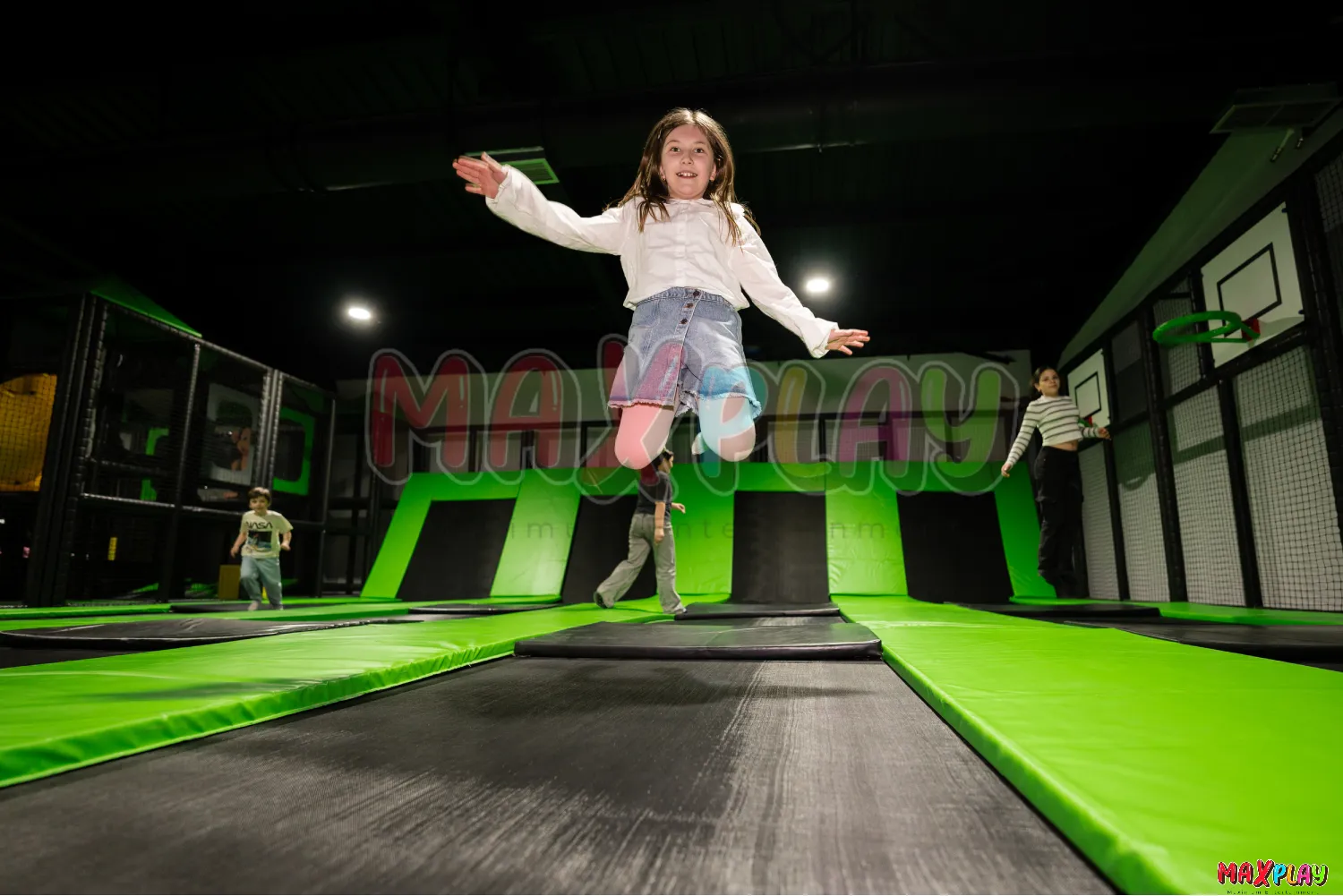
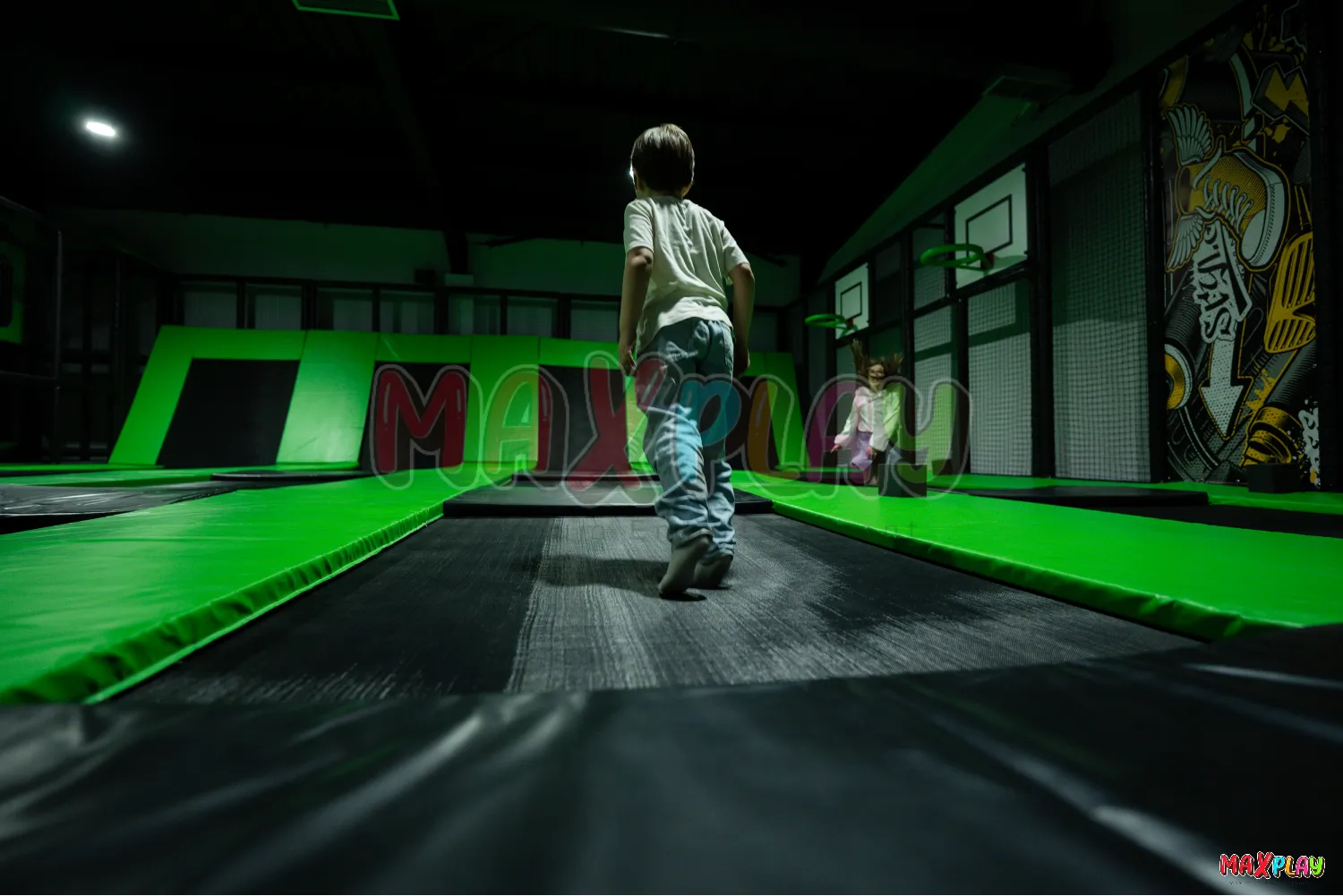
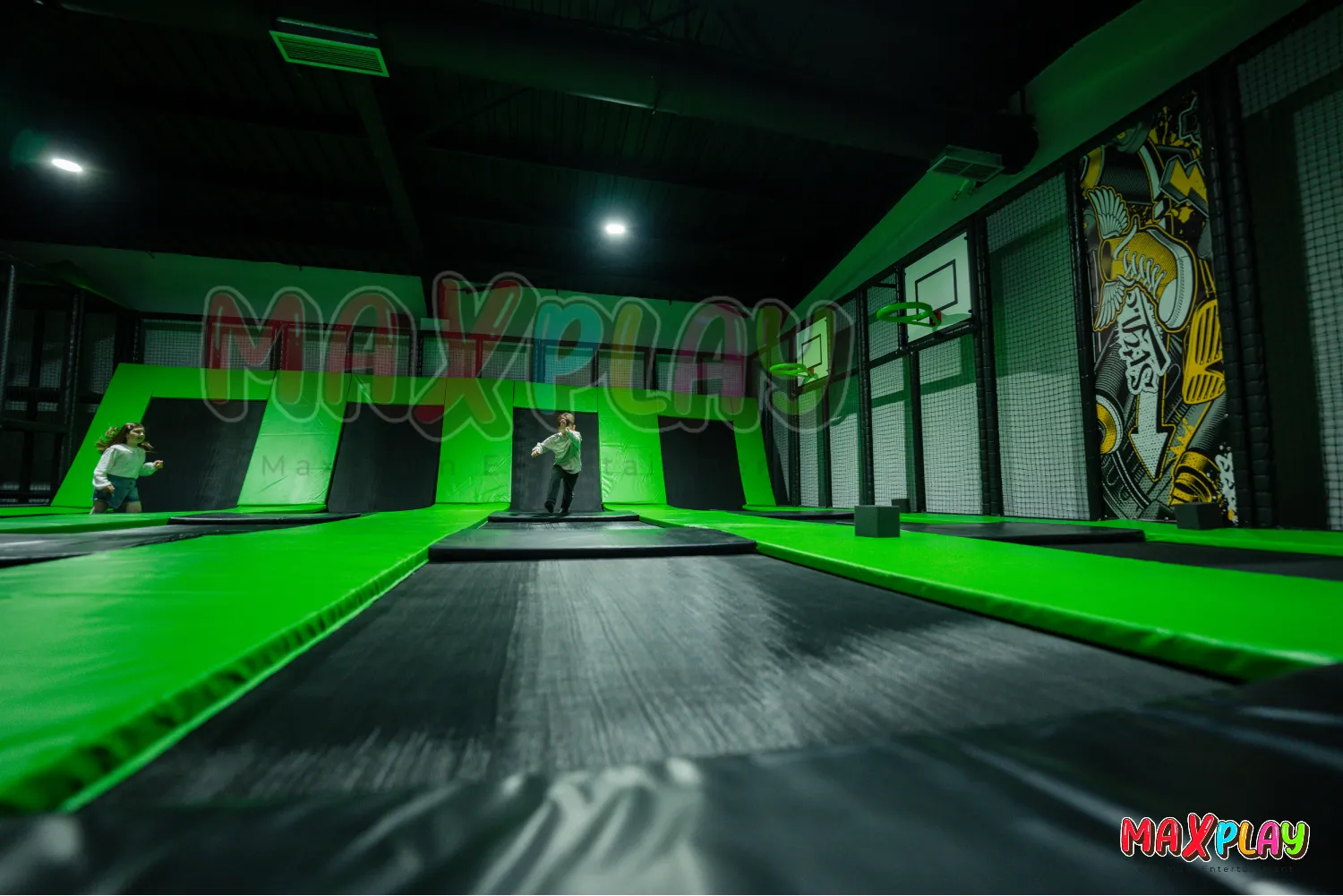
- Trampoline parks: Heavy-duty commercial jump systems with angled rebound walls, performance airbags, dodgeball arenas, and integrated ninja warrior obstacle courses.
- Role-play areas: Thematic mini-villages featuring miniature grocery stores, veterinary clinics, fire stations, and construction zones designed for immersive social play.
Practical operational data shows that venues combining active physical structures with interactive games achieve higher average spend per customer and extended visit durations. Integrating dynamic features like trampolines alongside quiet sensory corners ensures balanced floor capacity during busy weekend operating hours.
Designing Age-Appropriate Play Zones for Different Visitor Groups
Designing an inclusive family entertainment center requires strict structural zoning based on developmental stages. Mixing fast-moving older children with toddlers is a primary cause of play area accidents and customer dissatisfaction. A well-designed floor plan isolates age groups physically while maintaining open sightlines for families with multiple children.
Dedicated toddler zones serve children aged 6 months to 3 years, focusing on foundational motor skill development and sensory play. These areas feature closed-cell antimicrobial foam padding, low-rise crawling mounds, and tactile wall activities installed at floor level. Physically isolating toddler areas from the main structure prevents collisions with older children, creating a secure environment for early exploration.
Main children’s activity areas cater to children aged 4 to 12, focusing on dynamic, active play that tests balance, upper body strength, and spatial agility. These multi-level adventure systems feature rope bridges, vertical climbing challenges, and high-speed slides. Supplying certified, age-specific play equipment ensures structural challenges match children’s physical capabilities, creating an engaging experience across your family entertainment facility.
Why Custom-Built Playground Structures Make Better Use of Commercial Spaces
Pre-fabricated catalog units often leave unused floor space, fail to take advantage of vertical ceiling heights, and create unusable dead corners. High commercial rents require every square meter to be optimized for capacity and visual appeal. Choosing custom indoor playgrounds allows structures to be engineered precisely to the venue’s architectural footprint.
Investing in bespoke play structures allows engineers to design around concrete columns, run overhead bridges across service corridors, and build to tailored dimensions that follow sloped ceilings or mezzanine levels. Using advanced modular playground systems, structural steel frameworks can be adapted to irregular floor plans, turning odd structural alcoves into private birthday play areas or climbing zones.
Utilizing multi-level play structures optimizes operational yield by multiplying usable play surface within the original real estate footprint. A space-efficient design increases peak visitor capacity while keeping service corridors, parent seating, and dining areas open and comfortable.
What Makes Turkey a Practical Manufacturing Base for Montenegro Projects?
Geographic proximity and direct logistics corridors make choosing a Turkish playground manufacturer an efficient and reliable choice for Montenegrin investors. Sourcing playground equipment from Turkey avoids the long shipping times, port delays, and unpredictable ocean freight surcharges common with Asian suppliers. Ground and Ro-Ro shipping routes deliver equipment directly from Turkish production plants to Montenegrin sites in days rather than months.
Sourcing play equipment directly from Turkish manufacturers provides competitive pricing without compromising on European raw material quality or safety compliance. Unlike commercial trading intermediaries who resell low-grade materials, direct manufacturing in Turkey uses certified raw materials, heavy-gauge galvanized steel, and UV-stabilized, non-toxic rotational plastics built to international standards.
Establishing an European playground supply pipeline through direct Turkey Montenegro sourcing simplifies customs documentation, ensures fast access to replacement components, and lowers shipping overhead. With competitive manufacturing costs, fast international delivery, and quick dispatch for assembly teams, Turkish production helps projects launch on schedule and start generating revenue sooner.
Safety Requirements to Consider Before Manufacturing Begins
Commercial play equipment safety is an engineering and legal priority that must be addressed during initial planning. Across Montenegro and the broader European market, equipment must fully comply with EN 1176 (the harmonized standard for commercial playground equipment) and EN 1177 (specifying impact-attenuation criteria for playground surfacing), while also meeting ASTM standards for specialized installations like trampoline courts.
Engineering compliance requires calculating critical fall heights and installing certified impact-absorbing flooring systems throughout all active zones. Using high-density polyurethane safety tiles or seamless pour-in-place flooring prevents impact injuries beneath elevated platforms, climbing walls, and slide exits.
Beyond structural stability, sourcing certified child-safe materials is mandatory for all contact surfaces. All PVC fabrics, safety netting, connection joints, and foam paddings must be non-toxic, lead-free, and phthalate-free, with verified fire-retardant ratings (such as Class M2 or DIN 4102 B1). Adhering to recognized commercial play safety and playground safety requirements protects business owners against liability risks, simplifies local municipal licensing, and ensures equipment longevity under heavy commercial use.
Managing Production, Quality Checks and International Shipment from Turkey
Precision playground manufacturing relies on computerized steel cutting, automated tube bending, and disciplined fabrication workflows. Direct manufacturing facilities enforce rigorous production quality control protocols, testing weld integrity, vinyl coating safety, and structural steel wall thicknesses before components move to final finishing.
Rigorous pre-assembly and equipment testing are conducted on the factory floor before dispatch. Modular steel cages, high-load suspension brackets, and slide track alignments are test-fitted to ensure zero dimensional errors on-site. All components are barcoded, organized, and packed using heavy-duty, multi-layer secure packaging to protect plastics and structural frame pieces from transit damage.
Managing Turkey Montenegro logistics involves detailed freight planning, coordinating direct trucking routes across the Balkan corridor, and preparing customs paperwork. Organized logistics ensure that structural frames, padding, and netting arrive in a coordinated sequence, allowing immediate, efficient unloading and assembly at the venue.
How Professional Installation Turns a Playground Design into a Working Facility
Factory-engineered playground components must be assembled on-site with mechanical precision. Skilled indoor playground installation requires experienced technicians who understand dynamic structural loads, drop-test tolerances, and netting tension standards. Proper assembly directly influences long-term equipment safety and maintenance requirements.
During equipment assembly, certified technicians anchor base plates, assemble structural steel scaffolding, and tension heavy-duty perimeter anti-climb netting. Every connection point, cross-clamp, and fastener is covered with thick closed-cell foam tubing and wrapped in double-stitched vinyl casing. Using an experienced professional installation team eliminates finger-entrapment risks, head-pinch hazards, and loose structural joins that often occur with unqualified third-party crews.
Experienced installation supervision ensures that site installation conforms strictly to approved architectural blueprints. Upon completion, technicians perform comprehensive playground commissioning—verifying load-bearing points, testing slide angles, and checking hatch locks—handing over a fully certified, operational facility ready for public opening.
Building Play Areas for Shopping Malls, Hotels, Restaurants and Family Entertainment Centers
Different commercial venues require tailored playground designs to match foot-traffic patterns, customer dwell times, and business goals. A setup built for quick family dining operates very differently from a regional anchor attraction in a multi-story retail center.
A shopping mall playground acts as a major anchor attraction designed to draw families, increase retail dwell times, and drive weekday foot traffic. These installations require high-capacity, heavy-duty structures with automated ticketing barriers, perimeter seating, and wide entry zones. Conversely, a hotel kids area focuses on aesthetics, acoustic insulation, and self-contained play modules that integrate smoothly into hospitality environments.
Developing a compact restaurant play area calls for space-efficient layouts with hygienic, easy-to-clean surfaces and clear visibility from dining tables. Larger family entertainment center projects combine diverse concepts—integrating toddler play, challenging obstacle courses, interactive games, and party rooms into a comprehensive commercial play zone. Tailoring structural systems to your specific commercial model ensures your indoor recreation facility operates smoothly while driving revenue for your core business.
What Long-Term Support Should You Expect After the Playground Opens?
The operational lifespan and profitability of an indoor playground depend heavily on structured post-opening maintenance. Daily commercial use naturally causes wear on high-friction components such as slide entry mats, trampoline springs, foam rollers, and web bridge ropes. Establishing an ongoing playground maintenance program preserves asset value and prevents unexpected facility downtime.
A reliable manufacturer supports operators with fast access to certified spare parts and responsive technical support. If a zip-line harness needs replacement or a ball-pit cleaning system requires maintenance, having direct factory access avoids extended business interruptions. Partnering with an established manufacturer guarantees long-term equipment replacement support and consistent material matching years after the venue opens.
Comprehensive after-sales service and ongoing operational support should include operational manuals, safety audit checklists, and staff maintenance training. A proactive long-term playground care strategy protects your capital investment, lowers insurance risks, and ensures your facility consistently delivers a clean, safe play environment for every visitor.

How MaxPlay Supports Indoor Playground Projects from Design to Completion
As an established international playground supplier and direct trampoline park manufacturer, MaxPlay provides end-to-end, turnkey indoor playground solutions for commercial clients across Montenegro and the European market. We combine custom spatial engineering with direct factory production to create high-capacity family entertainment centers that maximize revenue per square meter. Our catalog includes custom indoor play set configurations, modular toddler play set indoor platforms, heavy-duty soft playground equipment, and certified commercial soft play equipment.
Our comprehensive project delivery model covers every stage of facility development:
- Custom Conceptualization & 3D Modeling: Developing bespoke, revenue-focused floor plans tailored to your architectural dimensions and operational goals.
- Direct Factory Manufacturing: Fabricating premium indoor play equipment, dynamic trampoline park equipment, and robust indoor soft playground equipment using certified materials that comply fully with EN 1176 and EN 1177 standards.
- Wholesale Sourcing & Attractions: Supplying direct soft play equipment wholesale products, high-volume ball pool systems, and interactive digital projection games without intermediary markups.
- Project Management & Assembly: Managing end-to-end project management, installation and assembly, precision structural erection, and safety commissioning with dedicated installation teams.
- Long-Term Operational Support: Providing reliable after-sales support, replacement parts inventory, and maintenance training throughout the operating life of your venue.
Working with experienced soft play manufacturers and recognized indoor playground equipment manufacturers gives your business a distinct competitive edge. As a dedicated indoor playground supplier, MaxPlay integrates modern interactive playground equipment that engages children and encourages repeat visits. Our direct Turkish manufacturing base delivers shorter production lead times, reliable Balkan road freight, and superior structural durability compared to standard imports—all at competitive factory-direct pricing.
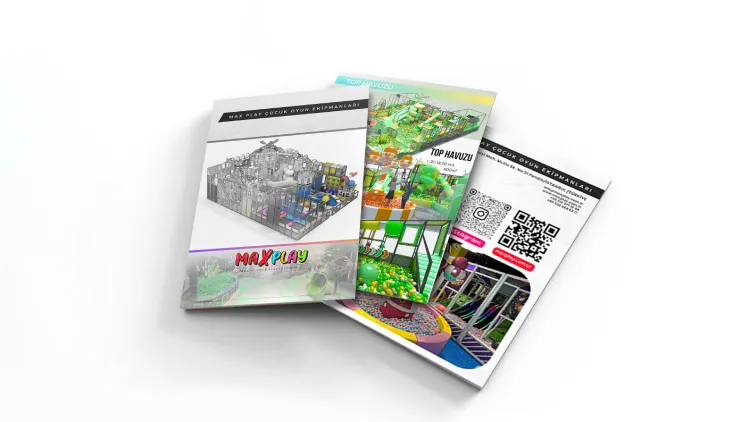
Every successful commercial entertainment venue begins with accurate spatial planning and transparent engineering expertise. Our technical team provides complete 3D design and project planning services free of charge, helping you turn empty commercial space into a profitable family destination. Contact our engineering team today to request your free 3D design plan, review tailored equipment options, and receive an itemized manufacturing proposal for your Montenegrin project.