




Indoor Playground Factories in Poland: Efficient Production and Delivery
The market for Indoor Playground Factories in Poland is closely connected to the growing demand for professionally engineered children’s entertainment facilities, family activity centers, and commercial leisure environments. For Polish investors, choosing a manufacturing partner involves considerably more than comparing equipment catalogs. Production accuracy, structural durability, customization capabilities, safety documentation, transportation arrangements, and long-term maintenance requirements all influence whether a playground project becomes a sustainable commercial investment.
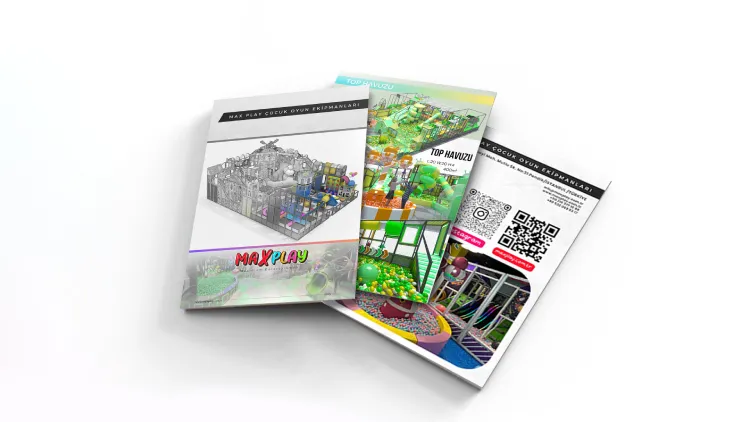
As MaxPlay Playground Equipment, we provide professional solutions for indoor playgrounds and soft play areas. We design, manufacture, install, and assemble indoor playground equipment and soft play systems for commercial spaces. Contact us for turnkey indoor playground projects.
| Landline: | 0216 377 10 88 |
| Mobile / WhatsApp: | 0532 069 53 17 |
| E-Mail: | info@maxplay.com.tr |
| Address: | Google Maps |
You can contact us for all your projects across Türkiye and international markets.
Our Services:
- Trampoline Manufacturing – Trampoline Park Installation
- Ball Pit Manufacturing – Ball Pit Playground Installations (with slides, etc.)
- Interactive Play Systems (Moving Soft Play Toys & Equipment)
- Sand Pit – Sand Play Areas
- Playgrounds and Role-Play Houses for Kindergartens & Nurseries
- Indoor playgrounds for businesses such as shopping malls, cafés, restaurants, etc.
- And all customized playground projects tailored to your specific needs.
While domestic indoor playground factories Poland can provide regional manufacturing advantages, international suppliers have become increasingly relevant for businesses seeking competitive production costs and flexible equipment configurations. In particular, Turkish manufacturers offer an alternative for investors who require customized designs, factory-direct pricing, coordinated road transportation, and technical support. Understanding the differences between manufacturing approaches helps project developers select equipment that meets operational requirements without creating unnecessary installation delays or maintenance expenses.
A successful procurement strategy begins with the intended customer experience and works backward through equipment specifications, factory capabilities, quality verification, and delivery planning. Whether developing a compact play café or a multi-level family entertainment center, buyers should evaluate how each manufacturing decision affects safety, visitor capacity, operational efficiency, and future expansion opportunities.
Understanding the Manufacturing Landscape for Commercial Indoor Play Equipment in Poland
Poland has an established industrial manufacturing sector supported by metal fabrication, plastics processing, technical textiles, woodworking, and machinery production. These capabilities provide a foundation for the domestic playground equipment market, where manufacturers and specialized contractors supply products for shopping centers, restaurants, hospitality venues, educational facilities, and dedicated indoor entertainment businesses. However, not every company advertising playground solutions operates a complete manufacturing facility. Some businesses specialize in design, distribution, assembly, or installation while purchasing components from external factories.
This distinction matters when evaluating commercial play equipment production capabilities. A factory with in-house fabrication and assembly operations may offer greater control over structural dimensions, material selection, production scheduling, and component compatibility. A distributor can still provide reliable solutions, but buyers should establish which activities are performed internally and which depend on subcontractors. In practice, one of the most common procurement misunderstandings occurs when a supplier’s installation experience is mistaken for direct manufacturing capability.
Polish operators also serve different customer segments. A neighborhood play café generally needs compact equipment, accessible toddler areas, and efficient supervision, whereas a destination entertainment venue may require multi-level climbing structures, obstacle attractions, and higher visitor throughput. These differences make it essential to evaluate suppliers according to project complexity rather than factory size alone. International sourcing becomes particularly relevant when a domestic supplier cannot accommodate unusual building dimensions, specialized themes, or the desired combination of attractions within the available budget.
How Playground Factories Organize Design, Engineering and Production Workflows?
Professional playground manufacturing begins before the first steel tube is cut or protective panel is assembled. The initial stage involves reviewing architectural drawings, ceiling heights, entrance locations, structural columns, emergency exits, and usable floor area. Engineers then translate the commercial concept into a technical arrangement that defines equipment dimensions, circulation routes, structural support points, and separation between activity zones. Effective commercial play structure engineering must account for both the equipment and the surrounding building.
Once the layout is approved, production teams prepare fabrication drawings, material specifications, component schedules, and assembly instructions. This stage determines how individual sections will connect during installation and whether large structural elements can pass through building entrances. A common practical challenge involves attractive 3D concepts that overlook real-world access limitations. For example, a playground tower may fit beneath the ceiling but require redesign because its prefabricated sections cannot pass through a narrow service corridor.
Well-organized factories use coordinated industrial playground production planning to connect design approval, material procurement, fabrication, protective finishing, assembly verification, and dispatch. Revision control is particularly important: if the customer changes a slide position after fabrication begins, connected platforms and support frames may also require modification. Reliable suppliers establish approval milestones and maintain a single controlled version of the technical drawings, reducing errors that would otherwise become expensive installation problems.
Essential Equipment Categories: Soft Play Frames, Ball Pools, Slides and Climbing Attractions
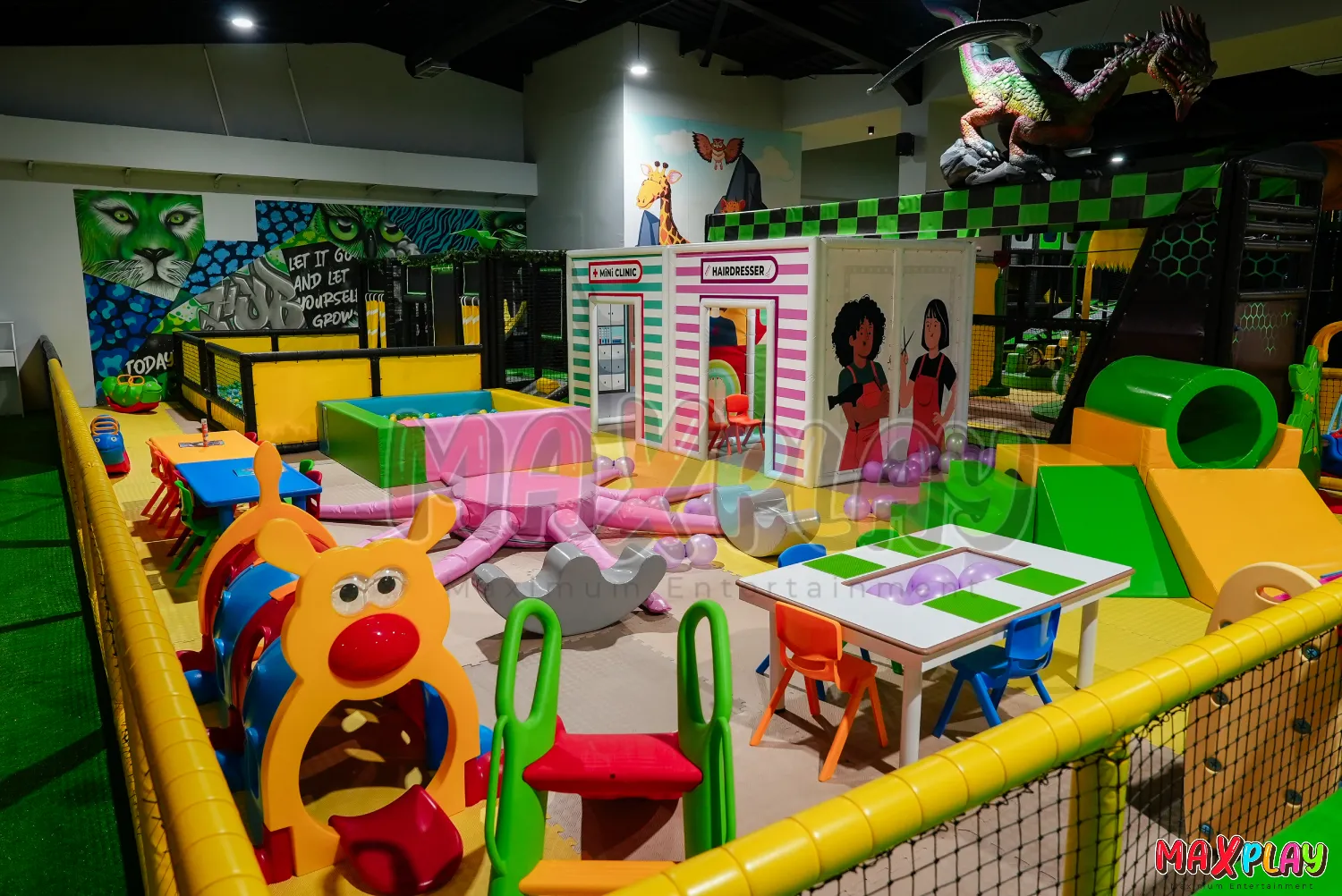
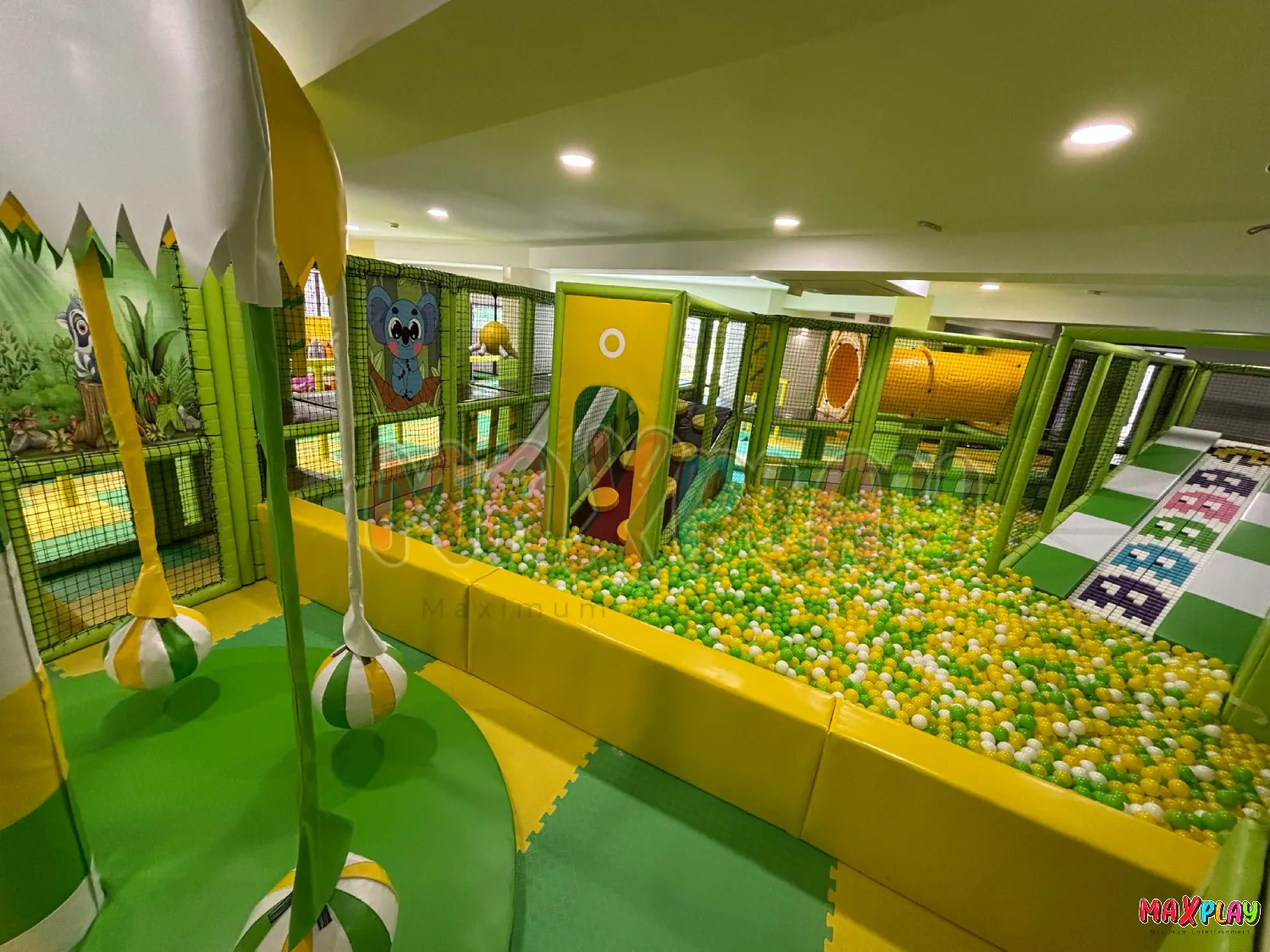
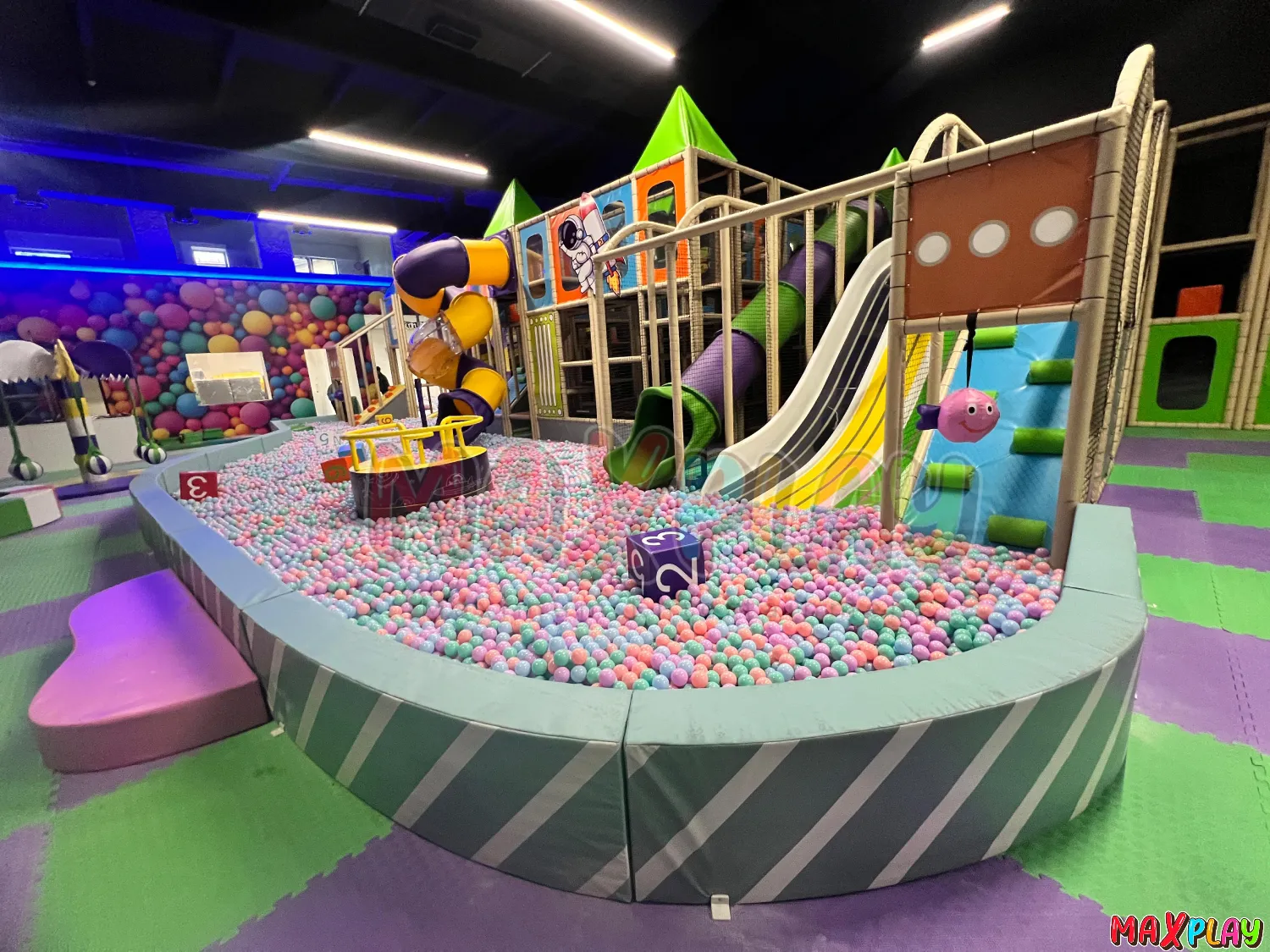
Commercial indoor entertainment facilities typically combine several types of attractions to serve different age groups and activity preferences. Multi-level climbing structures form the central circulation system, connecting platforms, tunnels, obstacles, and slides. These installations commonly incorporate commercial soft play equipment, padded barriers, enclosed climbing passages, and controlled entry points. The design must consider visitor movement, visibility for supervisors, and the ability of children to leave activity areas without creating congestion.
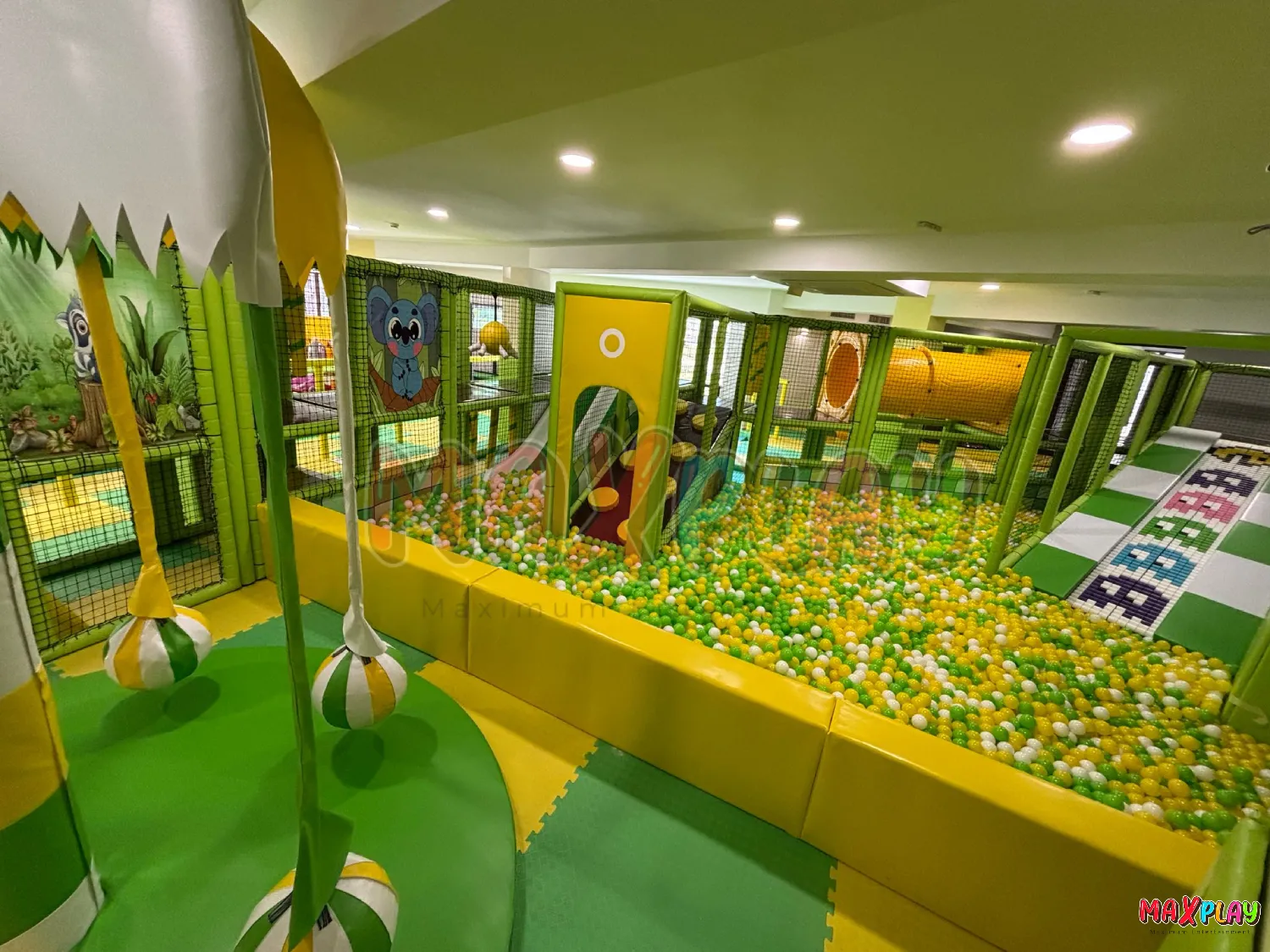
An indoor play set intended for preschool children requires a different approach from equipment designed for older, more physically active visitors. A toddler play set indoor configuration should prioritize low-level activities, gentle ramps, sensory panels, manageable climbing heights, and age-appropriate interaction. A ball pool can provide an engaging feature for younger visitors, but its operation requires attention to ball cleaning, access control, enclosure design, and routine inspection. In real use, the ease of maintaining an attraction often proves just as important as its visual appeal.
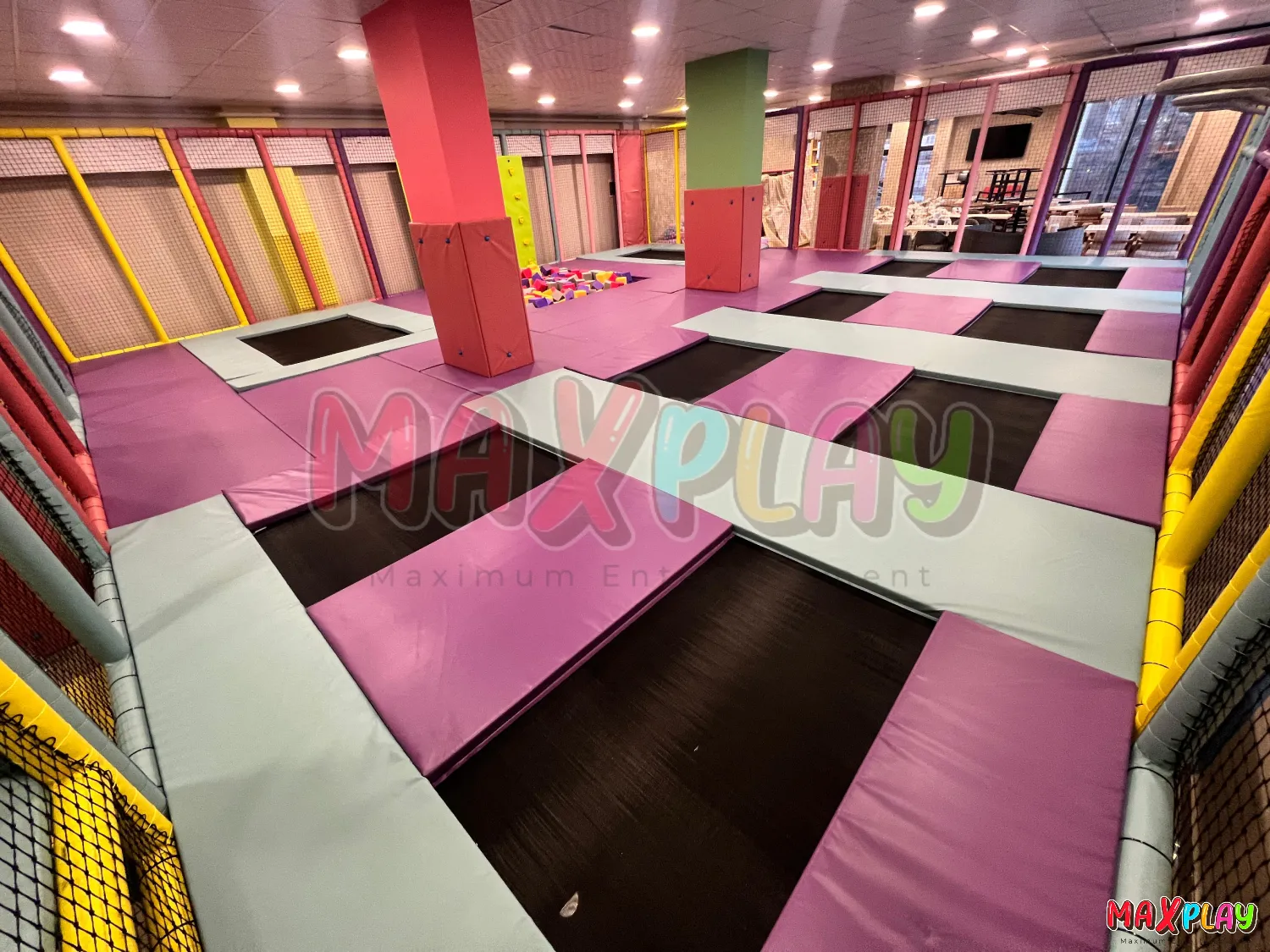
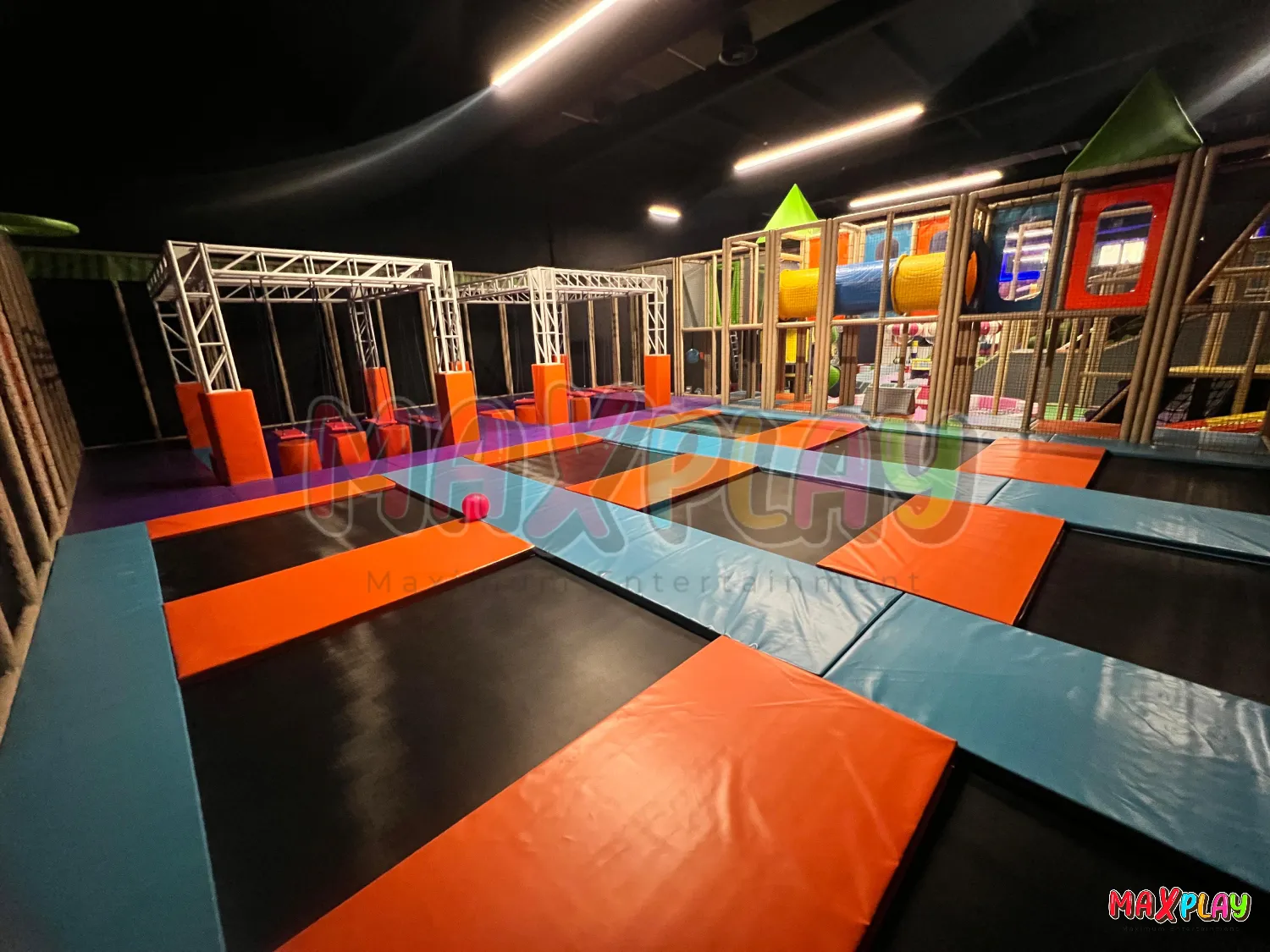
Larger facilities may integrate interactive playground equipment, climbing walls, ninja-style obstacles, and dedicated trampoline attractions. However, trampoline park equipment requires its own engineering, supervision, maintenance, and risk assessment considerations. A specialist trampoline park manufacturer should demonstrate experience with the particular activity systems being supplied rather than treating trampolines as ordinary additions to a soft play structure. The most effective equipment mix depends on target age groups, projected visitor numbers, staffing arrangements, and the venue’s business model.
MaxPlay Playground Equipment Overview
| Equipment Name | Description | Key Benefits |
| Ball Pool | Colorful pit filled with balls for safe sensory play. | Safe fun for toddlers, easy to clean, encourages motor skills. |
| Trampoline | High-quality indoor trampolines. | Builds balance and strength, child-safe design, durable materials. |
| Interactive Game Sets | Digital and physical interactive play stations. | Boosts learning, cognitive skills, and engagement. |
| Profession Houses | Role-play houses designed for kids. | Encourages creativity, social interaction, and imagination. |
| Trampoline Park | Large-scale trampoline structures. | Suitable for older kids, high durability, safe design. |
| Roller Slide | Conveyor-style (roller) slides for continuous fun. | Efficient design, fun motion play, safe structure. |
| Tower Slide | Tower slides designed for adventure play. | Exciting design, strong safety standards, eye-catching feature. |
| Climbing Wall | Indoor climbing walls. | Builds strength and coordination, safe grips, customizable difficulty levels. |
| Volcano Slide | Volcano-shaped slides with climbing and sliding features. | Combines climbing and sliding, unique design, fun for multiple age groups. |
Material Selection and Fabrication Methods That Influence Playground Durability
Material quality directly affects how equipment performs under repeated commercial use. Structural frames commonly use steel tubes and engineered connections, while contact surfaces incorporate protective padding, coated fabrics, molded plastics, and impact-attenuating materials. Suitable playground equipment fabrication methods depend on component function: structural elements require dimensional accuracy and dependable joints, whereas protective surfaces need appropriate cushioning, secure attachment, and resistance to everyday wear.
For soft playground equipment, buyers should examine foam density, covering strength, stitching quality, fastening methods, and cleanability. First-class material selection should be demonstrated through technical specifications and test evidence rather than marketing terminology alone. Coatings and fabrics used in children’s environments should be assessed for relevant chemical safety, durability, and hygiene requirements. Materials marketed as antibacterial, fire-resistant, or non-toxic should have documentation supporting the particular claim and intended application.
The most frequently overlooked aspect of soft play material durability is the difference between initial appearance and performance after prolonged use. A padded column may look identical to a higher-quality alternative on delivery, yet differences in foam compression, seam construction, or covering abrasion resistance become noticeable after months of activity. Similarly, exposed fastening points, poorly finished welds, and inadequate corrosion protection can increase maintenance requirements. A technically informed buyer therefore evaluates material specifications alongside replacement accessibility, cleaning procedures, and expected inspection intervals.
Comparing Polish and Turkish Playground Factories for Custom Commercial Orders
Polish and Turkish manufacturers can both serve European commercial playground projects, but their operating models, cost structures, and service arrangements may differ. Polish suppliers may offer advantages through domestic communication, shorter service travel distances, and familiarity with local building requirements. Meanwhile, Turkish playground manufacturing facilities can provide factory-direct production, specialized fabrication resources, and integrated design-to-delivery services. The better choice depends on project specifications rather than country of origin alone.
For customized orders, buyers should compare engineering capabilities, manufacturing scope, quality-control procedures, installation responsibilities, and total delivered cost. Factory-direct soft play sourcing can reduce intermediary markups and simplify technical communication when the manufacturer directly manages design revisions and component production. However, an attractive factory quotation is not automatically the lowest overall investment. Transportation, unloading, customs administration, installation labor, spare parts, and potential remedial work must also be included.
A practical comparison should use identical specifications. Requesting prices for two vaguely described playgrounds often produces misleading results because one supplier may include protective flooring, installation supervision, and technical documentation while another excludes them. Buyers assessing commercial play equipment procurement should obtain itemized quotations with clearly defined inclusions, exclusions, material grades, warranty terms, and responsibilities. This approach makes it possible to compare Polish and Turkish offers on measurable project value rather than headline price.
Why Turkey Can Be a Cost-Competitive Production Base for Polish Playground Developers?
Turkey combines industrial manufacturing experience with established export logistics connecting European markets. Its metalworking, plastics, textile, and industrial fabrication sectors support the production of specialized playground components. For Polish developers, this creates opportunities to obtain customized equipment from manufacturers capable of coordinating multiple production processes within a single project. Turkish soft play exporters may also offer competitive commercial terms because of differences in labor costs, factory overhead, supplier networks, and production organization.
Compared with certain European manufacturing options, Turkish suppliers can potentially provide lower factory prices for equivalent specifications. Turkey may also offer practical advantages over sourcing from China, particularly where road transportation, shorter supply chains, and direct engineering communication reduce delivery uncertainty. However, neither lower pricing nor faster delivery is universal. The final outcome depends on production capacity, material origin, order complexity, transport conditions, and the actual technical quality of the selected manufacturer.
In real procurement scenarios, the strongest advantage often comes from combining price competitiveness with predictable project execution. A supplier that delivers a correctly manufactured playground in fewer logistics stages may reduce warehouse costs, site delays, and installation disruption. Turkish manufacturing is particularly relevant for Polish investors who need custom-built structures, flexible order quantities, and coordinated international transportation. Buyers should still verify production references, applicable certifications, and actual delivery commitments rather than relying on country-level assumptions about quality or speed.
Bespoke Manufacturing Capabilities: Non-Standard Dimensions, Themes and Modular Configurations
Standard equipment packages are useful for projects with straightforward dimensions, but commercial properties rarely provide perfectly rectangular installation spaces. Structural columns, sloping ceilings, ventilation systems, sprinkler installations, and irregular walls frequently require customized layouts. Manufacturers specializing in bespoke children’s play structures can adapt platform positions, slide orientations, tunnel connections, and protective enclosures to the available architecture without sacrificing essential circulation space.
Modular construction provides additional flexibility. Properly engineered modular playground components allow different attractions to be combined into a coordinated system, with standardized connection methods supporting assembly and selected future modifications. For example, a shopping center may initially install a compact climbing structure and later introduce additional interactive features as customer demand develops. Such expansion is practical only when the original engineering accounts for structural loads, access arrangements, and compatible attachment points.
The most effective customization decisions are driven by operational requirements rather than appearance alone. Themed environments can strengthen brand identity, but excessive decorative elements may obstruct supervision or complicate cleaning. A professional indoor playground supplier should distinguish between modifications that improve commercial performance and features that introduce unnecessary manufacturing costs. In practice, the strongest designs balance visual identity with clear sightlines, maintainable surfaces, age-appropriate challenges, and efficient use of the available floor area.
Production Capacity, Quality Assurance and Technical Documentation for European Buyers
Production capacity should be evaluated through scheduling reliability and process control, not simply factory floor area. Experienced indoor playground equipment manufacturers coordinate fabrication, protective finishing, upholstery, plastics production, component procurement, and assembly preparation. Buyers should establish whether the manufacturer can complete all required attractions within the agreed production window and whether critical materials are available before fabrication begins.
Effective manufacturing quality assurance involves documented inspections at defined production stages. Structural dimensions, welded connections, protective finishes, padding thicknesses, enclosure attachment methods, and component identification should be checked against approved drawings. For projects involving indoor soft playground equipment, it is particularly important to examine accessible edges, potential entrapment points, impact areas, and connections that may loosen under repeated use. Pre-dispatch photographs and factory inspection records can help identify discrepancies before international transportation begins.
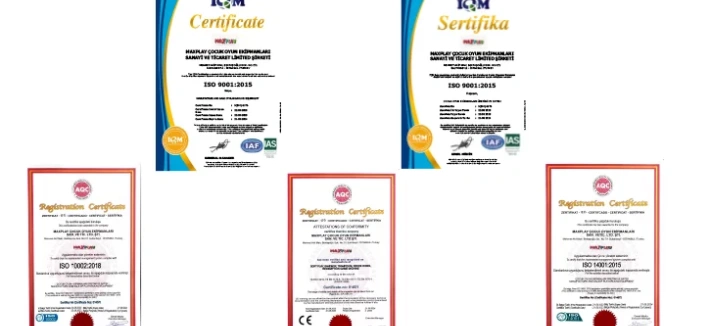
European buyers should also evaluate the applicability of EN 1176, EN 1177, and other relevant standards to the specific equipment and installation. Compliance depends on the product category, applicable standard provisions, test scope, and completed installation; a general factory certificate does not automatically establish conformity for every customized structure. Fire performance, material chemical safety, and hygiene suitability require their own appropriate evidence. First-class, certified production should therefore be supported by product-specific reports, material declarations, maintenance instructions, and inspection documentation. The practical objective is not merely to receive certificates, but to establish that the delivered installation is suitable for safe commercial operation.
Factory-to-Site Delivery Planning: Packaging, Road Freight and Equipment Protection
International transportation should be considered during engineering rather than after manufacturing is complete. Large slides, structural frames, protective panels, and prefabricated platforms have different handling requirements. An effective playground equipment export to Poland plan identifies the dimensions, weight, fragility, and unloading method for each shipment. Components should be packaged to minimize movement, protect finished surfaces, and allow efficient identification during assembly.
Turkey’s road freight connections with Europe provide a practical transportation option for Polish projects. Depending on shipment volume, equipment may travel through consolidated freight services or dedicated vehicles. Full-truckload transport can be appropriate for larger installations, while groupage services may suit smaller orders where flexible delivery scheduling is possible. Actual transit times depend on the selected route, border procedures, carrier availability, and customs clearance. Well-organized international equipment delivery coordination reduces the risk of materials arriving before the site is prepared or installation personnel are available.
Packaging quality is especially important for protective coverings, painted steel elements, acrylic panels, and molded slides. A useful industry practice is to number individual packages according to the installation sequence rather than loading them without a defined assembly order. This helps prevent unnecessary handling and reduces the likelihood of damage. Because shipments from Turkey enter the European Union from outside the EU customs territory, buyers should also establish the applicable customs classification, commercial invoice requirements, transport documentation, and origin or circulation documents where relevant. Proper planning can make Turkish road freight a faster and more economical alternative to some long-distance overseas supply arrangements.
Evaluating Manufacturing Lead Times, Supplier Communication and Long-Term Operating Costs
Manufacturing lead times vary according to project size, technical complexity, material availability, and factory workload. For conventional indoor play equipment, production may be relatively straightforward once dimensions and finishes are approved. Highly customized structures involving multiple activity zones, specialized slides, and interactive systems require more extensive engineering and fabrication. Buyers should distinguish between the initial quotation period, design approval, production time, transportation, and installation rather than treating the entire project as a single delivery estimate.
A reliable supplier communicates progress through measurable milestones. These may include completion of technical drawings, material procurement, structural fabrication, protective finishing, factory inspection, and shipment readiness. When evaluating playground factory lead times, the most useful question is not simply how quickly production can begin, but whether the manufacturer can maintain a realistic completion schedule. In practice, delayed customer approvals, unavailable finishes, and late design changes are among the issues most likely to disrupt delivery.
Long-term operating costs also deserve careful attention. A low-priced installation may become expensive if replacement padding is difficult to obtain, individual components cannot be serviced, or frequent repairs interrupt commercial operation. Buyers comparing soft play manufacturers should consider spare-part availability, warranty coverage, maintenance documentation, and the expected durability of high-contact surfaces. Similarly, soft play equipment wholesale arrangements may benefit operators developing multiple venues, but standardized bulk purchasing is less suitable when individual locations require significantly different structural layouts. The strongest purchasing decision balances acquisition cost with serviceability, visitor experience, and expected operating life.
How MaxPlay Supports Polish Playground Projects with Factory-Direct Manufacturing and International Delivery?
MaxPlay is a Turkish manufacturer specializing in the design, production, and installation of commercial indoor entertainment systems. Its product portfolio includes multi-level soft play structures, toddler activity zones, ball pools, climbing attractions, interactive play areas, and trampoline park solutions. The company’s manufacturing approach connects architectural planning with customized equipment production, helping operators develop facilities suited to their available space, target audience, and commercial objectives. Its published project portfolio includes installations ranging from compact play areas to larger entertainment environments.
For Polish investors, MaxPlay’s factory-direct model offers an alternative to purchasing through multiple intermediaries. The company describes an integrated process covering planning, 3D design, manufacturing, quality checks, international shipment, installation, and after-sales assistance. Its published product information also identifies internationally recognized playground safety standards and emphasizes durable materials, customizable configurations, and competitive manufacturing costs.
With production based in Istanbul, MaxPlay can coordinate road freight to Poland and other European destinations, potentially reducing logistics complexity compared with more distant overseas sourcing. Exact prices, certification scope, and delivery schedules should be established for each project.
MaxPlay also provides free preliminary site layouts and 3D playground design services, allowing businesses to evaluate space utilization, equipment selection, and project feasibility before committing to manufacturing.
Whether the objective is to develop a children’s entertainment center in Warsaw, a shopping mall play area in Kraków, or a family activity venue elsewhere in Poland, the company can prepare a tailored proposal covering design, production, delivery, and installation requirements. Request your free playground project today and explore a customized solution with competitive factory-direct pricing, high-quality materials, and coordinated international logistics. Contact MaxPlay to discuss your building dimensions, preferred attractions, and investment requirements.