






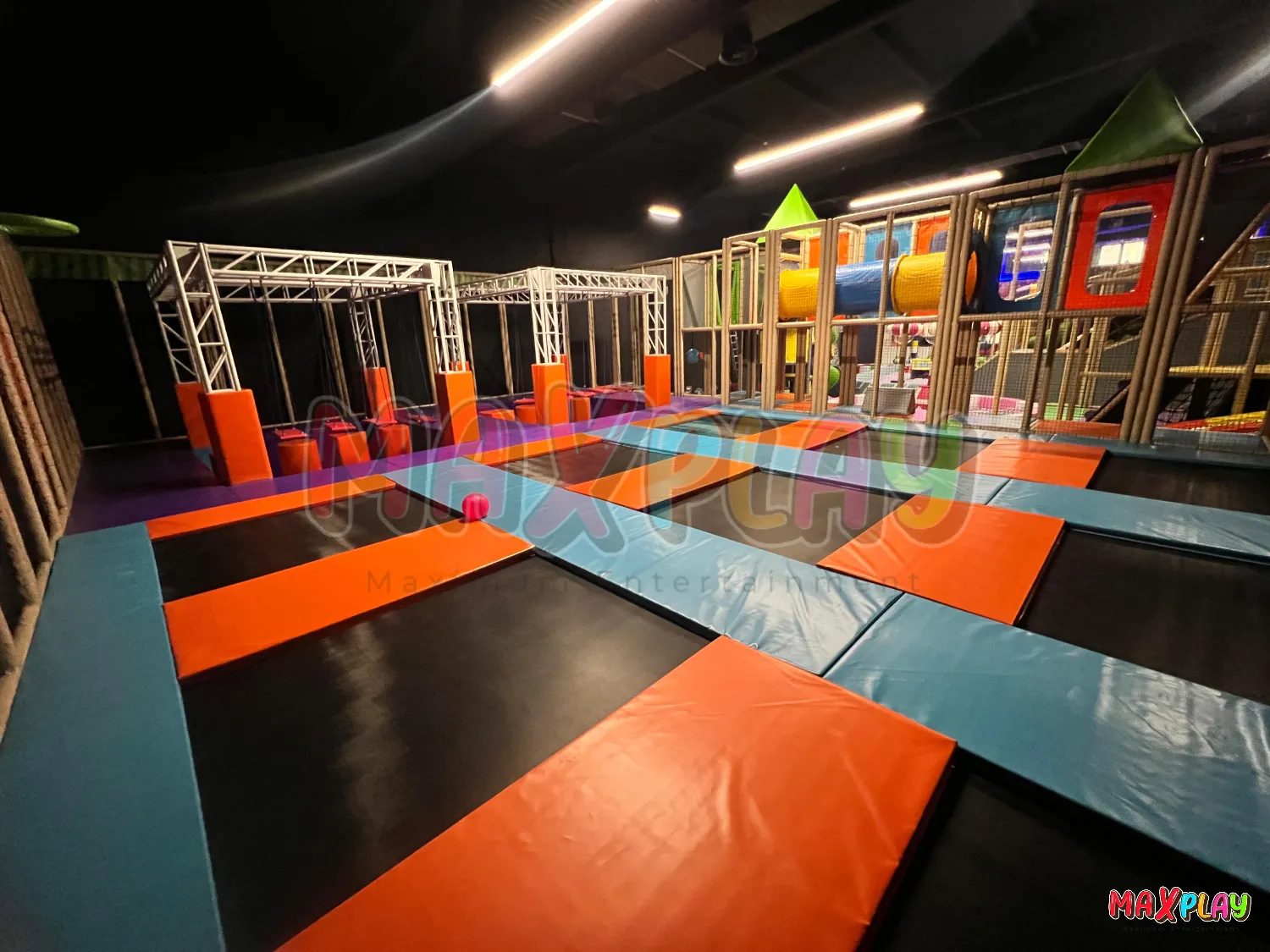
Indoor Playground Ideas for Small Spaces in Belgium: Creative and Functional Layouts
Commercial indoor playground development in Belgium increasingly requires a careful balance between available floor space, operational efficiency, child safety, and long-term profitability. For entrepreneurs converting compact retail properties, family cafés, hospitality facilities, or community venues into children’s entertainment areas, successful Indoor Playground Ideas for Small Spaces in Belgium depend on intelligent spatial planning rather than simply installing smaller equipment. A well-engineered playground can accommodate multiple activities within a limited footprint while maintaining comfortable circulation, effective supervision, and an engaging experience for children of different ages.
As MaxPlay Playground Equipment, we provide professional solutions for indoor playgrounds and soft play areas. We design, manufacture, install, and assemble indoor playground equipment and soft play systems for commercial spaces. Contact us for turnkey indoor playground projects.
| Landline: | 0216 377 10 88 |
| Mobile / WhatsApp: | 0532 069 53 17 |
| E-Mail: | info@maxplay.com.tr |
| Address: | Google Maps |
You can contact us for all your projects across Türkiye and international markets.
Our Services:
- Trampoline Manufacturing – Trampoline Park Installation
- Ball Pit Manufacturing – Ball Pit Playground Installations (with slides, etc.)
- Interactive Play Systems (Moving Soft Play Toys & Equipment)
- Sand Pit – Sand Play Areas
- Playgrounds and Role-Play Houses for Kindergartens & Nurseries
- Indoor playgrounds for businesses such as shopping malls, cafés, restaurants, etc.
- And all customized playground projects tailored to your specific needs.
The most effective small indoor playground ideas Belgium businesses can implement begin with understanding how children interact with their surroundings. Equipment positioning, activity sequencing, structural dimensions, and the relationship between active and quiet play areas all influence the commercial performance of a facility. Working with experienced indoor playground equipment manufacturers allows operators to transform architectural limitations into practical design opportunities through customized structures, appropriate material selection, and carefully coordinated installation.
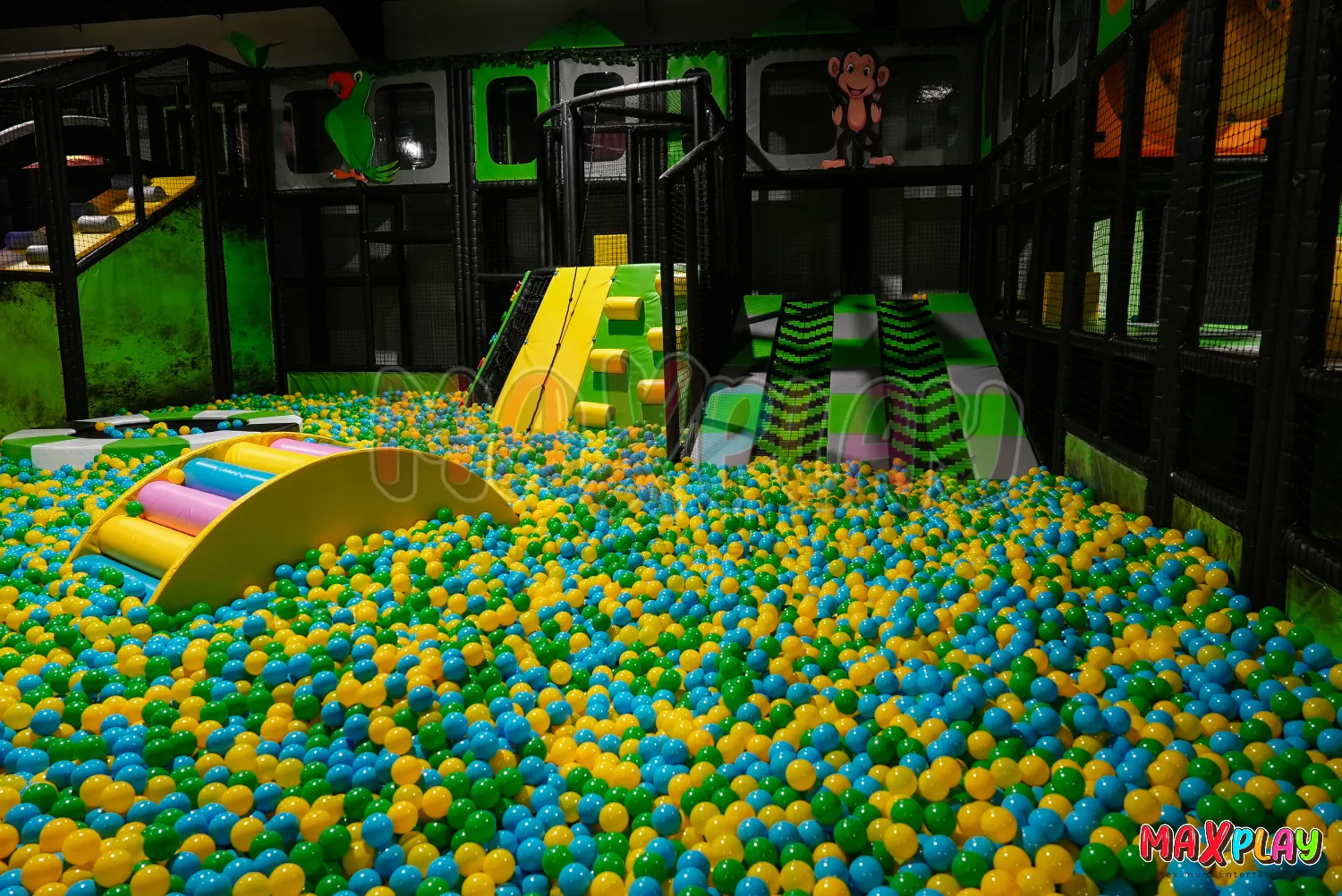
Creative Indoor Playground Concepts for Compact Commercial Spaces in Belgium
Designing a successful compact playground begins with identifying the commercial purpose of the space. A neighborhood play café in Brussels may prioritize activities for children aged two to six, while a family entertainment venue in Antwerp might require a broader selection of physical challenges for older children. These different operating models influence equipment height, activity density, staff requirements, and the relationship between play facilities and customer seating. Effective compact indoor play area design therefore starts with a detailed operational brief rather than a standard equipment catalogue.
In practical projects, one of the most common mistakes is attempting to include too many independent attractions. A small venue containing several disconnected play modules can feel crowded without offering a meaningful play experience. A better approach is to organize activities into connected sequences that allow children to climb, crawl, explore, slide, and return to the starting point without unnecessary interruptions. This creates a more complete experience while reducing unused circulation space.
Another consideration is the commercial identity of the venue. Belgian operators serving families, shopping centers, and hospitality businesses should evaluate whether their playground is intended to generate admission revenue, increase customer dwell time, or support an existing service. These objectives determine the appropriate investment level and equipment configuration. For example, a restaurant may benefit more from a supervised, low-height play corner than from a complex climbing installation requiring dedicated operational staff.
MaxPlay Playground Equipment Overview
| Equipment Name | Description | Key Benefits |
| Ball Pool | Colorful pit filled with balls for safe sensory play. | Safe fun for toddlers, easy to clean, encourages motor skills. |
| Trampoline | High-quality indoor trampolines. | Builds balance and strength, child-safe design, durable materials. |
| Interactive Game Sets | Digital and physical interactive play stations. | Boosts learning, cognitive skills, and engagement. |
| Profession Houses | Role-play houses designed for kids. | Encourages creativity, social interaction, and imagination. |
| Trampoline Park | Large-scale trampoline structures. | Suitable for older kids, high durability, safe design. |
| Roller Slide | Conveyor-style (roller) slides for continuous fun. | Efficient design, fun motion play, safe structure. |
| Tower Slide | Tower slides designed for adventure play. | Exciting design, strong safety standards, eye-catching feature. |
| Climbing Wall | Indoor climbing walls. | Builds strength and coordination, safe grips, customizable difficulty levels. |
| Volcano Slide | Volcano-shaped slides with climbing and sliding features. | Combines climbing and sliding, unique design, fun for multiple age groups. |
Transforming Small Retail Units, Play Cafés and Family Venues into Functional Children’s Play Areas
Repurposing existing commercial properties introduces architectural challenges that are frequently underestimated during early planning. Narrow entrances, structural columns, irregular walls, ventilation equipment, and limited ceiling clearance can restrict the positioning of play structures. Before developing custom indoor playground layouts, a professional design assessment should establish usable floor dimensions, ceiling heights, emergency exit locations, electrical installations, and any structural restrictions affecting equipment placement.
For indoor playgrounds for play cafés, the relationship between children’s activities and adult seating is particularly important. Parents should be able to observe the play area without blocking access routes or creating congestion around food-service counters. A practical arrangement may position the main climbing structure against a perimeter wall, provide a separate toddler activity corner near seating, and maintain a clearly identifiable entrance and exit. Such arrangements support supervision while allowing the café to operate efficiently during busy periods.
Retail businesses require a different approach. Child-friendly retail play zones are generally designed to support short visits rather than extended entertainment sessions. Interactive wall panels, small soft play features, and enclosed activity stations can occupy underused areas without significantly affecting merchandising space. However, these installations are unsuitable when they obstruct accessibility routes, interfere with emergency circulation, or create supervision responsibilities that the business cannot reasonably manage.
Smart Floor Planning: Maximizing Play Capacity Without Compromising Safety and Accessibility
Effective children’s play area space optimization requires more than calculating the dimensions of individual attractions. Designers must account for equipment access, protective clearances, supervision points, maintenance access, and the movement patterns created when several children use the facility simultaneously. The total floor area occupied by a structure is therefore different from the operational space required for its safe use.
Consider a hypothetical Belgian commercial unit with approximately 80 square meters of usable floor area. Rather than dedicating the entire room to equipment, the layout could reserve a central area for connected play activities, establish a clearly separated toddler corner, and allocate the remaining space to access, seating, and supervision. The exact proportions would depend on the building configuration, age groups, manufacturer specifications, and applicable safety requirements. This example illustrates why maximizing equipment coverage does not necessarily maximize commercial capacity.
A frequent planning error is evaluating capacity solely by the number of children who can physically fit inside a structure. Real-world capacity is influenced by activity duration, bottlenecks, supervision, and the distribution of users across different attractions. Well-designed small commercial playground solutions use connected routes, appropriately sized entry points, and activity transitions to improve the experience without creating excessive crowding.
Vertical Soft Play Structures, Multi-Level Platforms and Space-Saving Climbing Systems
When floor area is limited but sufficient ceiling height is available, vertical development can provide additional play opportunities without expanding the building footprint. Vertical playground equipment may incorporate elevated platforms, enclosed tunnels, climbing elements, and slides within a coordinated structure. This approach is particularly useful for commercial properties where expansion into adjacent units is financially impractical.
The effectiveness of multi-level indoor play systems depends on how activities are distributed between levels. Placing every popular attraction at the highest platform can create queues and congestion. A more balanced arrangement might position introductory climbing activities at ground level, incorporate exploration elements on intermediate platforms, and connect upper sections through carefully planned transitions. Visibility, rescue access, fall protection, and age suitability must be considered throughout the design.
Not every compact property is suitable for vertical structures. Low ceilings, restricted maintenance access, structural limitations, or a customer base consisting primarily of toddlers may make a single-level arrangement more appropriate. Modular soft play structures offer an alternative because individual components can be configured around the building’s actual dimensions. In some projects, a wider low-height structure provides better accessibility and supervision than a taller installation with limited usable activity space.
Compact Playground Equipment Options: Mini Slides, Ball Pits, Crawl Tunnels and Interactive Play Panels
Equipment selection should focus on the variety of experiences delivered per square meter. An effective indoor play set does not need to contain the largest available attractions; it needs to offer a suitable combination of movement, exploration, and age-appropriate challenges. Small climbing ramps, enclosed crawl tunnels, padded obstacles, and short slides can be integrated into a single play route, reducing the need for separate activity stations.
Mini slides for indoor playgrounds are particularly useful where ceiling clearance or floor dimensions restrict larger installations. Their effectiveness depends on platform height, landing conditions, user age, and the surrounding activity sequence. Similarly, compact ball pit installations can provide sensory and social play opportunities without requiring an oversized enclosure. A well-positioned ball pool may serve as the finishing point of a short slide or as a separate activity area for younger children, provided appropriate separation and supervision arrangements are maintained.
Wall-mounted interactive playground equipment offers another space-efficient solution. Sensory boards, rotating puzzles, tactile elements, and interactive projection activities can introduce additional play value without occupying substantial floor space. When comparing indoor play equipment, operators should consider cleaning accessibility, replacement-part availability, component durability, and whether the equipment remains engaging during repeat visits. Products that appear attractive in a showroom may prove less practical if they require frequent maintenance or interfere with nearby activities.
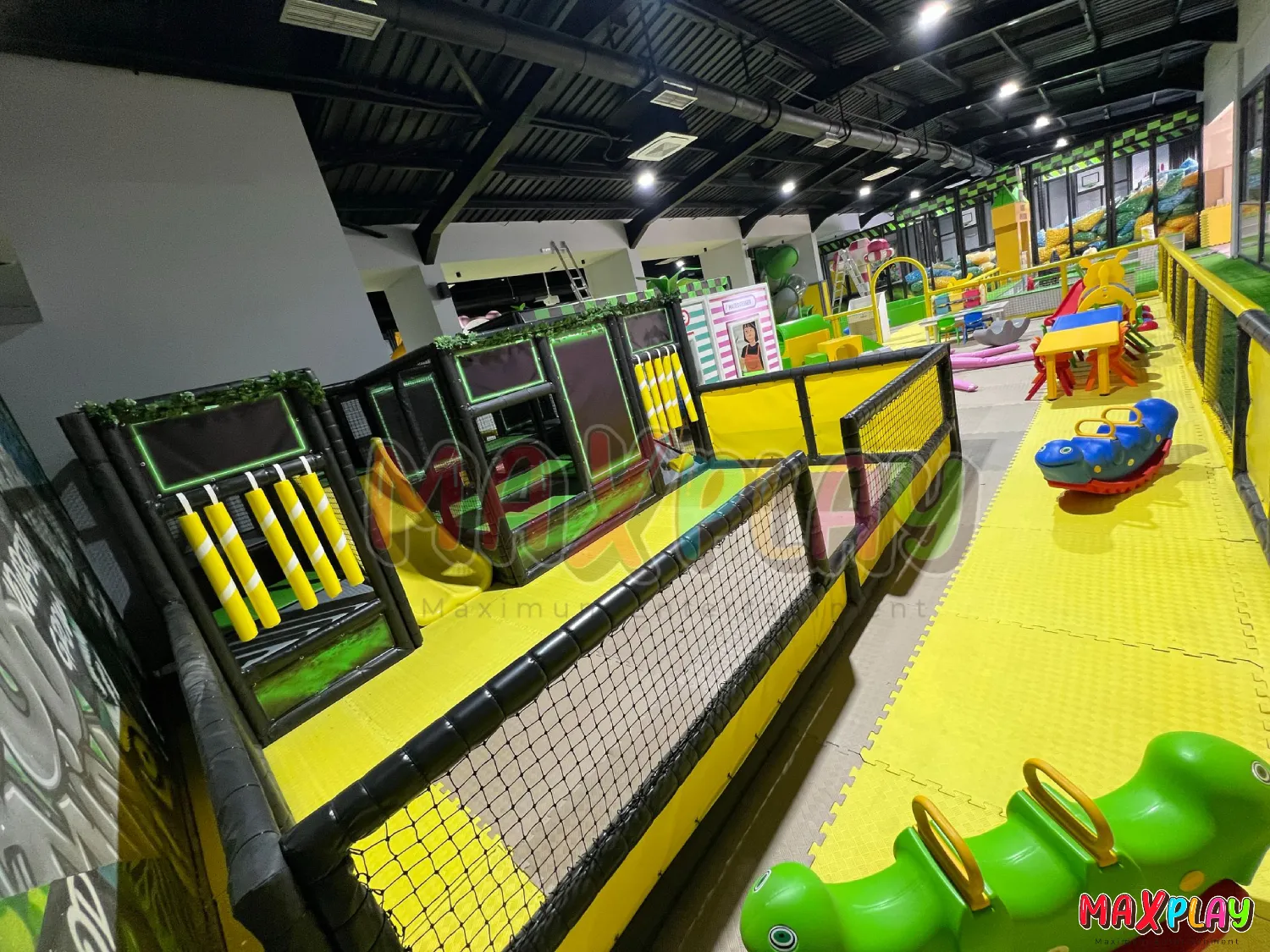
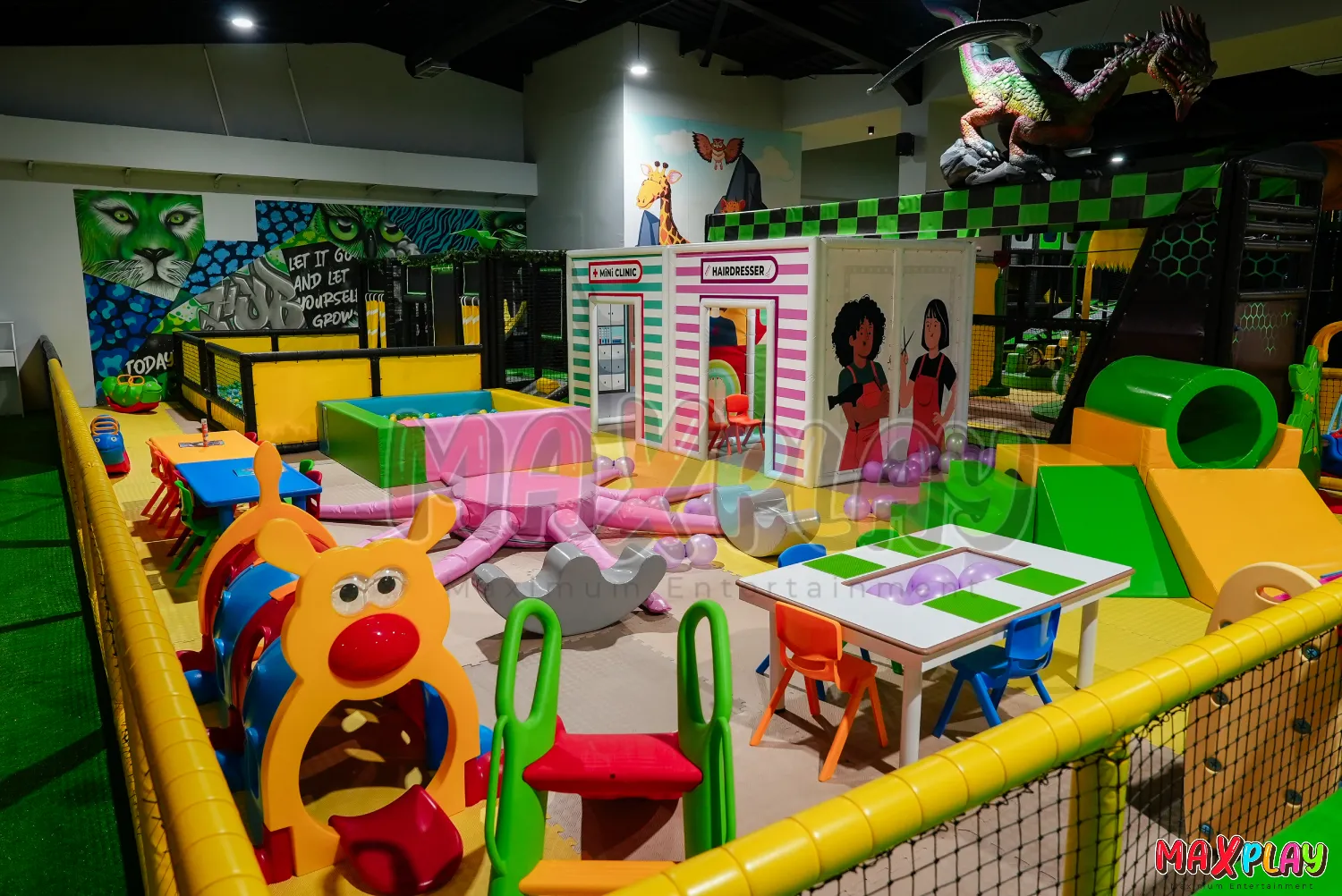
Combining Toddler Zones, Sensory Activities and Role-Play Corners in Limited Floor Areas
Young children require different environmental conditions from older users. A suitable toddler play corner design emphasizes low-height activities, predictable movement routes, padded surfaces, and equipment that supports developing coordination. Integrating toddlers into the same circulation route as older children can create unnecessary collision risks, especially around slides, climbing entrances, and active play features.
A compact toddler play set indoor configuration may combine soft climbing blocks, low ramps, tactile wall features, and simple role-play elements. Sensory play equipment for small spaces can include textured panels, movable shapes, visual puzzles, and age-appropriate interactive components. These activities support variety without requiring the footprint of larger climbing attractions. All small components and detachable elements should be assessed for age-related hazards, including choking risks.
In actual operation, combining activities does not mean removing every boundary between them. A successful arrangement often uses low partitions, differentiated flooring, or controlled access points to establish clear activity zones. For example, a small play café could position a miniature market-themed role-play corner beside a soft activity area while keeping the entrance to the older children’s climbing structure separate. This arrangement supports different developmental needs and reduces the likelihood of incompatible activities interfering with one another.
Custom-Themed Playground Designs That Enhance Visual Appeal and Encourage Repeat Visits
The visual identity of a playground influences how customers perceive the venue and whether children recognize it as a distinctive destination. Themed indoor play environments can transform conventional structures into imaginative settings such as miniature cities, forests, underwater landscapes, or adventure villages. In compact properties, the most effective themes use coordinated colors, recognizable architectural details, and integrated activities rather than large decorative elements that consume valuable space.
For example, a forest-themed playground might combine a tree-shaped climbing tower, tunnel entrances resembling animal shelters, and sensory panels featuring natural textures. The theme creates a connected experience while the underlying equipment remains modular and practical. In a retail environment, a miniature city concept could incorporate a small shopfront, role-play counter, and interactive wall features. The theme should reinforce the activities rather than simply cover standard equipment with decorative graphics.
From a commercial perspective, repeat visits depend on more than appearance. Children need sufficient activity variation, and operators need surfaces that withstand regular cleaning and heavy use. Effective commercial playroom design Belgium projects should therefore balance aesthetic customization with component durability, accessible maintenance points, and future replacement requirements. A distinctive visual concept becomes a stronger investment when it remains practical throughout the equipment’s service life.
Safety, Supervision and Circulation Planning for Small Indoor Playgrounds in Belgium
Safety planning should be integrated into the earliest design stages, not treated as a final inspection item. Indoor playground safety planning involves evaluating foreseeable user behavior, fall risks, entrapment hazards, protective surfacing, structural stability, access control, and emergency procedures. In compact facilities, these issues become especially important because activities are positioned closer together and congestion can develop quickly.
For Belgian commercial installations, applicable European standards and local regulatory requirements must be reviewed according to the equipment type and intended use. EN 1176 addresses playground equipment and surfacing requirements, while EN 1177 concerns impact-attenuating playground surfacing. Depending on the installation, other technical standards or regulatory provisions may also apply. Buyers should request relevant test documentation, material specifications, installation instructions, and maintenance guidance rather than assuming that a general CE claim establishes compliance for every playground component.
A practical operational assessment should address several recurring concerns:
- Can staff observe important activity areas without significant blind spots?
- Are emergency exits and accessible circulation routes unobstructed?
- Are age groups appropriately separated where necessary?
- Can cleaning and maintenance personnel reach enclosed components?
- Are protective surfaces suitable for the relevant fall heights?
- Can children be assisted or evacuated from elevated areas when required?
The most common operational weakness is a design that looks efficient on a floor plan but becomes difficult to supervise during peak attendance. Appropriate soft playground equipment must therefore be evaluated as part of a complete operating environment. Safety performance depends on installation quality, inspection, maintenance, and responsible supervision as well as manufacturing standards.
Why Turkish Playground Manufacturers Are a Practical Choice for Custom-Built Play Areas in Belgium?
Belgian operators comparing European, Chinese, and Turkish suppliers should assess more than the initial equipment quotation. Production customization, technical communication, shipping arrangements, installation support, and long-term maintenance requirements all contribute to the real cost of ownership. Established Turkish indoor playground manufacturers can offer an attractive combination of project-specific manufacturing, competitive pricing, and geographic proximity to European markets.
Turkey’s location provides practical logistics advantages for Belgian projects. Depending on the shipment volume, route, and delivery requirements, equipment can be transported by road, sea, or combined freight services. Road freight is particularly relevant for European deliveries because it can support coordinated transportation of modular structures and installation components. Compared with some intercontinental shipping arrangements, this proximity may reduce transit times and simplify communication, although actual delivery schedules depend on production capacity, customs procedures, transport availability, and destination conditions.
Pricing comparisons require similar technical specifications. A low-cost imported structure may not represent better value if it excludes suitable protective materials, engineering documentation, installation assistance, or replacement-part support. Conversely, a European-made installation may offer advantages in local service access. Experienced soft play manufacturers in Turkey can compete with suppliers in China and other manufacturing markets by combining competitive production costs with configurable engineering and potentially shorter European delivery routes. Claims of superior quality or faster delivery should always be assessed against comparable quotations and documented project conditions.
Modular Manufacturing, Flexible Dimensions and Space-Efficient Playground Solutions from Turkey
The main advantage of bespoke playground manufacturing is the ability to adapt equipment to the actual architectural conditions of a commercial property. Standard catalogue structures often assume regular floor plans and predictable ceiling heights. In contrast, custom-sized soft play equipment can be developed around columns, narrow wall sections, irregular corners, and operational requirements that would otherwise limit the usable area.
For example, a Belgian family café with a long, narrow room may benefit from a linear structure combining crawl tunnels, climbing steps, and a compact slide rather than a conventional square playground. A venue with an irregular corner might use a custom activity platform to convert otherwise underutilized space into a functional play feature. Such configurations require accurate measurements, structural coordination, and an understanding of how children move between activities.
Material and manufacturing quality remain essential. Commercial-grade foam padding, suitable protective coverings, robust structural connections, and hygienic, cleanable surfaces help support long-term operation. Buyers seeking commercial soft play equipment should request information about material composition, applicable safety testing, fire-performance documentation where required, and quality-control procedures. First-class manufacturing should be demonstrated through traceable specifications, appropriate certification or test reports, and consistent production practices rather than marketing descriptions alone.
For buyers comparing an indoor playground supplier with a general equipment reseller, manufacturing flexibility can be a decisive factor. A factory-based partner may be better positioned to coordinate dimensions, colors, component compatibility, and project documentation. However, soft play equipment wholesale purchasing is generally most suitable for distributors or businesses acquiring standardized components across multiple locations. A single compact venue with unusual dimensions often benefits more from project-based customization than from purchasing a large quantity of standard modules.
Budget Planning, Equipment Delivery and Installation Considerations for Belgian Indoor Play Businesses
Budget development should begin with a clear distinction between equipment expenditure and total project investment. Small indoor playground startup costs may include architectural surveys, equipment design, manufacturing, freight, customs administration, installation, flooring, electrical adjustments, insurance, permits, staff training, and ongoing maintenance. Overlooking these supporting expenses can produce an unrealistic financial forecast even when the equipment quotation itself appears affordable.
A practical comparison between equipment options should consider their operational value rather than simply their purchase price.
| Equipment option | Main advantage | Important consideration |
| Single-level soft play structure | Easier access and supervision | Requires sufficient floor area |
| Multi-level modular system | Greater activity variety within a compact footprint | Requires adequate height and access planning |
| Interactive wall panels | Minimal floor-space consumption | Limited physical activity |
| Compact ball pit | Sensory and social engagement | Frequent cleaning and ball management |
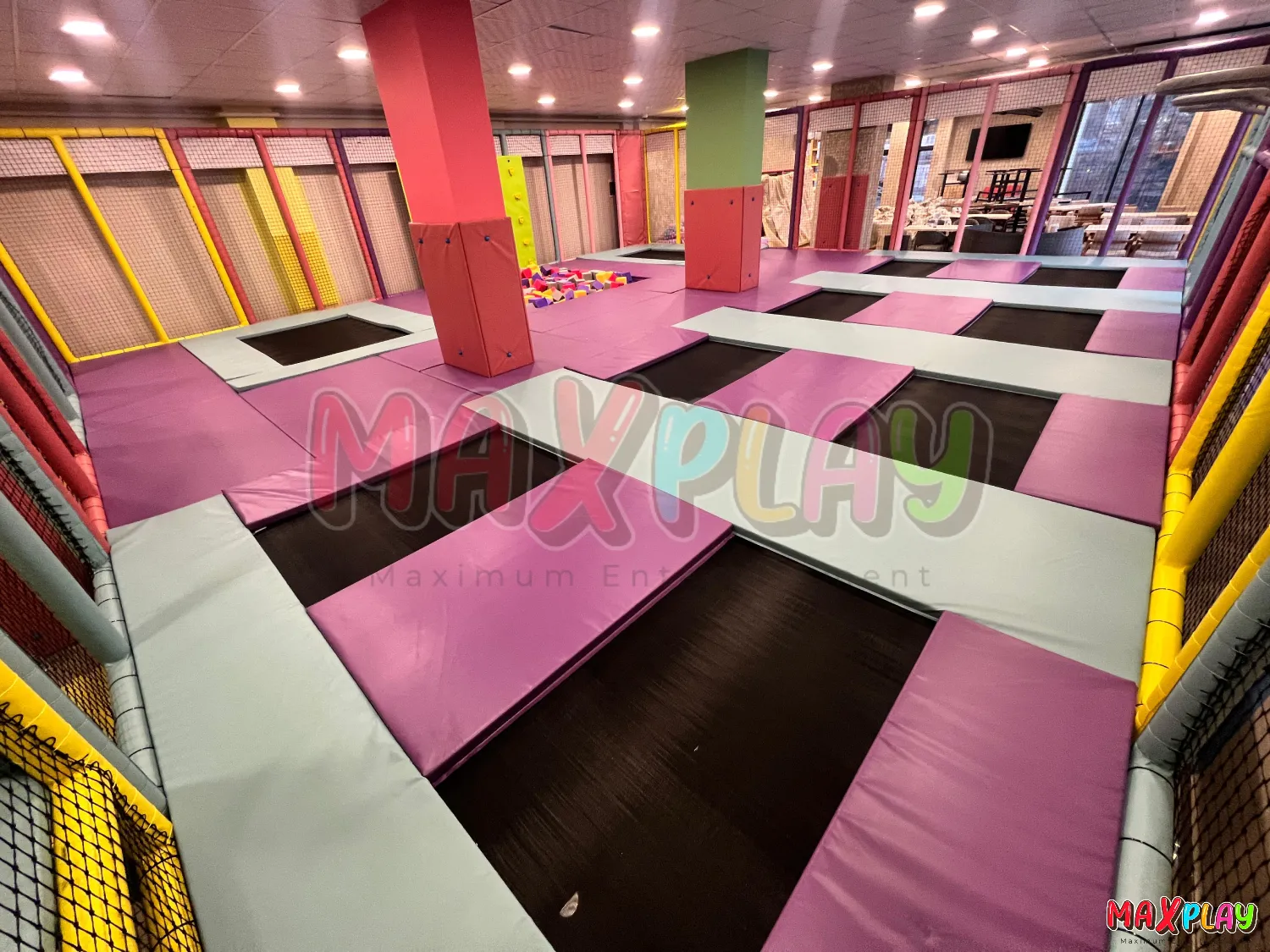
| Small trampoline installation | Dynamic physical activity | Higher clearance, separation, and safety requirements |
Some operators initially consider trampoline park equipment as a way to introduce an exciting attraction. However, a compact venue may not provide the necessary clearances, separation, staffing, or operational conditions. Consulting a specialist trampoline park manufacturer can help establish whether such equipment is appropriate, but soft play and interactive activities are often more practical for very small properties.
Logistics planning should be coordinated before manufacturing begins. Equipment dimensions, packaging methods, delivery access, unloading arrangements, and installation sequencing can all affect project costs. Modular playground installation offers advantages where large preassembled structures cannot pass through existing entrances. Belgian buyers should also confirm customs responsibilities, delivery terms, documentation, and the availability of replacement components. A lower factory quotation may become less competitive when transportation, assembly, and service exclusions are considered.
How MaxPlay Creates Tailor-Made Indoor Playground Designs for Small Commercial Spaces in Belgium?
MaxPlay approaches compact commercial playground development as an integrated design and manufacturing project. Rather than selecting equipment solely from standard configurations, the company focuses on the relationship between available space, intended age groups, operational requirements, and the activities a venue needs to provide. Its portfolio of indoor soft playground equipment includes modular climbing structures, slides, ball pools, toddler activity areas, interactive elements, and customized themed installations that can be combined according to project requirements.
As a Turkey-based manufacturer, MaxPlay provides turnkey compact playground solutions covering project-based design, equipment production, international shipping coordination, and installation support. Its manufacturing approach allows structural dimensions, activity combinations, protective components, and visual themes to be adapted to individual properties. For Belgian businesses, this flexibility is particularly valuable when developing playgrounds inside existing buildings where ceiling height, access restrictions, and irregular floor plans prevent the use of conventional layouts. The company emphasizes high-quality materials, hygienic and child-appropriate production, relevant safety documentation, competitive factory-direct pricing, and efficient logistics connections between Turkey and Europe. Specific certifications and compliance documentation should be confirmed for the proposed equipment configuration.