






Interactive Indoor Playground Equipment in Norway: Enhancing the Play Experience
Investing in high-grade interactive indoor playground equipment has evolved from an optional attraction upgrade into the primary economic driver for leisure developments across the Nordic region. In markets like Norway, where sub-zero temperatures, heavy snowfall, and long winter nights restrict outdoor recreation for nearly six months of the year, commercial indoor destinations must offer more than static containment structures. Today’s families expect dynamic environments that physically challenge children while engaging their senses through technology-infused responsive design. Specifying an indoor play set designed specifically for high-capacity throughput requires an operational balance: incorporating mechanical resilience, tactile appeal, and digital interactivity without creating complex maintenance liabilities for site operators.
As MaxPlay Playground Equipment, we provide professional solutions for indoor playgrounds and soft play areas. We design, manufacture, install, and assemble indoor playground equipment and soft play systems for commercial spaces. Contact us for turnkey indoor playground projects.
| Landline: | 0216 377 10 88 |
| Mobile / WhatsApp: | 0532 069 53 17 |
| E-Mail: | info@maxplay.com.tr |
| Address: | Google Maps |
You can contact us for all your projects across Türkiye and international markets.
Our Services:
- Trampoline Manufacturing – Trampoline Park Installation
- Ball Pit Manufacturing – Ball Pit Playground Installations (with slides, etc.)
- Interactive Play Systems (Moving Soft Play Toys & Equipment)
- Sand Pit – Sand Play Areas
- Playgrounds and Role-Play Houses for Kindergartens & Nurseries
- Indoor playgrounds for businesses such as shopping malls, cafés, restaurants, etc.
- And all customized playground projects tailored to your specific needs.
In real-world project deployments across Oslo, Bergen, and Trondheim, the commercial success of an active play destination depends on its engineering integrity. When commercial facilities rely solely on standard plastic slides and enclosed crawl tubes, children experience novelty fatigue within forty minutes. Integrating responsive light targets, projection climbing systems, and kinetic mechanics extends typical dwell time beyond two and a half hours. However, engineering these spaces requires deep knowledge of heavy foot traffic patterns, hygienic material performance under extreme thermal shifts between indoor and outdoor air, and strict adherence to strict European compliance frameworks.
Designing commercial play systems demands a manufacturer that bridges creative spatial architecture with heavy-duty structural manufacturing. Every load-bearing upright, high-density foam protector, and sensor module must function flawlessly under continuous daily stress. By leveraging direct engineering oversight, facilities can implement cutting-edge attractions that fulfill Scandinavian design aesthetics—clean sightlines, muted or natural color palettes, and accessible multi-tiered flow—while maximizing revenue per square meter.
Designing Interactive Indoor Play Spaces for Norway’s Modern Family Entertainment Market
Executing an interactive indoor playground design Norway venture requires direct alignment with local cultural and operational realities. In Scandinavia, commercial leisure projects are designed around community hubs where parents and children share spaces for extended stays. When engineering family entertainment centre concepts, operators must avoid the cluttered, hyper-saturated aesthetics common in legacy play zones. Modern Norwegian interior schemes prioritize acoustic damping, organic color selections, visible sightlines from adjacent dining areas, and expansive central pathways that accommodate strollers and accessibility aids.
From an engineering perspective, indoor activity centre planning in cities like Stavanger or Tromsø involves addressing structural obstacles such as heavy ceiling insulation trusses, deep HVAC ducts needed for winter thermal regulation, and structural columns. A common operational challenge is overlooking how acoustic resonance impacts customer retention; open, steel-framed industrial buildings amplify child-generated noise, driving parents away prematurely. Introducing sound-absorbing high-density vinyl wraps, padded structural decking, and textile-integrated attractions directly resolves this issue while elevating the venue into one of the region’s premier modern children’s play spaces.
Effective engaging play environment design relies on zoned foot-traffic management. Layouts must feature clear lines of progression, preventing older, faster children from colliding with early walkers. Designing peripheral resting spaces with unobstructed sightlines enables parents to supervise comfortably from cafe zones, directly driving secondary food and beverage revenues. When architectural intent matches precise structural manufacturing, the indoor venue becomes an enduring, weather-resilient community anchor.
How Interactive Play Equipment Improves Children’s Physical and Cognitive Development
Integrating educational playground equipment into commercial spaces addresses a clear gap in children’s physical activity during long Nordic winters. Static structures encourage basic gross motor engagement, but combining digital sensors with physical movement creates comprehensive cognitive development play systems. When children encounter responsive light-tag matrices on climbing walls or velocity-tracking tunnels, they engage in executive-function tasks: spatial calculation, peripheral threat assessment, and rapid problem-solving, all while sustaining peak cardiovascular activity.
In practical operational settings, children naturally disengage from monotonous physical tasks. However, when an installation utilizes sensory play equipment—such as textured interactive panels, musical floor switches, and responsive projection surfaces—it triggers multi-sensory feedback loops that benefit both neurotypical children and those with sensory processing sensitivities. These active play solutions for children transform routine soft play into a developmental training ground where balance, proprioception, and bilateral coordination are strengthened organically.
The measurable result of intentional child development through play is sustained customer loyalty. Parents in Norway gravitate toward venues that contribute positively to their children’s motor milestones and mental resilience rather than unguided, chaotic screen time. Designing equipment that challenges memory sequencing, cooperative team play, and tactile dexterity elevates an indoor center into an essential resource for year-round physical health.
Choosing the Right Indoor Playground Features for Different Age Groups
A frequent structural misstep in facility design is failing to physically isolate distinct age brackets. Multi-age integration often results in toddlers being overwhelmed by older children. To guarantee absolute patron safety, an installation must designate a self-contained toddler play set indoor perimeter physically buffered from high-velocity zones. Supplying certified toddler play equipment demands specific production standards: lower fall heights, closed-cell foam padding with zero surface friction burn, and interactive elements positioned between 30 and 80 centimeters from floor level.
For children aged four to eight, installations shift toward multi-level soft play structures for kids, integrating spiral tube slides, balance logs, suspended rope walkways, and cargo nets. At this developmental phase, children seek adventurous risk-taking within engineered containment boundaries. Structuring playground solutions for different age groups ensures equipment meets varying anthropometric requirements:
- Infants and Toddlers (0–3 Years): Low-profile sensory boards, soft crawl ramps, mini soft foam shapes, zero-pinch safety gates, and shallow micro ball pools.
- Juniors (4–8 Years): Multi-tier crawl matrices, balance bridges, medium-velocity double slides, soft obstacle wedges, and interactive projection floors.
- Youth and Tweens (9+ Years): High-level ninja courses, timed climbing matrices, aerial aerial challenges, vertical drop slides, and integrated digital tracking arenas.
Establishing dedicated children’s activity zones simplifies operational oversight and drastically reduces accidental impact incidents. High-risk zones must feature clear safety signage and continuous run-off matting. Developing distinct, safe indoor play areas that match each age group’s physical capabilities protects visitors and significantly lowers facility insurance and liability exposures.
Popular Types of Interactive Playground Equipment for Commercial Play Centres
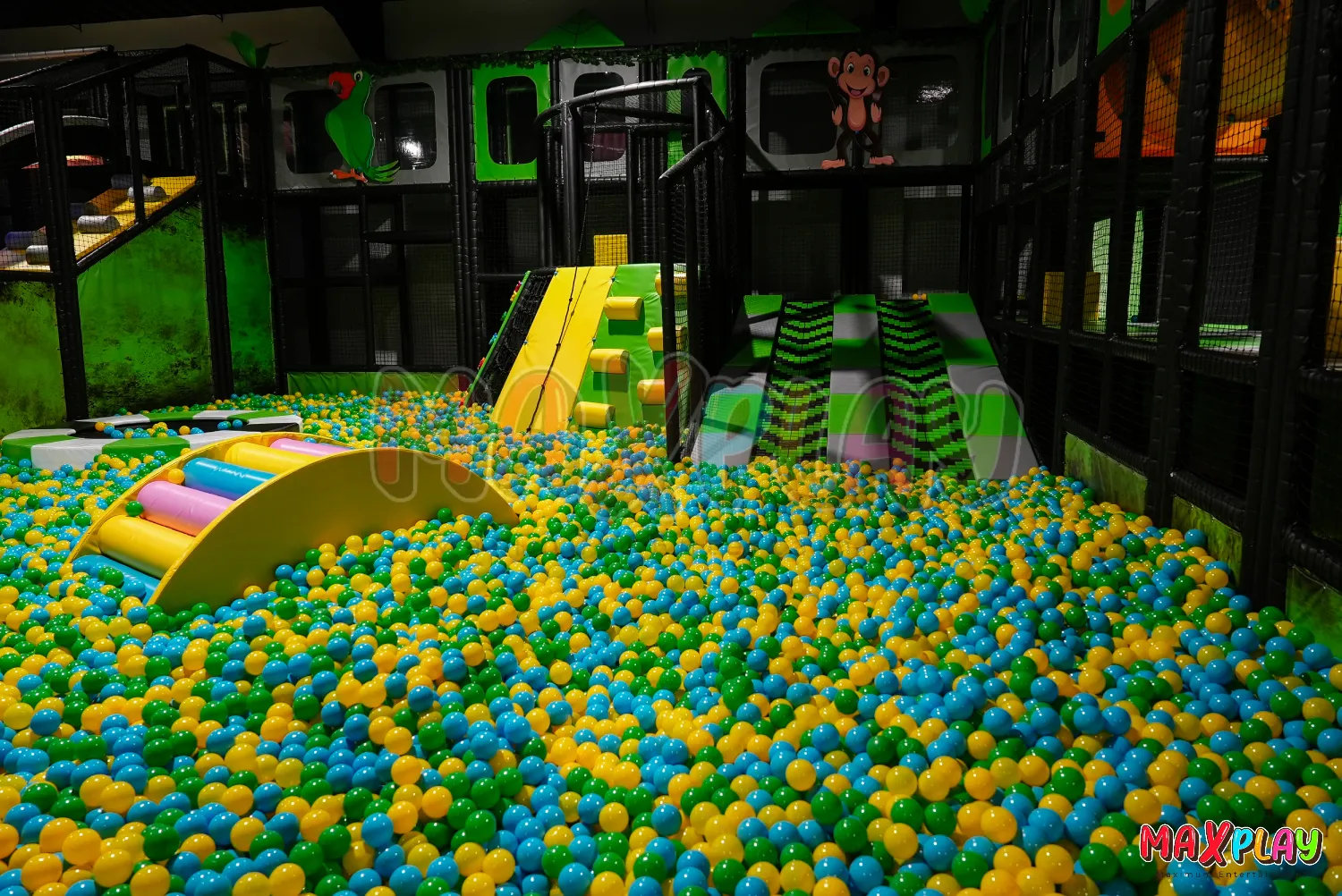
Commercial success in leisure venues requires deploying high-performing, durable attraction hardware. At the forefront of modern installations are responsive interactive playground elements that combine mechanical play with instant digital feedback. Utilizing interactive wall projections over an expansive ball pool allows hundreds of children to throw soft spheres at dynamically generated digital targets, blending motor coordination with digital gaming. An engineered ball pool systems installation must include automated industrial ball-washing conduits beneath the pit decking to maintain rigorous hygiene with low labor overhead.
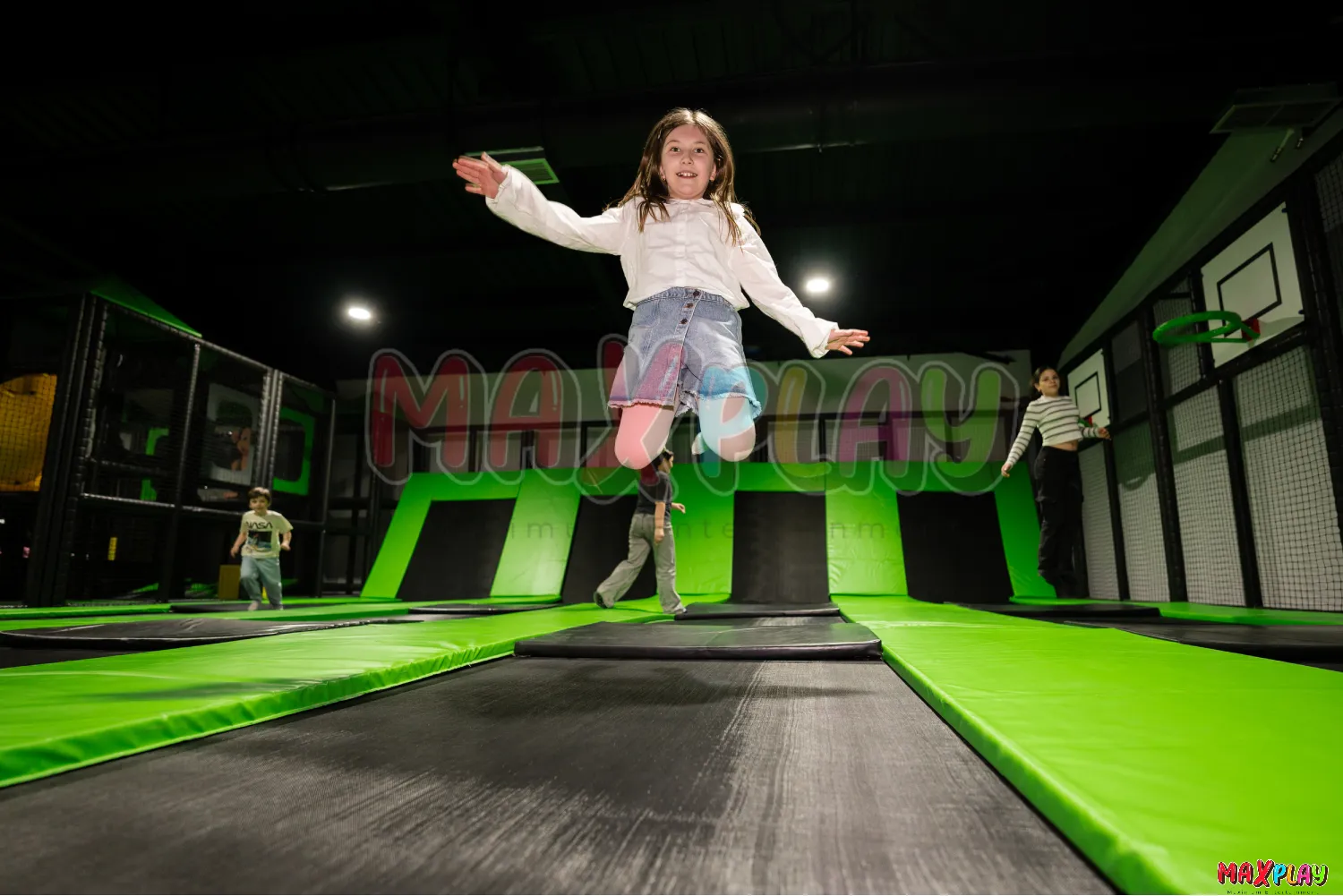
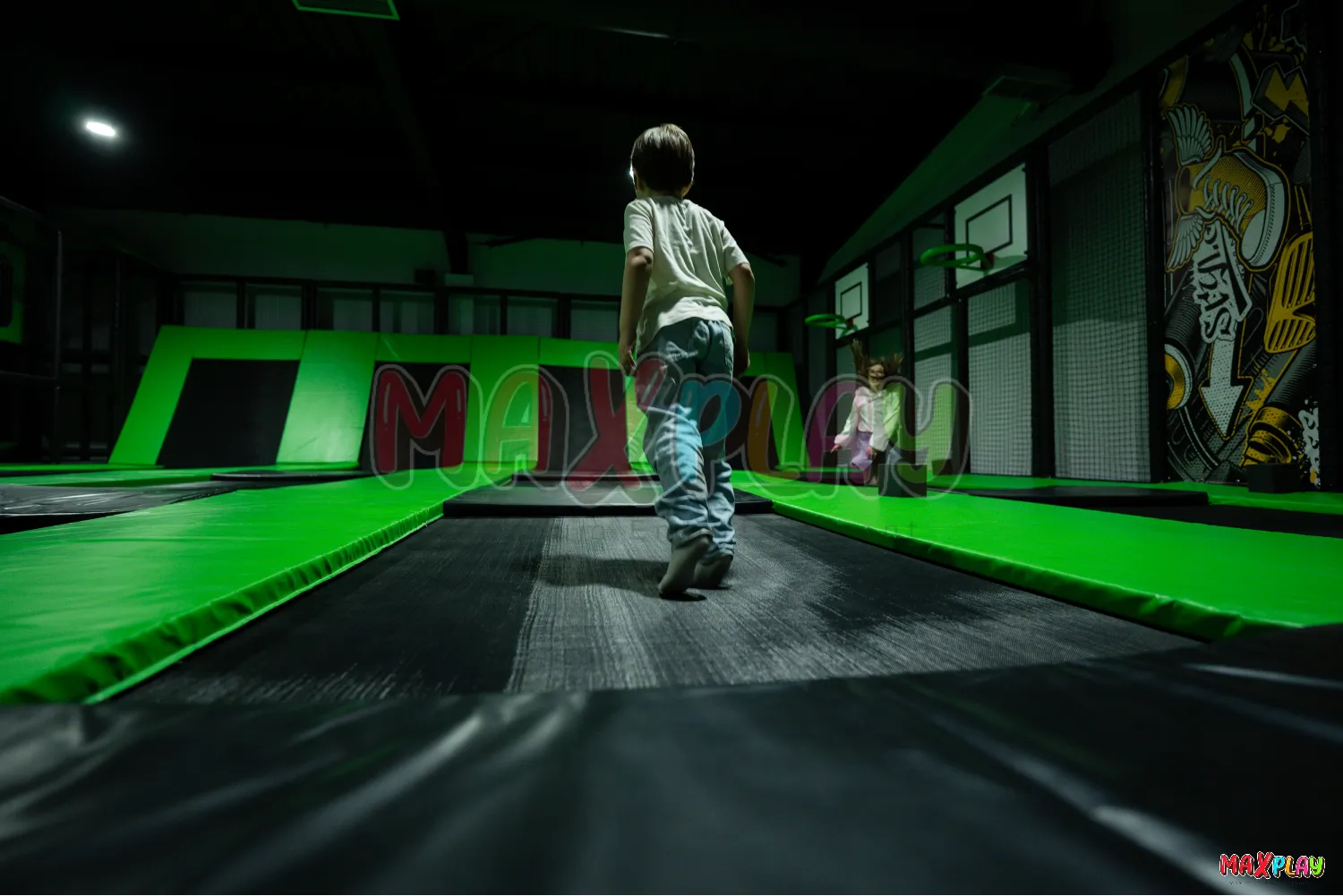
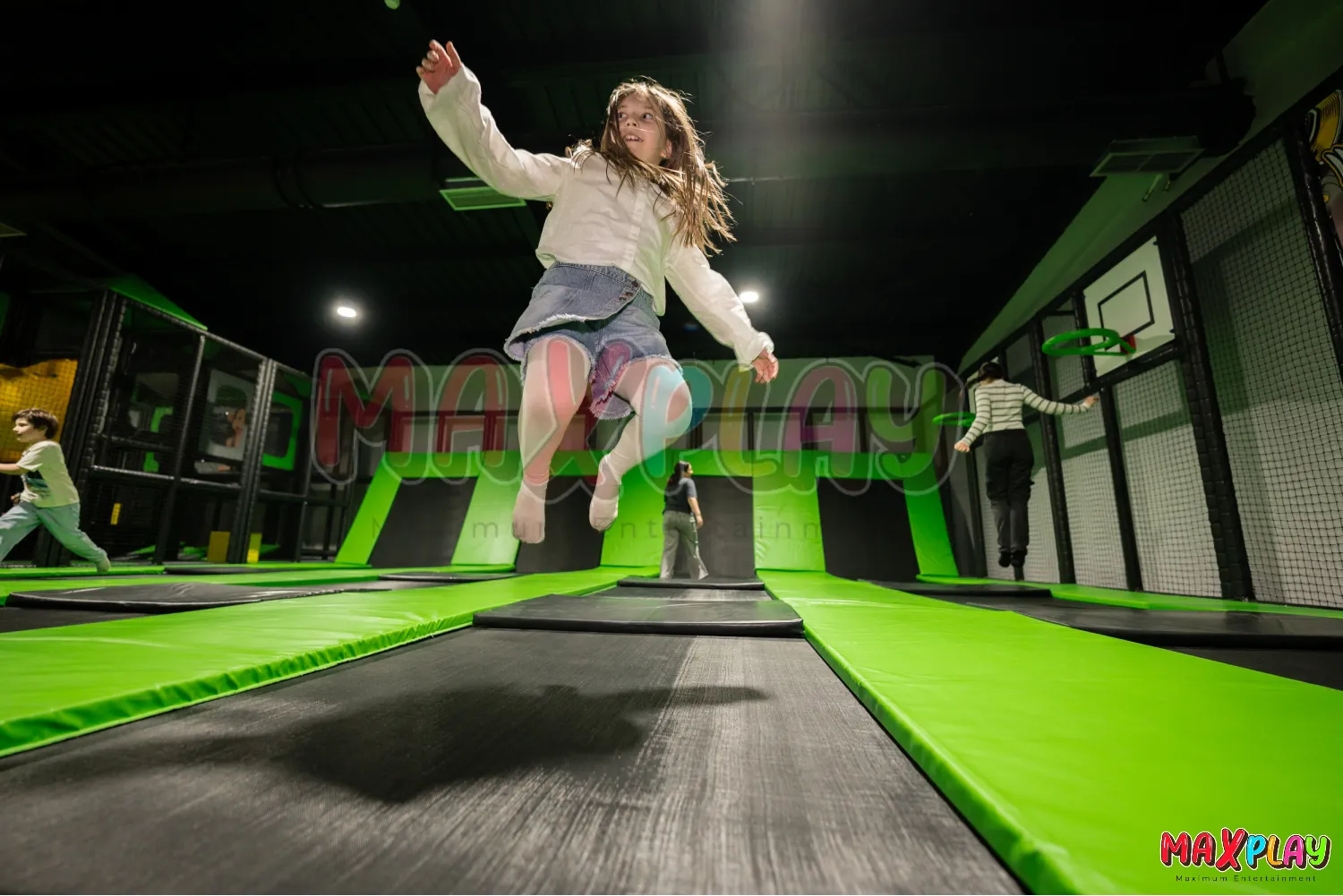
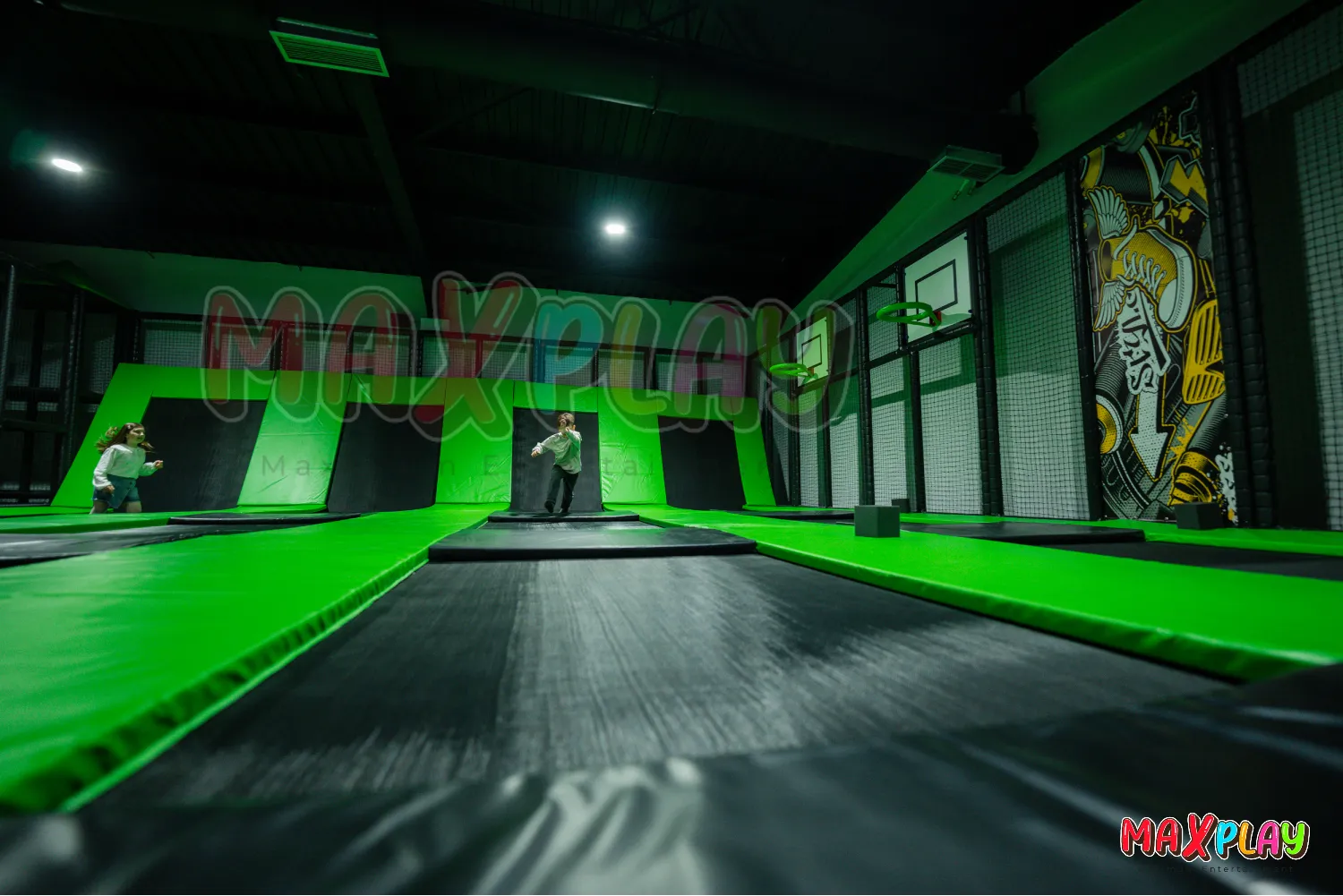
Complementing digital systems are physical climbing structures and slides configured with integrated timing gates and RFID reader checkpoints. Children tap sensor bracelets at the base, ascend through structured obstacle runs, and tag the summit finish line to record their sprint metrics on leaderboards. For operators seeking maximum attraction density, combining this hardware with a dedicated trampoline park equipment zone creates an all-in-one entertainment complex. The trampoline matrix must feature commercial-grade continuous cross-stitched performance beds, dual-stage steel springs, and heavy-duty corner safety boxes to manage high dynamic rebound loads safely.
Thematic consistency remains critical when introducing themed indoor playground attractions. Whether executing a Scandinavian fjord exploration aesthetic, an Arctic wildlife quest, or an industrial maritime motif, every visual layer must be crafted from non-toxic, fire-retardant composites. Integrating high-performance digital play equipment within structural themed vinyl sleeves maintains spatial immersion without compromising mechanical durability, ensuring the commercial facility stands out in a competitive marketplace.
Why Businesses in Norway Prefer Custom-Made Indoor Playground Solutions?
Standard off-the-shelf catalog units rarely align with the complex structural profiles of commercial properties in Norway. High leasing costs across hubs like Oslo, Bergen, and Drammen require developers to monetize every available cubic meter, including mezzanine recesses, angled sub-roof clearances, and structural support spans. Investing in bespoke indoor playground equipment enables operators to build around architectural constraints rather than settling for unoptimized, generic box structures.
In real-world construction, integrating a custom play area manufacturing approach allows clients to dictate every critical specification, from internal structural framework configurations to customized, non-standard footprint shapes. Commercial operators frequently struggle with catalog configurations that leave dead, non-monetized dead zones around structural columns. Developing tailor-made entertainment solutions ensures that vertical building volume is captured through tiered sky-walks, custom slide drop elevations, and multi-tier observation towers tailored exactly to the property’s engineering parameters.
Beyond spatial optimization, delivering unique kids play centre concepts strengthens a business’s local brand identity. Generic play modulars make venues look identical, reducing long-term pricing power. By launching personalised playground projects, developers can incorporate localized cultural touchpoints, regional storytelling, and targeted sensory zones. This bespoke execution commands premium party booking fees and secures consistent monthly memberships from local families seeking a distinctive destination.
The Advantages of Sourcing Indoor Playground Equipment from Turkey for Norway Projects
For Norwegian developers, navigating the global supply market often leads to an operational trade-off: choosing between ultra-expensive domestic European suppliers with slow lead times, or low-cost Far Eastern fabricators plagued by long maritime shipping windows, communication barriers, and inconsistent material certifications. Partnering directly with a premier Turkish playground equipment manufacturer provides an optimal strategic middle ground. Turkey’s advanced industrial manufacturing infrastructure delivers top-tier production quality at highly competitive manufacturing costs.
From an international logistics standpoint, a playground equipment supplier Turkey provides distinct advantages over East Asian supply chains. Ocean freight from East Asia routinely faces extended transit schedules, unpredictable canal bottlenecks, and volatile container surcharges. In contrast, streamlined overland and combined Ro-Ro maritime transport networks from Istanbul to Scandinavia cut transit times down to 10–14 days. This direct logistical line ensures:
- Predictable construction schedules without open-ended customs delays.
- Direct access to heavy-gauge European-certified materials at lower baseline production rates.
- Seamless technical coordination within closely aligned European time zones.
- Straightforward sourcing of replacement modules, spare upholstery, and expansion systems.
This logistical reliability makes Turkish manufacturing the ideal source for affordable European playground solutions. Developers bypass extreme domestic markups while securing high-performance engineering designed for continuous commercial use. Facilitating a streamlined Turkey to Norway playground export pipeline gives project operators complete budgetary control and reliable project launch schedules through high-efficiency, cost-effective playground production.
MaxPlay Playground Equipment Overview
| Equipment Name | Description | Key Benefits |
| Ball Pool | Colorful pit filled with balls for safe sensory play. | Safe fun for toddlers, easy to clean, encourages motor skills. |
| Trampoline | High-quality indoor trampolines. | Builds balance and strength, child-safe design, durable materials. |
| Interactive Game Sets | Digital and physical interactive play stations. | Boosts learning, cognitive skills, and engagement. |
| Profession Houses | Role-play houses designed for kids. | Encourages creativity, social interaction, and imagination. |
| Trampoline Park | Large-scale trampoline structures. | Suitable for older kids, high durability, safe design. |
| Roller Slide | Conveyor-style (roller) slides for continuous fun. | Efficient design, fun motion play, safe structure. |
| Tower Slide | Tower slides designed for adventure play. | Exciting design, strong safety standards, eye-catching feature. |
| Climbing Wall | Indoor climbing walls. | Builds strength and coordination, safe grips, customizable difficulty levels. |
| Volcano Slide | Volcano-shaped slides with climbing and sliding features. | Combines climbing and sliding, unique design, fun for multiple age groups. |
Safety Requirements and Quality Standards for Indoor Play Equipment in Norway
Norwegian municipal safety authorities and commercial underwriting insurers enforce strict technical compliance policies for indoor leisure installations. The baseline benchmark across all Nordic territories is the rigorous EN1176 playground standards framework, covering EN 1176-1, EN 1176-10 (specifically governing fully enclosed play equipment), and EN 1177 for critical impact fall attenuation. Sourcing non-certified or self-certified machinery poses immense legal and commercial liability risks, including immediate site closures and voided liability insurance policies.
To ensure continuous compliance, all structural frameworks must integrate certified high-yield steel uprights joined by heavy-cast, dual-bolted junction clamps. Specifying certified child-safe soft play materials means utilizing high-density, fire-retardant (Class B1/M2) vinyl coverings free from phthalates, lead, and chemical off-gassing. Polyethylene netting must be braided knotless mesh, calibrated precisely to eliminate head, finger, and limb entrapment hazards across every user transition zone.
Investing in fully safety-certified playground equipment requires detailed material traceability portfolios, including third-party laboratory stress-test certificates and structural weld verifications. Meeting complex commercial playground safety requirements demands continuous, hands-on quality management at every step of manufacturing. Installing durable indoor play structures built from certified, wear-resistant components protects children during peak operating hours and insulates the operating business against structural failures and legal exposure.
Creating Engaging Indoor Playgrounds with Space-Saving and Functional Layouts
Commercial real estate leasing costs across Norway require rigorous operational discipline when planning functional floor space. Executing successful indoor playground layout planning starts with establishing dedicated, clean circulation pathways that safely separate incoming, playing, and exiting traffic. A frequent operational design failure is positioning shoe storage and reception check-in gates too close to the main attraction access point, which creates chaotic bottlenecks during weekend peak hours.
Addressing footprint limitations requires creative small space play area solutions that utilize vertical height rather than expanding across wide horizontal surfaces. By implementing multi-tier vertical 3D crawl mazes, clear structural polycarbonate cantilever lookouts, and overlapping slide runouts, multi-level play can thrive within compact footprints. This discipline of efficient playground architecture guarantees that high visitor capacity can be maintained comfortably without causing site-wide congestion.
The final structural plan must balance active play features with high-margin support amenities. Allocating clear sightlines toward optimized children’s activity areas from comfortable seating sectors lets parents supervise easily while enjoying food and beverage offerings. Organizing a high-efficiency commercial play zone design maximizes spatial capacity, increases secondary per-head spending, and elevates daily patron dwell times across the year.
Interactive Play Areas as a Business Opportunity for Norwegian Entrepreneurs
Launching an indoor playground business Norway enterprise represents an exceptionally resilient commercial leisure investment. Given Norway’s high disposable household income, structural emphasis on family well-being, and cold climate limiting outdoor recreation, the sustained demand for premium indoor spaces remains strong. Unlike seasonal entertainment sectors, well-managed play centers generate steady recurring revenue through open admissions, structured birthday parties, private corporate venue hire, and school group bookings.
Achieving a high-yield children’s entertainment centre investment requires balancing capital expenditure against long-term maintenance costs. Operating margins improve when equipment is engineered with durable, low-wear components that reduce daily staffing and mechanical repairs. Sourcing high-grade commercial soft play equipment direct from specialized manufacturers eliminates unnecessary broker markups, optimizing equipment payback timelines down to an attractive 14 to 20 months.
Executing a highly profitable play centre setup relies on balancing physical challenges with digital interactivity to drive return visits. Outdated ball pits no longer satisfy tech-savvy children. Forward-thinking family recreation business ideas incorporate automated, interactive fitness platforms where children return consistently to beat high scores. Developing a concept supported by comprehensive indoor play centre startup solutions gives entrepreneurs an enduring operational framework configured for multi-location expansion across the Nordic territories.
Turnkey Indoor Playground Projects: From Concept Design to Installation
Taking an indoor leisure venue from raw square footage to an operational destination requires seasoned industrial orchestration. Opting for turnkey indoor playground solutions eliminates the communication gaps that occur when architectural design, steel fabrication, logistics, and assembly are split across disconnected subcontractors. A single responsible engineering partner manages structural integrity, fire-code compliance, and spatial integration through one point of contact.
The turnkey lifecycle starts with structural 3D CAD modeling, integrating the building’s exact laser-scanned dimensions to capture clear heights, utility drops, and emergency exits. Following production, dedicated playground installation services send certified technicians directly to the Norwegian project site. Installing multi-level structures demands precise engineering: ensuring secure floor anchors, tensioning high-load safety nets, and testing all electronics under full operating load.
Relying on comprehensive complete play area project management mitigates common risks such as shipping delays, import customs mismatches, and on-site assembly errors. Field technicians coordinate directly with local general contractors to synchronize ventilation, fire-alarm clearance, and power runs. This disciplined approach to professional playground construction delivers fully verified, ready-to-operate kids play centres ready to accept visitors from opening day.
What Makes Turkish Manufacturers a Reliable Partner for European Playground Projects?
Sourcing heavy architectural leisure equipment requires absolute transparency and direct manufacturing accountability. Choosing an established European playground equipment supplier operating from Turkey’s premier manufacturing zones provides direct access to modern, integrated fabrication facilities. Leading soft play manufacturers manage their own CNC steel fabrication, precision rotational plastic molding, and industrial upholstery stitching under ISO-certified quality management regimes, guaranteeing reliable structural performance.
When evaluating indoor playground equipment manufacturers, factory capability determines long-term equipment durability. Cheap imports often rely on low-density recycled foam that collapses under continuous compression, along with thin PVC vinyl skins that crack under low temperatures. Specialized fabricators manage heavy-duty soft play equipment wholesale operations utilizing high-resilience, cold-cured polyurethane foam cores wrapped in 0.55mm–0.9mm high-density, lacquered, tear-resistant PVC. These materials are built to withstand high-volume foot traffic without deforming or failing.
Experienced partners specializing in international playground manufacturing design products with international freight efficiency in mind. Frameworks are engineered as modular, nested assemblies that pack cleanly into standard freight containers or mega-trailers, significantly cutting transport costs. This commitment to high-quality soft play production and rapid delivery schedules makes Turkish industrial manufacturers an exceptional choice for Nordic enterprises seeking durable, export-ready playground solutions backed by a reliable playground project partner.
Building Innovative Interactive Playground Experiences with MaxPlay
Executing an ambitious leisure development requires partnering with an experienced industry specialist. At MaxPlay, we design and manufacture high-capacity attractions that combine structural engineering with modern digital technology. As a dedicated custom indoor playground manufacturer, MaxPlay playground solutions balance commercial durability with memorable visitor experiences, helping your destination stand out in an evolving leisure market.
Our multi-tier production facilities deliver top-tier MaxPlay interactive playground equipment, fully compliant with strict EN1176 and EN1177 safety protocols. We integrate high-density structural components, flame-retardant non-toxic vinyls, and intuitive sensory hardware to construct vibrant, future-ready destinations. Whether your design requires a multi-level indoor soft playground equipment footprint, an energetic trampoline park manufacturer design, an expansive indoor play equipment hub, or a fully integrated interactive playground equipment arena, our production teams build to the highest technical standards.
As a full-scope indoor playground supplier, MaxPlay serves clients across Europe and the Nordic region, providing scalable soft playground equipment packages tailored to your commercial footprint. From custom toddler zones to complete high-throughput Family Entertainment Centers, our engineering guarantees reliable performance, fast turnaround times, and long-term operating durability.
Take the first step toward launching your next entertainment destination. We offer completely free project planning and custom 3D design layouts tailored precisely to your building’s architectural blueprints. Contact our technical team today to request your free design proposal, review equipment specifications, and receive a competitive wholesale quotation. Contact us now to begin your custom project.