





Soft Play Centre Setup in Czechia: Safety Guidelines and Layout Advice
Planning a profitable, modern indoor family entertainment venue requires rigorous technical planning, clear architectural zoning, and strict adherence to European manufacturing directives. Executing a successful Soft Play Centre Setup in Czechia demands an intimate understanding of local commercial real estate, European child safety legislation, and changing family leisure expectations in Central Europe. Investors must strike a balance between physical throughput capacity, high-yield guest flow, and durable equipment fabrication to ensure sustainable operational profitability.
As MaxPlay Playground Equipment, we provide professional solutions for indoor playgrounds and soft play areas. We design, manufacture, install, and assemble indoor playground equipment and soft play systems for commercial spaces. Contact us for turnkey indoor playground projects.
| Landline: | 0216 377 10 88 |
| Mobile / WhatsApp: | 0532 069 53 17 |
| E-Mail: | info@maxplay.com.tr |
| Address: | Google Maps |
You can contact us for all your projects across Türkiye and international markets.
Our Services:
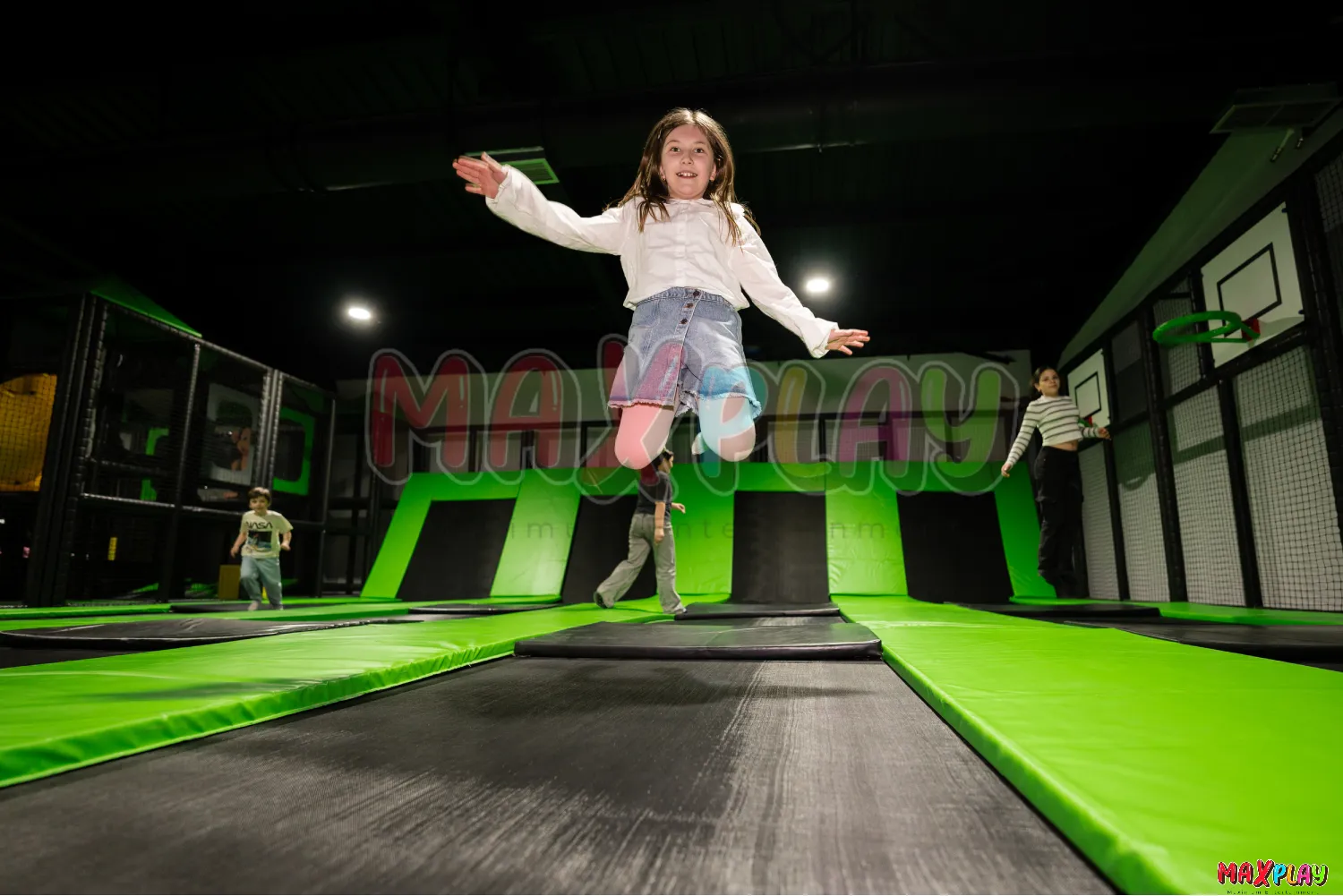
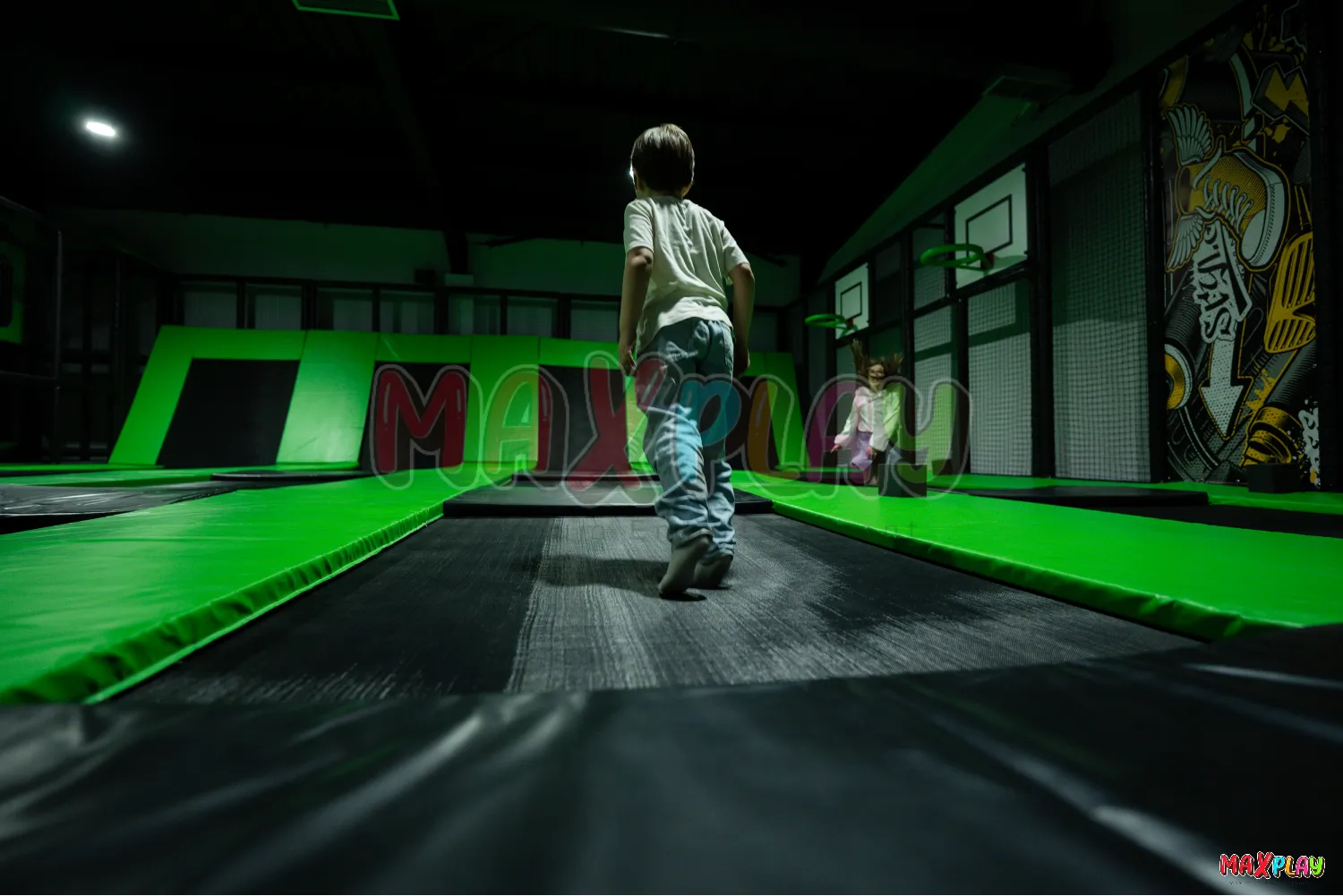
- Trampoline Manufacturing – Trampoline Park Installation
- Ball Pit Manufacturing – Ball Pit Playground Installations (with slides, etc.)
- Interactive Play Systems (Moving Soft Play Toys & Equipment)
- Sand Pit – Sand Play Areas
- Playgrounds and Role-Play Houses for Kindergartens & Nurseries
- Indoor playgrounds for businesses such as shopping malls, cafés, restaurants, etc.
- And all customized playground projects tailored to your specific needs.
In real-world project development, commercial success hinges directly on the engineering choices made during the early spatial planning stage. Selecting the right indoor play equipment involves not only evaluating aesthetic appeal, but also calculating structural loads, maintenance workflows, and age-segregated traffic dynamics. When engineering a high-footfall recreational facility, sourcing commercial systems that deliver exceptional longevity and proven compliance makes the difference between an asset that depreciates quickly and a dependable, high-revenue family destination.

Planning a Soft Play Centre Around Czech Market Expectations
The Czech commercial leisure sector has transformed into a discerning market where families demand high-grade hospitality, exceptional hygiene, and integrated service concepts. In major urban centers such as Prague, Brno, and Ostrava, modern indoor recreation projects thrive by operating as comprehensive family entertainment centers (FECs) rather than standalone equipment footprints. Czech parents prioritize wholesome physical development, ergonomic relaxation areas, and high-quality on-site dining where sightlines to their children remain entirely unobstructed.
From an operational standpoint, underestimating parent-to-child dwelling times is one of the most common commercial oversights. A successful facility allocates approximately 25% to 30% of its usable footprint to accompanying amenities, including parent lounge zones, hygienic changing facilities, and commercial-grade cafe seating. Selecting an established indoor playground supplier capable of structuring comprehensive spatial floor plans ensures that high-volume visitor movement between play areas and catering zones remains frictionless even during peak weekend hours.
Understanding the competitive landscape in Czechia also requires tailoring your unit mix to seasonal shifts. Winter months and inclement weather drive intensive weekend footfall, requiring your core attractions to manage high hourly capacity without creating structural bottlenecks. Operators who configure their floor plans with modular, scalable commercial soft play equipment secure higher customer retention rates by maintaining fresh circulation routes and preventing overcrowding at high-demand entry and exit points.
Which Turkish Playground Designs Are Trending in Europe?
European leisure operators are increasingly moving away from generic catalog layouts in favor of immersive, narrative-driven adventure worlds developed by Turkish manufacturers. Biophilic play concepts—featuring muted earth tones, organic timber aesthetics, and Scandinavian-inspired minimalist geometries—are dominating modern shopping mall installations and municipal family centers. Turkish engineering teams have adapted to this shift by combining tactile wooden elements with certified structural steel, providing European venues with visually sophisticated play structures that blend seamlessly into contemporary architectural developments.
Multi-level vertical labyrinths that maximize volumetric space are another major export success across Central and Western Europe. Rising commercial square-meter lease rates have forced European venue operators to seek high-capacity attractions that expand upward rather than outward. Turkish manufacturers excel in engineering modular 3D climbing structures, suspended rope tunnels, and high-altitude tube slides that accommodate high visitor density on compact floor footprints, significantly reducing the tenant’s real estate overhead per active child.
Hybrid interactive environments that merge physical motor challenges with responsive digital gamification are also seeing rapid adoption. Turkish designers are integrating sensory LED climbing walls, interactive projection ball targets, and RFID-enabled obstacle courses directly into traditional soft structures. This hybrid format appeals directly to older children aged 8 to 12, extending the target demographic beyond early childhood and enabling European operators to capture higher per-ticket revenue and specialized party bookings.
MaxPlay Playground Equipment Overview
| Equipment Name | Description | Key Benefits |
| Ball Pool | Colorful pit filled with balls for safe sensory play. | Safe fun for toddlers, easy to clean, encourages motor skills. |
| Trampoline | High-quality indoor trampolines. | Builds balance and strength, child-safe design, durable materials. |
| Interactive Game Sets | Digital and physical interactive play stations. | Boosts learning, cognitive skills, and engagement. |
| Profession Houses | Role-play houses designed for kids. | Encourages creativity, social interaction, and imagination. |
| Trampoline Park | Large-scale trampoline structures. | Suitable for older kids, high durability, safe design. |
| Roller Slide | Conveyor-style (roller) slides for continuous fun. | Efficient design, fun motion play, safe structure. |
| Tower Slide | Tower slides designed for adventure play. | Exciting design, strong safety standards, eye-catching feature. |
| Climbing Wall | Indoor climbing walls. | Builds strength and coordination, safe grips, customizable difficulty levels. |
| Volcano Slide | Volcano-shaped slides with climbing and sliding features. | Combines climbing and sliding, unique design, fun for multiple age groups. |
How Can Turkish Playground Systems Improve Customer Experience?
Turkish playground engineering directly elevates customer satisfaction by prioritizing unobstructed sightlines and intuitive pedestrian circulation throughout the entire venue. In commercial operations, parents prioritize comfort and child visibility just as much as children prioritize excitement. Turkish layout architects design play units with open-mesh safety netting and low-profile perimeter barriers, allowing caregivers seated in adjacent cafe areas to maintain continuous 360-degree supervision without leaving their seats.
Traffic flow optimization within Turkish-designed systems drastically reduces friction, queuing, and bottlenecks during peak weekend operational hours. By engineering dual-path climbing routes, wide multi-lane racing slides, and expansive arrival zones beneath high-speed attractions, these structures prevent user collisions and crowd compression. Smooth movement keeps children engaged longer, which directly extends family dwell times from typical 45-minute visits to high-yield 90-to-120-minute stays that drive ancillary food and beverage spending.
Developmentally tailored zoning further enhances the guest experience by matching physical challenges to exact motor-skill stages. Turkish systems cleanly isolate infant and toddler sensory areas from the high-velocity obstacle tracks used by older children. This structural segregation prevents accidental collisions, protects early walkers, and gives parents the peace of mind required to become frequent, loyal subscription members.
How Do Turkish Playground Manufacturers Ensure Long-Term Durability?
Long-term structural resilience begins with strict adherence to the harmonized European standard EN 1176 for playground safety and structural integrity. Turkish manufacturing facilities utilize heavy-gauge, hot-dip galvanized steel tubing treated with anti-corrosion primers and electrostatic powder coatings. These rigid frames undergo rigorous load and stress calculations, ensuring they endure continuous dynamic force without developing frame fatigue, fastener slippage, or structural sag over years of heavy daily footfall.
Surface wear resistance is achieved by using premium, commercial-grade PVC upholstery with weights exceeding 650 to 900 g/m². These outer skins are tear-resistant, UV-stabilized, and flame-retardant, specifically formulated to resist cracking or peeling under abrasive friction and aggressive hospital-grade chemical cleaning cycles. Internally, high-density, closed-cell polyethylene (EPE) and polyurethane foam cores maintain their elastic compression-recovery properties, preventing internal padding collapse and keeping fall zones fully protective over extended operating lifespans.
In addition to superior raw materials, Turkish producers maintain strict factory-level quality assurance protocols, from automated precision CNC pipe bending to reinforced double-stitched vinyl seams. Every batch of rotationally molded plastics and high-tensile climbing rope undergoes rigorous testing for toxic chemicals, heavy metals, and tensile load limits in compliance with REACH directives. This meticulous fabrication standard ensures that equipment exported to European facilities passes technical municipal safety audits with minimal recurring maintenance costs.
Creating Separate Areas for Toddlers, Preschoolers and Older Children
Age-appropriate spatial zoning is essential for physical safety, risk management, and overall visitor satisfaction. When older, more athletic children share dynamic physical play paths with younger visitors, collision rates spike exponentially. High-performance facilities divide their square footage into distinct developmental zones: dedicated toddler enclosures (ages 0–3), intermediate adventure structures (ages 4–7), and advanced multi-level challenges for older children (ages 8–12).
For early developmental stages, an isolated toddler play set indoor environment must prioritize gross motor discovery through low-impact sensory integration. These enclosures require low-profile soft steps, tactile balance paths, and miniature crawling tubes enclosed by protective perimeter padding. Keeping toddlers physically separated from active running tracks protects early walkers while giving parents full confidence to let their children explore independently.
For older youth cohorts, play dynamics shift toward high-energy agility, spatial challenges, and upper-body physical coordination. Integrating multi-tier obstacle courses, suspended web bridges, and vertical drop features inside a robust indoor play set accommodates higher kinetic energy without placing structural stress on peripheral fixtures. Clear physical boundaries between these distinct zones prevent cross-age interference and maintain consistent, manageable flow throughout the center.

Layout Principles for Safe Movement and Better Supervision
Efficient indoor playground engineering relies on unobstructed sightlines and intuitive pedestrian circulation. In practical layout design, perimeter circulation corridors surrounding primary play structures should measure at least 1.8 to 2.0 meters wide to prevent pinch points between active children, staff members, and parents pushing strollers. Entrances and exits must feature single-point, access-controlled gating to prevent unsupervised exits directly into public areas.
Line-of-sight analysis must guide the placement of all interior elevated elements. Structural pillars, enclosed crawl tubes, and high climbing towers should never obscure visibility from parent seating areas or supervisory staff stations. Using open-weave, high-tensile safety netting rather than solid containment panels keeps the play labyrinth visually transparent, allowing floor monitors to spot and resolve minor safety issues before they escalate.
Emergency egress planning must be built directly into the equipment layout from day one. Play structures cannot block building fire exits, manual call points, or emergency fire hose reels. Designers must engineer dedicated evacuation corridors around the footprint, ensuring that high-density modular indoor soft playground equipment leaves clear access routes for maintenance staff and emergency personnel during routine checks or emergency evacuations.
Safety Surfaces, Protective Elements and Equipment Standards
Every commercial playground built within the European Union must fully comply with the EN 1176 standard for playground equipment and the EN 1177 standard for impact-attenuating surfacing. These harmonized regulations establish strict limits for critical fall heights, pinch points, head and neck entrapment gaps, and the dynamic load capacities of structural frameworks. Non-compliant setups risk immediate regulatory closure by local municipal authorities and void commercial liability insurance policies.
Surfacing choices directly dictate your facility’s safety thresholds. High-impact fall zones beneath elevated play platforms, rope bridges, and slide exits require closed-cell, high-density polyethylene (EPE) or polyurethane (PU) foam padding engineered to absorb kinetic impacts up to certified heights. Floor connections must feature seamless PVC interlocking systems or flush-fitted protective transitions to eliminate trip hazards, while heavy-duty structural steel pipes must be wrapped in flame-retardant, high-density foam sleeves secured with industrial-grade zip ties.
To maintain continuous regulatory compliance in Czechia, operators must establish documented maintenance and inspection protocols. Common audit failures usually stem from preventable wear and tear:
- Netting and Fastener Degradation: Loose netting joints or sagging safety boundaries that create non-compliant head entrapment gaps.
- Worn Transition Surfaces: Compressed foam padding at high-impact landing zones beneath slides and climbing structures.
- Exposed Metal Anchors: Damaged PVC protective sleeves or shifted impact padding exposing rigid structural joints.
- Torn Vinyl Seams: Splits in heavy-traffic floor elements that trap dirt, moisture, and fine debris.
Turkish-Made Soft Play Equipment for Czech Indoor Play Projects
Central European entertainment investors are increasingly turning to Turkish manufacturing hubs as the strategic supply chain partner of choice for indoor leisure installations. Compared to long-distance sourcing from East Asia, partnering with established soft play manufacturers in Turkey delivers clear advantages in production transparency, raw material certifications, and project turnaround speeds. Facilities in Turkey build directly to strict European EN 1176 standards, combining certified European-origin vinyls and steel with highly competitive fabrication costs.
Lead time reliability is a major advantage for commercial operators who must meet strict lease-commencement deadlines in Czech retail parks or shopping malls. Freight transit from Turkish industrial facilities to Czechia takes only 4 to 7 days by direct road transport, compared to 45 to 60 days for maritime shipping from East Asia. This rapid logistics turnaround substantially lowers supply chain disruption risks, limits currency fluctuations, and allows operators to launch their facilities and generate cash flow much faster.
Sourcing commercial soft play equipment directly from Turkey combines competitive tier-one manufacturing pricing with premium material standards. Operators bypass intermediary trading markups while securing custom-engineered, heavy-duty play structures designed for continuous commercial use. This direct manufacturing connection simplifies post-launch operational support, making it fast and straightforward to source matching modular expansions, replacement vinyl pads, and specialized spare parts without project-stalling international shipping delays.
Making a Play Centre Fit an Existing Commercial Building
Adapting commercial play equipment to existing commercial real estate requires careful structural planning. Standard industrial warehouses, retail units, and legacy commercial spaces in Czechia often feature low ceiling clearances, load-bearing concrete columns, and low-hanging HVAC ductwork. Rather than using generic, catalog-standard modules, successful operators utilize custom-engineered soft playground equipment manufactured to fit the building’s exact structural dimensions.
Column integration is one of the most common design challenges. Concrete pillars can either become central anchor points for multi-level labyrinths or be wrapped in heavy-duty impact foam to serve as themed decorative landmarks. Ceiling variations can be optimized by placing high-tower elements and multi-tier spiral slides in clear-height zones, while reserving lower-ceiling mezzanines for single-tier sensory courses, arcade games, or toddler activity corners.
Floor load-bearing capacity must also be verified during initial site evaluations. Multi-level steel frames, high-density ball enclosures, and dynamic kinetic elements exert significant static and dynamic loads across structural floor slabs. Laser-leveling the subfloor and anchoring framework baseplates with heavy-duty structural fixings prevents system movement, preserves structural alignment, and guarantees quiet, vibration-free operation over years of continuous use.
Equipment Combinations That Add Variety to the Play Experience
To build a high-retention family entertainment venue, operators must curate an engaging mix of physical, cognitive, and sensory play elements. A repetitive obstacle course quickly loses its novelty; sustained commercial viability depends on combining vertical climbing paths, fast-moving descent channels, and interactive problem-solving hubs that keep children engaged across multiple return visits.
A well-balanced installation anchors high-energy physical play with a commercial ball pool, multi-lane racing slides, spider-climb webs, and suspended agility bridges. Integrating rapid descent elements directly into expansive soft basins manages peak physical traffic while keeping play flow smooth and uninterrupted. Surrounding these high-speed physical zones with sensory mazes and balance challenges gives children space to alternate between fast-paced action and slower, developmental play.
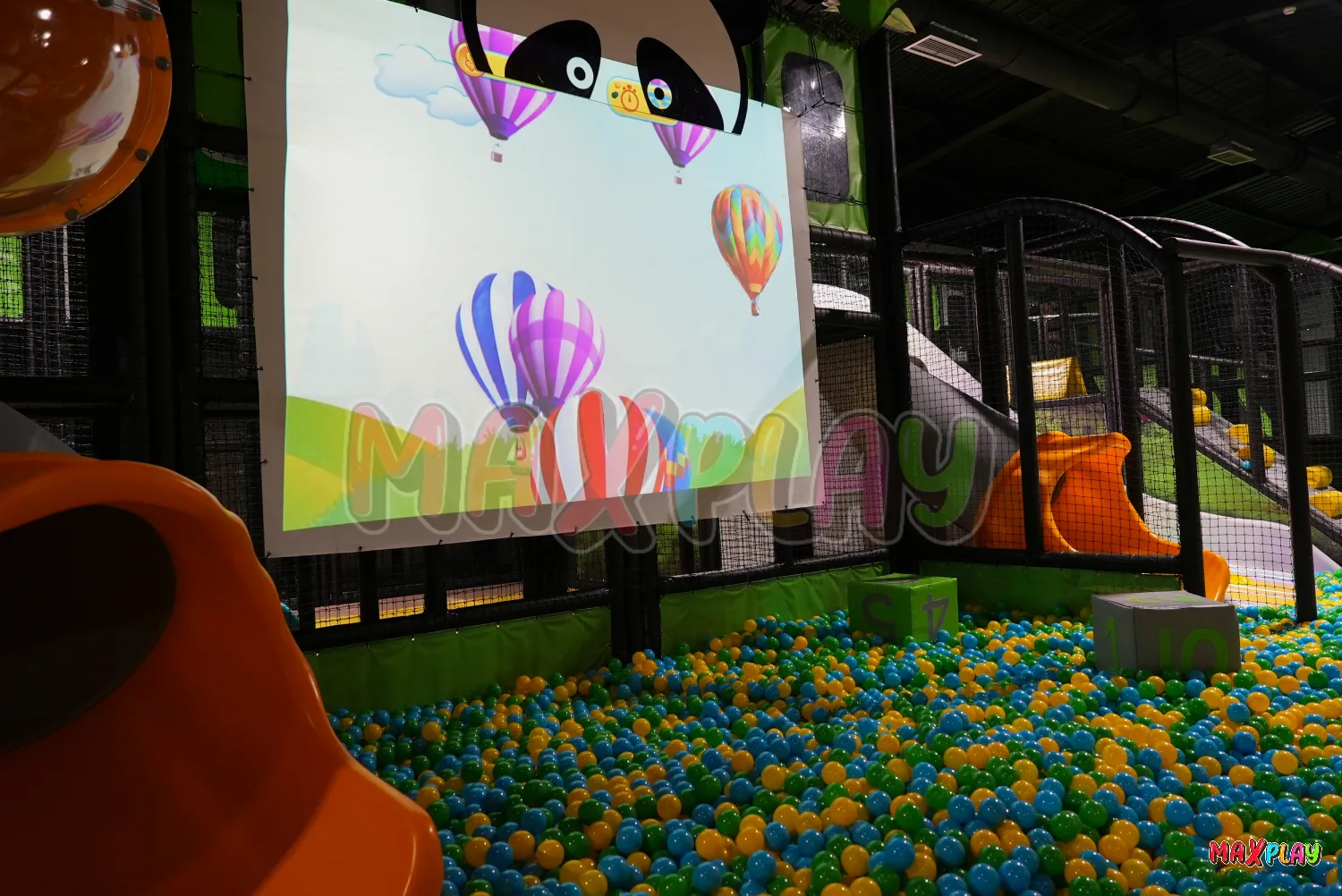
Savvy investors are also modernizing their facilities by integrating electronic, projection, and motion-reactive features into traditional soft play layouts. Incorporating responsive interactive playground equipment—such as interactive projection ball walls, light-up memory targets, and digital balance games—bridges the gap between active sports and digital entertainment. This hybrid approach expands the venue’s appeal to tech-savvy children aged 8 to 12, extending your demographic reach and opening up high-margin opportunities for private birthday party bookings.
Selecting Materials for Hygiene, Cleaning and Frequent Use
Daily commercial use subjects soft play components to heavy abrasive friction, mechanical tension, and continuous chemical cleaning. Selecting high-grade materials during fabrication directly determines your long-term maintenance costs and interior presentation. All play-surface vinyls must feature 0.55mm thick (approx. 650–900 g/m²), tear-resistant, flame-retardant, and non-toxic PVC coatings that withstand continuous scrubbing without cracking, peeling, or fading.
Material choices must meet strict chemical safety guidelines, specifically REACH compliance and zero phthalate or heavy metal content. Because young children interact directly with soft padded surfaces, non-porous and anti-microbial outer coatings are essential. High-density, closed-cell polyethylene foam inserts must resist moisture absorption, preventing fungal growth, bacterial accumulation, and interior foam breakdown when exposed to commercial disinfectant cleaners.
Maintenance workflows must be built directly into the center’s standard operating procedures:
- Daily Sanitation Protocols: Vacuuming ball pits with automated sanitization equipment; wiping high-touch handrails, tunnels, and toddler balance paths with hospital-grade, non-toxic disinfectants.
- Weekly Mechanical Audits: Inspecting zip-tie tensions, verifying high-stress webbing integrity, checking anchor point torques, and sanitizing deep ball reservoir pits.
- Monthly Deep-Clean Cycles: Sanitizing overhead netting structures, inspecting internal foam cores for structural compression, and conditioning all vinyl exterior skins.
Planning Delivery and Installation from Turkey to Czechia
Smooth international logistics and structured site execution protect projects from costly commercial delays. Sourcing from Turkey gives Czech operators a seamless, land-based freight route across Bulgaria, Serbia/Romania, Hungary, and Slovakia straight to Czechia. Standard road transit takes just a few days, eliminating the unpredictable customs holds and port congestion common to maritime supply chains.
Clear customs preparation simplifies clearance upon entry into the European Union. Turkish suppliers export under preferential trade frameworks, providing ATR movement certificates, detailed packing manifests, technical CE declarations, and EN 1176 material test reports that ensure smooth, tariff-compliant customs processing. Every pallet and structural steel bundle arrives systematically labeled to match installation blueprints, speeding up on-site staging and sorting.
On-site mechanical installation must be carried out or directly supervised by certified structural assembly technicians. A typical 300 to 800 square meter soft play installation takes approximately 10 to 18 business days to complete. Professional assembly teams erect structural pipe networks, apply protective foam insulation, tension surrounding containment nets, and anchor all landing surfaces to exact millimeter tolerances, ensuring total safety compliance before opening day.
Pre-Opening Checks Before Welcoming the First Visitors
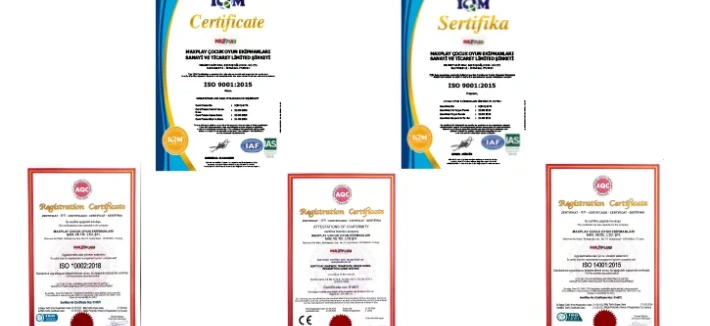
Before welcoming paying guests, every commercial play facility must complete an exhaustive technical commissioning audit. This process includes dynamic load testing of elevated structures, thorough checks of joint fastenings, and careful inspection of internal clear spaces. In Czechia, securing commercial operating permits and valid liability insurance requires a fully documented safety sign-off that confirms the entire installation strictly follows European safety regulations.
Trained safety inspectors use calibrated test probes to verify compliance across the entire installation. These specialized probes test for finger, head, and torso entrapment hazards across every tunnel entry, net seam, step transition, and platform junction. Every slide runout, swing arc, and landing zone must be evaluated to confirm that impact-absorbing floor materials provide adequate deceleration and fall attenuation.
Final commissioning also involves establishing daily operational workflows for staff. Floor supervisors should be trained on line-of-sight monitoring protocols, maximum capacity limits per play zone, fast-response first aid actions, and emergency evacuation management. Systematically testing every gate latch, locking access door, interactive electronics hub, and parent check-in terminal ensures that your grand opening operates safely, smoothly, and without service interruptions.

Soft Play Centre Development with MaxPlay
Developing a world-class indoor play facility demands an experienced manufacturing partner that combines structural engineering precision with proven international execution. MaxPlay is an established Turkish designer and manufacturer delivering complete, turnkey commercial indoor entertainment projects across Europe. The company engineers comprehensive solutions encompassing custom trampoline park equipment, modular soft play equipment wholesale supply, and expansive bespoke play labyrinths tailored precisely to your property’s architectural layout.
Working with MaxPlay gives commercial operators direct factory access to certified premium equipment at highly competitive manufacturing pricing. Our production lines use only heavy-duty, certified, non-toxic raw materials that meet or exceed all EN 1176 and EN 1177 safety standards. By operating as a premier indoor playground equipment manufacturers specialist and direct trampoline park manufacturer, MaxPlay eliminates third-party trading markups, ensures fast 4 to 7 day road freight delivery to Czechia, and provides end-to-end technical support from conceptual 3D layout design to final on-site installation.
Whether you are launching a new family entertainment center in Prague, outfitting a shopping center leisure zone in Brno, or upgrading an existing hospitality venue, our engineering team handles every phase of development to maximize visitor capacity, safety, and long-term return on investment. We provide full architectural planning and project visualization completely free of charge. Request your free custom project design and engineering consultation with MaxPlay today to turn your commercial indoor venue into a profitable, high-performing reality.