





Turnkey Indoor Playground Projects in Bulgaria: What to Expect
Investing in Turnkey Indoor Playground Projects in Bulgaria requires more than selecting colourful equipment and filling an available floor area. A commercially successful venue must combine market positioning, age-appropriate attractions, visitor circulation, operational efficiency, safety engineering and a clear revenue model. Whether the project is planned for a shopping mall in Sofia, a hospitality property on the Black Sea coast or a regional family entertainment venue, the decisions made before production determine how efficiently the business will operate after opening.
As MaxPlay Playground Equipment, we provide professional solutions for indoor playgrounds and soft play areas. We design, manufacture, install, and assemble indoor playground equipment and soft play systems for commercial spaces. Contact us for turnkey indoor playground projects.
| Landline: | 0216 377 10 88 |
| Mobile / WhatsApp: | 0532 069 53 17 |
| E-Mail: | info@maxplay.com.tr |
| Address: | Google Maps |
You can contact us for all your projects across Türkiye and international markets.
Our Services:
- Trampoline Manufacturing – Trampoline Park Installation
- Ball Pit Manufacturing – Ball Pit Playground Installations (with slides, etc.)
- Interactive Play Systems (Moving Soft Play Toys & Equipment)
- Sand Pit – Sand Play Areas
- Playgrounds and Role-Play Houses for Kindergartens & Nurseries
- Indoor playgrounds for businesses such as shopping malls, cafés, restaurants, etc.
- And all customized playground projects tailored to your specific needs.
In practice, the most successful projects begin with a detailed assessment of the building, target audience, expected visitor capacity and local competition. A professional indoor playground supplier should therefore evaluate ceiling height, column positions, emergency exits, mechanical systems, entrance visibility and parent waiting areas before recommending any equipment. This approach prevents the common mistake of purchasing an attractive indoor play set that looks impressive in a catalogue but does not support the venue’s actual capacity, customer profile or commercial goals.
Understanding Bulgaria’s Growing Demand for Indoor Family Entertainment Spaces
The Bulgaria indoor entertainment market is developing as shopping centres, retail parks, hotels and independent operators look for activities that can attract families throughout the year. Indoor venues are particularly valuable because they are not heavily affected by rain, cold weather or extreme summer heat. This gives weather-independent play facilities a more predictable operating calendar than many outdoor attractions and allows operators to build recurring revenue through daily admissions, birthday parties, school visits and organised group events.
The strongest demand is not limited to large cities. Sofia, Plovdiv, Varna and Burgas provide clear opportunities, but regional cities can also support well-planned indoor children’s activity centres when the concept reflects local spending habits and family expectations. In real-world operation, families rarely choose a venue based only on the number of attractions. Cleanliness, staff visibility, seating comfort, food service, safety and age separation can be equally important. This is why successful family entertainment centres (FEC) are designed as complete visitor experiences rather than collections of unrelated play products.
For the children’s leisure industry, location must also be assessed in relation to surrounding businesses. A play centre inside a mall may benefit from existing footfall, while a standalone facility may offer lower rent and greater flexibility but require a stronger marketing budget. Investors considering a commercial recreation investment should compare rental costs, parking access, nearby schools, family demographics and competing shopping mall attractions before finalising the concept.
How to Plan a Profitable Indoor Playground Project from Day One
Professional commercial playground planning starts with a feasibility study rather than an equipment list. The study should estimate the reachable family population, admission price, peak-hour capacity, average visit duration, staffing requirements and additional revenue opportunities. These figures help determine whether the facility should focus on soft play, active sports, birthday events, toddler activities or a broader entertainment mix. Without this analysis, operators may spend too much on attractions that do not match the market or too little on facilities that influence repeat visits.
A practical feasibility study should include conservative, expected and optimistic scenarios. For example, revenue projections should not assume that the venue will operate at full weekend capacity throughout the year. Rent, utilities, cleaning, insurance, staff, maintenance, marketing and replacement parts must be included in investment planning. One of the situations most frequently encountered in practice is an investor budgeting for equipment and construction but underestimating working capital for the first months of operation.
A revenue-focused layout also depends on visitor flow analysis. Reception, shoe storage, party rooms, food service and exits should not interrupt the main circulation path. Efficient planning improves operational efficiency because staff can supervise larger areas without unnecessary blind spots. The resulting entertainment business model should connect design decisions to measurable outcomes such as capacity, dwell time, repeat visits, party bookings and secondary spending. This is the foundation of revenue-focused playground design.
Choosing the Right Mix of Play Equipment for Bulgarian Family Entertainment Centres
The right equipment mix depends on the target age range and the behaviour expected inside the venue. Multi-level soft play structures work well as a central attraction because they combine crawling, climbing, balancing, sliding and obstacle-based activities within one controlled system. However, they should not be expected to serve every age group equally. A six-year-old seeking physical challenge and a two-year-old learning basic movement skills require different equipment, fall protection and supervision conditions.
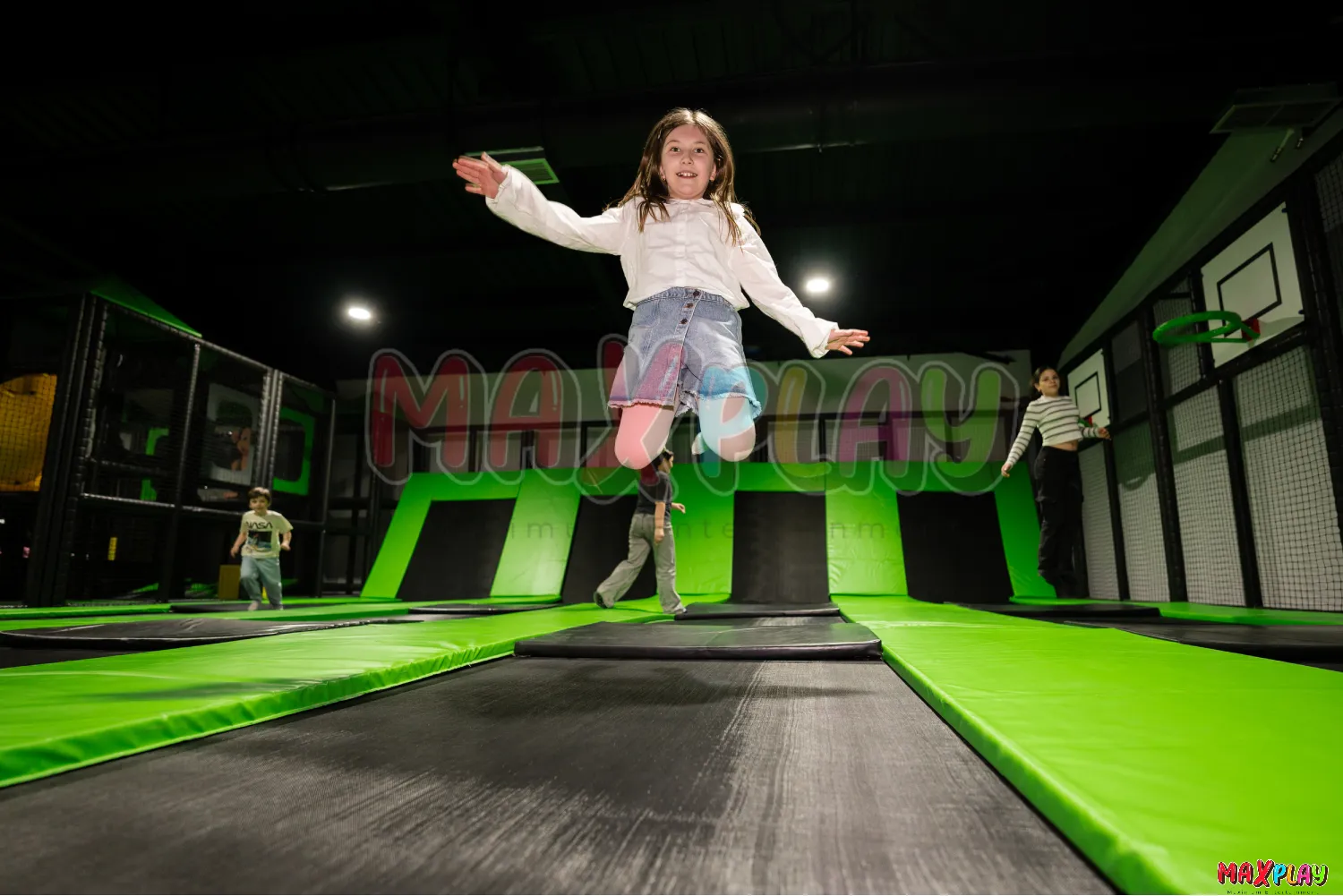
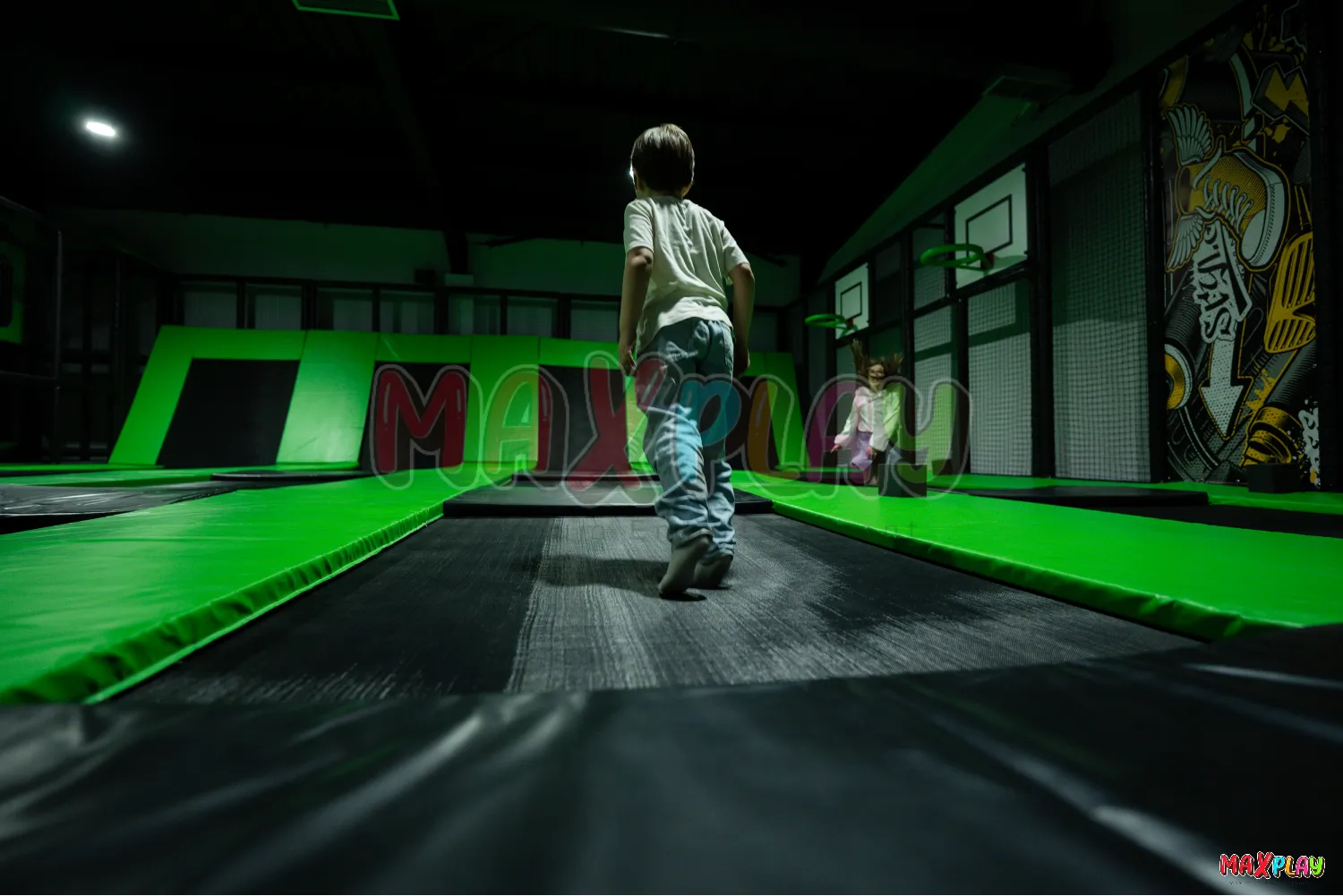
For larger facilities, trampoline park equipment, a ninja course, climbing walls and other adventure play systems can increase appeal among older children and teenagers. These attractions require careful engineering, capacity rules and operational supervision. In actual use, high-energy attractions should not discharge users directly into toddler circulation or parent seating zones. Separating activity levels reduces collisions and makes the facility easier to manage during busy periods.
Dedicated toddler play areas should include low platforms, soft steps, sensory panels, small slides and easy-to-supervise access points. Ball pools can support younger children when their depth, entry design, cleaning procedures and surrounding barriers are correctly planned. Meanwhile, interactive playground equipment and role-play villages add cognitive, imaginative and social activities. A balanced venue should therefore combine physical, sensory, creative and social play instead of relying on one attraction category.
Why More Bulgarian Investors Source Indoor Playground Equipment from Turkey?
Working with a Turkish indoor playground manufacturer gives Bulgarian investors access to a geographically close production base with established European logistics routes. Compared with distant supply markets, transportation from Türkiye can be organised more quickly, communication is easier and installation teams can reach Bulgarian project sites without the long mobilisation periods associated with intercontinental delivery. This geographical advantage is especially valuable when opening dates are connected to lease obligations, mall launch schedules or seasonal tourism demand.
Factory-direct cooperation can also provide better control over technical details. Through factory-direct purchasing, buyers can review materials, approve colour palettes, revise layouts and coordinate production without relying on multiple trading companies. A supplier with European export expertise should also be able to prepare packing lists, product documents, loading plans and customs paperwork in a format that supports efficient border procedures and site delivery.
Türkiye competes with China and other manufacturing markets on price while offering shorter delivery routes, easier project communication and greater flexibility for customised production. Competitive pricing should not mean selecting the cheapest quotation. The more useful comparison considers steel specifications, foam density, covering quality, netting, connection systems, warranty terms and installation support. A capable turnkey project supplier combines competitive manufacturing costs with custom playground production, certified quality and coordinated international shipping.
MaxPlay Playground Equipment Overview
| Equipment Name | Description | Key Benefits |
| Ball Pool | Colorful pit filled with balls for safe sensory play. | Safe fun for toddlers, easy to clean, encourages motor skills. |
| Trampoline | High-quality indoor trampolines. | Builds balance and strength, child-safe design, durable materials. |
| Interactive Game Sets | Digital and physical interactive play stations. | Boosts learning, cognitive skills, and engagement. |
| Profession Houses | Role-play houses designed for kids. | Encourages creativity, social interaction, and imagination. |
| Trampoline Park | Large-scale trampoline structures. | Suitable for older kids, high durability, safe design. |
| Roller Slide | Conveyor-style (roller) slides for continuous fun. | Efficient design, fun motion play, safe structure. |
| Tower Slide | Tower slides designed for adventure play. | Exciting design, strong safety standards, eye-catching feature. |
| Climbing Wall | Indoor climbing walls. | Builds strength and coordination, safe grips, customizable difficulty levels. |
| Volcano Slide | Volcano-shaped slides with climbing and sliding features. | Combines climbing and sliding, unique design, fun for multiple age groups. |
The Advantages of Bespoke Playground Design Over Standard Modular Solutions
Standard modules can be suitable for small budgets, simple installations and venues that require a basic play corner. However, they often leave unused spaces around columns, irregular walls or low ceiling areas. Bespoke indoor playground design uses the building itself as part of the engineering process. Dimensions, circulation routes and play activities are developed specifically for the available floor plan, allowing more of the rentable area to generate functional or commercial value.
In real projects, space optimisation does not mean placing as much equipment as possible into the venue. Excessive density can reduce visibility, create congestion and make the playground feel smaller. Effective commercial playground engineering balances activity capacity with safe circulation, maintenance access and staff supervision. For example, a low-ceiling section may be used for toddler activities or role play, while higher areas can accommodate tower slides, climbing routes or multi-level obstacles.
Customisation also allows investors to build stronger branded entertainment concepts. Custom-themed play centres can reflect a city, jungle, space, ocean, construction or fantasy concept through colour, graphics and architectural details. This creates a more memorable environment than standard catalogue combinations. Well-planned tailor-made play environments support customer experience design by connecting the entrance, equipment, party rooms, signage and parent areas within one visual identity.
What a Complete Turnkey Playground Project Really Includes
A genuine turnkey service begins with concept development. At this stage, the manufacturer should review the venue plan, target audience, business model and budget before creating a design direction. The next step is usually 3D playground design, which helps the investor understand equipment positions, colours, themes and circulation. The 3D visual is not only a sales image; it should correspond to measurable dimensions and a technically buildable system.
The project then moves into engineering services and production management. Structural frames, platforms, connection points, protective barriers and attraction-specific components must be prepared according to approved drawings. In practice, design changes made after production begins can create delays and additional costs. This is why dimensions, colours, access requirements and equipment lists should be formally approved before manufacturing.
Complete turnkey commercial solutions should also cover packing, loading, delivery coordination, installation planning, on-site assembly and final checks. Professional project coordination keeps production, construction and site preparation aligned. After opening, operators may require spare parts, maintenance guidance, technical advice or expansion support. Reliable after-sales support therefore has direct value throughout the equipment lifecycle and should be evaluated before signing the supply agreement.
Safety Standards, Material Quality and Certifications Every Bulgarian Buyer Should Verify
Safety should be evaluated through documentation, engineering and practical design details. An EN1176 certified playground should incorporate appropriate protection against entrapment, uncontrolled falls, sharp edges, unsafe openings and foreseeable movement conflicts. EN 1176 establishes safety requirements for playground equipment, while specific parts address different equipment categories and operational considerations. Buyers should verify which standards apply to the selected attractions rather than accepting a general statement that a product is “European standard.”
An experienced buyer should also review the complete material specification. Important points include steel structure, welding quality, platform strength, foam density, protective covering, safety netting, fasteners and impact-absorbing surfaces. Fire-retardant materials are particularly important in enclosed commercial venues, although the required fire classification should be confirmed according to the building, insurer and local authority. Surfaces accessible to children should be suitable for regular cleaning and produced from materials appropriate for child-focused environments.
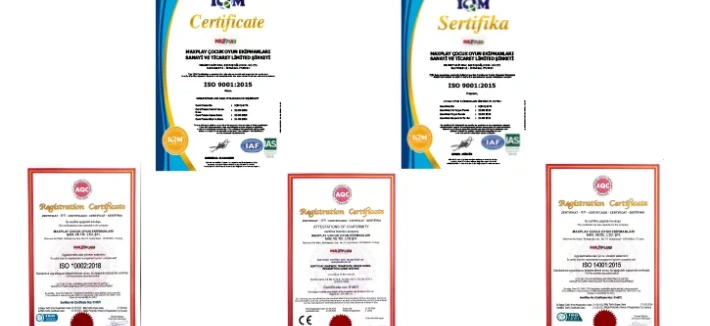
CE-compliant equipment, production certificates and quality management documentation provide useful evidence, but they should be supported by project-specific drawings and installation records. MaxPlay states that its products carry CE and several ISO and TS EN certifications, including relevant parts of TS EN 1176. Effective quality assurance also continues after manufacturing through packing control, assembly checks and maintenance documentation. A professional commercial playground inspection should assess the installed system, not only individual factory components. These procedures contribute to safer and more durable indoor play systems.
How Smart Space Planning Improves Visitor Experience and Business Performance
A successful indoor playground layout separates movement into clear zones. Children entering the play structure, parents walking to seating areas, staff serving party rooms and employees transporting cleaning supplies should not compete for the same narrow passage. Good customer circulation reduces congestion at reception and helps families understand the venue immediately. In real use, entrance bottlenecks often occur because ticketing, waivers, shoe storage and access control were planned as separate items rather than one operating sequence.
A practical zoning strategy may include toddler play, general soft play, high-energy attractions, role play, birthday rooms, café service and technical storage. The age boundaries should be understandable without constant staff explanation. Parent seating areas should provide visibility into key play zones while remaining outside active landing and circulation areas. Charging points, stroller parking, toilets and food service can further influence how long families remain in the venue.
Capacity planning must consider more than the theoretical number of children who fit inside the equipment. Reception queues, party groups, seating capacity, toilets and food service all create operational limits. A well-designed family-friendly venue design therefore connects the playground to the complete customer journey. This also improves operational workflow, allowing staff to supervise, clean, manage parties and respond to incidents more efficiently.
Logistics, Installation and Project Delivery Between Turkey and Bulgaria
Efficient cross-border project delivery begins before the equipment leaves the factory. The project site should be measured correctly, access routes confirmed and the installation area prepared according to the approved plan. Door dimensions, loading access, freight elevator capacity and storage space can affect unloading. One frequently encountered problem is equipment arriving while flooring, electrical work or ceiling installations are still incomplete, which increases handling risks and delays assembly.
Professional playground export logistics should include itemised packing, protective loading and a shipment sequence that supports installation. Türkiye’s proximity to Bulgaria enables fast road transport and flexible cargo options compared with shipments from China or other distant production centres. Shorter transit routes can also make replacement parts and future expansion deliveries easier. Accurate customs documentation and coordinated European transportation help prevent avoidable border delays.
The final schedule should combine manufacturing, transport, unloading and on-site assembly within one project timeline management system. Installation scheduling should also account for local holidays, shopping centre work permits and restricted delivery hours. A lower equipment price can lose its advantage if transport, accommodation, lifting equipment or installation labour are not clearly defined. Buyers should therefore request a complete responsibility matrix showing what the manufacturer provides and what must be arranged locally.
Future-Proofing Your Indoor Playground with Expandable and Interactive Attractions
A playground should be designed for its opening year and its future operating years. Modular playground expansion allows an operator to introduce new activities without replacing the entire structure. This may involve reserving connection points, maintaining clear access routes or placing equipment so that an adjacent area can later be integrated. Expansion planning is especially useful for businesses opening in phases or testing demand before committing to the full investment.
Technology-based attractions can also refresh the customer experience. Interactive play technology may include projection games, reaction walls, digital scoring, interactive climbing or movement-triggered activities. These digital play systems can support repeat visits because game content, targets or difficulty levels may change over time. However, they require reliable electrical planning, software support and access for maintenance. Technology should complement physical play rather than become a fragile feature that interrupts operations when technical support is unavailable.
Sensory play equipment can widen the appeal of the venue by introducing light, sound, texture and controlled movement experiences. These elements can be valuable in toddler zones and inclusive play environments when stimulation levels are carefully managed. A strong long-term investment combines durable physical attractions with scalable entertainment concepts and upgradeable playground solutions, allowing the operator to add novelty without rebuilding the complete facility.
Common Mistakes Investors Make When Launching an Indoor Playground Business
The first major mistake is evaluating suppliers only by total price. Effective supplier selection requires a line-by-line comparison of equipment scope, material specifications, certifications, installation responsibilities and warranty coverage. Two quotations with similar visuals may contain very different structural details. Buyers should ask whether flooring, graphics, electrical components, freight, customs support, assembly, accommodation and lifting equipment are included, because these items frequently become hidden project costs.
Another common issue is postponing maintenance planning until after opening. High-use parts, nets, covers, fixings, trampolines and interactive components need different inspection routines. The operator should receive daily, monthly and periodic control guidance, along with spare-part procedures. In real operation, small defects become expensive when they are not identified early. A clear maintenance programme protects the equipment lifecycle and reduces preventable closures.
A successful commercial playground investment also depends on realistic operational planning. Oversized venues may face high rent and staffing costs, while undersized venues can become overcrowded during peak hours. This type of project is suitable for investors prepared to manage customer service, hygiene, staff training, maintenance and local marketing. It is less suitable for buyers expecting equipment alone to generate automatic revenue. Controlling operational risks, measuring customer behaviour and adapting pricing or attractions over time are essential for ROI optimisation and a sustainable playground business strategy.
Why MaxPlay Is a Trusted Turnkey Indoor Playground Partner for Projects in Bulgaria
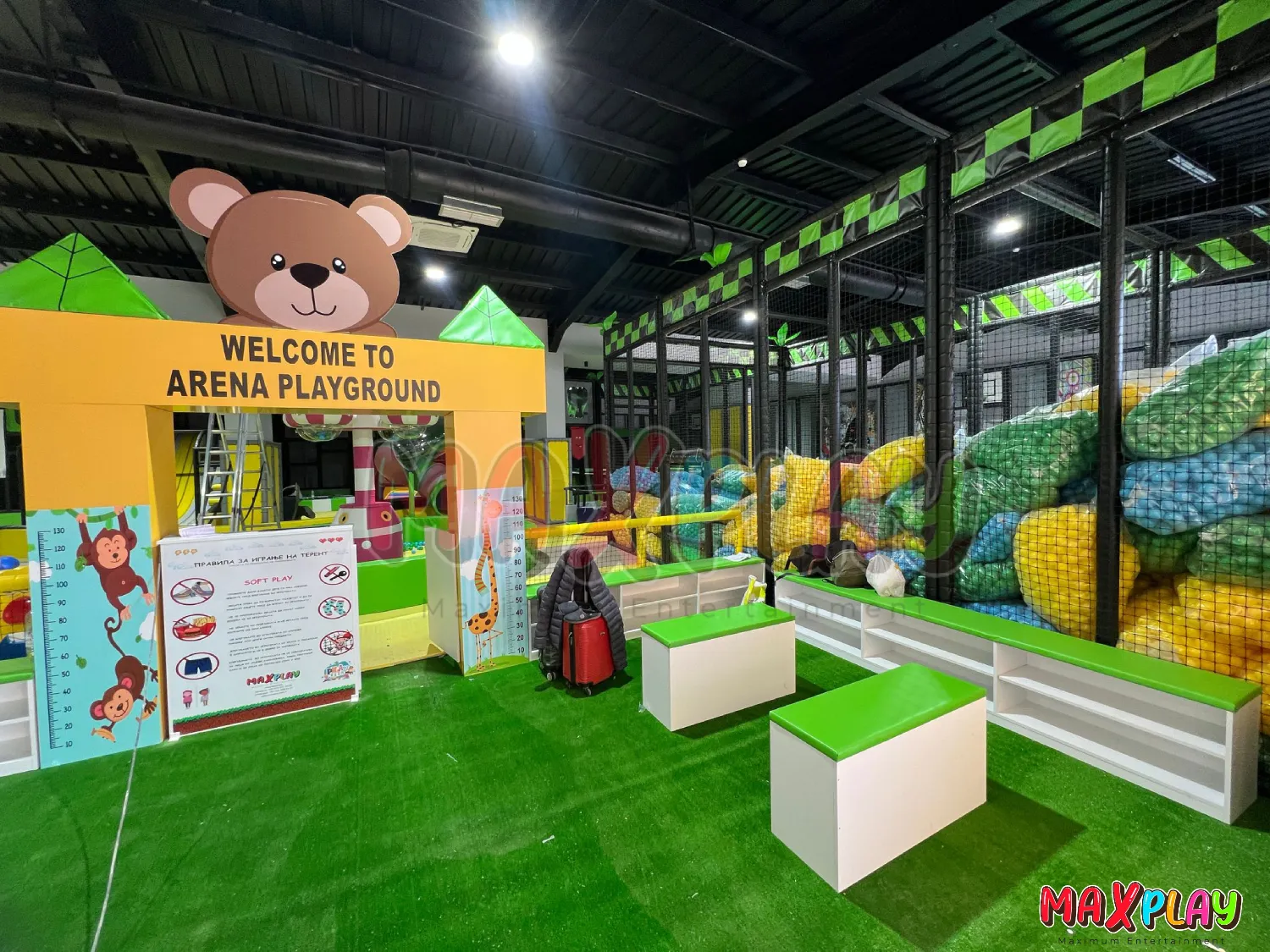
MaxPlay specialises in the design, engineering, production and implementation of commercial indoor playground and entertainment systems. Its solutions are developed for shopping malls, independent family entertainment venues, hotels, restaurants, nurseries and children’s activity centres. As a turnkey indoor playground manufacturer, MaxPlay can coordinate concept design, area planning, customised production, international delivery, professional installation and technical support within one project structure. The company’s official materials describe its work across design, manufacturing, assembly and international commercial play projects.
The product range supports projects requiring indoor soft playground equipment, ball pools, toddler zones, climbing activities, role-play areas, ninja systems, interactive games and trampoline park equipment. Rather than operating only as one of the conventional soft play manufacturers, MaxPlay approaches each venue through commercial playground engineering and custom playground production. This gives Bulgarian investors access to project-based solutions instead of being limited to standard modules. Businesses comparing indoor playground equipment manufacturers, soft play equipment wholesale options or a specialised trampoline park manufacturer can evaluate equipment quality together with layout efficiency, installation support and after-sales service.
Manufacturing in Türkiye enables rapid road shipment and flexible cargo arrangements to Bulgaria. It also creates a practical alternative to sourcing from China and other distant markets: competitive prices, shorter transportation times, faster communication and easier customisation can be combined with first-class materials, certified production and child-appropriate manufacturing processes. MaxPlay supports European projects through international project management, organised installation support, responsive after-sales service and experience as a Turkish playground exporter. For investors seeking indoor playground solutions Europe, a commercially planned ball pool, a complete soft play centre or an experienced family entertainment centre specialist, MaxPlay provides free project planning based on the venue’s dimensions and business goals.