





Top Indoor Playground Equipment Manufacturers in Finland: Leading the Industry
Selecting the right manufacturer for a commercial children’s entertainment facility requires more than comparing equipment catalogs or requesting the lowest quotation. Businesses researching Top Indoor Playground Equipment Manufacturers in Finland need to evaluate engineering capabilities, operational safety, material performance, installation expertise, and long-term maintenance requirements. For Finnish investors, the decision also involves balancing Nordic design expectations with realistic construction budgets, reliable international logistics, and equipment that can withstand intensive daily use.
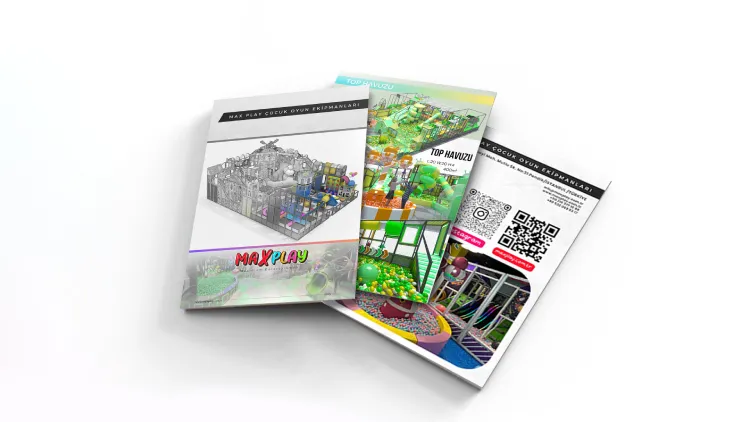
As MaxPlay Playground Equipment, we provide professional solutions for indoor playgrounds and soft play areas. We design, manufacture, install, and assemble indoor playground equipment and soft play systems for commercial spaces. Contact us for turnkey indoor playground projects.
| Landline: | 0216 377 10 88 |
| Mobile / WhatsApp: | 0532 069 53 17 |
| E-Mail: | info@maxplay.com.tr |
| Address: | Google Maps |
You can contact us for all your projects across Türkiye and international markets.
Our Services:
- Trampoline Manufacturing – Trampoline Park Installation
- Ball Pit Manufacturing – Ball Pit Playground Installations (with slides, etc.)
- Interactive Play Systems (Moving Soft Play Toys & Equipment)
- Sand Pit – Sand Play Areas
- Playgrounds and Role-Play Houses for Kindergartens & Nurseries
- Indoor playgrounds for businesses such as shopping malls, cafés, restaurants, etc.
- And all customized playground projects tailored to your specific needs.
Finland’s family entertainment sector presents distinctive opportunities. Long winters, limited daylight during colder months, and demand for accessible family recreation make indoor activity facilities an important part of the leisure landscape. However, a successful venue depends on much more than an attractive indoor play set or a collection of colorful attractions. It requires a coordinated environment where children can explore safely, parents can supervise comfortably, and operators can manage visitor flow without unnecessary staffing or maintenance costs.
For investors comparing domestic suppliers with commercial playground manufacturers Europe and international production partners, Turkish manufacturers offer another procurement route. Factory-direct manufacturing, customizable designs, competitive production costs, and established transport connections with European markets can make Turkey an attractive option. The key is selecting a supplier that combines commercial engineering expertise with verifiable quality assurance and dependable project execution.
The Indoor Playground Manufacturing Industry and Commercial Play Market in Finland
The Finnish indoor entertainment industry serves several business models, including standalone family entertainment centers, shopping mall attractions, activity parks, hotel recreation areas, and smaller neighborhood play cafés. Although these facilities share a focus on children’s recreation, their commercial requirements differ significantly. A shopping center may prioritize short visits and high visibility, while a dedicated entertainment venue typically needs enough activity variety to encourage longer stays and repeat attendance.
Finland’s climate creates a practical advantage for year-round indoor activity centers, but it also introduces operational challenges. During cold and wet periods, demand may concentrate around weekends, school holidays, and afternoon visiting hours. Operators must plan for fluctuating occupancy, efficient entrance management, adequate seating, and convenient storage for winter clothing. A facility designed only around its theoretical maximum capacity may perform poorly when large groups arrive simultaneously.
In practical project planning, one frequently overlooked issue is the relationship between available floor area and commercially usable space. A 500 m² property does not necessarily provide 500 m² for play equipment. Reception counters, circulation routes, toilets, seating, emergency exits, and service areas all reduce the actual installation footprint. Experienced manufacturers account for these constraints before recommending structures, ensuring that equipment capacity aligns with the building rather than forcing a standard catalog configuration into an unsuitable layout.
What Defines a Leading Playground Equipment Manufacturer? Engineering Expertise, Product Quality and Project Experience
A reliable indoor playground equipment manufacturer should be evaluated as an engineering and project delivery partner, not simply as a seller of play structures. Manufacturing capability includes structural calculations where applicable, accurate component fabrication, material traceability, controlled assembly processes, and technical drawings that installers can follow. These capabilities become particularly important in multi-level installations, where small dimensional errors can create difficulties during on-site assembly.
Quality also depends on details that are rarely visible in promotional photographs. Welded connections, protective padding thickness, net attachment methods, panel edges, fastening systems, and accessible maintenance points all affect long-term performance. High-quality soft playground equipment should combine durable materials with appropriately designed impact protection and surfaces suitable for routine cleaning. Premium-grade construction is best demonstrated through specifications, inspection records, test documentation, and material samples rather than unsupported quality claims.
A practical assessment should also consider project references and the manufacturer’s ability to solve site-specific problems. For example, a venue with limited ceiling height may require a redesigned climbing route, while a building with structural columns may need custom platforms and protective enclosures. Manufacturers with genuine project experience can explain these trade-offs, identify restrictions before production, and provide realistic solutions without compromising the intended visitor experience.
Comparing Finnish, European and Turkish Playground Equipment Manufacturers for Commercial Projects
Finnish and other European suppliers may offer advantages in local communication, regional installation networks, familiarity with Nordic commercial properties, and accessible after-sales services. These benefits can be valuable for operators who prioritize nearby technical assistance or require extensive coordination with local contractors. However, pricing and production capacity vary considerably between manufacturers, making individual quotations more informative than country-based assumptions.
Turkish indoor playground manufacturers can offer competitive alternatives because of their manufacturing infrastructure, labor-cost structures, access to industrial materials, and experience producing customized equipment for export. Compared with some Western European production models, Turkish factory-direct suppliers may deliver a more favorable balance between manufacturing costs and customization flexibility. Against Chinese suppliers, Turkish production can offer logistical advantages for Finnish projects, including potentially shorter transit times and more manageable communication across time zones. Actual differences depend on the supplier, project scope, shipping method, and production schedule.
A meaningful European playground supplier comparison should therefore evaluate equivalent specifications rather than comparing headline prices alone. Two quotations may look similar while covering very different obligations. One could include technical drawings, protective flooring, freight coordination, installation supervision, and spare parts, while another covers equipment manufacturing only. In real procurement situations, the lowest initial offer can become the more expensive choice once missing services, installation adjustments, and replacement components are included.
MaxPlay Playground Equipment Overview
| Equipment Name | Description | Key Benefits |
| Ball Pool | Colorful pit filled with balls for safe sensory play. | Safe fun for toddlers, easy to clean, encourages motor skills. |
| Trampoline | High-quality indoor trampolines. | Builds balance and strength, child-safe design, durable materials. |
| Interactive Game Sets | Digital and physical interactive play stations. | Boosts learning, cognitive skills, and engagement. |
| Profession Houses | Role-play houses designed for kids. | Encourages creativity, social interaction, and imagination. |
| Trampoline Park | Large-scale trampoline structures. | Suitable for older kids, high durability, safe design. |
| Roller Slide | Conveyor-style (roller) slides for continuous fun. | Efficient design, fun motion play, safe structure. |
| Tower Slide | Tower slides designed for adventure play. | Exciting design, strong safety standards, eye-catching feature. |
| Climbing Wall | Indoor climbing walls. | Builds strength and coordination, safe grips, customizable difficulty levels. |
| Volcano Slide | Volcano-shaped slides with climbing and sliding features. | Combines climbing and sliding, unique design, fun for multiple age groups. |
Popular Indoor Playground Systems for Finnish Family Entertainment Centers, Shopping Malls and Activity Parks
Choosing family entertainment center equipment Finland investors can operate profitably requires matching attractions to the venue’s audience, visit duration, and available space. Smaller commercial properties often benefit from compact climbing structures, sensory features, and role-play activities. Larger destinations may combine physical challenges, slides, interactive experiences, and supervised adventure attractions to serve several age groups.
For a shopping mall location, modular indoor play equipment offers flexibility when the available footprint has irregular boundaries or may change during future renovations. Modular systems can be configured around structural columns, service access points, and circulation areas. They may also allow selected components to be replaced or refreshed without rebuilding the entire facility, provided the original engineering design supports modification.
A frequent planning mistake is investing too heavily in one visually impressive attraction while neglecting supporting activities. A large slide may attract attention, but children need meaningful activities between slide runs. Effective commercial layouts combine movement, exploration, social interaction, and opportunities for different abilities. This creates a more balanced visitor experience and reduces congestion around a single popular feature.
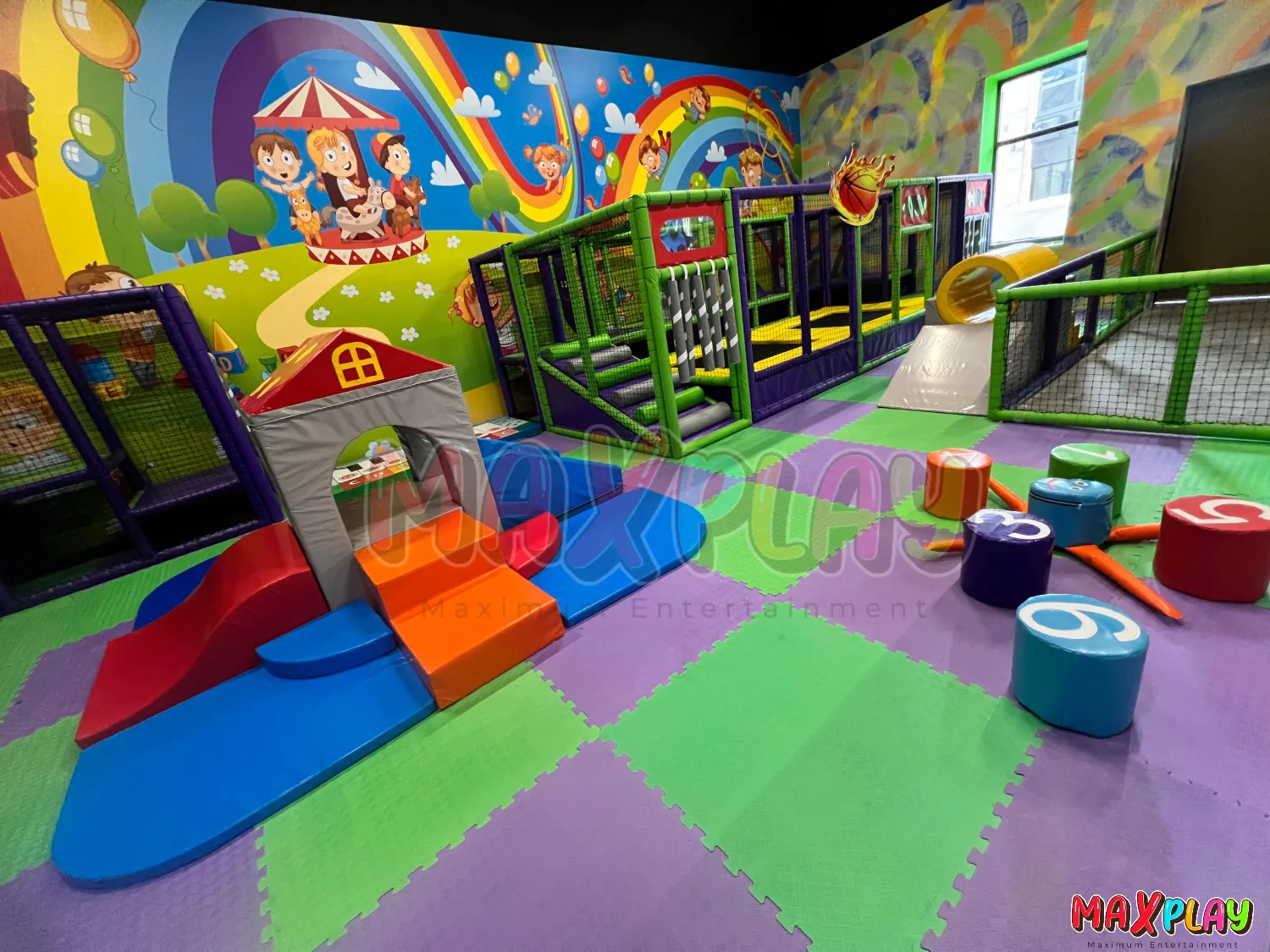
Soft Play Structures, Adventure Courses, Trampoline Zones and Interactive Play Equipment for Different Age Groups
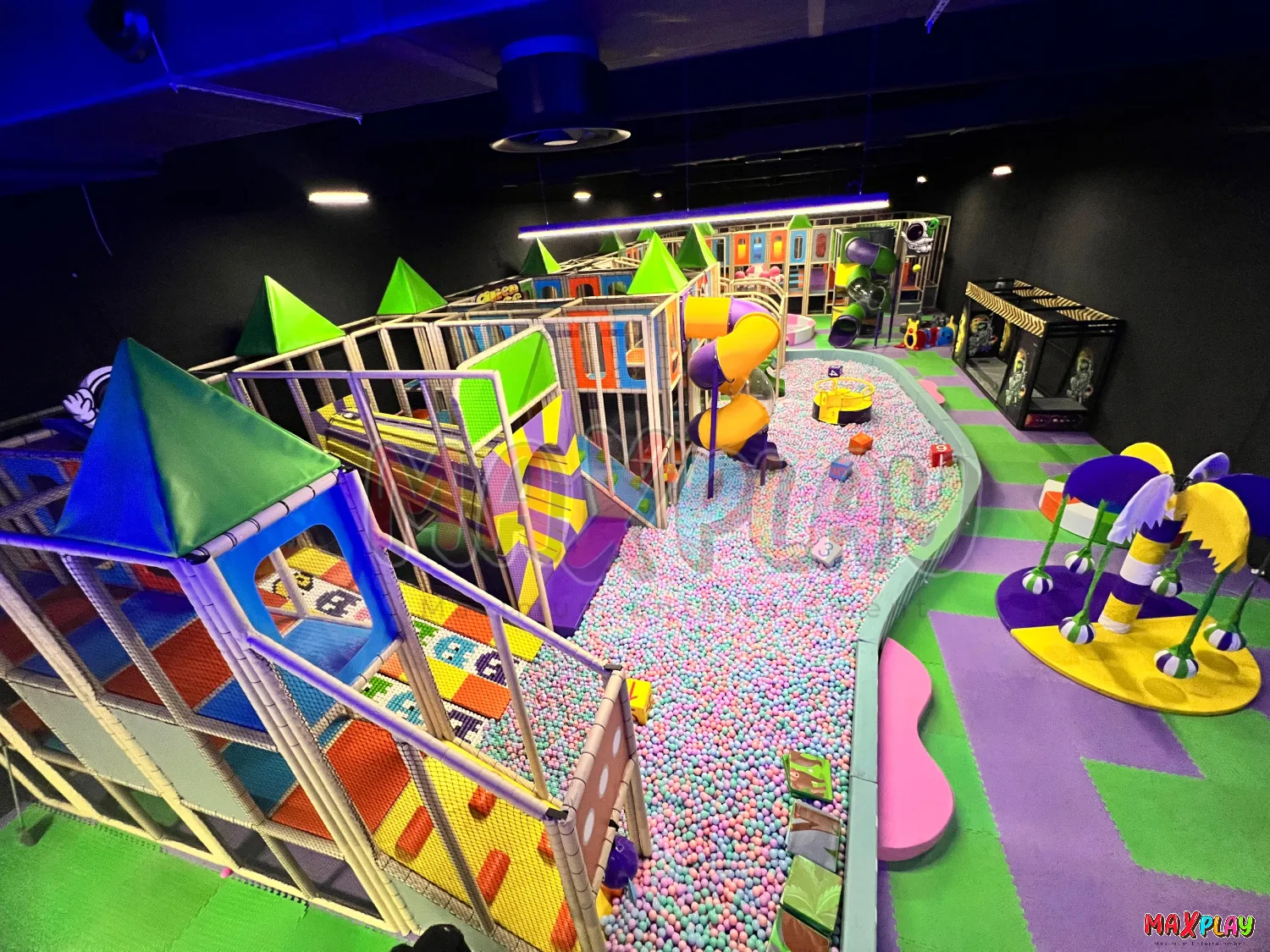
Multi-level soft play structures are suitable for facilities seeking high activity density within a defined footprint. Platforms, crawl tunnels, climbing obstacles, enclosed slides, and a ball pool can form a connected activity sequence. However, vertical development must be matched to ceiling clearance, visibility, access for rescue or assistance, and appropriate separation between age groups. A tall structure is not automatically more commercially effective than a carefully designed lower-level layout.
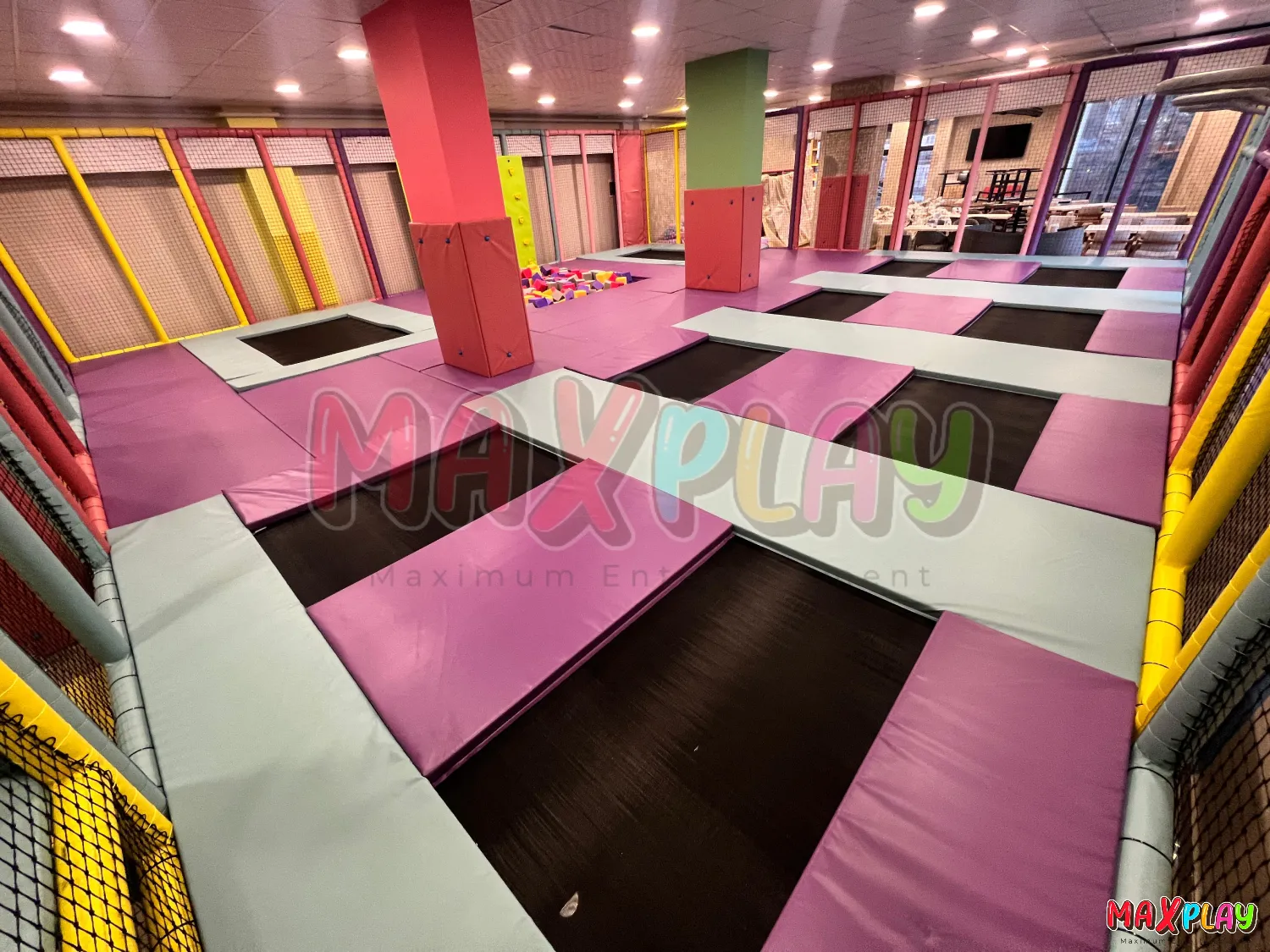
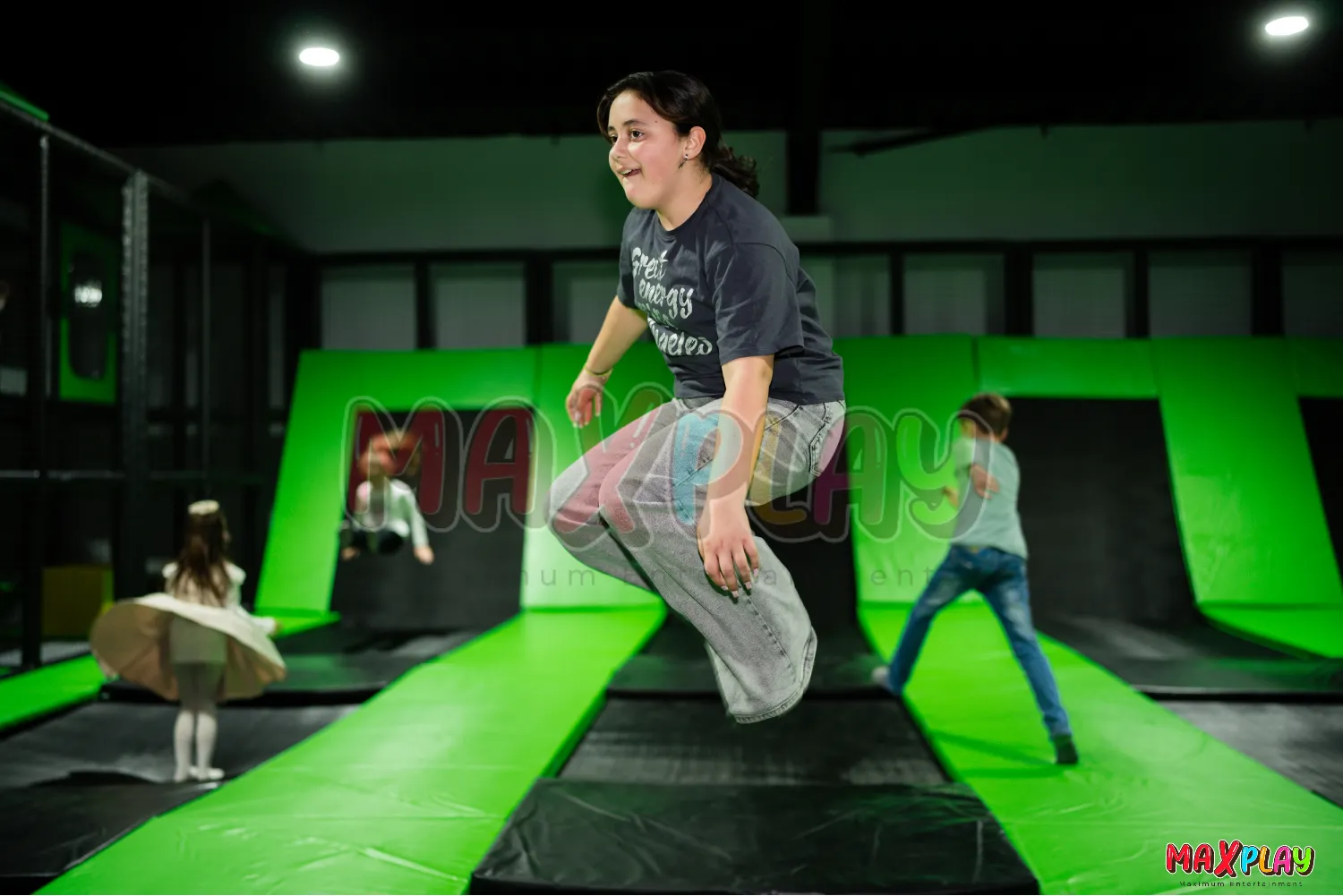
For older children and teenagers, indoor adventure playground systems and commercial trampoline park equipment may provide a more physically demanding experience. Adventure courses require careful consideration of fall protection, access arrangements, supervision, and rescue procedures. Trampoline installations introduce additional risks involving simultaneous users, uncontrolled movement, and landing zones. An experienced trampoline park manufacturer should address these requirements through activity-specific design, appropriate documentation, and clear operating procedures rather than treating trampoline zones as ordinary soft play extensions.
Meanwhile, interactive playground equipment and interactive children’s play installations can add variety through projection games, responsive surfaces, sensory panels, and collaborative challenges. These features are particularly useful when operators want to offer activities beyond climbing and jumping. In actual operation, however, electronic attractions require maintenance planning, software support, reliable power connections, and equipment that can tolerate repeated use. The most successful layouts use technology to complement physical play rather than making the entire visitor experience dependent on electronic systems.
Designing Year-Round Indoor Play Environments for Finland’s Nordic Climate and Family Leisure Needs
Effective Nordic indoor playground design begins with understanding how families use enclosed recreational spaces throughout the year. Finnish venues may experience considerable seasonal variation in daylight, outdoor conditions, and visitor demand. Indoor facilities therefore need consistent lighting, comfortable temperatures, reliable ventilation, and layouts that remain inviting during both short weekday visits and busy holiday periods.
The most important environmental consideration is not simply maintaining a warm indoor temperature. Active children generate heat, while parents may spend extended periods sitting nearby. Ventilation design, occupancy assumptions, humidity management, and air distribution should be coordinated with building specialists. Materials used in indoor play equipment should also tolerate frequent cleaning and the operating conditions of the specific facility. Condensation, inadequate airflow, and poorly accessible surfaces can create maintenance problems even when the equipment itself is structurally sound.
For younger visitors, a dedicated toddler play set indoor configuration should emphasize low-level movement, sensory discovery, age-appropriate obstacles, and separation from more energetic activities. A toddler zone located directly beside the exit of a high-speed slide is a poor layout choice, regardless of how attractive it appears in a 3D rendering. Practical planning should prioritize predictable circulation, clear supervision lines, and calm transitions between activity zones.
Playground Safety and Quality Assessment: EN 1176, EN 1177, Material Durability and Technical Documentation
Safety is a central procurement consideration for any operator purchasing commercial soft play equipment. European standards such as playground safety standards EN 1176 and EN 1177 provide important reference frameworks for playground equipment and impact-attenuating surfacing within their applicable scopes. However, not every indoor attraction is governed by the same standard. Fully enclosed play equipment, trampoline facilities, and other specialized attractions may require additional or different standards, including EN 1176-10 and EN ISO 23659 where applicable. Finnish project requirements should be confirmed with qualified safety professionals and relevant authorities.
The selection of impact-absorbing playground surfacing must reflect the equipment’s fall characteristics, intended use, and applicable testing requirements. Surface appearance alone does not establish protective performance. Buyers should request relevant test reports, material specifications, installation instructions, and evidence supporting the suitability of the proposed surface for the planned application. Foam density, thickness, durability, and performance under repeated impacts all deserve attention.
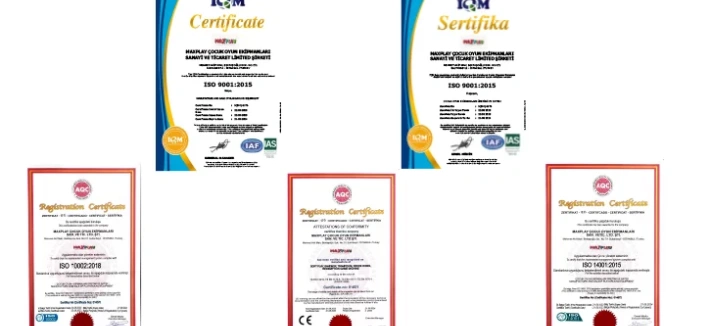
Health-conscious manufacturing also requires material-level verification. Operators should examine cleaning compatibility, restricted substance requirements, fire-performance documentation, and relevant declarations for plastics, coatings, textiles, and foam components. CE marking should not be assumed to apply universally to every playground structure; its applicability depends on the product and relevant legislation. Reputable commercial soft play equipment suppliers should clearly distinguish verified certifications from general manufacturing claims, provide traceable documentation, and support independent inspection where necessary.
Why Turkey Is a Strategic Sourcing Alternative for Finnish Indoor Playground Investors?
Turkey’s position between European markets and established manufacturing supply chains makes it a practical sourcing destination for commercial entertainment equipment. Factory-direct playground equipment procurement can reduce intermediary costs, simplify technical communication, and allow investors to work directly with production teams responsible for fabrication and quality control. These advantages are especially relevant for custom installations that require repeated design coordination.
Turkish playground equipment exports to Finland can be arranged through international road, sea, and multimodal freight networks. Depending on shipment dimensions, cargo volume, route availability, and the destination, Turkish suppliers may offer faster delivery arrangements than more distant Asian production locations. Nevertheless, shipping speed should always be confirmed through a written logistics schedule. Customs procedures, ferry connections, oversized cargo handling, and seasonal transport conditions can affect the final delivery date.
Price competitiveness is another important consideration, but it should be understood in relation to verified quality. A Turkish manufacturer using first-class materials, controlled production procedures, and documented safety testing may provide stronger overall value than a cheaper quotation based on less durable components. For Finnish investors, the objective is not simply to purchase the least expensive equipment; it is to obtain a reliable commercial installation at a competitive total project cost.
Custom Playground Manufacturing in Turkey: Bespoke Themes, 3D Layout Planning and Modular Equipment Integration
Custom indoor playground manufacturing allows investors to create an attraction that reflects the building, customer profile, and commercial positioning of the venue. Rather than selecting a fixed catalog package, the design process can begin with architectural drawings, ceiling dimensions, structural restrictions, target age groups, and expected visitor capacity. This information informs the arrangement of play zones, access routes, supervision points, and maintenance areas.
With bespoke playground design solutions, operators can develop distinctive concepts such as Nordic forests, underwater adventures, imaginative cities, or nature-inspired climbing environments. Successful custom-themed children’s play areas use visual storytelling to guide activities rather than relying only on decorative graphics. For example, a forest-themed environment might connect stepping obstacles, elevated bridges, tunnels, and discovery panels into a coherent sequence that encourages exploration.
Professional indoor playground engineering services should translate the approved concept into manufacturable components, assembly drawings, material schedules, and installation documentation. During this stage, designers must consider transport dimensions, modular connections, protective padding, and access for future repairs. The most common design-stage problem is approving an impressive visual concept before checking whether it can be manufactured, shipped, installed, and maintained efficiently. Early technical coordination helps prevent these costly revisions.
Evaluating International Manufacturers Through Production Capacity, Project References and Total Ownership Costs
Choosing between indoor playground equipment manufacturers requires a structured evaluation process that extends beyond product appearance and purchase price. Manufacturing capacity should be assessed against the proposed project schedule, particularly when the installation includes custom structural elements, specialized slides, large quantities of protective padding, or equipment that requires separate production processes. A manufacturer with sufficient workshop capacity, experienced technical personnel, and organized production planning is better positioned to coordinate these requirements without creating unnecessary delays.
For buyers comparing soft play manufacturers, previous project experience provides valuable evidence of practical capability. References should ideally include installations with similar floor areas, activity types, and operating conditions. A supplier experienced in small play cafés may not automatically have the engineering resources required for a large adventure facility. Investors should examine completed installations, request examples of technical documentation, and determine whether the manufacturer can explain how challenges were resolved during previous projects. This approach is particularly important when evaluating an international indoor playground supplier without an established local relationship.
The calculation of indoor playground manufacturing costs should also include the expenses associated with ownership and operation. Initial procurement is only one component of the investment. Equipment lifespan, cleaning requirements, consumable parts, routine inspections, repair accessibility, and eventual refurbishment all influence financial performance. For example, inexpensive protective padding may require frequent replacement in high-contact areas, while better-quality materials can offer improved durability under comparable operating conditions. The same principle applies to nets, fastening systems, moving components, and decorative surfaces.
A professional purchasing evaluation should examine the following factors:
- Technical specifications: Material grades, structural details, protective systems, component dimensions, and applicable safety documentation.
- Manufacturing capabilities: Production facilities, quality-control procedures, customization capacity, and realistic completion schedules.
- Commercial transparency: Equipment pricing, design inclusions, packaging, transport arrangements, installation costs, and payment milestones.
- Project references: Comparable installations, photographic evidence, customer feedback, and experience with international deliveries.
- Long-term support: Spare parts availability, maintenance instructions, warranty conditions, and technical assistance.
Buyers should also distinguish between soft play equipment wholesale purchasing and fully engineered commercial installations. Wholesale procurement can be suitable for distributors purchasing standardized modules, replacement components, or smaller equipment packages. However, a large entertainment center with multiple connected structures generally requires project-specific engineering and installation coordination. Purchasing separate components from different suppliers without a unified design can create compatibility problems, unclear responsibilities, and additional safety assessment requirements.
A particularly common mistake is comparing equipment prices per square meter without examining the contents of each proposal. Two projects occupying identical floor areas may have substantially different costs because of platform density, structural height, slide complexity, electronic features, and protective flooring specifications. Buyers should request itemized quotations and evaluate equivalent scopes. This makes it easier to identify genuine savings rather than apparent discounts created by excluding essential components.
From Turkish Factory to Finnish Venue: International Freight, Professional Installation and After-Sales Support
Successful international playground project management requires coordination between design teams, manufacturing personnel, logistics providers, installation specialists, and the Finnish venue operator. Once technical drawings and production specifications have been approved, the manufacturer should establish a clear production schedule and identify the components requiring special packaging or handling. Large slides, structural frames, modular platforms, and decorative panels may have different transport requirements, making accurate shipment planning essential.
Turkey offers established international freight connections through road transport, maritime shipping, and multimodal logistics services. Depending on cargo volume and delivery requirements, equipment may be consolidated into full-container shipments or transported through specialized freight arrangements. For Finnish projects, the most appropriate solution depends on the final destination, shipment dimensions, delivery urgency, and available transport routes. Compared with long-distance Asian sourcing, Turkish production can provide shorter geographical supply routes and potentially faster replenishment of replacement components. However, delivery commitments should be based on confirmed carrier arrangements rather than generalized transit-time promises.
When evaluating turnkey playground installation Finland projects, buyers should establish responsibility for every stage of delivery. Manufacturing completion does not necessarily mean that equipment is ready for commercial operation. Site preparation, unloading arrangements, structural fixing, assembly, protective surfacing, inspections, and operational handover may involve different contractors. A clear division of responsibilities helps prevent delays and ensures that technical requirements are addressed before installation begins.
The installation process should include verification of the building’s suitability, assembly according to approved documentation, and appropriate checks before public use. Ceiling heights, floor conditions, fixing methods, emergency access, and maintenance clearances must be considered. In practice, one of the most expensive avoidable problems occurs when the equipment reaches the venue before the property is ready. Missing electrical connections, unfinished flooring, inaccessible loading areas, or unresolved structural questions can interrupt assembly and increase labor costs.
Professional playground equipment maintenance services are equally important after opening. Operators should receive maintenance instructions, inspection schedules, spare parts information, and procedures for reporting defects. Components exposed to continuous movement or frequent contact may require closer monitoring than decorative elements. Regular inspections of connections, nets, padding, slides, and flooring help identify deterioration before it affects the visitor experience.
For the soft play equipment for Nordic market, long-term serviceability should be considered during procurement. A Finnish operator sourcing internationally benefits from standardized replacement components, clear part identification, remote technical assistance, and practical shipping arrangements for spare parts. A supplier that provides accurate technical documentation can simplify local maintenance even when its production facility is located outside Finland.
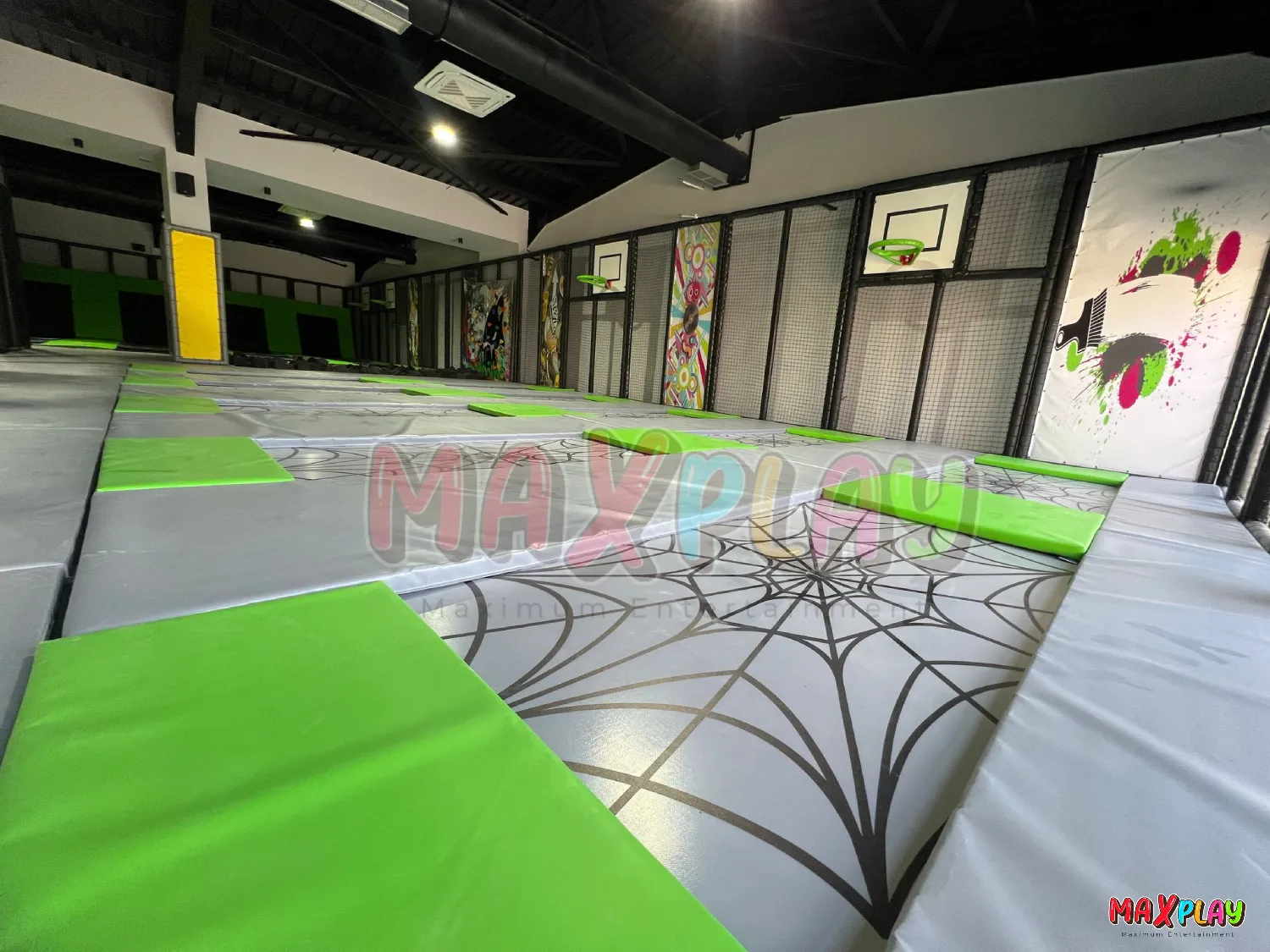
How MaxPlay Combines Turkish Manufacturing Expertise and Turnkey Indoor Playground Solutions for Finland?
MaxPlay is a Turkey-based manufacturer specializing in commercial children’s entertainment environments, customized play structures, and integrated recreational equipment. Its project-oriented approach combines design, engineering, manufacturing, international shipping coordination, installation services, and after-sales support. This makes MaxPlay a potential manufacturing partner for Finnish investors developing shopping mall attractions, family entertainment centers, hotel recreation areas, and dedicated children’s activity venues.
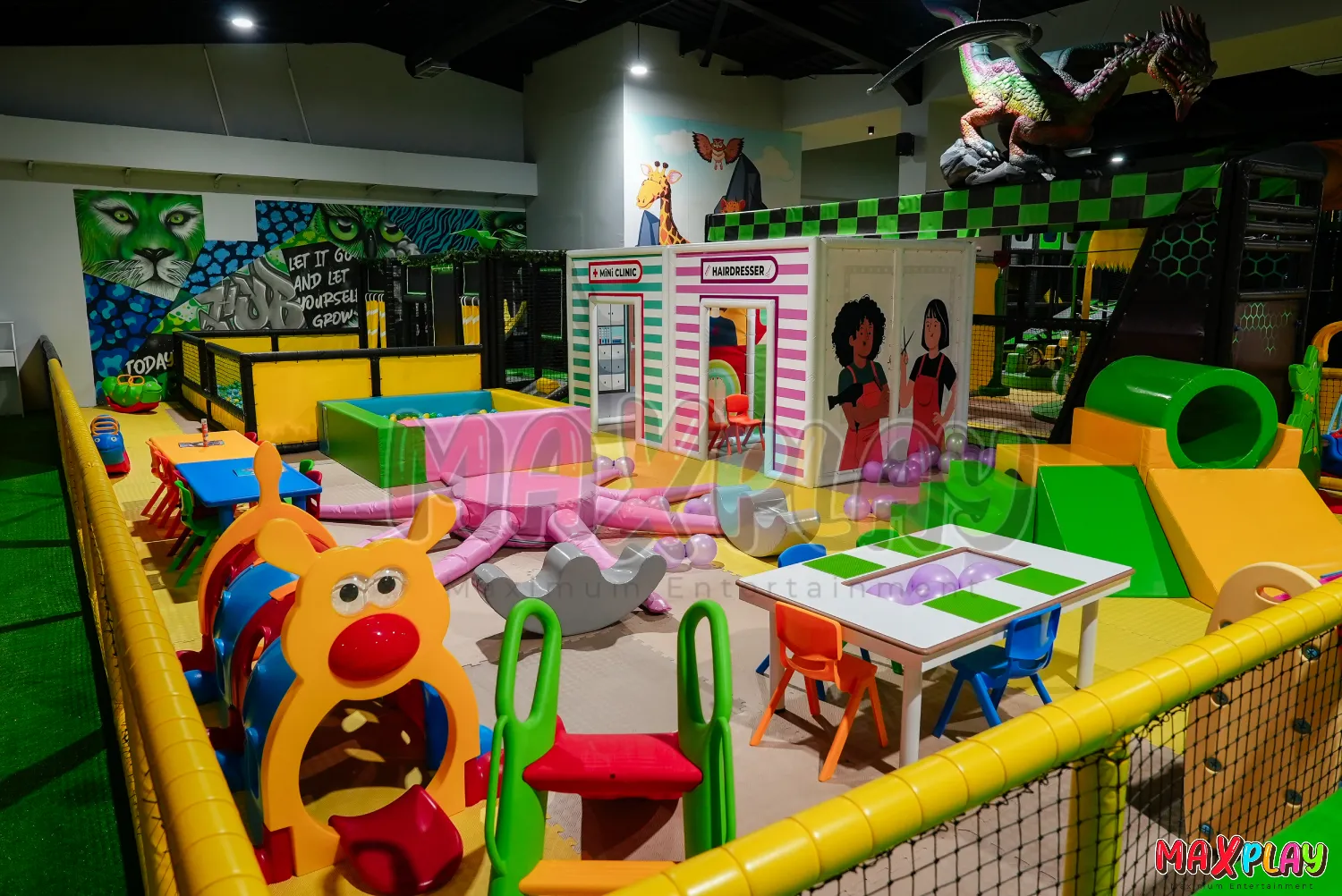
Unlike a supplier focused exclusively on standardized products, MaxPlay develops configurations around the commercial requirements and physical characteristics of individual projects. Its manufacturing scope includes indoor soft playground equipment, ball pits, multi-level climbing systems, slides, toddler areas, interactive attractions, and selected adventure activities. Where appropriate, these elements can be combined with trampoline park equipment and other recreational features to create a coordinated entertainment environment.
For a Finnish investor, this flexibility is valuable because venue layouts rarely follow standard catalog dimensions. A property may have structural columns, restricted ceiling areas, irregular walls, or specific entrance and circulation requirements. MaxPlay’s project-based design approach allows equipment arrangements to be developed around these limitations while considering age separation, visitor movement, activity diversity, and operational access.