





Indoor Playground Accessories in Romania: Value-Added Components to Include
Choosing Indoor Playground Accessories in Romania involves more than adding activities to an existing structure. The right components improve circulation, extend the useful life of equipment and give children stronger reasons to explore. For operators, the commercial question is whether an addition solves a real problem: an underused corner, a queue at the slide, limited toddler provision or a play experience that regular visitors have outgrown.
As MaxPlay Playground Equipment, we provide professional solutions for indoor playgrounds and soft play areas. We design, manufacture, install, and assemble indoor playground equipment and soft play systems for commercial spaces. Contact us for turnkey indoor playground projects.
| Landline: | 0216 377 10 88 |
| Mobile / WhatsApp: | 0532 069 53 17 |
| E-Mail: | info@maxplay.com.tr |
| Address: | Google Maps |
You can contact us for all your projects across Türkiye and international markets.
Our Services:
- Trampoline Manufacturing – Trampoline Park Installation
- Ball Pit Manufacturing – Ball Pit Playground Installations (with slides, etc.)
- Interactive Play Systems (Moving Soft Play Toys & Equipment)
- Sand Pit – Sand Play Areas
- Playgrounds and Role-Play Houses for Kindergartens & Nurseries
- Indoor playgrounds for businesses such as shopping malls, cafés, restaurants, etc.
- And all customized playground projects tailored to your specific needs.
A practical assessment starts with how the venue operates during its busiest sessions. Where do children stop moving? Which activities need frequent staff intervention? What makes parents reluctant to return? Answering these questions produces a more useful investment plan than selecting accessories from photographs alone. For Romanian shopping centres, independent play venues and hospitality businesses, successful upgrades connect attractive design with manageable maintenance, appropriate age zoning and reliable everyday performance.
How Playground Accessories Improve the Functionality and Commercial Appeal of Indoor Play Areas in Romania?
Well-selected commercial soft play add-ons change how a play area functions without necessarily increasing its footprint. A connecting activity can open an overlooked upper platform, while a ground-level discovery panel can give younger children something meaningful to do beside an older sibling’s route. The value comes from creating additional play opportunities within the space the business already pays to operate.
In practice, a frequent layout problem is unequal activity distribution. Children repeatedly use one popular feature while adjacent sections remain empty. Consider a shopping-centre venue in Bucharest where a single slide attracts most visitors: an alternative climbing route and a short interactive challenge could distribute activity more evenly. This is an illustrative planning scenario, and its suitability would depend on the actual layout, visibility and available clearances.
Effective commercial play area enhancement should also improve the parent’s experience. Clear sightlines, understandable age zones and clean, well-maintained surfaces make the venue easier to supervise. Accessories become commercially meaningful when they support satisfaction and repeat visits without creating disproportionate cleaning, repair or staffing demands.
Choosing Complementary Equipment for Existing Soft Play Structures and New Playground Projects
For an existing installation, selection begins with a measured survey. Platform heights, frame dimensions, connection points, access openings and the condition of surrounding components determine what can be added. Modular playground upgrade components are useful only when their interfaces match the structure; “modular” does not mean that products from different manufacturers are automatically interchangeable.
A common purchasing mistake is choosing indoor play equipment by appearance before checking the space needed around it. A tunnel may physically fit between two platforms yet obstruct supervision or make maintenance access difficult. For a new project, these relationships can be resolved during design. For an upgrade, the existing building and structure impose constraints that should be documented before production begins.
Commercial buyers should also distinguish a domestic indoor play set from equipment intended for continuous public use. Upholstery, joints, fixings, access arrangements and maintenance instructions must suit the operating environment. Compact components can work well for cafés or supervised nursery settings, whereas busy paid-entry venues need specifications suited to sustained use and a broader range of movement patterns.
How Can Turkish Playground Manufacturers Reduce Your Investment Costs?
Factory-direct sourcing can reduce costs by connecting design decisions with manufacturing capabilities early. Standard frame dimensions, coordinated upholstery colours and consolidated accessory orders can limit unnecessary custom work. When comparing soft play manufacturers, the useful figure is the installed project cost, including transport, assembly, documentation and anticipated replacement needs, rather than the equipment price alone.
Turkish suppliers can compete with Chinese and other international producers on price while offering a geographically closer supply route to Romania. Road freight from Turkey can provide shorter transit than long-distance ocean shipping from China, although production queues, customs clearance and delivery arrangements affect the complete schedule. Better quality should be demonstrated through materials, workmanship and relevant documentation; country of origin alone does not establish superiority.
In real procurement, an inexpensive component becomes costly if it arrives with incompatible brackets or requires repeated repairs. Soft play equipment wholesale purchasing is therefore most effective when quantities, specifications and installation responsibilities are agreed together. A transparent quotation should identify packing, delivery terms, unloading arrangements and spare parts so that apparent savings remain savings after the equipment reaches the venue.
Which Indoor Playground Concepts Are Most Profitable for Family Entertainment Centers?
There is no single concept that produces the highest profit in every Romanian location. A neighbourhood centre serving preschool families has different economics from a destination venue attracting school-age groups. The strongest concept matches local demand, usable floor area, staffing capacity and achievable admission income. Equipment selection should follow that operating model, rather than relying on the popularity of a particular attraction.
For example, a hypothetical residential-area venue in Cluj-Napoca could combine a visible toddler section, an adventure structure and birthday facilities. A larger destination centre might justify trampoline park equipment alongside other attractions, provided its operating plan supports appropriate supervision and separation. In practice, allocating too much space to one activity can leave the business exposed when that activity does not appeal to the visiting age group.
A specialist trampoline park manufacturer should explain the layout and operating implications of the proposed system. Buyers can compare concepts using expected contribution after staffing, maintenance and occupancy costs, tested against conservative attendance assumptions. A larger attraction may generate more revenue while producing less profit than a smaller, simpler zone. Forecasts should remain assumptions until supported by local trading evidence.
MaxPlay Playground Equipment Overview
| Equipment Name | Description | Key Benefits |
| Ball Pool | Colorful pit filled with balls for safe sensory play. | Safe fun for toddlers, easy to clean, encourages motor skills. |
| Trampoline | High-quality indoor trampolines. | Builds balance and strength, child-safe design, durable materials. |
| Interactive Game Sets | Digital and physical interactive play stations. | Boosts learning, cognitive skills, and engagement. |
| Profession Houses | Role-play houses designed for kids. | Encourages creativity, social interaction, and imagination. |
| Trampoline Park | Large-scale trampoline structures. | Suitable for older kids, high durability, safe design. |
| Roller Slide | Conveyor-style (roller) slides for continuous fun. | Efficient design, fun motion play, safe structure. |
| Tower Slide | Tower slides designed for adventure play. | Exciting design, strong safety standards, eye-catching feature. |
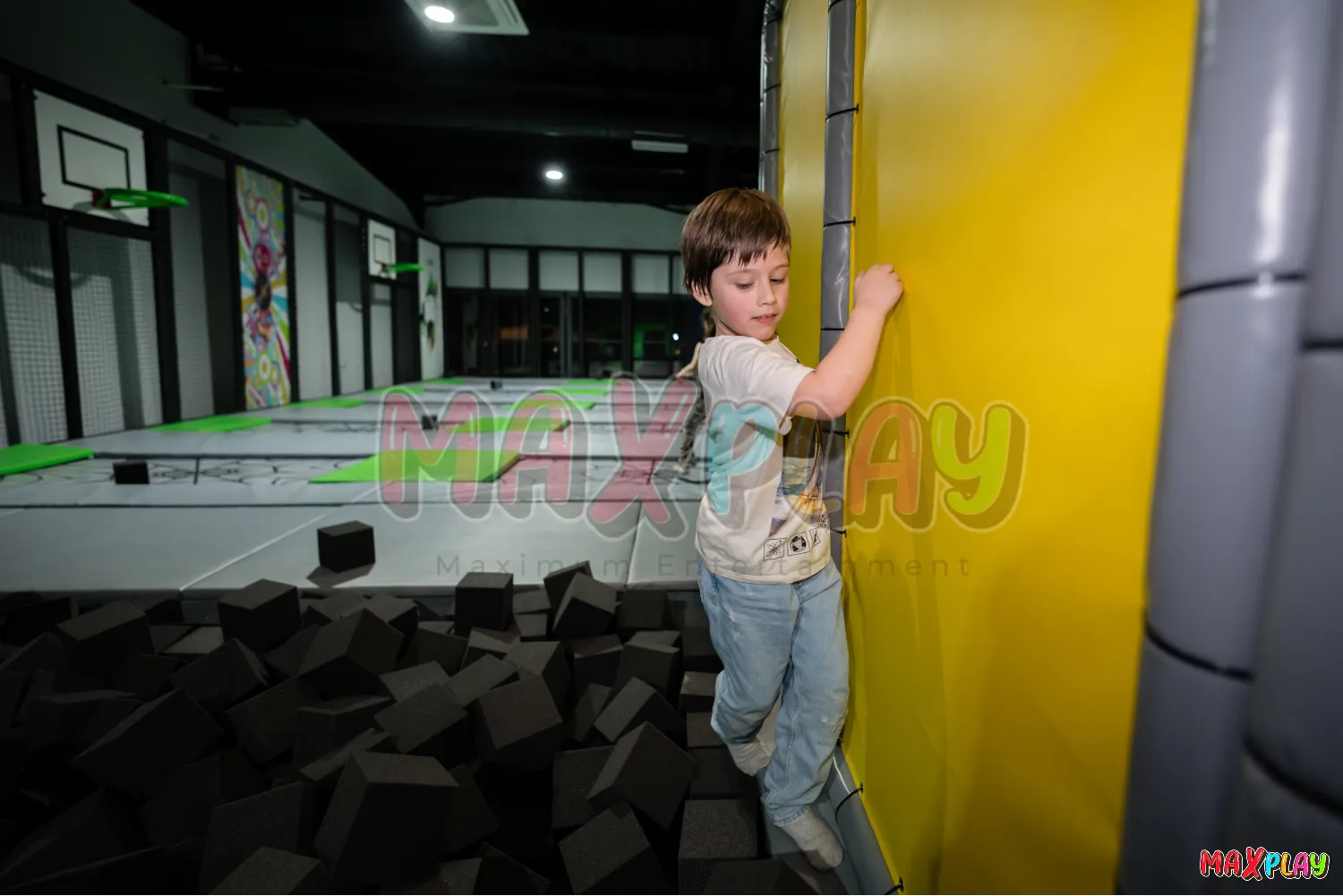
| Climbing Wall | Indoor climbing walls. | Builds strength and coordination, safe grips, customizable difficulty levels. |
| Volcano Slide | Volcano-shaped slides with climbing and sliding features. | Combines climbing and sliding, unique design, fun for multiple age groups. |
Slide Extensions, Crawl Tunnels and Connecting Bridges for Multi-Level Adventure Systems
Changes to circulation routes require particular care because they affect the way children enter, move through and leave the structure. Slide extensions for indoor play areas must be assessed as part of the complete slide assembly, including geometry, support, transitions and the exit environment. An extension is not an interchangeable decorative section that can simply be attached to any existing slide.
Similarly, soft play tunnel connectors should be planned around access, visibility and the intended age range. A short tunnel can introduce discovery between nearby platforms, while a bridge can create a more open transition. In actual use, a narrow or poorly positioned connection may become a stopping point where children turn around, hesitate or obstruct those behind them.
For a multi-level upgrade, the useful question is whether the new route improves the whole journey. A bridge that reconnects two active sections may be more valuable than another dead-end platform. Older children may enjoy a more challenging sequence, while younger users need routes suited to their abilities. Structural assessment and an appropriate safety review should precede any modification affecting load-bearing elements or movement paths.
Ball Pool Accessories, Interactive Targets and Play Features That Encourage Active Participation
A ball pool offers more possibilities when children can sort, transport, aim or cooperate rather than simply enter and leave. Targets, collection points and themed activity panels can introduce understandable goals. The best additions support several ways to play, allowing a younger child to explore cause and effect while an older child follows a scoring challenge.
When selecting ball pool interactive accessories, operators should consider how the activity works during a full session. A target positioned beside the main entrance can concentrate children where others are trying to enter. A collection feature may be popular but create excessive ball redistribution work for staff. Positioning, ball containment and cleaning access can therefore matter as much as the attraction itself.
Powered interactive playground equipment introduces further purchasing questions: access to serviceable components, protected wiring, suitable controls and replacement availability. A simple mechanical activity may suit a venue with limited technical support better than a complex electronic system. Neither option is inherently superior; the right choice depends on play value, reliability expectations and the operator’s ability to maintain it consistently.
Sensory Panels, Role-Play Elements and Educational Add-Ons for Younger Children
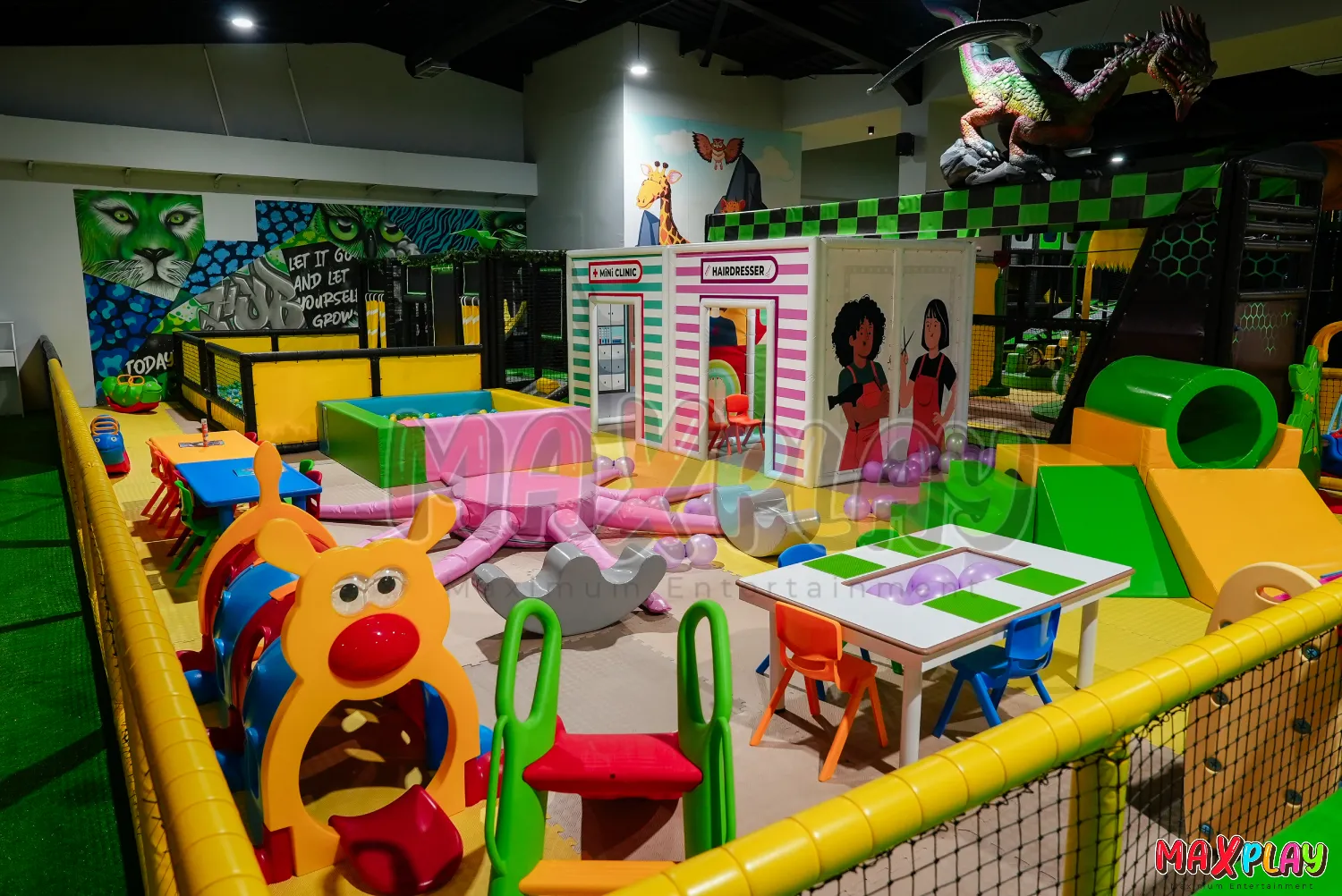
Younger children benefit from activities that allow repeated exploration at a comfortable pace. Sensory wall play equipment can provide rotating elements, tactile contrasts, matching tasks or simple movement sequences without requiring climbing confidence. Positioning these features within a clearly identifiable quieter zone helps prevent the area from becoming a shortcut for faster-moving visitors.
A buyer searching for a toddler play set indoor should look beyond the product label to assess suitability for the intended children and supervision arrangements. Reach heights, component security, cleanability and caregiver access are practical considerations. A frequent planning error is filling a toddler zone with attractive objects while leaving insufficient space for children and accompanying adults to move comfortably.
Role-play elements such as a miniature shop or workshop can support shared storytelling and repeated visits. Thoughtfully selected soft playground equipment can complement these activities with low-level movement and comfortable transitions. Educational value should be described through the actions children can practise—sorting, matching, taking turns or manipulating objects—rather than through unsupported promises about developmental outcomes.
Safety Padding, Protective Netting and Impact-Absorbing Flooring as Essential Supporting Components
Supporting components deserve the same purchasing attention as headline attractions. Protective playground padding needs to suit the location, underlying surface and expected wear. Padding on a frequently contacted corner faces different demands from a decorative wall panel. In daily operation, loose covers, opening seams and displaced protection can undermine an otherwise well-designed installation.
The specification for indoor playground safety netting must account for its function, attachment method and surrounding structure. Likewise, flooring should be selected for the relevant equipment and impact conditions, rather than by colour or nominal thickness alone. EN 1176 includes specific provisions for fully enclosed play equipment and guidance concerning installation, inspection, maintenance and operation; the applicable assessment must address the actual installation.
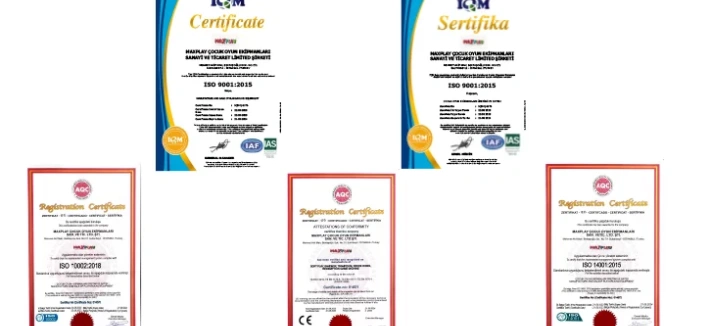
First-class quality and production suitable for children should be supported by identifiable materials and relevant evidence. Buyers should examine the scope of certificates and test reports, including whether they cover the proposed product, material or assembly. A company certificate is not a substitute for installation-specific verification. For Romanian premises, the equipment review should also be coordinated with applicable building, fire and operational requirements.
Custom-Themed Decorations, Entrance Features and Visual Elements for Distinctive Play Environments
Strong theming gives a venue a recognisable identity while helping children understand its different zones. Custom-themed play area decorations might distinguish an adventure route from a toddler village or make an entrance visible from the surrounding shopping-centre circulation. Their contribution is strongest when they support orientation and play, rather than occupying space without a clear purpose.
In practice, visually impressive concepts can create maintenance problems when decorative pieces conceal fixings, obstruct sightlines or require extensive dismantling for cleaning. Materials and attachment details should therefore be reviewed alongside the artwork. A low-profile wall graphic, a padded three-dimensional element and an overhead feature have different implications for cleaning, inspection and replacement.
For independent Romanian operators, a coherent theme can be more practical than a highly elaborate environment spread unevenly across the venue. Colour consistency, durable finishes and a clear entrance feature can establish identity within a controlled budget. Designs should also avoid making decorative elements look climbable when they are not intended for that use, and any recognisable licensed characters require appropriate rights.
Why Romanian Playground Operators Can Benefit from Sourcing Accessories from Turkish Manufacturers?
The commercial appeal of Turkish playground accessory manufacturers includes proximity, manufacturing flexibility and the possibility of coordinating several product categories through one production partner. For Romanian buyers, this can simplify communication about dimensions, finishes and packing. The advantage is particularly relevant when accessories must match an existing installation rather than follow a standard catalogue configuration.
Fast shipping from Turkey can support both planned upgrades and urgent replacement orders. Depending on shipment size, transport options can include consolidated road cargo, dedicated vehicles or courier services for suitable small components. The practical distinction is between production lead time and transit time: a nearby factory still needs an agreed manufacturing slot, complete specifications and a realistic dispatch plan.
When comparing suppliers in Turkey, China and other markets, buyers should evaluate equivalent specifications. A lower quotation may exclude installation, different material grades or necessary support components. Turkish production can offer competitive pricing, high-quality execution and shorter delivery routes, but those benefits should appear in the proposal as measurable commitments. Packing lists, delivery terms and replacement procedures make the comparison more dependable.
Custom Manufacturing and Compatibility Planning for Upgrading Existing Playground Structures
Successful retrofit playground equipment starts with reliable information about the original installation. Drawings, dated photographs, measured dimensions and details of previous alterations help establish what can be retained. Where these records are missing, a site survey becomes more important. A component that appears compatible in a photograph may require a different fixing arrangement or support condition.
Indoor play structure compatibility extends beyond whether two parts can be physically joined. The review should consider structural behaviour, transitions, openings, adjacent activities and access for inspection. In practice, ordering from approximate measurements is a common source of avoidable rework. Critical dimensions should be confirmed against a documented reference, with responsibility for checking them clearly assigned.
Bespoke playground accessory production is appropriate when standard items cannot resolve these constraints efficiently. It is less suitable when the underlying structure is damaged or its condition cannot support the proposed modification. New commercial soft play equipment may sometimes offer better long-term value than repeatedly adapting an ageing system. The decision should follow condition assessment, installation costs and the remaining useful life of retained components.
Prioritizing Accessory Investments Through Maintenance Needs, Visitor Feedback and Equipment Lifespan
An investment schedule should first address defects and deteriorating components, then operational weaknesses, followed by discretionary enhancements. Playground maintenance accessories help preserve reliable operation, but they should be selected against documented needs. Replacing a worn protective section may offer little promotional appeal while being more urgent than adding a visually striking attraction.
For children’s activity centre upgrades, visitor feedback becomes more useful when connected to observation. “There is not enough to do” might reflect unsuitable age provision, queues or activities that children do not understand. Staff can record where assistance is repeatedly needed, which features remain unused and how cleaning affects availability. This evidence helps distinguish a genuine equipment gap from a layout or operating issue.
Purchasing playground equipment replacement parts also requires consistent records. Component references, dimensions, material specifications and installation dates reduce ambiguity when reordering. A practical phased plan can group compatible work into scheduled closures, limiting disruption. Equipment lifespan should be judged by condition, use and inspection findings; a fixed age alone does not explain whether an item remains suitable or should be replaced.
How MaxPlay Supplies Custom Indoor Playground Accessories and Integrated Play Components for Romanian Businesses?
MaxPlay presents design, production and implementation as connected services, with a product range covering soft play, toddler areas, interactive activities and trampoline parks. For businesses comparing indoor playground equipment manufacturers, that breadth is useful when an accessory order must fit into a wider venue concept. Its published offer includes customised layouts and three-dimensional project presentations before production. A dependable indoor playground supplier should translate that design stage into clear drawings, agreed interfaces and an understandable production scope.
For indoor soft playground equipment, the quality discussion should cover construction, upholstery, connection details and maintenance access. MaxPlay promotes first-class quality, certified production and equipment intended for children’s use; Romanian buyers should review the relevant supporting documentation for their selected configuration. MaxPlay When comparing indoor playground accessories Romania suppliers, the proposal should also clarify transport options, installation responsibilities and support after delivery. These details turn an appealing concept into a project that can be assessed, ordered and operated with confidence.
MaxPlay offers free project planning to help turn your available space and operational priorities into a coordinated proposal. Share your floor plan, existing structure dimensions, photographs and preferred activities to discuss suitable accessories, competitive pricing and fast shipping options from Turkey to Romania. Request your free project now and contact MaxPlay to plan your upgrade.