





Top Indoor Playground Equipment Manufacturers in Czechia: Who to Trust
Selecting the Top Indoor Playground Equipment Manufacturers in Czechia requires more than comparing equipment catalogues, attractive renderings, or initial quotations. For investors developing family entertainment centres, shopping mall attractions, hotel play areas, or independent activity venues, the manufacturer’s engineering capabilities, material quality, safety documentation, and long-term technical support directly influence operational reliability and profitability. A well-designed facility must accommodate intensive daily use, different age groups, cleaning requirements, and future maintenance without compromising the visitor experience.
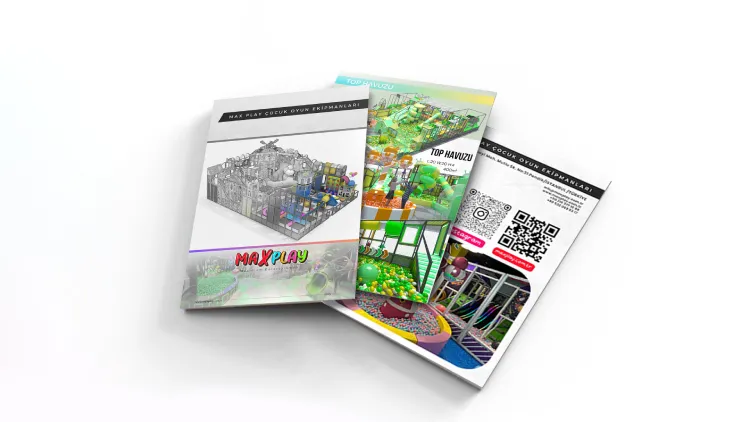
As MaxPlay Playground Equipment, we provide professional solutions for indoor playgrounds and soft play areas. We design, manufacture, install, and assemble indoor playground equipment and soft play systems for commercial spaces. Contact us for turnkey indoor playground projects.
| Landline: | 0216 377 10 88 |
| Mobile / WhatsApp: | 0532 069 53 17 |
| E-Mail: | info@maxplay.com.tr |
| Address: | Google Maps |
You can contact us for all your projects across Türkiye and international markets.
Our Services:
- Trampoline Manufacturing – Trampoline Park Installation
- Ball Pit Manufacturing – Ball Pit Playground Installations (with slides, etc.)
- Interactive Play Systems (Moving Soft Play Toys & Equipment)
- Sand Pit – Sand Play Areas
- Playgrounds and Role-Play Houses for Kindergartens & Nurseries
- Indoor playgrounds for businesses such as shopping malls, cafés, restaurants, etc.
- And all customized playground projects tailored to your specific needs.
The Czech market offers opportunities for domestic and international suppliers, including established European companies and specialised Turkish manufacturers. However, not every supplier provides the same production capabilities, installation services, or degree of customisation. A manufacturer offering an inexpensive standard structure may not be suitable for a complex, multi-level entertainment centre requiring bespoke engineering, interactive attractions, and coordinated installation. Understanding these differences helps investors distinguish genuinely capable manufacturers from companies that primarily resell equipment.
For Czech businesses evaluating trusted indoor playground manufacturers Czechia, the most effective approach is to examine the complete project lifecycle: concept development, structural design, material selection, manufacturing, logistics, installation, inspection, and after-sales service. Turkish manufacturers such as MaxPlay represent an additional sourcing option, combining custom production with factory-direct procurement and international project coordination. The following evaluation framework explains how to assess suppliers, identify hidden procurement risks, and select equipment that delivers lasting commercial value.
Understanding the Commercial Playground Supplier Market in Czechia
The Czech indoor entertainment sector serves several business models, including dedicated family entertainment centres, shopping mall leisure facilities, hospitality venues, and educational environments. Each requires a different balance between equipment capacity, visitor circulation, supervision, and available floor space. A compact children’s corner in a restaurant cannot be planned using the same design principles as a multi-level adventure playground intended to accommodate dozens of simultaneous users.
The Czech family entertainment centre equipment market includes domestic fabricators, European distributors, international manufacturers, and companies specialising in complete recreational environments. Some suppliers manufacture their own steel structures, protective padding, and play components, while others source individual systems from external factories. This distinction matters because a company responsible for engineering and production generally has more direct control over dimensional changes, replacement components, and manufacturing schedules.
In practice, one of the most common procurement mistakes is assuming that every company advertising indoor playground equipment manufacturers operates an actual production facility. Investors should establish whether the supplier is a manufacturer, authorised distributor, installation contractor, or project integrator. None of these business models is automatically inferior, but responsibilities must be transparent. For projects involving custom structures, integrated attractions, or unusual building dimensions, direct manufacturing involvement can simplify technical decisions and reduce communication delays.
What Makes an Indoor Playground Manufacturer Reliable for Long-Term Business Investments?
Reliability should be measured by how consistently a supplier translates a proposed design into a safe, maintainable, commercially functional installation. Attractive presentation materials are useful during concept selection, but they provide limited evidence of structural integrity, material performance, or manufacturing accuracy. A dependable supplier should explain the engineering assumptions behind its design and demonstrate how equipment will perform under expected operating conditions.
A thorough commercial play equipment supplier evaluation considers structural engineering, documented production controls, traceable materials, installation competence, and the ability to supply replacement parts. For example, an adventure structure with elevated platforms requires properly designed load-bearing connections, secure access points, appropriate protective barriers, and carefully planned supervision routes. These features must be coordinated during engineering rather than corrected after installation.
Real-world operation reveals weaknesses that are rarely visible in showroom photographs. Loose protective covers, difficult-to-access cleaning areas, poorly positioned transitions, and components requiring frequent adjustment can increase maintenance costs. For long-term equipment reliability, investors should therefore assess not only purchase price but also service accessibility, anticipated component replacement, warranty exclusions, and operational downtime. The strongest supplier is often the one that can explain these practical issues before the contract is signed.
Assessing Engineering Experience, Production Facilities and Completed Project References
A manufacturer’s portfolio should demonstrate more than the number of installations completed. Project references are most useful when they include facility dimensions, equipment categories, installation complexity, operating environment, and evidence of completed work. A supplier experienced in small modular play corners may not possess the engineering resources required for a large entertainment centre featuring elevated walkways, climbing challenges, and integrated attractions.
During a playground factory project references review, investors should request examples comparable to their planned venue. If the project involves a shopping mall with limited ceiling clearance, references from similarly constrained indoor spaces are particularly relevant. Manufacturers should be able to explain how structural columns, emergency routes, ventilation systems, and restricted installation access affected their design decisions.
Production capabilities deserve equal attention. A factory producing custom children’s play equipment should have procedures for dimensional verification, component fabrication, protective finishing, assembly preparation, and quality inspection. Digital design tools and production drawings can improve coordination between engineers and installers, but their value depends on how accurately they reflect the final manufactured components. Where possible, investors should request factory photographs, technical documentation samples, production-stage inspection information, and references from operators who have used the equipment for a meaningful period.
Comparing Equipment Portfolios: Adventure Play Systems, Toddler Zones and Interactive Attractions
A commercial playground should provide activities appropriate for different developmental stages while maintaining clear supervision and circulation routes. Multi-level adventure structures, climbing obstacles, slides, and tunnels can serve older children, while younger visitors benefit from lower platforms, soft obstacles, sensory activities, and protected exploration areas. Selecting equipment solely according to visual impact often produces an unbalanced facility.
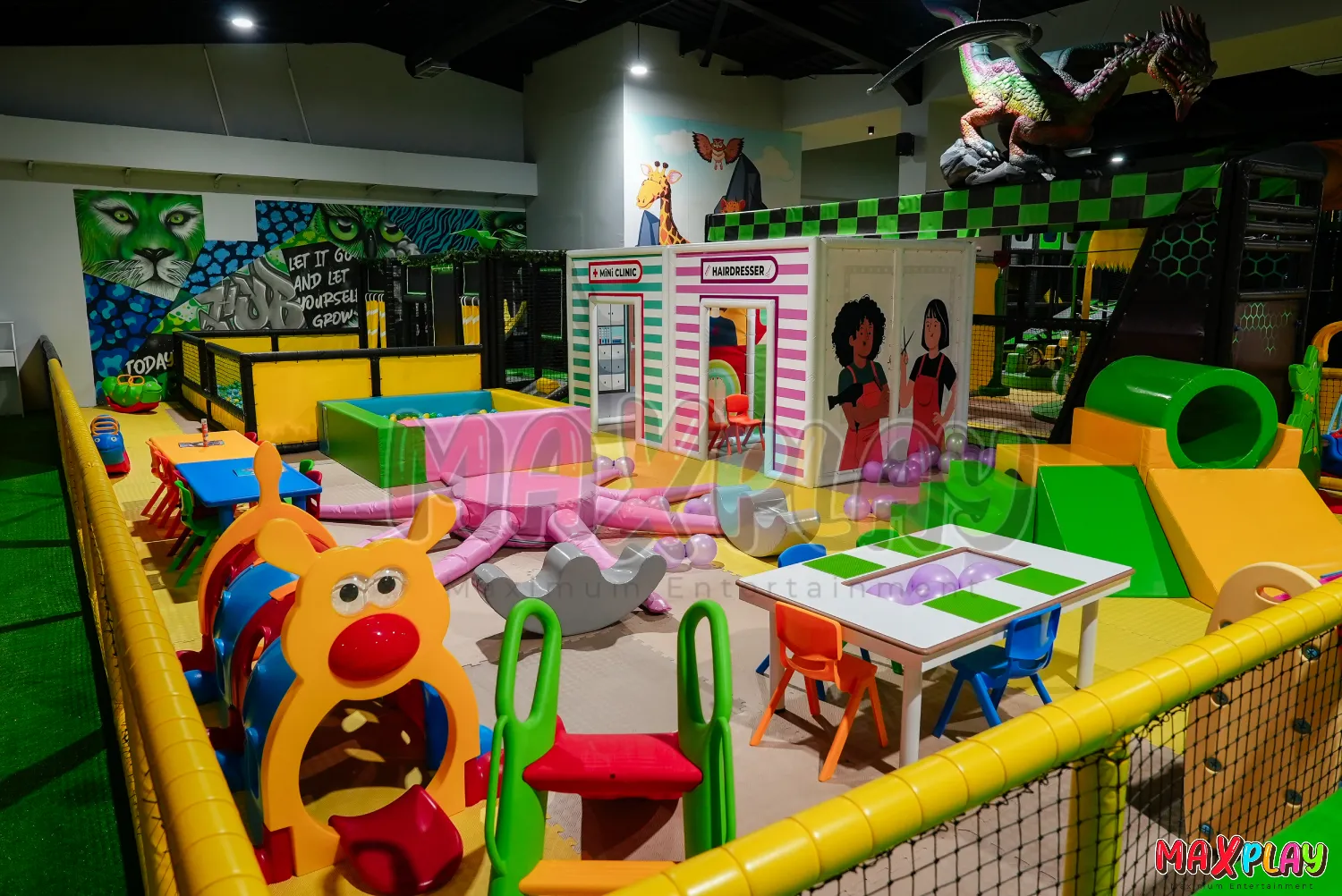
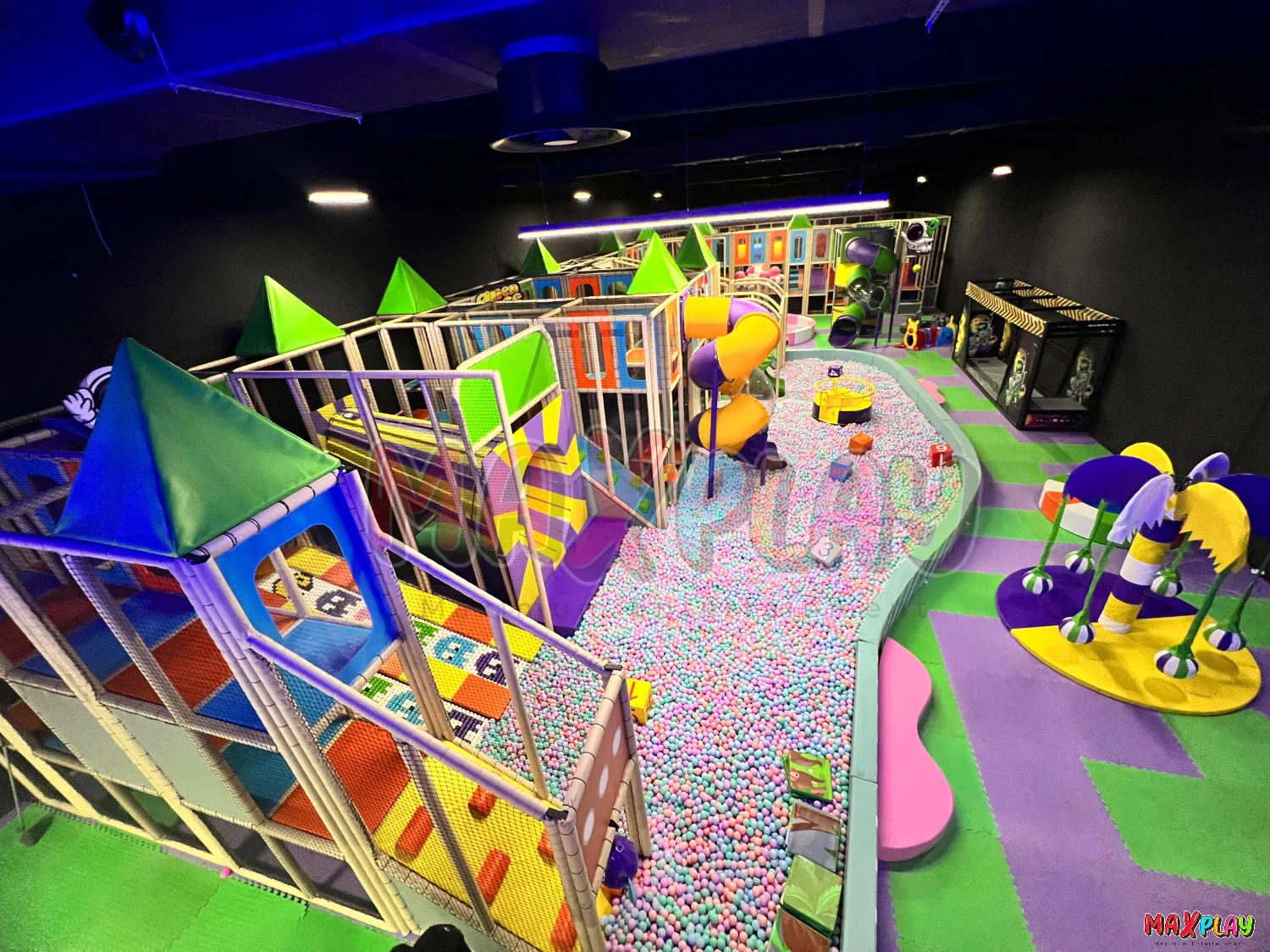
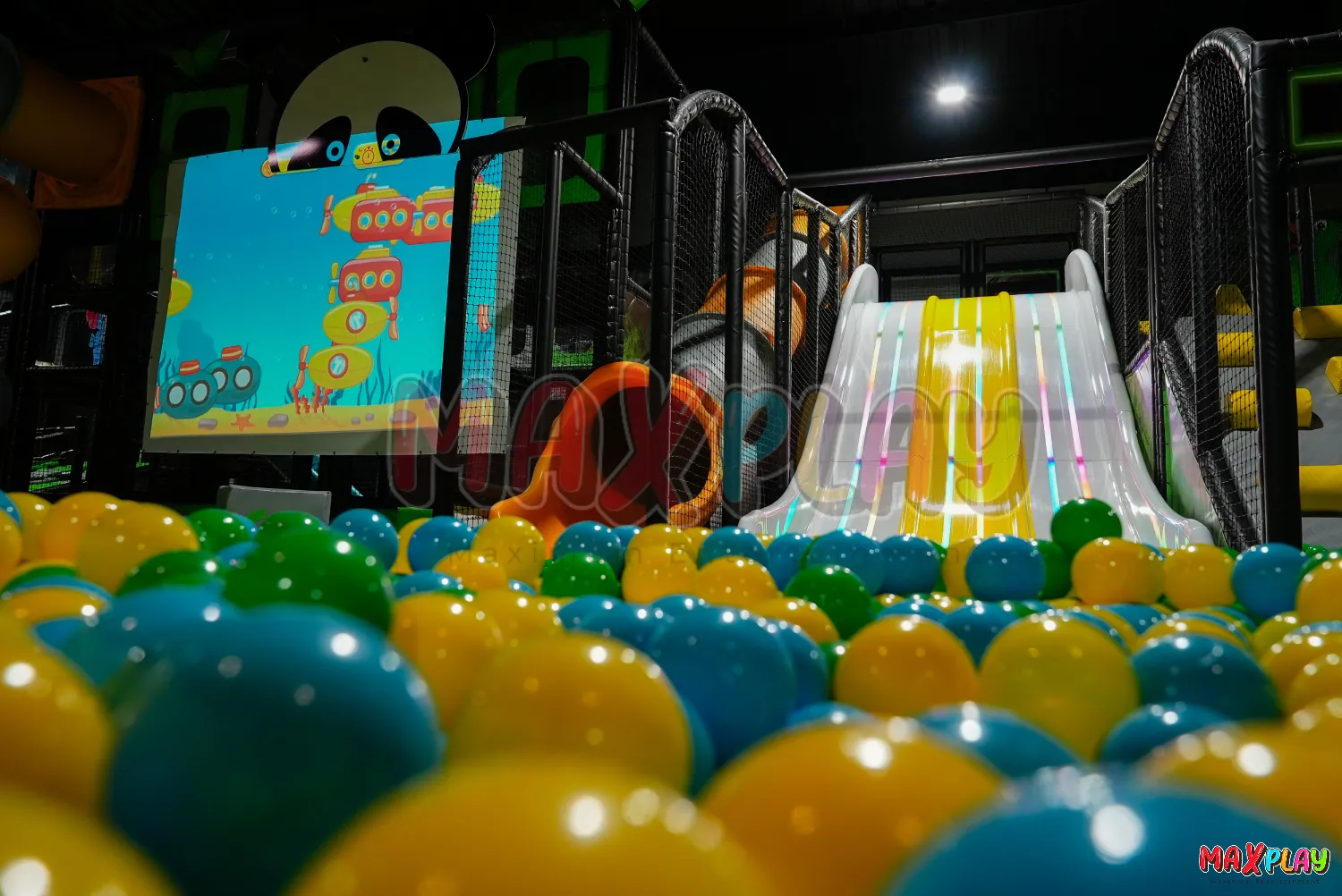
For example, a compact indoor play set may be appropriate for a café or hotel lounge, whereas a larger entertainment centre may require interconnected climbing structures, obstacle courses, and several slide configurations. A dedicated toddler play set indoor arrangement should prioritise low-level movement, accessible entry points, age-appropriate challenges, and separation from faster-moving children. A well-designed ball pool can complement these areas, provided operators establish suitable cleaning, supervision, and ball-management procedures.
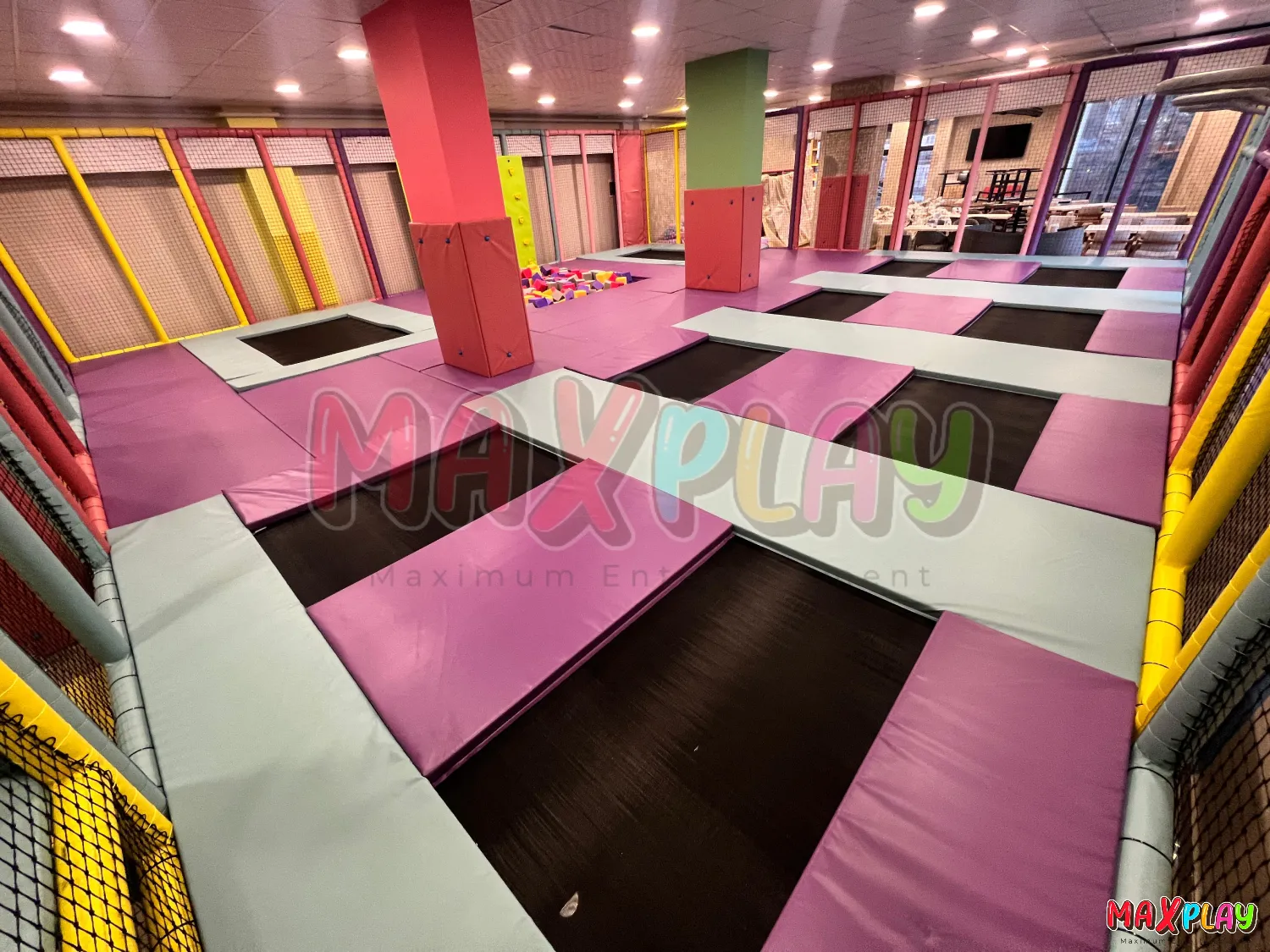
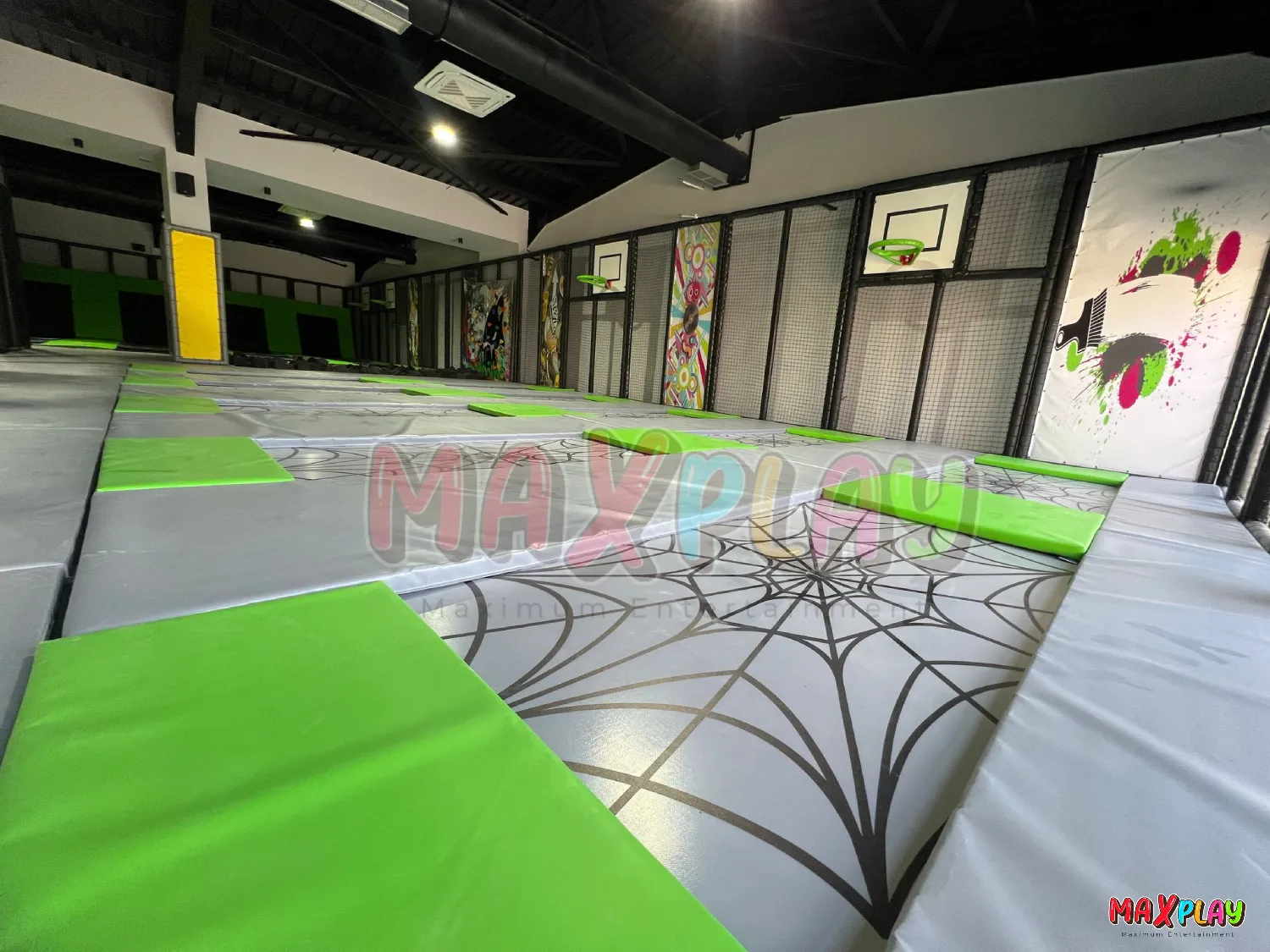
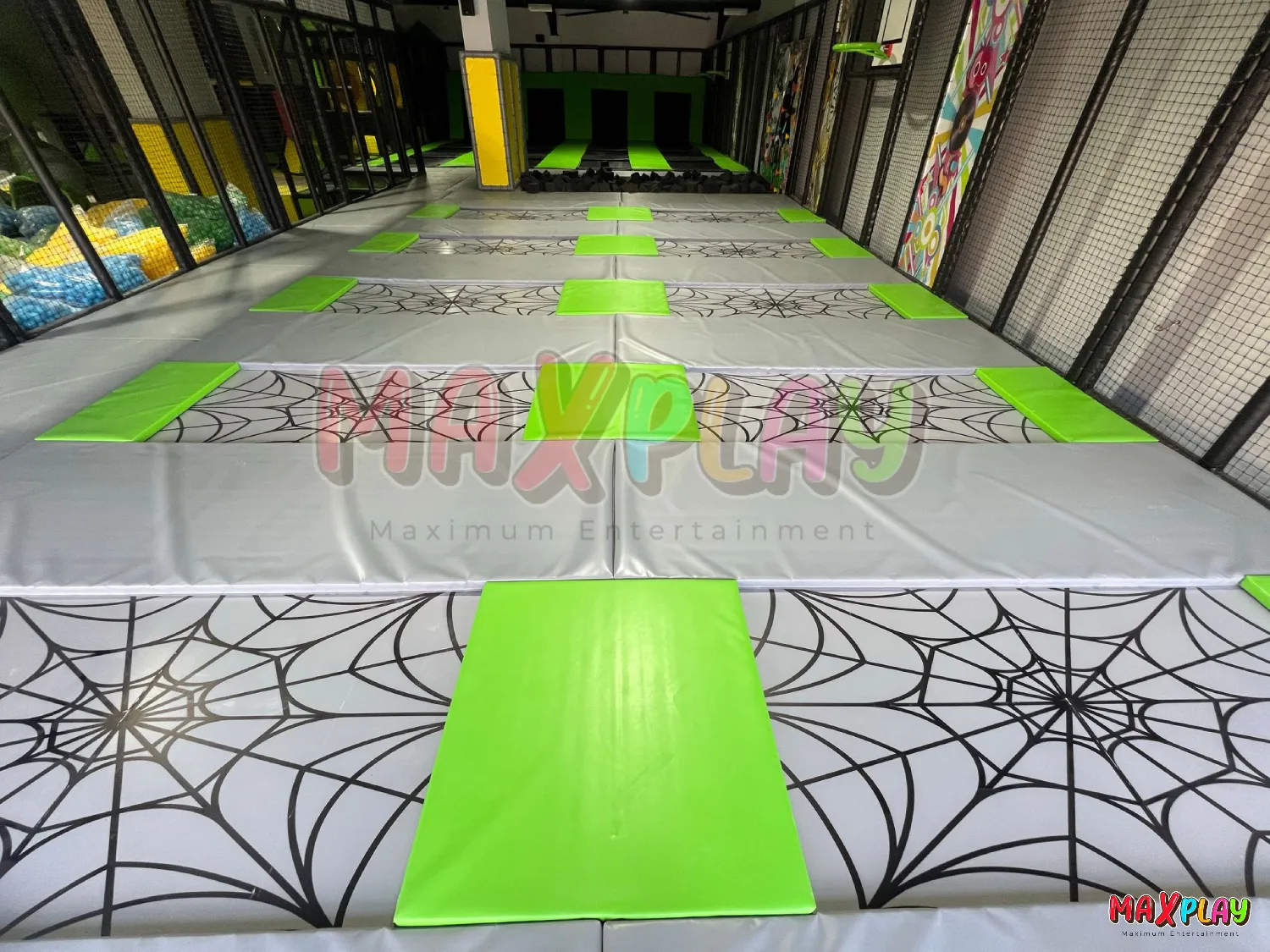
The equipment mix can also include interactive playground equipment, projection-based activities, role-play environments, and climbing challenges. For operators considering trampoline park equipment, the supplier’s experience with trampoline-specific engineering, operational controls, and applicable safety requirements should be evaluated separately from conventional soft play expertise. A capable trampoline park manufacturer should address jumping-bed performance, padding, user separation, inspection access, and staff supervision requirements. Combining different attraction types can improve visitor engagement, but only when the facility’s layout, staffing model, and maintenance resources support them.
MaxPlay Playground Equipment Overview
| Equipment Name | Description | Key Benefits |
| Ball Pool | Colorful pit filled with balls for safe sensory play. | Safe fun for toddlers, easy to clean, encourages motor skills. |
| Trampoline | High-quality indoor trampolines. | Builds balance and strength, child-safe design, durable materials. |
| Interactive Game Sets | Digital and physical interactive play stations. | Boosts learning, cognitive skills, and engagement. |
| Profession Houses | Role-play houses designed for kids. | Encourages creativity, social interaction, and imagination. |
| Trampoline Park | Large-scale trampoline structures. | Suitable for older kids, high durability, safe design. |
| Roller Slide | Conveyor-style (roller) slides for continuous fun. | Efficient design, fun motion play, safe structure. |
| Tower Slide | Tower slides designed for adventure play. | Exciting design, strong safety standards, eye-catching feature. |
| Climbing Wall | Indoor climbing walls. | Builds strength and coordination, safe grips, customizable difficulty levels. |
| Volcano Slide | Volcano-shaped slides with climbing and sliding features. | Combines climbing and sliding, unique design, fun for multiple age groups. |
How to Verify Playground Safety Documentation, Material Specifications and Product Quality?
Safety documentation should be evaluated at the level of the actual equipment configuration rather than accepted as a general marketing claim. In Europe, EN 1176 and EN 1177 are important references for playground equipment and impact-attenuating surfaces where applicable. Depending on the attraction type, additional standards or technical requirements may apply. Czech operators should also verify local building, fire-safety, accessibility, and inspection obligations before approving a design.
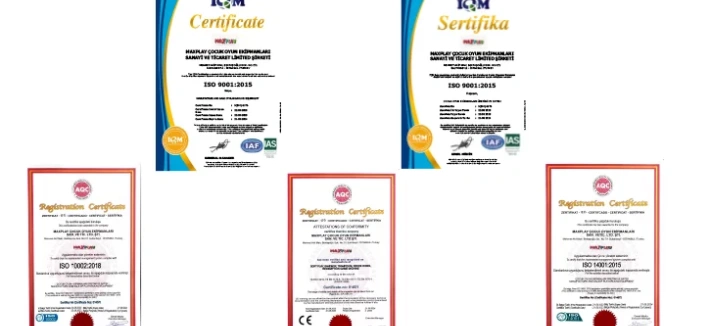
Effective European playground technical documentation should identify applicable standards, materials, installation requirements, inspection procedures, and relevant test evidence. A supplier describing its products as certified should be able to identify the issuing body, certificate scope, tested product, and applicable standard. CE marking must not be treated as a universal certification for every playground component; its relevance depends on the product and applicable European legislation. Independent testing and TÜV documentation can provide useful assurance when their scope matches the supplied equipment.
A proper playground material quality assessment should examine steel structure specifications, protective coatings, foam density, upholstery performance, netting strength, fastening systems, and surface cleanability. First-class manufacturing quality involves consistent fabrication and verified material properties, not simply premium-looking finishes. Materials used in children’s environments should be selected with attention to applicable chemical restrictions, hygiene, durability, and fire-performance requirements. In practical operation, removable protective elements, accessible cleaning points, and replaceable wear components often contribute as much to long-term usability as the original material specification.
Czech and Turkish Playground Manufacturers: Comparing Production Flexibility and Procurement Value
Comparing domestic and international suppliers requires a consistent technical specification. A Czech supplier may offer advantages in local communication, site visits, installation coordination, and maintenance response. Turkish manufacturers may provide competitive factory-direct pricing, integrated fabrication, and flexible custom production. Neither option should be considered superior without examining the project requirements and the complete commercial offer.
A meaningful playground manufacturer comparison should include the same equipment dimensions, material grades, safety requirements, installation scope, warranty provisions, and delivery conditions. Otherwise, a lower quotation may reflect thinner specifications, excluded installation work, or limited after-sales obligations rather than genuine manufacturing efficiency. Turkish playground manufacturing companies can compete with European and Chinese alternatives through production costs, geographic accessibility, customisation, and coordinated exports, although actual advantages vary by supplier and project.
| Evaluation factor | Czech supplier | Turkish manufacturer | Chinese manufacturer |
| Local coordination | Potentially easier | Requires international coordination | Requires international coordination |
| Customisation | Depends on factory capabilities | Strong potential with project-based production | Varies by factory and order requirements |
| Freight to Czechia | Usually simpler domestically | Road freight is a practical option | Typically longer intercontinental logistics |
| Pricing | Depends on local production costs | Potentially competitive factory-direct pricing | Often competitive on standardised products |
| Technical support | Local access may be advantageous | Depends on service and installation arrangements | Depends on local partners and supplier support |
For factory-direct playground sourcing, the decisive question is whether the supplier delivers better total value rather than merely a lower factory price. A Turkish manufacturer offering a tailored layout, durable materials, documented production, and coordinated delivery may represent a stronger investment than an inexpensive imported structure requiring substantial local modification. Conversely, projects needing frequent on-site service may benefit from a supplier with an established local support network.
Why Turkey Is an Alternative Sourcing Market for Czech Family Entertainment Businesses?
Turkey has developed a substantial manufacturing base for commercial recreational equipment, combining metal fabrication, plastics processing, textile production, protective padding, and specialised assembly operations. This manufacturing ecosystem allows playground suppliers to coordinate several production processes within a relatively concentrated geographic area. For Czech investors, that integration can support customised orders without relying on numerous disconnected subcontractors.
An important advantage is the potential for faster European delivery compared with intercontinental shipments. Playground equipment delivery Czech Republic projects can use road freight from Turkish production facilities through established European transport corridors. Istanbul’s geographic position offers access to international cargo networks, consolidated shipments, and dedicated vehicle services. Depending on shipment dimensions, customs procedures, route conditions, and carrier availability, Turkish road transport can offer shorter and more predictable transit arrangements than sea freight originating in China.
Price competitiveness is another consideration, particularly for projects requiring extensive custom fabrication. Turkish producers can compete with Chinese and European suppliers while offering premium-grade materials, certified production processes, and comparatively accessible shipping routes. However, better quality and shorter lead times should be established through comparable specifications and written delivery commitments rather than assumed from the manufacturing country alone. For investors pursuing an indoor play facility investment, Turkey can provide an attractive balance of manufacturing quality, logistics flexibility, and total procurement cost.
Custom Design Capabilities: Tailored Dimensions, Themed Environments and Age-Specific Play Concepts
Customisation should begin with the building rather than the equipment catalogue. Ceiling height, structural columns, emergency exits, ventilation outlets, lighting systems, and customer circulation all affect the achievable playground layout. A manufacturer should translate these constraints into a coordinated design that provides adequate play capacity without creating congestion or compromising access for cleaning and supervision.
For example, a 250 m² family entertainment venue might accommodate a central multi-level adventure structure, a protected toddler section, and a smaller interactive activity zone. However, the ideal configuration depends on usable floor area, ceiling clearance, anticipated visitor age distribution, and staffing levels. Bespoke adventure play structures can incorporate climbing towers, suspended obstacles, themed tunnels, slides, and interconnected platforms. The technical challenge is ensuring that these elements function together without introducing awkward transitions, supervision blind spots, or maintenance difficulties.
Themed environments require particular attention to fabrication details. Decorative elements should not create unintended climbing opportunities, sharp projections, or inaccessible cleaning spaces. Manufacturers of soft playground equipment and indoor soft playground equipment should integrate protective materials with the supporting structure rather than applying padding as an afterthought. For businesses seeking soft play equipment wholesale, modular configurations may simplify repeat orders across multiple locations, while individually designed environments can provide stronger brand differentiation for flagship entertainment centres.
In real operation, age-specific planning is especially important. An active climbing course suitable for children aged seven to twelve may be inappropriate for preschool visitors. The most effective indoor play equipment layouts establish clear activity zones, appropriate challenge levels, and intuitive routes between attractions. A visually impressive structure is only commercially valuable when children can use it comfortably, parents can supervise effectively, and operators can maintain it efficiently.
Questions to Ask Manufacturers About Quotations, Delivery Schedules and Installation Responsibilities
A professional quotation should provide enough technical detail to support meaningful comparison. Investors should avoid accepting proposals that describe only the overall playground dimensions and total price. Equipment quantities, materials, finishes, attraction specifications, freight arrangements, installation responsibilities, and documentation requirements should be identifiable before commercial approval.
A practical commercial playground procurement checklist should cover the following questions:
- What are the exact equipment dimensions, usable play areas, and proposed visitor capacities?
- Which components are manufactured in-house, and which are purchased from subcontractors?
- What safety standards apply, and which test reports or certificates are available?
- Are transport, customs clearance, unloading, installation, and commissioning included?
- Who is responsible for site measurements, building interfaces, and installation access?
- What are the production milestones, inspection stages, and estimated dispatch dates?
- How are manufacturing defects, missing components, and transit damage handled?
- What spare parts, maintenance instructions, and technical assistance are provided?
One frequently overlooked issue is the difference between manufacturing completion and operational readiness. A supplier may quote a four-week production period without including packaging, international freight, customs processing, unloading, installation, or final inspection. A project scheduled to open before a school holiday can experience significant financial consequences if these activities are not incorporated into a realistic programme.
Installation responsibility should also be contractually defined. For turnkey playground project services, investors need to know whether the manufacturer provides installation personnel, supervises a local contractor, or delivers equipment for independent assembly. Electrical connections, floor preparation, lifting equipment, waste disposal, and final safety inspection may involve separate parties. Clarifying these boundaries before production reduces disputes and prevents delays during the final stages of construction.
Warranty Conditions, Spare Parts Availability and Technical Support as Supplier Selection Criteria
Warranty coverage is an important indicator of supplier accountability, but its practical value depends on the details. A warranty may cover manufacturing defects while excluding normal wear, accidental damage, improper cleaning, unauthorised modifications, or inadequate maintenance. Investors should distinguish between structural components, upholstery, moving parts, interactive electronics, and consumable accessories because these categories may have different service requirements.
When evaluating supplier warranty and maintenance support, operators should establish how replacement components are identified, ordered, shipped, and installed. Standardised protective pads, compatible fasteners, replaceable netting sections, and documented component references can reduce repair times. In contrast, equipment incorporating unique parts without clear specifications may create unnecessary dependence on a single supplier.
Maintenance accessibility should be considered during the design stage. For example, a damaged netting panel positioned behind several interconnected structures may require extensive dismantling if replacement access was not planned. Similarly, a slide with difficult-to-reach fastening points can increase inspection and repair time. Experienced soft play manufacturers understand that maintainability must be engineered into the structure, not treated as a separate concern after installation.
For high-traffic venues, technical support should include clear inspection guidance, recommended maintenance intervals, cleaning instructions, and procedures for reporting defects. Operators purchasing commercial soft play equipment should also establish which repairs can be performed by trained local personnel and which require specialist intervention. This distinction is particularly relevant for international procurement, where emergency service visits may involve additional travel and scheduling costs.
How MaxPlay Supports Czech Playground Investors with Custom Manufacturing and End-to-End Project Services?
MaxPlay is a Turkish manufacturer specialising in commercial playground design, production, international delivery, and installation. Its product portfolio includes soft play systems, toddler activity areas, ball pools, adventure structures, interactive attractions, and trampoline facilities. The company combines project-specific engineering with manufacturing capabilities intended for shopping malls, family entertainment centres, hospitality businesses, and other commercial environments. Its published project portfolio includes installations ranging from compact play areas to larger multi-attraction facilities.
Unlike a catalogue-only indoor playground supplier, MaxPlay develops equipment configurations around individual site dimensions, customer requirements, and available investment budgets. Its production approach incorporates technical design, material selection, fabrication, quality checks, and installation preparation. The company states that its equipment is manufactured in accordance with internationally recognised standards, including EN 1176 and EN 1177 where applicable, and provides supporting safety documentation. For Czech investors, relevant certificates and test reports should be reviewed against the actual project configuration and local requirements.
MaxPlay’s commercial indoor playground equipment range can support different investment models, from individual toddler play corners to extensive family entertainment centres. Its factory-direct production model allows buyers to explore competitive prices against Chinese and other European manufacturing alternatives without automatically sacrificing customisation or material specifications. Production in Turkey also provides practical access to road freight, international cargo services, and coordinated shipments to Czech destinations. The company publishes an indicative manufacturing period of four to eight weeks for playground projects, although actual production, transport, and installation schedules depend on the approved design and project scope.
For investors comparing soft play manufacturers, MaxPlay’s integrated approach is particularly relevant when a project requires more than equipment supply. Coordinating design, production, transportation, installation, and after-sales assistance through one provider can simplify communication and reduce the risk of mismatched responsibilities. Its stated support includes spare parts and technical assistance after installation, helping operators plan for maintenance and future facility development.
MaxPlay also offers free preliminary playground project design and 3D layout planning, allowing investors to assess space utilisation, attraction combinations, and project feasibility before committing to manufacturing. Whether developing a compact children’s activity area in Prague, a shopping mall playground in Brno, or a larger entertainment venue elsewhere in Czechia, businesses can obtain a tailored proposal based on their location, available space, visitor profile, and budget. Request your free playground project today and discover how MaxPlay can deliver certified-quality equipment, competitive factory-direct pricing, and efficient international shipping from Turkey.