





Soft Play Centre Setup in Montenegro: Planning, Layout and Compliance
Establishing a successful indoor entertainment facility requires more than selecting attractive playground structures. Soft Play Centre Setup in Montenegro involves evaluating commercial demand, designing efficient activity zones, selecting reliable equipment, understanding regulatory obligations, and preparing a facility for safe daily operation. Every decision, from ceiling clearance to reception positioning, influences visitor satisfaction, operational costs, and long-term profitability.
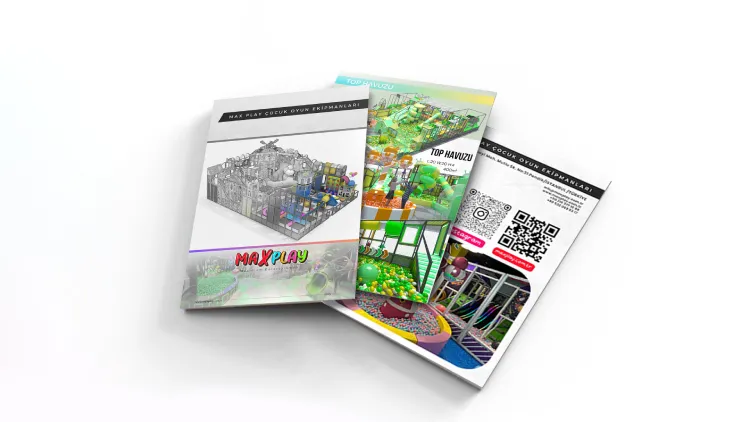
As MaxPlay Playground Equipment, we provide professional solutions for indoor playgrounds and soft play areas. We design, manufacture, install, and assemble indoor playground equipment and soft play systems for commercial spaces. Contact us for turnkey indoor playground projects.
| Landline: | 0216 377 10 88 |
| Mobile / WhatsApp: | 0532 069 53 17 |
| E-Mail: | info@maxplay.com.tr |
| Address: | Google Maps |
You can contact us for all your projects across Türkiye and international markets.
Our Services:
- Trampoline Manufacturing – Trampoline Park Installation
- Ball Pit Manufacturing – Ball Pit Playground Installations (with slides, etc.)
- Interactive Play Systems (Moving Soft Play Toys & Equipment)
- Sand Pit – Sand Play Areas
- Playgrounds and Role-Play Houses for Kindergartens & Nurseries
- Indoor playgrounds for businesses such as shopping malls, cafés, restaurants, etc.
- And all customized playground projects tailored to your specific needs.
Montenegro offers opportunities for family-oriented leisure businesses in residential communities, shopping destinations, and tourism-driven areas. However, a facility designed for year-round local customers requires a different commercial strategy from one serving seasonal visitors along the Adriatic coast. Investors researching soft play centre setup Montenegro should therefore approach the project as an integrated business development process rather than a straightforward equipment purchase.
At MaxPlay, commercial playground development is approached through coordinated design, engineering, manufacturing, and installation planning. The objective is to create environments that balance children’s entertainment, parental confidence, efficient supervision, and sustainable business operations. Understanding these relationships before committing to equipment helps investors avoid expensive layout modifications and operational limitations after opening.
Key Considerations Before Opening a Commercial Soft Play Centre in Montenegro
The first stage of indoor playground business development is establishing a realistic operating concept. Investors should determine the intended customer age range, expected visitor frequency, admission structure, staffing requirements, and additional revenue opportunities. A neighbourhood play centre serving children aged two to eight may benefit from a compact structure, a toddler section, and birthday-party facilities. A larger family entertainment destination may require multi-level attractions, interactive activities, and separate zones for older children.
In practice, one of the most common investment mistakes is choosing equipment before evaluating the building. Structural columns, ceiling height, emergency exits, ventilation capacity, and utility connections can significantly restrict the usable play area. A nominal 300-square-metre property does not provide 300 square metres of playground space once circulation routes, reception, seating, sanitary facilities, storage, and staff areas are considered. Early feasibility assessments should distinguish gross floor area from the space genuinely available for attractions.
Financial planning should also extend beyond the initial installation. Lease commitments, staffing, insurance, electricity, cleaning supplies, periodic inspections, replacement components, and marketing expenditure all influence the operating budget. A reliable family leisure centre feasibility assessment examines different attendance scenarios rather than assuming consistently high visitor numbers. Conservative projections are particularly important when entering a market where customer habits and local competition have not yet been established.
Assessing Location Suitability, Target Customers and Seasonal Demand for Indoor Family Activities
Location selection should begin with customer accessibility rather than rental price alone. In Podgorica, residential density, proximity to schools, parking availability, and shopping patterns may be particularly relevant. In coastal destinations such as Budva, Bar, Tivat, and Herceg Novi, tourism flows can introduce additional demand but may also create considerable seasonal fluctuations. Investors should examine whether the surrounding population can sustain weekday attendance outside peak holiday periods.
A practical location assessment considers the distance families are willing to travel, nearby competing attractions, visibility from pedestrian routes, and the convenience of arriving with young children. Ground-floor premises with straightforward stroller access may offer operational advantages over upper-floor locations requiring elevators. Shopping-centre units can benefit from existing visitor traffic, although lease restrictions, opening hours, and shared-building safety procedures must be assessed carefully.
Real-world operating conditions often reveal a difference between tourist demand and repeat local customers. Visitors staying for a short holiday may favour a single extended session, while residents may prefer memberships, short weekday visits, and organised birthday celebrations. An indoor playground startup requirements assessment should therefore consider school calendars, local purchasing power, weather patterns, and seasonal staffing needs. A smaller, adaptable venue can sometimes produce better financial results than a large attraction with substantial fixed expenses.
MaxPlay Playground Equipment Overview
| Equipment Name | Description | Key Benefits |
| Ball Pool | Colorful pit filled with balls for safe sensory play. | Safe fun for toddlers, easy to clean, encourages motor skills. |
| Trampoline | High-quality indoor trampolines. | Builds balance and strength, child-safe design, durable materials. |
| Interactive Game Sets | Digital and physical interactive play stations. | Boosts learning, cognitive skills, and engagement. |
| Profession Houses | Role-play houses designed for kids. | Encourages creativity, social interaction, and imagination. |
| Trampoline Park | Large-scale trampoline structures. | Suitable for older kids, high durability, safe design. |
| Roller Slide | Conveyor-style (roller) slides for continuous fun. | Efficient design, fun motion play, safe structure. |
| Tower Slide | Tower slides designed for adventure play. | Exciting design, strong safety standards, eye-catching feature. |
| Climbing Wall | Indoor climbing walls. | Builds strength and coordination, safe grips, customizable difficulty levels. |
| Volcano Slide | Volcano-shaped slides with climbing and sliding features. | Combines climbing and sliding, unique design, fun for multiple age groups. |
Developing a Functional Floor Plan with Reception, Play Zones, Seating and Support Facilities
Effective commercial soft play floor planning begins with circulation. Children should be able to move naturally between activities without crossing reception queues, food-service areas, or equipment maintenance routes. Parents need straightforward access to seating, toilets, and their children’s designated play zones. Staff must be able to supervise entrances and reach different sections without unnecessary obstacles.
A well-organised children’s entertainment venue layout typically places reception near the main entrance, establishes a controlled transition into the play area, and positions seating where caregivers can observe important activity zones. Shoe storage, stroller parking, handwashing facilities, and cleaning supply storage should be considered during initial design rather than added wherever space remains. In larger venues, birthday-party rooms and refreshment counters should be positioned to avoid disrupting the primary playground circulation.
For illustration, a 250-square-metre facility might provisionally allocate approximately 140 square metres to play activities, 40 square metres to reception and seating, 25 square metres to circulation, 20 square metres to party activities, and 25 square metres to sanitary and operational facilities. These figures are planning examples, not regulatory requirements or universal design ratios. The final allocation must reflect actual occupancy calculations, accessibility needs, escape routes, and equipment clearances. Experienced designers also reserve sufficient space around attractions for cleaning, inspection, and component replacement.
Choosing Age-Appropriate Attractions: Toddler Areas, Multi-Level Structures and Active Play Courses
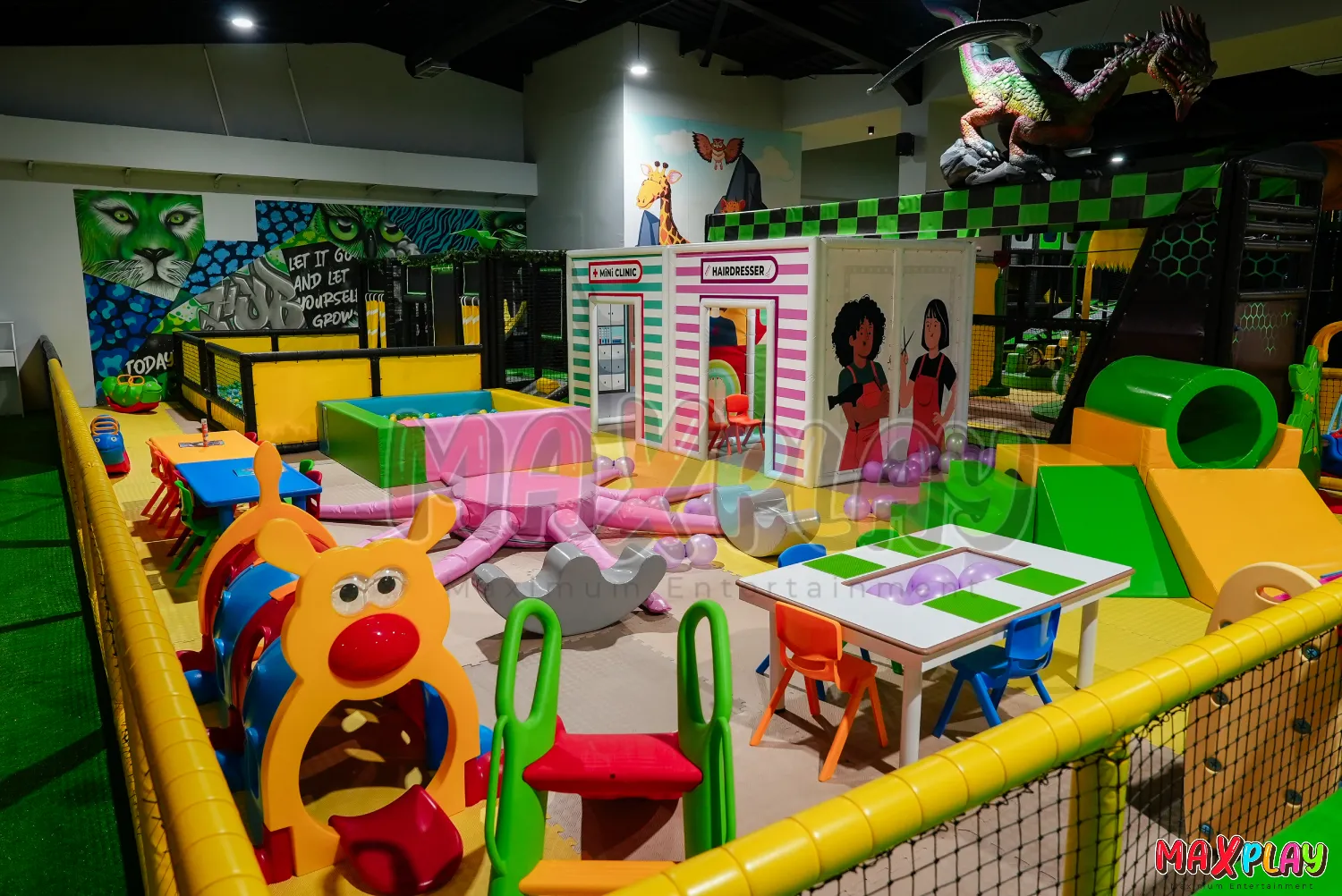
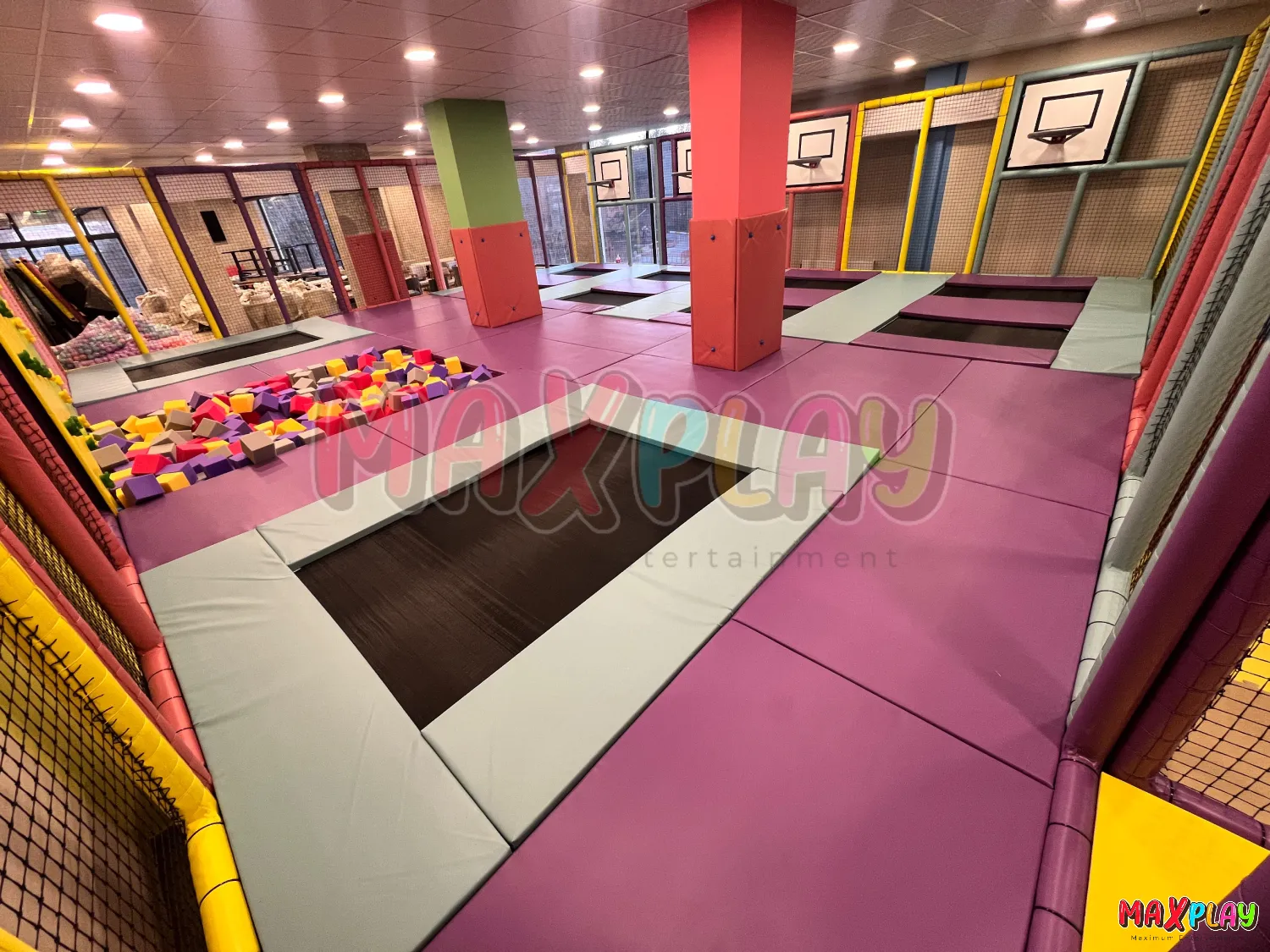
Equipment selection should follow the developmental abilities of the intended visitors. Younger children generally benefit from low-height structures, sensory activities, miniature slides, padded obstacles, and controlled exploration spaces. Older children are more likely to engage with interconnected tunnels, climbing challenges, elevated platforms, and obstacle courses. Effective toddler and adventure play zoning prevents incompatible activity levels from competing within the same circulation area.
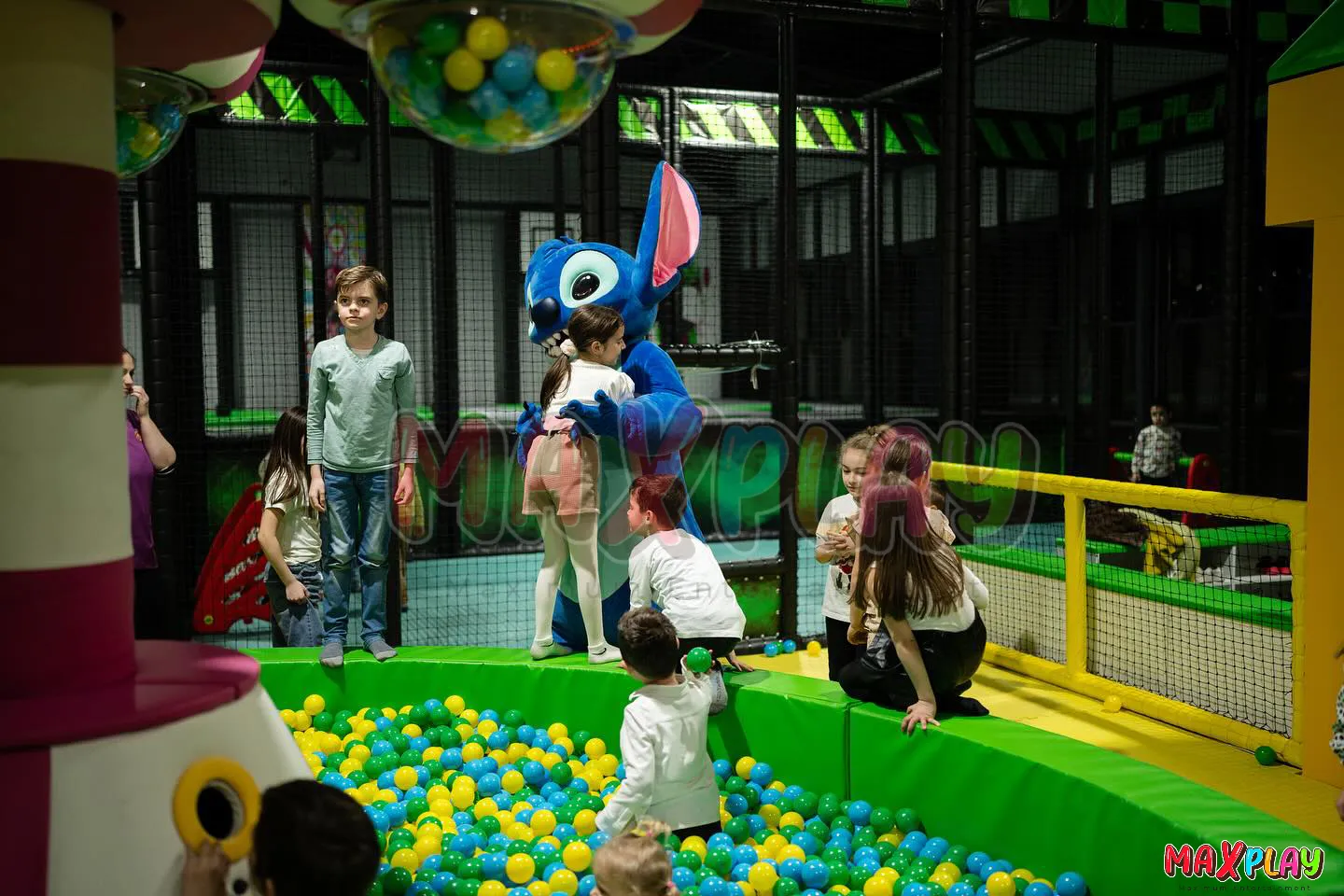
A dedicated indoor play set for younger visitors may combine a compact toddler play set indoor configuration with foam blocks, low climbing steps, and tactile panels. Larger facilities can integrate soft playground equipment into multi-level structures that provide more activities within a limited footprint. A ball pool can support exploratory play, but its capacity, entry design, ball-cleaning procedures, and separation from high-speed activities require particular attention.
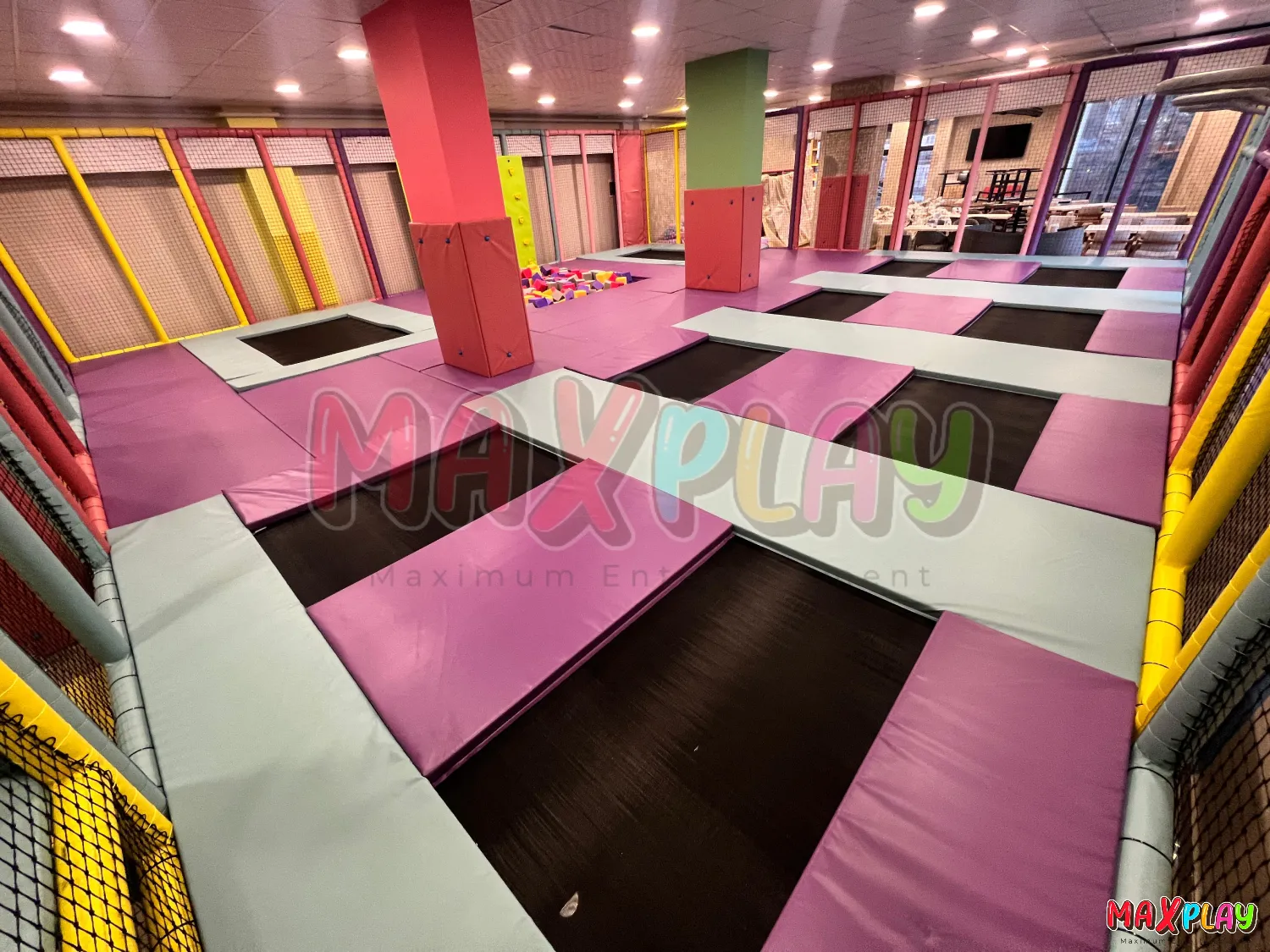
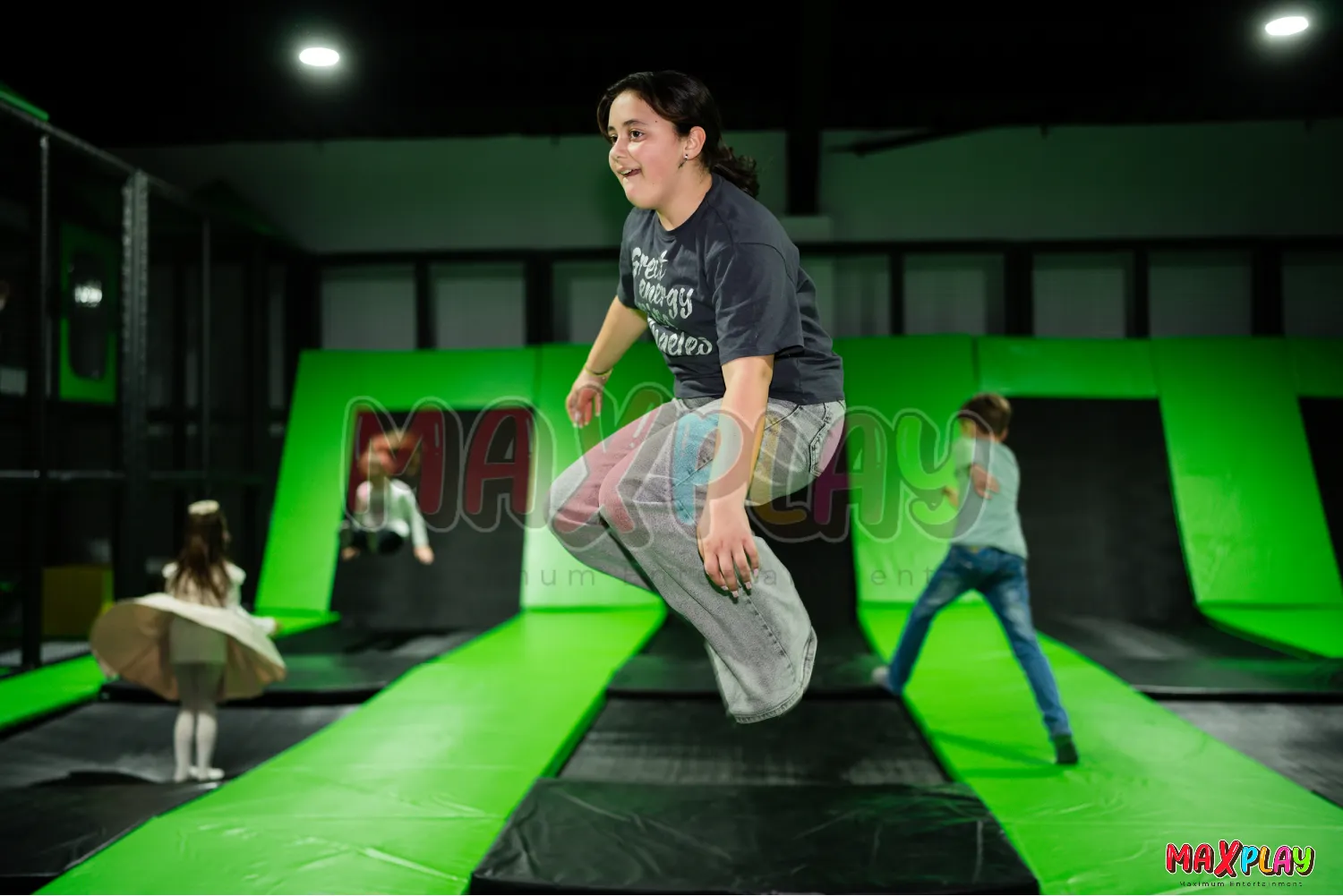
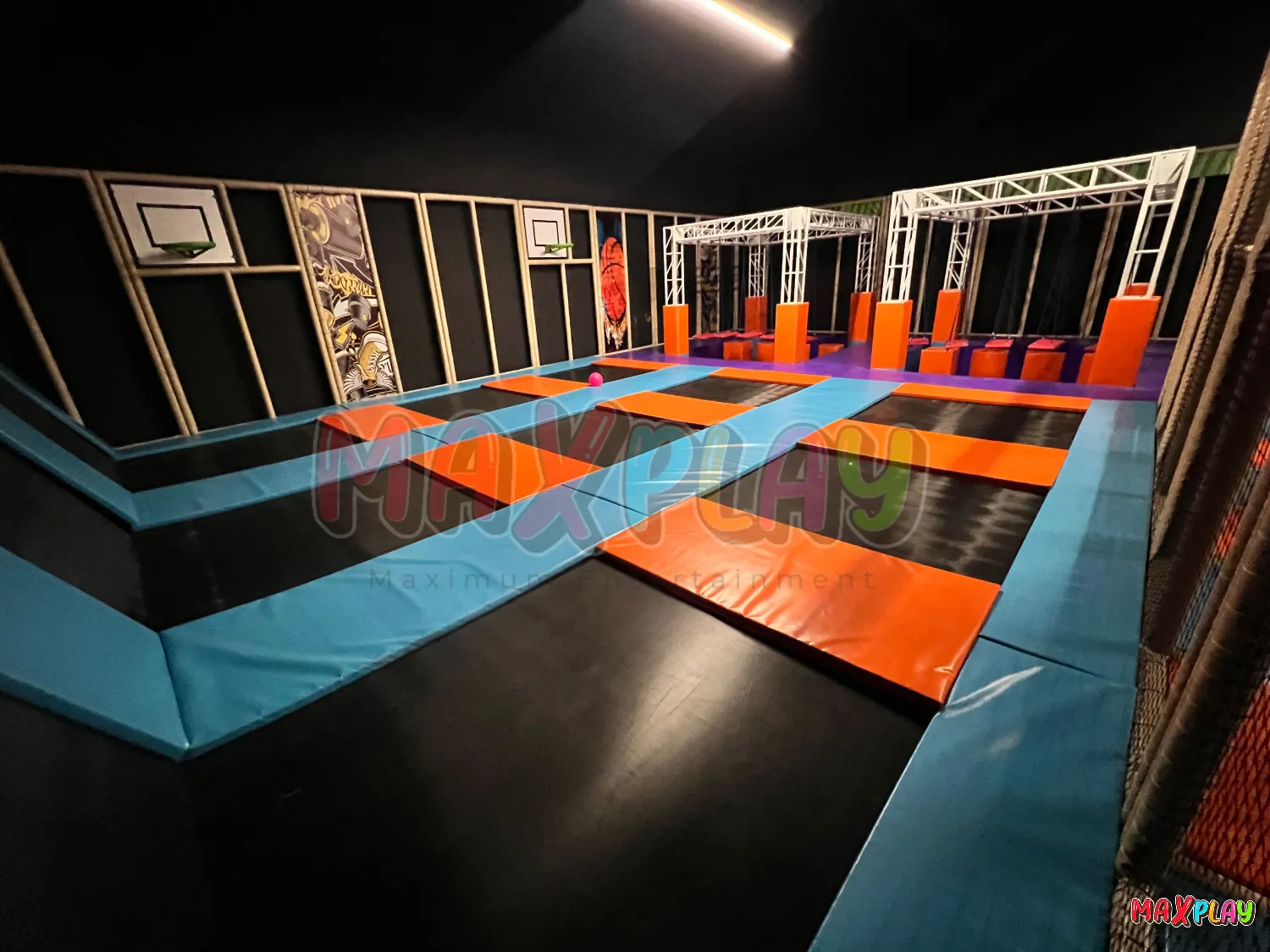
Operators considering interactive playground equipment should assess technical reliability, staff involvement, and maintenance requirements alongside entertainment value. Projection-based games and responsive activity walls may differentiate a venue, while conventional climbing structures often provide simpler mechanical maintenance. Trampoline park equipment introduces additional considerations involving impact protection, user separation, operating procedures, and applicable standards. It is not automatically appropriate for every soft play business, particularly facilities primarily serving preschool children.
Designing Clear Supervision Lines, Safe Entry Points and Comfortable Parent Waiting Areas
Supervision should influence the geometry of the playground from the earliest design stage. Although multi-level structures create excitement, enclosed corners and poorly positioned obstacles can obstruct visibility. Transparent protective mesh, strategically positioned openings, and clearly defined activity boundaries help caregivers and staff observe children without compromising the play experience. Parent seating and supervision design must account for both direct sightlines and areas requiring active staff monitoring.
Controlled entry and exit arrangements are equally important. A facility should establish a clear procedure for admitting children, identifying accompanying adults, and managing collection at the end of a visit. Depending on the operating model, wristbands, electronic admission records, or supervised access gates may support these procedures. However, access-control arrangements must never obstruct emergency evacuation or conflict with fire-safety requirements.
In daily operation, comfort also influences customer retention. Parents may remain on site for an hour or longer, making seating quality, acoustic conditions, ventilation, temperature control, and toilet accessibility commercially significant. A playground that looks impressive in photographs can still generate complaints if adults cannot see their children or communicate comfortably. The most successful layouts treat the caregiver experience as part of the entertainment service rather than an afterthought.
Understanding Applicable Safety Standards, Local Approvals and Inspection Responsibilities
Children’s play centre compliance planning should begin before signing a lease or approving the final equipment design. In Montenegro, operators need to establish which building-use permissions, municipal procedures, fire-safety obligations, accessibility provisions, occupational safety requirements, and commercial operating conditions apply to their particular premises. The requirements may vary according to building classification, occupancy, food-service activities, and the equipment installed.
European safety frameworks provide useful technical references. EN 1176 addresses playground equipment and surfacing, while EN 1177 concerns impact-attenuating playground surfacing. EN 1176-10 is particularly relevant to fully enclosed play equipment. Depending on the attractions, other standards, including EN 14960 for applicable inflatable play equipment, may need consideration. Standards must be selected according to the actual equipment category; a general declaration of compliance is not a substitute for reviewing the relevant requirements.
A sound playground safety inspection planning process includes design-stage hazard assessment, supplier documentation review, installation verification, and appropriate independent inspection before public use. Operators should retain equipment specifications, maintenance instructions, inspection reports, staff training records, and incident procedures. The exact legal status of standards, conformity documents, and approvals should be confirmed with competent Montenegrin authorities and qualified local professionals. Equipment certification alone does not establish that the entire facility is legally authorised to operate.
Material Selection, Cleaning Access and Equipment Durability for Daily Commercial Operations
The quality of an indoor playground is determined as much by its internal construction as by its visible finish. Commercial structures must withstand repeated climbing, sliding, impact, and contact with cleaning agents. High-quality steel frameworks, properly specified protective padding, durable netting, securely fastened connectors, and appropriate floor systems contribute to structural reliability. Buyers comparing commercial soft play equipment should request technical material specifications rather than relying solely on photographs or general quality descriptions.
Hygiene is another essential consideration. Materials used in frequently touched areas should be suitable for children’s environments and compatible with the intended cleaning procedures. Depending on the component, relevant evidence may include material test reports, chemical-safety documentation, flame-performance classifications, and compliance with applicable substance restrictions. Claims of certified, health-conscious production should be supported by product-specific documents. A certificate covering one material does not necessarily cover every component of the completed installation.
Maintenance access is frequently underestimated during indoor play facility operating requirements planning. Ball pools need practical emptying and cleaning arrangements; padded panels should be replaceable without extensive dismantling; and elevated sections must permit safe inspection of fasteners and net connections. In real commercial use, an easily serviced design can reduce downtime and maintenance labour. First-class quality therefore involves not only attractive finishes but also consistent manufacturing tolerances, traceable components, and thoughtful maintenance engineering.
Why Turkey Is a Suitable Manufacturing Partner for Customized Soft Play Projects in Montenegro?
Turkey offers a commercially attractive sourcing option for Montenegrin investors seeking factory-direct production, adaptable engineering, and efficient regional logistics. Compared with sourcing from distant Asian markets, Turkish manufacturing can provide shorter transport routes and more practical coordination between the equipment manufacturer, freight provider, and installation team. These advantages are particularly relevant when construction schedules are tight or additional components are required during assembly.
When evaluating Turkish playground manufacturers Montenegro, buyers should compare complete delivered project costs rather than equipment quotations alone. Chinese suppliers may offer competitive initial prices, but international freight, customs procedures, installation arrangements, replacement-part availability, and communication delays can change the final investment. European manufacturers may provide strong engineering capabilities but sometimes operate at higher production costs. Turkish suppliers can compete on price while offering premium-quality materials, customised engineering, and potentially faster delivery. Actual advantages depend on project specifications, production capacity, and negotiated shipping conditions.
An experienced indoor playground supplier should provide dimensional drawings, material specifications, relevant test documentation, installation instructions, and clear warranty terms. Turkish production is particularly attractive when a project requires design revisions or non-standard dimensions. However, country of origin alone does not establish product quality. Investors should assess manufacturing controls, documented conformity, project references, and the supplier’s ability to provide technical support after installation.
Tailor-Made Playground Production for Different Floor Areas, Themes and Investment Budgets
Custom manufacturing allows investors to adapt playground equipment to actual building conditions rather than forcing standard structures into unsuitable premises. A narrow commercial unit may require a linear adventure course, while a square floor plan could accommodate a central multi-level attraction surrounded by seating. Low ceilings, columns, structural beams, and irregular walls must be incorporated into the engineering drawings. This is where bespoke play centre construction provides advantages over purchasing disconnected catalogue products.
Professional custom indoor playground production also makes it possible to establish a coherent visual identity. Coastal-inspired themes, miniature urban environments, forest adventures, and contemporary pastel concepts can appeal to different audiences. However, decorative features should never interfere with structural access, cleaning, or supervision. A visually impressive attraction that creates inaccessible corners or complicated maintenance requirements is not necessarily a successful commercial design.
Budget optimisation involves prioritising play value rather than simply reducing material quality. For smaller projects, a compact indoor soft playground equipment configuration may deliver more usable activities than several isolated attractions. Operators comparing soft play equipment wholesale offers should examine the actual scope of supply, including structural framing, protective surfaces, decorative panels, transport packaging, and assembly services. Established soft play manufacturers and indoor playground equipment manufacturers should be able to explain how each proposed configuration supports the intended age groups, available space, and investment objectives.
Coordinating Equipment Delivery, Installation, Staff Preparation and Pre-Opening Checks
International playground installation requires careful coordination between production completion, building readiness, freight scheduling, and on-site assembly. For playground equipment installation Montenegro, the equipment supplier and local project team should agree on delivery access, unloading arrangements, temporary storage, electrical requirements, and installation sequencing. Large structural components may require specific handling equipment, while finished floors and surrounding walls need protection during assembly.
Shipping from Turkey can be organised through suitable road freight and other cargo arrangements, depending on shipment volume and destination. Consolidated cargo may suit smaller projects, whereas dedicated transport can provide greater scheduling control for large installations. Customs documentation, packing lists, commercial invoices, import duties, and applicable tax treatment should be confirmed before dispatch. Reliable turnkey soft play business solutions also require coordination between playground installation and other contractors responsible for lighting, ventilation, fire protection, and interior finishing.
Before opening, the operator should complete a structured indoor playground pre-opening checklist covering equipment stability, protective padding, accessible fasteners, entry controls, emergency procedures, cleaning routines, and staff responsibilities. Particular attention should be given to high-contact areas, slide exits, elevated platforms, and transitions between different floor surfaces. Staff should understand age restrictions, capacity limits, incident reporting, and the process for temporarily closing equipment when defects are identified. The final inspection should verify the completed installation against approved drawings and applicable safety requirements, not merely confirm that assembly has finished.
How MaxPlay Supports Soft Play Centre Development in Montenegro Through Custom Design and Turnkey Solutions?
MaxPlay is a Turkey-based manufacturer specialising in commercial indoor playgrounds, soft play structures, toddler attractions, interactive activity systems, and larger family entertainment installations. Its production capabilities cover projects of different sizes, from compact play corners to multi-level adventure environments. Through design, engineering, manufacturing, shipping, installation coordination, and after-sales support, MaxPlay helps investors develop facilities around the actual requirements of their buildings and business models.
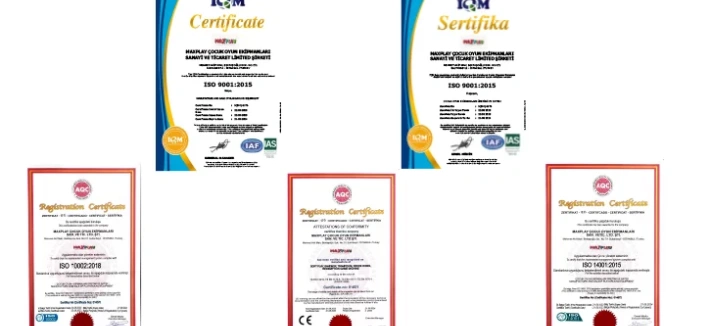
As a trampoline park manufacturer and specialist in children’s indoor entertainment systems, MaxPlay combines equipment categories where the project concept and available space justify them. Its manufacturing approach emphasises durable construction, certified quality processes, materials suitable for children’s environments, and customisable layouts. Factory-direct production also supports competitive pricing against suppliers in China and other international markets, while Turkey’s geographical position offers potential advantages in freight coordination and delivery times for Montenegro. Every project is evaluated according to its technical requirements, intended use, and commercial objectives.
MaxPlay provides free preliminary playground planning and 3D layout design, allowing investors to review space utilisation, equipment selection, and visual concepts before committing to production.
Whether the proposed venue is in Podgorica, Budva, Tivat, Bar, or another Montenegrin location, the process begins with understanding the building dimensions, target customers, desired attractions, and available budget. Request your free playground project today and discover a customised, competitively priced solution for your investment.