




Turnkey Indoor Playground Projects in Norway: Fast and Reliable Installations
Developing a successful indoor entertainment venue requires more than purchasing attractive play equipment. Turnkey Indoor Playground Projects in Norway involve coordinated planning, technical design, manufacturing, international transportation, installation, and safety verification. For investors entering the family entertainment industry, the quality of this coordination directly influences construction schedules, operational costs, visitor experience, and long-term profitability.
As MaxPlay Playground Equipment, we provide professional solutions for indoor playgrounds and soft play areas. We design, manufacture, install, and assemble indoor playground equipment and soft play systems for commercial spaces. Contact us for turnkey indoor playground projects.
| Landline: | 0216 377 10 88 |
| Mobile / WhatsApp: | 0532 069 53 17 |
| E-Mail: | info@maxplay.com.tr |
| Address: | Google Maps |
You can contact us for all your projects across Türkiye and international markets.
Our Services:
- Trampoline Manufacturing – Trampoline Park Installation
- Ball Pit Manufacturing – Ball Pit Playground Installations (with slides, etc.)
- Interactive Play Systems (Moving Soft Play Toys & Equipment)
- Sand Pit – Sand Play Areas
- Playgrounds and Role-Play Houses for Kindergartens & Nurseries
- Indoor playgrounds for businesses such as shopping malls, cafés, restaurants, etc.
- And all customized playground projects tailored to your specific needs.
Norway’s climate creates strong opportunities for indoor recreation facilities that provide comfortable, engaging environments throughout the year. However, transforming an empty commercial property into a functioning children’s activity centre involves technical challenges that are frequently underestimated. Ceiling heights, building access, structural limitations, fire safety provisions, equipment dimensions, and installation logistics must be considered before manufacturing begins. A professionally managed project addresses these requirements as interconnected decisions rather than separate purchasing activities.
Working with an experienced indoor playground supplier allows investors to consolidate responsibilities while maintaining greater control over specifications and budgets. Turkish manufacturer MaxPlay approaches commercial playground development through custom engineering, factory-based production, and coordinated international delivery. By combining competitive manufacturing costs with project-specific solutions, the company provides Norwegian businesses with an alternative to fragmented procurement and complicated multi-supplier construction processes.
What Does a Turnkey Indoor Playground Project Include for Norwegian Investors?
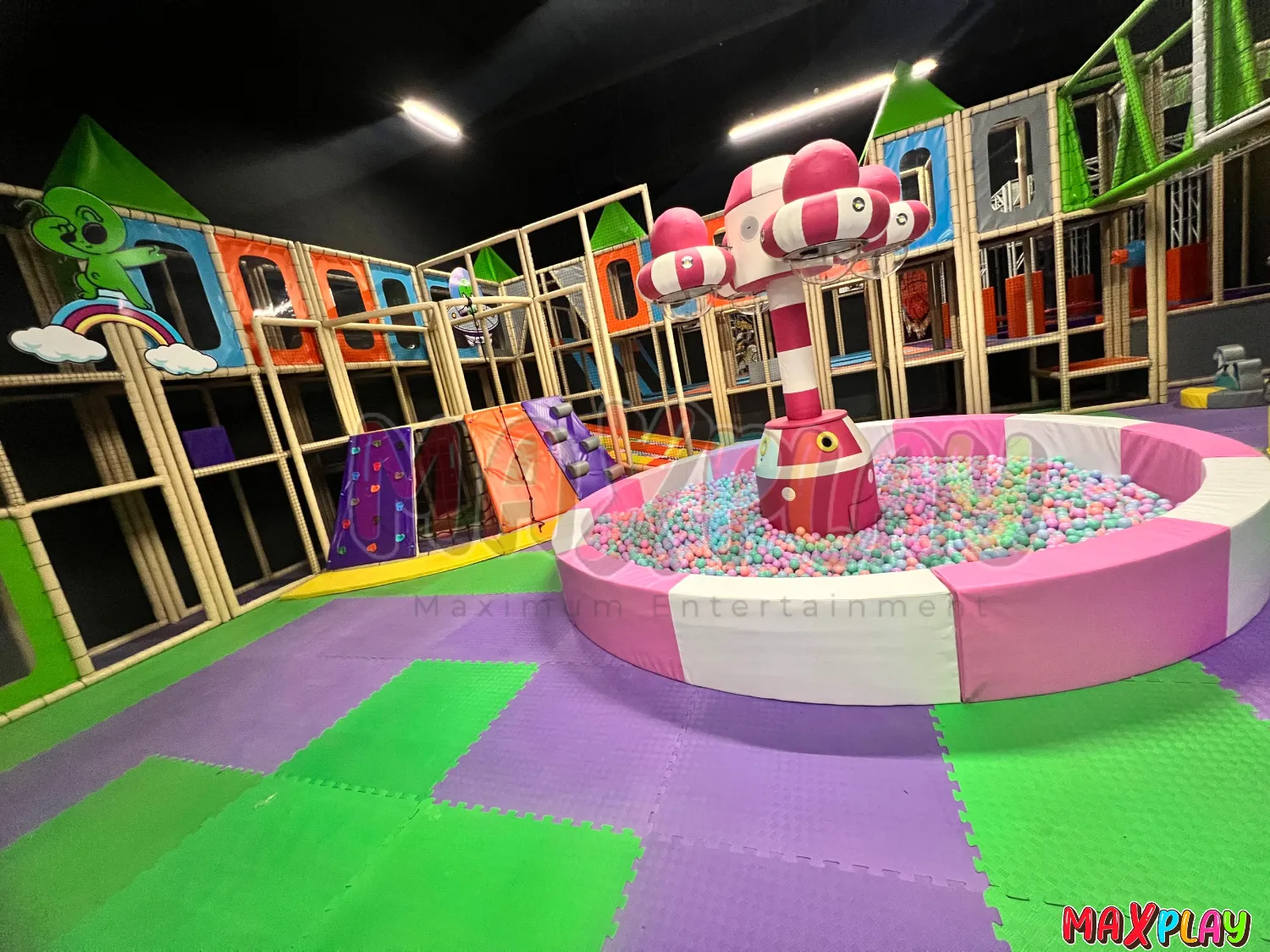
A turnkey project brings the essential stages of playground development under a coordinated delivery structure. Instead of independently commissioning designers, purchasing attractions from several manufacturers, arranging international transportation, and sourcing installation contractors, investors work through a defined project process. The scope typically includes site evaluation, concept development, technical drawings, equipment manufacturing, quality control, packing, shipment, assembly, and preparation for final inspection. This integrated approach is particularly valuable for commercial indoor play facility development, where mistakes made during the design phase can create expensive problems during installation.
One of the most common practical difficulties arises when architectural drawings and equipment specifications are prepared independently. A climbing structure may fit within the available floor area but interfere with ventilation ducts, emergency routes, or maintenance access. Similarly, a visually appealing slide configuration may require more clearance than the initial layout provides. Effective turnkey playground construction Norway projects therefore begin with coordinated technical information, including verified measurements, building services, structural considerations, and operational requirements.
The definition of turnkey should also be established contractually. Investors need to understand which party handles unloading, customs clearance, mechanical assembly, electrical connections, inspection coordination, and staff familiarisation. Complete indoor playground solutions are most valuable when responsibilities, exclusions, milestones, and acceptance criteria are documented before production. This approach is particularly suitable for shopping centres, family entertainment venues, hotels, and dedicated activity facilities seeking predictable delivery. It is less suitable for operators who prefer to manage multiple specialist contractors independently and already possess the technical resources to do so.
MaxPlay Playground Equipment Overview
| Equipment Name | Description | Key Benefits |
| Ball Pool | Colorful pit filled with balls for safe sensory play. | Safe fun for toddlers, easy to clean, encourages motor skills. |
| Trampoline | High-quality indoor trampolines. | Builds balance and strength, child-safe design, durable materials. |
| Interactive Game Sets | Digital and physical interactive play stations. | Boosts learning, cognitive skills, and engagement. |
| Profession Houses | Role-play houses designed for kids. | Encourages creativity, social interaction, and imagination. |
| Trampoline Park | Large-scale trampoline structures. | Suitable for older kids, high durability, safe design. |
| Roller Slide | Conveyor-style (roller) slides for continuous fun. | Efficient design, fun motion play, safe structure. |
| Tower Slide | Tower slides designed for adventure play. | Exciting design, strong safety standards, eye-catching feature. |
| Climbing Wall | Indoor climbing walls. | Builds strength and coordination, safe grips, customizable difficulty levels. |
| Volcano Slide | Volcano-shaped slides with climbing and sliding features. | Combines climbing and sliding, unique design, fun for multiple age groups. |
Planning Indoor Entertainment Facilities for Norway’s Year-Round Family Leisure Market
Norwegian indoor recreation facilities must accommodate changing visitor patterns throughout the year. Cold weather, rainfall, limited daylight during winter, school holidays, and weekend family activities can influence attendance. Nevertheless, seasonal demand alone does not guarantee commercial success. Location accessibility, local demographics, nearby competition, parking availability, ticket pricing, and complementary services determine whether an activity centre can attract repeat customers. Investors planning Norwegian family entertainment centres should evaluate these factors before selecting equipment or committing to a property.
In practical facility planning, visitor circulation is often as important as the attractions themselves. Parents need clear visibility of younger children, comfortable seating, and convenient access to refreshments and toilets. Staff require unobstructed supervision routes and manageable entry and exit points. A facility designed for 100 simultaneous visitors must consider more than the physical capacity of its play structures; reception congestion, shoe storage, birthday-party rooms, and emergency evacuation arrangements can become operational bottlenecks. These considerations belong within indoor activity centre project management from the earliest planning stage.
Different business models also require different equipment strategies. A neighbourhood play café may benefit from compact climbing structures, sensory activities, and a dedicated preschool area. A regional entertainment destination may justify larger adventure attractions, interactive games, and multiple activity zones. Hotels may prioritise durability, compact dimensions, and simplified supervision rather than maximum capacity. The most appropriate investment is not necessarily the largest playground but the configuration that matches expected attendance, age distribution, staffing resources, and available space.
From Site Measurements to 3D Concepts: Preparing a Build-Ready Playground Design
Accurate site information is the foundation of reliable manufacturing. Before detailed engineering begins, the project team should establish the usable floor area, finished ceiling height, column positions, floor levels, doorway dimensions, and potential delivery routes. Fire exits, sprinklers, lighting fixtures, ventilation equipment, and existing electrical installations must also appear in the design documentation. These details help determine whether an indoor play set can be manufactured as originally conceived or requires dimensional adjustments.
A common mistake is treating a preliminary 3D visualisation as a complete construction document. Concept images communicate colours, themes, attraction placement, and the overall visitor experience, but they do not automatically establish structural interfaces, installation tolerances, or technical compliance. The design process should progress from an initial concept to coordinated drawings showing equipment footprints, platform elevations, access points, clearance zones, and relevant fixing details. Experienced indoor playground equipment manufacturers use this information to identify potential conflicts before materials enter production.
Consider a commercial property with a relatively narrow entrance and a spacious interior. A large adventure tower might fit comfortably once assembled but cannot be transported into the building as a single module. The engineering team must divide the structure into manageable components without compromising its intended performance. Custom playground engineering Turkey can address these challenges through project-specific dimensions, modular connections, and manufacturing drawings developed around actual site conditions. This preparation reduces unexpected modifications, protects the installation schedule, and helps investors evaluate the proposed design before committing to full production.
Choosing Integrated Play Attractions: Adventure Towers, Soft Play Zones, Slides and Toddler Areas
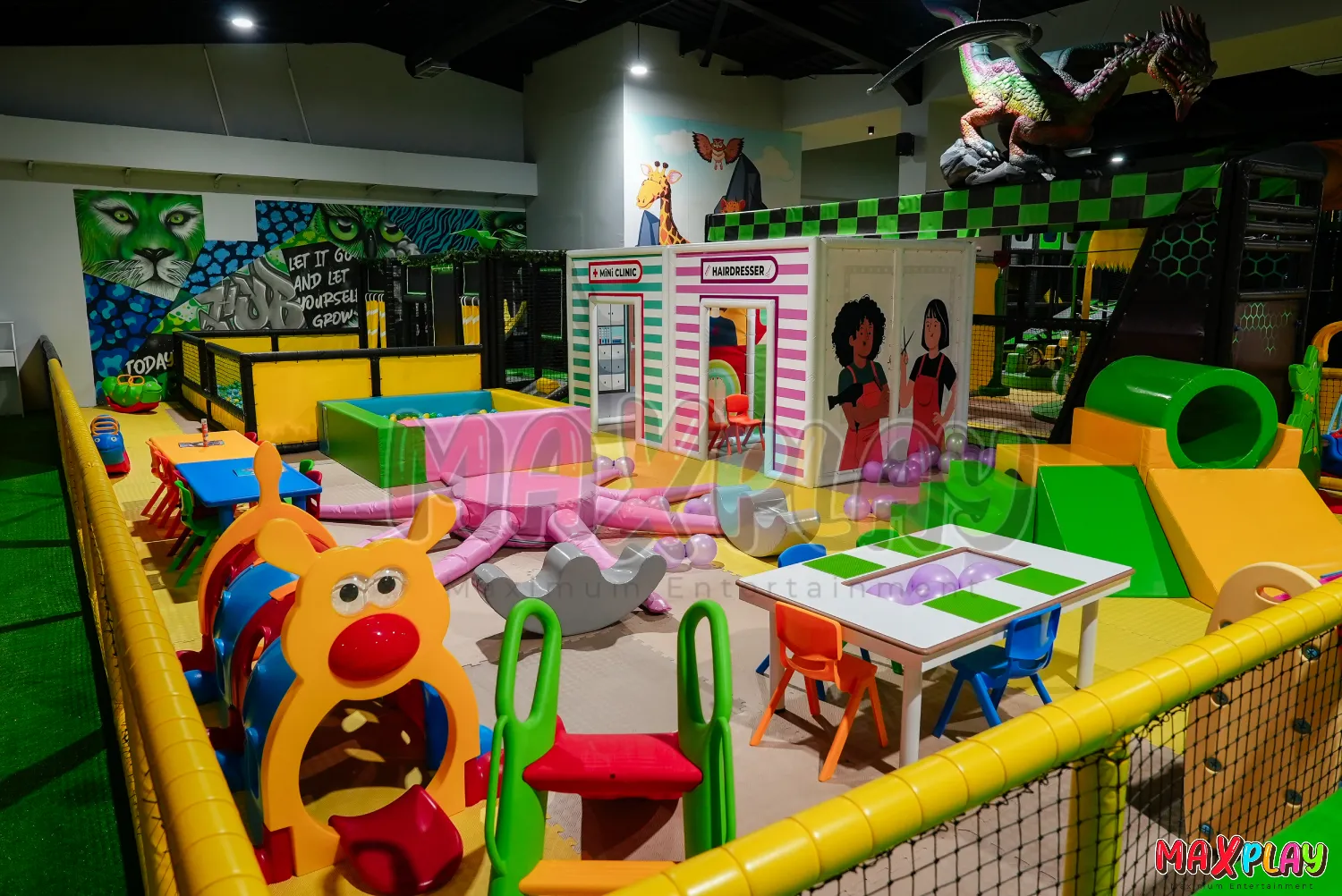
Attraction selection should follow the intended customer profile rather than a catalogue-driven purchasing process. Multi-level adventure towers are suitable for facilities targeting active school-age children, while enclosed climbing structures, tunnels, and obstacle courses encourage exploration within controlled play environments. A carefully designed soft playground equipment arrangement can combine different physical challenges without creating unnecessary circulation conflicts. The objective is to distribute activities so children remain engaged while staff can supervise movement between zones.
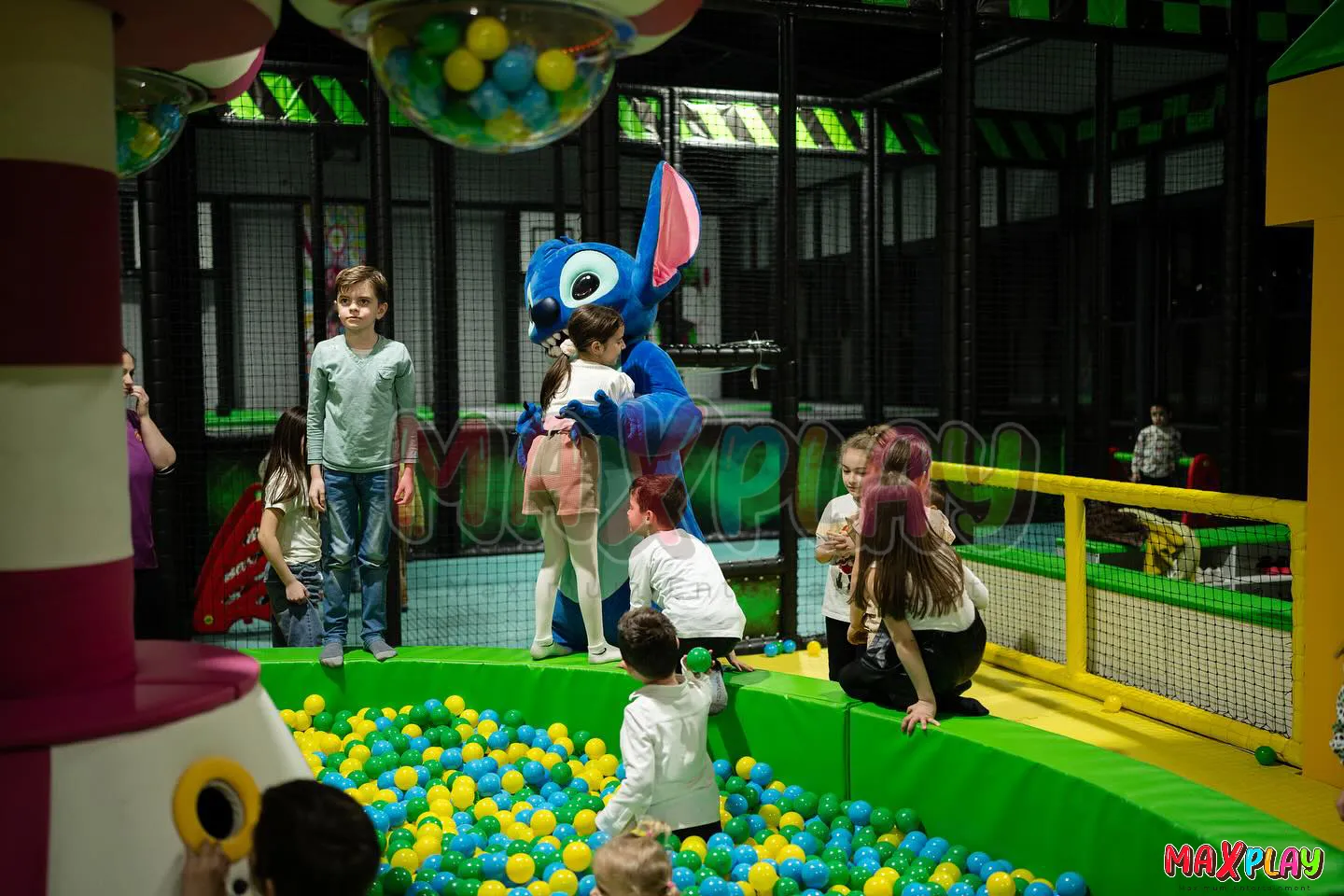
For younger visitors, a dedicated toddler play set indoor configuration should provide age-appropriate climbing heights, low-level slides, sensory panels, and protected play boundaries. These spaces should be separated from higher-energy attractions where older children move quickly. In real operation, mixed-age congestion is a frequent source of supervision difficulties. A ball pool can provide an appealing attraction, but its depth, entry arrangement, cleaning access, and age suitability require careful consideration. The same applies to indoor soft playground equipment, where protective surfaces must be selected for the intended activity and foreseeable use.
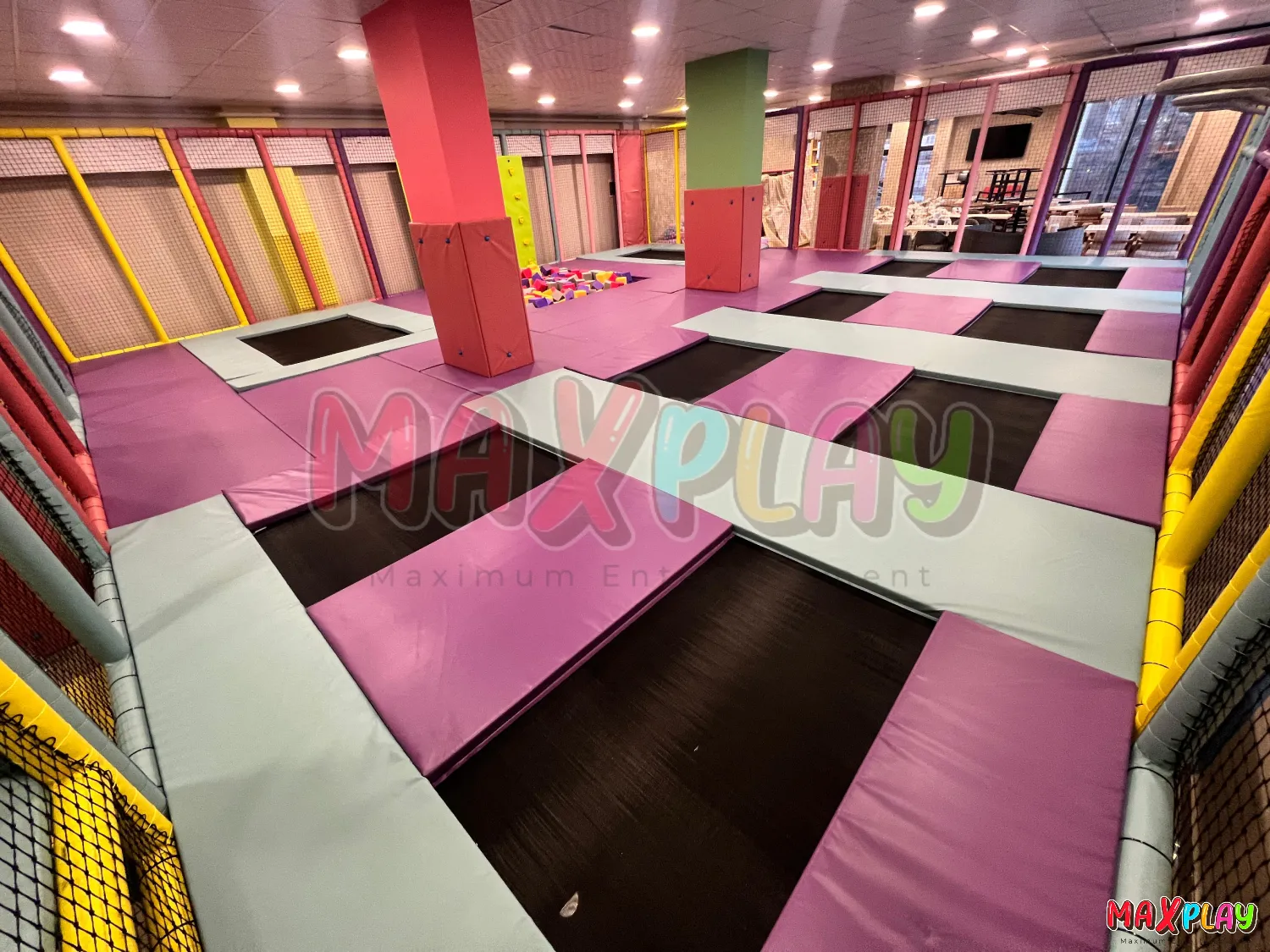
Larger venues may integrate modular adventure play systems, interactive projection activities, climbing walls, and selected trampoline park equipment. However, trampoline installations introduce additional design, supervision, maintenance, and safety requirements and should not simply be treated as extensions of a conventional soft play structure. Working with a qualified trampoline park manufacturer is particularly important when planning specialised jumping areas. The strongest attraction mix balances visitor appeal, operational complexity, cleaning requirements, maintenance access, and the space needed for safe circulation.
How Prefabricated Playground Components Can Reduce On-Site Installation Time?
Factory preparation plays a significant role in installation efficiency. Prefabricated soft play structures are manufactured as planned components before arriving at the destination, reducing the amount of cutting, fitting, and modification required inside the venue. Steel frames, protective padding, platform panels, barriers, slides, and decorative elements can be produced according to approved drawings and organised into installation sequences. This method helps shift technically demanding work into a controlled manufacturing environment.
In practical installations, delays frequently result from missing connectors, incorrectly identified components, or deliveries arranged without reference to the assembly sequence. A reliable manufacturer can reduce these risks through component identification, packing lists, connection details, and pre-shipment checks. Factory-built play equipment should be organised so installation teams can identify the correct parts without repeatedly unpacking unrelated materials. For venues with restricted storage areas, phased unloading and coordinated deliveries can be especially important.
The advantages of prefabrication are strongest when the building itself is ready. Finished flooring, completed utility installations, suitable site access, and confirmed working conditions allow commercial play structure assembly to proceed more efficiently. Even well-manufactured equipment cannot compensate for an unfinished property or unresolved building restrictions. Fast playground installation services therefore depend on coordinated preparation rather than speed alone. A realistic schedule includes unloading, component inspection, assembly, adjustment, final cleaning, and sufficient time to resolve inspection findings before opening.
Safety Planning for Norwegian Play Facilities: Equipment Standards, Risk Assessments and Inspection Documentation
Safety must be integrated into the design process rather than checked only after installation. Norwegian playground safety requirements involve identifying the rules applicable to the specific facility, its equipment, and its intended use. Relevant considerations may include Norway’s playground equipment safety framework, applicable NS-EN standards, building regulations, fire safety obligations, and operator responsibilities. EN 1176 and EN 1177 provide important technical references for relevant playground equipment and impact-attenuating surfaces, although their applicability depends on the equipment category and installation conditions.
A common procurement mistake is assuming that a general CE declaration or a manufacturer’s statement of compliance automatically proves that every installed attraction satisfies Norwegian requirements. Different products can fall under different regulatory frameworks, and CE marking is not a universal certification for all playground structures. Investors should request product-specific technical documentation, material information, applicable test reports, installation instructions, maintenance guidance, and a clear explanation of the standards used. For specialised attractions, including trampolines, additional equipment-specific requirements may apply.
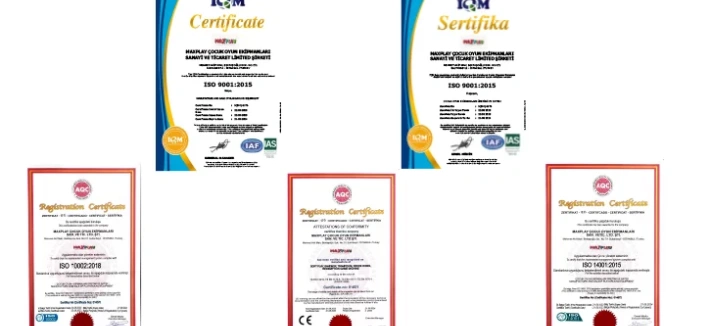
Safe commercial soft play equipment also depends on construction quality and appropriate material selection. Protective padding, enclosed connections, durable netting, secure fasteners, accessible inspection points, and hygienic, cleanable surfaces contribute to safer operation. Flame-performance documentation and material health information should be assessed against the actual application and local requirements. Before opening, the operator should arrange an appropriate independent inspection where required, document outstanding findings, and establish routine maintenance procedures. A successful safety strategy combines certified or appropriately tested components, qualified installation, operational supervision, and ongoing inspection rather than relying on a certificate alone.
Why Turkish Playground Manufacturing Offers Practical Advantages for Norwegian Projects?
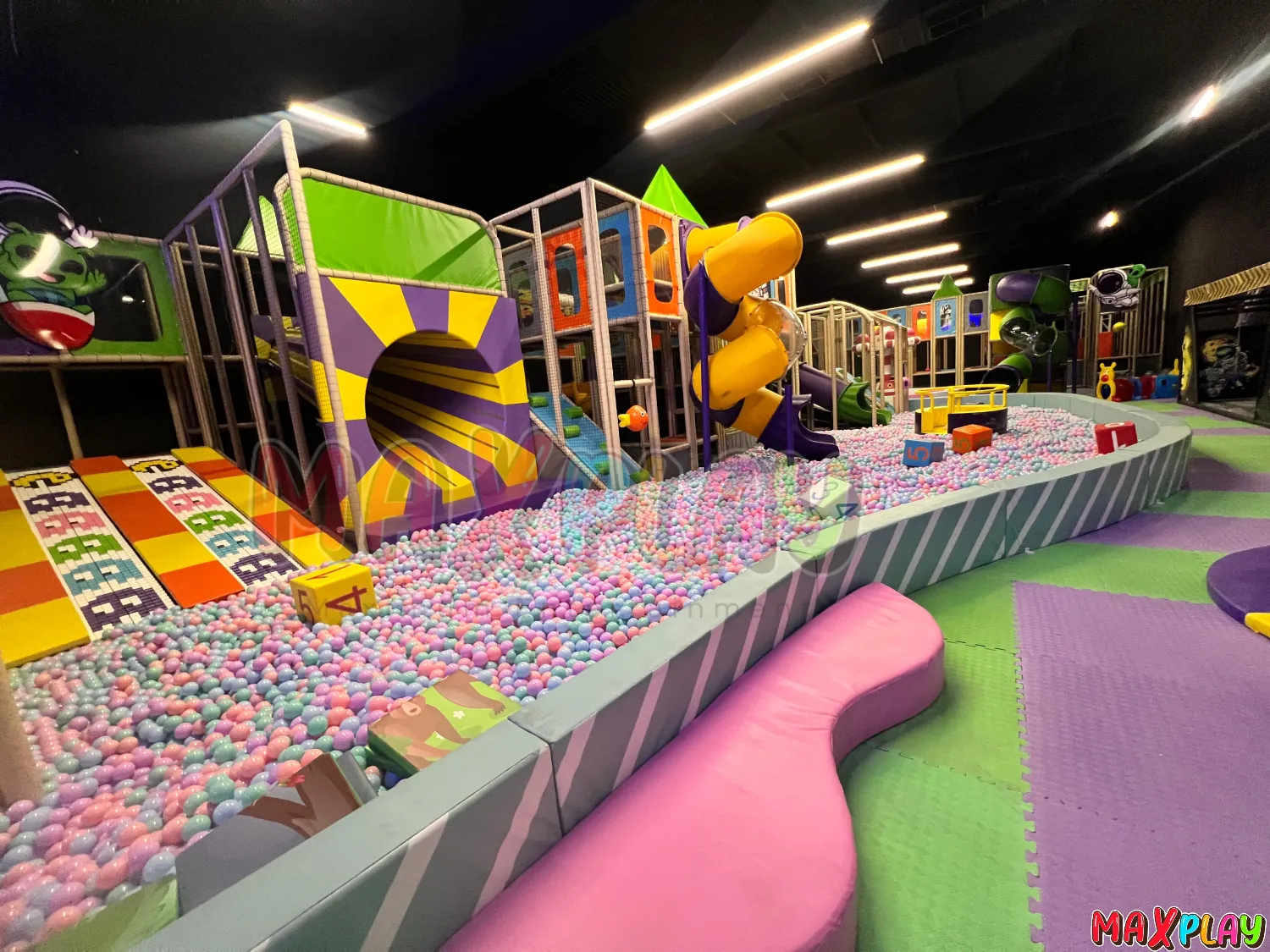
Turkey has developed a strong manufacturing base serving international commercial markets, including recreational equipment and custom-engineered structures. For Norwegian investors, the country’s advantages include competitive production costs, established export logistics, and access to manufacturers capable of producing complete playground systems. Experienced Turkish playground equipment exporters can combine technical design, manufacturing, and delivery within one coordinated process, reducing the complexity associated with purchasing individual attractions from unrelated suppliers.
Price comparisons should consider more than the initial equipment quotation. Chinese manufacturers may offer lower prices for standardised products, while European suppliers may benefit from geographic proximity or established regional service networks. Turkish producers can occupy a competitive position between these alternatives, offering customised manufacturing, first-class materials, and potentially shorter production and delivery schedules than distant suppliers. However, actual lead times and quality depend on the manufacturer, equipment specifications, production workload, and shipping arrangements. A meaningful comparison includes manufacturing costs, transport charges, customs expenses, installation, replacement parts, and expected maintenance.
A frequent purchasing mistake is choosing soft play manufacturers exclusively on the basis of price per square metre. Two visually similar playgrounds may differ considerably in frame construction, padding density, netting durability, protective finishes, fastening systems, and installation documentation. These differences influence maintenance requirements and equipment lifespan. For investors considering soft play equipment wholesale or complete custom facilities, Turkish manufacturing can provide attractive value when competitive pricing is supported by documented material quality, applicable certification, transparent technical specifications, and reliable after-sales assistance.
Coordinating Custom Production, Factory Quality Checks and Pre-Shipment Preparation in Turkey
Once the technical drawings are approved, manufacturing should follow a controlled production schedule. Steel structures, platforms, protective barriers, slides, padding, and decorative components need to be produced according to the agreed dimensions and material specifications. Professional indoor playground equipment manufacturers should establish inspection checkpoints covering dimensional accuracy, connection quality, protective finishing, material consistency, and component completeness. These checks are especially important for custom installations where replacement parts may not be immediately available in Norway.
Factory quality assurance should extend beyond visual appearance. Structural components require suitable materials and fabrication methods, while surfaces accessible to children must be evaluated for sharp edges, exposed fasteners, entrapment hazards, and foreseeable contact. Foam padding and protective coverings should be appropriate for intensive commercial use, with supporting documentation for relevant chemical safety, fire performance, and hygiene requirements. High-quality indoor play equipment must also withstand repeated cleaning without premature deterioration. Where certification is claimed, investors should verify that the documentation covers the supplied products and applicable standards rather than relying on generic promotional statements.
Before shipment, the manufacturer should verify quantities, identify components, protect vulnerable surfaces, and prepare installation documentation. Photographic records can help confirm the condition and completeness of the shipment before loading. In practical international projects, a missing specialised connector may cause more disruption than a minor manufacturing delay because the replacement must cross borders. Careful packing, spare-component planning, and clearly labelled assembly packages reduce this exposure. These procedures also make the transition from manufacturing to installation more predictable.
Transporting Playground Structures to Norway: Freight Routes, Import Documentation and Delivery Scheduling
International transportation is a critical part of project planning because playground structures often combine bulky frames, irregularly shaped slides, protective panels, and sensitive decorative components. International playground freight coordination begins with accurate cargo dimensions, weight calculations, packaging requirements, and the delivery address. From manufacturing centres around Istanbul, equipment can be transported to Norway through international road freight networks or suitable sea-freight arrangements. The appropriate method depends on cargo volume, available routes, shipment urgency, handling requirements, and final destination.
Road transportation can be practical for time-sensitive projects when the cargo dimensions and route permit efficient movement. Sea freight may offer advantages for larger shipments, although port handling and onward transport must be included in the schedule. Air freight is generally less economical for complete playground structures but can be considered for urgent, compact replacement components. Reliable soft play installation scheduling therefore requires the transport method to be selected before installation teams and specialist equipment are booked. Weather disruptions, customs processing, ferry connections, and site-access restrictions should be reflected in the delivery plan.
Norwegian import procedures also require attention. Depending on the transaction, documentation may include a commercial invoice, packing list, transport documents, commodity classifications, and applicable origin evidence. Import VAT, customs treatment, and clearance responsibilities should be established before dispatch. Turkey’s customs arrangements with European markets do not automatically mean every shipment enters Norway without duties or documentation. The agreed Incoterm should identify who is responsible for freight, insurance, clearance, and delivery costs. In real projects, an apparently inexpensive shipping quotation can become costly when unloading equipment, local transport, storage, or customs brokerage has been excluded.
Managing Installation Teams, Final Inspections and Opening-Day Readiness
Successful installation begins before the first shipment reaches the venue. The project manager should confirm that the building is accessible, construction work has progressed sufficiently, and suitable space is available for unloading and sorting components. Installation teams need approved drawings, assembly instructions, appropriate tools, lifting arrangements where necessary, and a clear sequence of work. These preparations become particularly important when several attractions share structural interfaces or when equipment must be assembled around existing building features.
During installation, technicians should verify frame alignment, fastening arrangements, protective padding, netting connections, slide interfaces, and accessible maintenance points. A frequent operational mistake is completing the visible structure while leaving difficult-to-reach connections or protective elements for later adjustment. Such omissions can delay final approval and create unnecessary rework. Proper indoor playground commissioning involves systematic checks of the completed installation, correction of identified deficiencies, and confirmation that the equipment corresponds to the approved design.
The final playground project handover should provide the operator with relevant drawings, inspection records, maintenance instructions, component information, and recommended operational procedures. Staff should understand age restrictions, supervision requirements, cleaning routines, incident reporting, and the process for taking damaged equipment out of service. Independent inspection and any required local approvals must be completed before public use. Opening readiness is therefore a combination of technical completion, documented safety, trained personnel, and operational preparation rather than simply the date on which assembly finishes.
How MaxPlay Coordinates Custom Playground Manufacturing and Turnkey Installation for Norwegian Businesses?
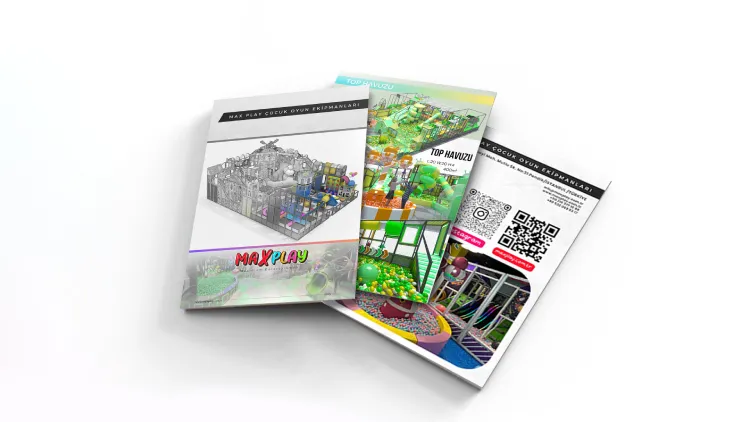
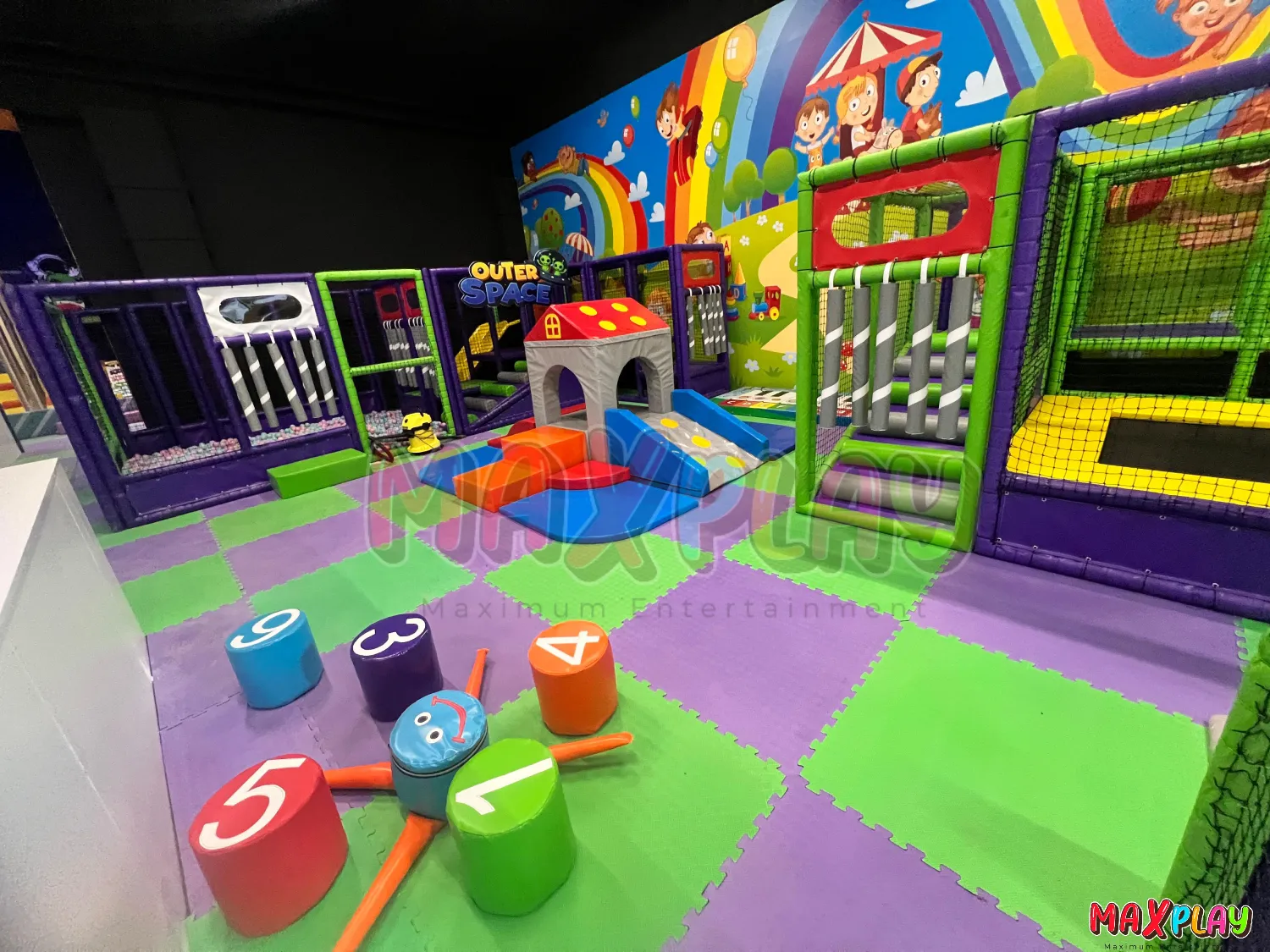
MaxPlay combines playground design, manufacturing, international shipping, installation coordination, and after-sales support within a project-oriented service model. Based in Istanbul, the company develops customised recreational environments for shopping centres, hotels, family entertainment venues, and independent play facilities. Its product range includes soft play structures, adventure systems, slides, toddler attractions, climbing activities, ball pools, and interactive playground equipment. The company’s published project process covers business planning, free site layout and 3D design, manufacturing, testing, shipping, installation, and ongoing technical support.
For Norwegian investors, this integrated structure helps align design decisions with manufacturing capabilities and practical installation requirements. MaxPlay’s approach allows equipment dimensions, themes, activity combinations, and circulation layouts to be adapted to individual properties rather than forcing the venue to accommodate a fixed catalogue design. The company positions its manufacturing around first-class material quality, internationally recognised safety standards, and competitive factory-direct pricing. Its production base in Turkey also supports flexible international freight arrangements, making it possible to evaluate faster and more cost-effective delivery options compared with suppliers located farther away. Product-specific certification, shipping schedules, and installation responsibilities should be confirmed during project planning.
MaxPlay also recognises that the commercial value of a playground depends on its performance after opening. Durable construction, appropriate materials, practical maintenance access, and continued technical assistance contribute to a more dependable investment. For businesses comparing custom children’s entertainment facilities, MaxPlay offers a combination of custom engineering, competitive pricing, manufacturing expertise, and coordinated project delivery. Preliminary playground project planning and 3D design are available free of charge. Request your custom project today and discover how MaxPlay can transform your Norwegian property into a professionally designed indoor entertainment destination.